
In the realm of professional personal branding, every visual element serves as a communication tool. Your hairstyle is not merely a matter of convenience; it is a fundamental component of your corporate identity. Just as a brand’s logo must align with its core values, your physical appearance must project the level of authority, approachability, and sophistication you wish to convey in the marketplace. Choosing to adopt a short hairstyle is a high-stakes decision that can redefine your professional image, provided it is executed with an understanding of facial geometry and strategic design principles.

The Geometry of Authority: Aligning Face Shapes with Precision Cuts
To successfully integrate a short hairstyle into your personal brand, one must approach the choice with the same analytical rigor applied to a rebranding campaign. The goal is to achieve balance—a principle of design that dictates how elements are distributed to create harmony. When evaluating whether short hair suits your face shape, you are essentially looking to optimize your facial proportions to frame your strongest features.
Oval Faces: The Universal Canvas
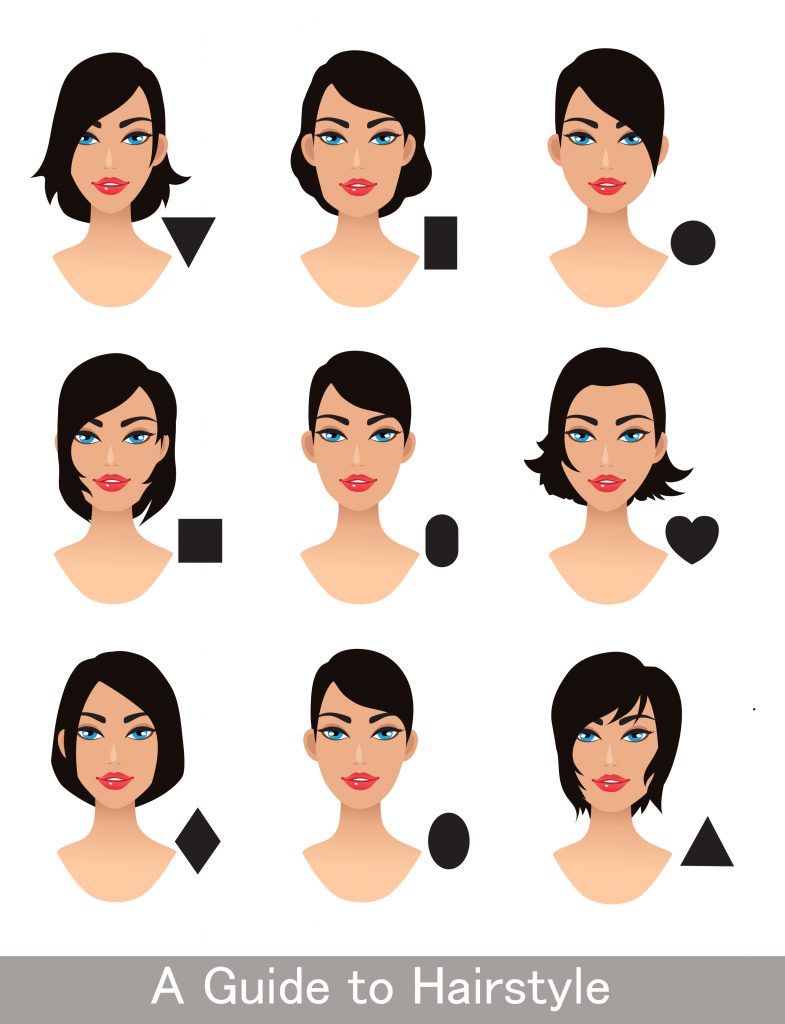
If your face shape is oval, you possess the “neutral” structure of the branding world. Much like a versatile font that works across multiple media, the oval face can accommodate almost any short style. You have the luxury of experimentation. Pixie cuts, textured bobs, and structured lobs all work to highlight your symmetry. From a strategic branding perspective, an oval-faced individual often uses short hair to convey modernism and efficiency. By keeping the hair away from the face, you invite focus directly onto your expressions, which is an invaluable asset in high-stakes negotiations or public speaking.
Round Faces: Creating Verticality and Structure
A round face presents a unique branding challenge: the need to introduce angles where curves dominate. The goal here is to elongate the silhouette to project a more professional, authoritative presence. Opting for a short cut with volume at the crown or sharp, angular layers near the jawline acts as a “verticalizing” agent. Avoid rounded, blunt cuts that hug the face, as these may inadvertently project a softer, more youthful image than you might desire in a corporate environment. By incorporating height and asymmetry, you can introduce a sense of “edge” and executive maturity to your brand identity.
Strategic Aesthetics: Designing Your Personal Brand Identity
Your hair is a constant visual touchpoint for those who interact with your personal brand. When choosing a short cut, consider the psychological triggers associated with different styles. In the context of corporate strategy, hair serves as a non-verbal cue that signals your organizational style and work ethic.
Square and Rectangular Faces: Softening the Narrative
Square faces are defined by a strong, prominent jawline, which naturally communicates strength and stability. In professional settings, this is an asset. However, if your brand message requires a touch of approachability, a short cut for a square face should focus on texture and soft, sweeping layers. Avoid severe, geometric lines that may make your appearance seem overly rigid. By opting for a layered bob or a soft, piecey pixie, you maintain your core strength while inviting a more collaborative, human-centric tone to your professional persona.
Heart and Diamond Faces: Balancing Proportions
Heart-shaped faces—characterized by a wider forehead and a narrower chin—benefit significantly from short styles that add volume around the jawline. This technique provides visual “weight” to the lower half of the face, creating a balanced, aesthetically pleasing portrait. If your brand strategy emphasizes leadership and groundedness, a chin-length bob with side-swept bangs can be incredibly effective. For those with diamond faces, where the cheekbones are the most prominent feature, short hair that emphasizes volume in the mid-section helps to narrow the appearance of the forehead and jaw, further accentuating the most dynamic part of your face.
The ROI of Image Management: Maintaining Your Professional Visuals
A haircut is a long-term investment in your personal brand. Unlike a digital marketing asset that can be updated with a click, your hair requires ongoing maintenance. The professional who neglects their haircut is, effectively, signaling a lack of attention to detail—an trait that can negatively impact your perceived reliability in business.
Precision vs. Maintenance
When selecting a short style, you must conduct a “resource audit.” Can your schedule accommodate the recurring appointments required to maintain a sharp, geometric fade or a precise, angular bob? A high-maintenance style that is allowed to grow out into an unkempt state creates a “brand drift,” where the intentionality of your look is lost. Choose a cut that fits your bandwidth. If your role involves extensive travel or high-stress environments, a low-maintenance, texturized crop may yield a higher return on investment than a style requiring daily heat styling and professional touch-ups every three weeks.
Professional Consistency
Consistency is the cornerstone of effective branding. If your short hair is to become a signature of your professional identity, it must be consistent. This does not mean it must never change, but that it should evolve in a way that remains true to your core brand message. A shift from a sleek, high-fashion pixie to a soft, wavy bob can signal a change in your career trajectory—perhaps from a high-intensity operational role to a more strategic, advisory position. Use these shifts intentionally. Treat your hair as a secondary visual element that supports the primary narrative of your career development.
The Intersection of Style and Executive Presence
In the modern workplace, the definition of “professional” is increasingly dictated by individual authenticity. The “one-size-fits-all” corporate aesthetic of the past has been replaced by a focus on personal branding that aligns with specific market niches. Whether you are in finance, technology, or creative consulting, your hairstyle should reflect your industry’s expectations while highlighting your unique brand proposition.
Interpreting Your Sector’s Visual Code
Consider the visual culture of your field. A tech entrepreneur might adopt a clean, minimalist short cut to reflect a philosophy of efficiency and innovation. Conversely, a creative director in the branding industry might opt for a bolder, more avant-garde short style to showcase their willingness to take risks. Your hairstyle is a piece of marketing collateral that you wear every day. It should bridge the gap between who you are and how you want the world to perceive your expertise.

Final Considerations for the Brand-Conscious Professional
Before committing to a major change, conduct a trial run. Use digital tools to simulate different cuts, or consult with a stylist who understands the intersection of facial aesthetics and professional branding. Remember that your goal is to enhance your natural features, not to mask them. A well-executed short haircut does more than just frame your face; it clears away the distractions, allowing your colleagues and clients to focus on the most important part of your brand: your professional vision and your ability to execute it.
By viewing your physical presentation through the lens of strategic design, you ensure that every choice—from the cut of your hair to the structure of your professional narrative—works in concert to build a brand that is as compelling as it is authentic. The right short hairstyle is not just a trend; it is a deliberate decision to claim your space in the professional world with confidence and clarity.
aViewFromTheCave is a participant in the Amazon Services LLC Associates Program, an affiliate advertising program designed to provide a means for sites to earn advertising fees by advertising and linking to Amazon.com. Amazon, the Amazon logo, AmazonSupply, and the AmazonSupply logo are trademarks of Amazon.com, Inc. or its affiliates. As an Amazon Associate we earn affiliate commissions from qualifying purchases.