
The Psychology of Financial Turbulence: Navigating Market Uncertainty
Financial turbulence is not merely a statistical anomaly; it is a psychological test of one’s investment thesis. In the context of capital markets, turbulence—often measured by the VIX or realized volatility—manifests as the rapid, unpredictable fluctuation of asset prices. For the retail investor and the seasoned institutional manager alike, these periods feel like a sudden, jarring shift in momentum. It is the moment when the market’s steady climb turns into a nauseating series of vertical drops and unexpected lurches.

Understanding the “feeling” of financial turbulence requires separating emotional responses from structural realities. When a portfolio experiences a sharp downturn, the visceral reaction is often one of fight or flight. However, strategic asset management dictates that turbulence should be treated as a signal, not a noise. It is the market attempting to recalibrate expectations in the face of new, often incomplete, information.
The sensation of turbulence is defined by the loss of control over the immediate outcome of one’s capital. Just as a pilot manages a turbulent flight by maintaining a steady course rather than reacting to every bump, the investor must recognize that volatility is a feature of the market’s design, not a failure of the system. Those who succumb to the feeling of chaos often lock in losses, whereas those who view turbulence as a calculated risk factor are often the ones who find the most opportunity for long-term alpha.
The Anatomy of a Market Correction: Identifying the Drivers
To master the experience of financial turbulence, one must first dissect its anatomy. Turbulence is rarely arbitrary; it is almost always the result of a disconnect between current valuations and macroeconomic conditions.
Liquidity Constraints and Margin Calls
One of the most intense feelings of market turbulence arises from liquidity constraints. When leverage is high, a small shift in price can trigger margin calls, forcing institutional players to liquidate positions regardless of their long-term merit. This creates a feedback loop: price drops cause liquidations, which cause further price drops. This phase of turbulence feels like a suffocating lack of oxygen in the market; it is the realization that the cost of capital has suddenly increased, and the luxury of time is no longer available.
Sentiment Reversals and Crowd Behavior
Turbulence is frequently amplified by human behavior. When headlines turn negative, the collective sentiment can shift from exuberant to fearful in a matter of hours. This transition feels like a sudden departure from rational pricing. Investors often describe this as “irrational exuberance” giving way to “capitulation.” Recognizing this emotional cycle is essential; if the feeling of turbulence is driven by fear rather than fundamental economic shifts, the market is likely approaching a bottom.
The Role of Algorithmic Trading
In the modern digital age, turbulence has a mechanical component. High-frequency trading (HFT) algorithms are designed to react to volatility, often exacerbating the very conditions they track. For the human observer, this results in “flash crashes” or rapid intraday swings that lack fundamental catalysts. This experience can feel like an erratic, synthetic shock to the system, leaving investors feeling sidelined by machines that can process and react to data in microseconds.
Managing the Turbulence: Strategies for the Rational Investor
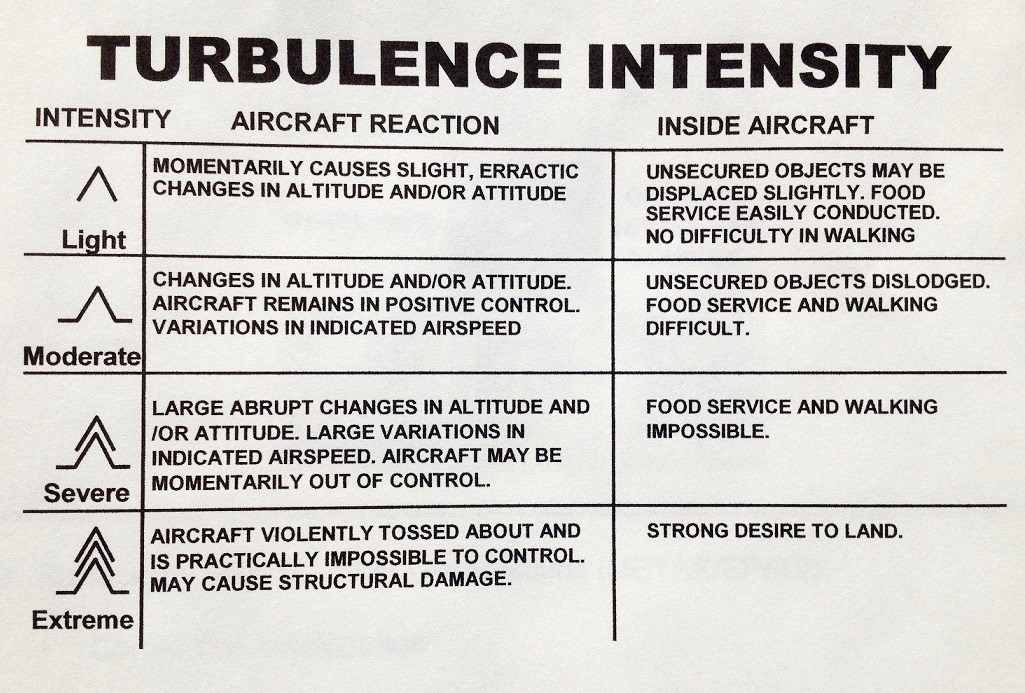
If turbulence is an inevitable component of the financial cycle, the strategic objective is not to avoid it, but to manage the experience through disciplined frameworks. The goal is to shift the investor’s perspective from the emotional “feeling” of the drop to the rational “structure” of the portfolio.
Stress Testing and Portfolio Resilience
A portfolio that feels “fragile” during turbulence is usually one that lacks proper diversification or carries excessive risk concentrations. Stress testing—modeling how your assets would perform under various volatility scenarios—is the best way to neutralize the fear of the unknown. When you have already modeled a 20% drawdown, the reality of that drop feels less like a crisis and more like a pre-planned event. Resilience is built in the calm, not in the storm.
The Importance of Cash Reserves (The Liquidity Buffer)
Nothing mitigates the visceral anxiety of market turbulence like liquidity. Holding a strategic cash position acts as an emotional safety net. It transforms the feeling of being “hit” by a down market into the feeling of “being prepared to buy.” When capital is available, turbulence loses its sting because it suddenly presents the opportunity to acquire quality assets at distressed prices. This is the cornerstone of opportunistic investing.
Maintaining the Long-Term Thesis
The most difficult aspect of turbulence is the urge to change the plan. If your investment thesis was sound when the market was calm, it is likely still sound when the market is turbulent—provided the underlying economic variables haven’t fundamentally changed. Turbulence is a temporary deviation from a trend, not the termination of the trend itself. By focusing on fundamental data rather than price action, investors can maintain their composure and avoid the common pitfall of selling at the nadir of the cycle.
Turning Volatility Into Advantage: The Contrarian Mindset
For the sophisticated investor, the feeling of turbulence should be reframed as a signal of potential. Market history consistently shows that the periods of highest volatility are often the moments that precede the most significant long-term growth.
The Alpha of Patience
Market turbulence creates “mispricing.” Because the market is reacting to the immediate fear of other participants, assets are frequently sold off indiscriminately. This presents a window where the value of a company or an asset may be significantly higher than its current, depressed market price. Patience in these moments is a strategic asset; it is the ability to wait while others are panicking.
Rebalancing as a Discipline
During turbulent times, asset allocations naturally drift. An equity-heavy portfolio might suddenly find itself over-weighted in high-risk sectors simply because other parts of the market have corrected more aggressively. Rebalancing during turbulence forces the investor to sell high and buy low—a mechanical action that benefits from the very volatility that many fear. By following a rebalancing schedule, the investor leverages the turbulence to maintain their risk profile, effectively turning market chaos into an automated wealth-building tool.

Concluding Perspective: Mastering the Cycle
Financial turbulence is the price of admission for long-term wealth creation. If the market were a linear, upward line, there would be no premium for risk. The discomfort you feel during a market correction is the market charging its premium for the future returns you expect.
By understanding the psychological drivers of market swings, acknowledging the role of modern algorithmic trading, and maintaining a disciplined strategy—including rigorous stress testing and the maintenance of a liquidity buffer—the investor can move from a position of anxiety to one of control. The feeling of turbulence eventually becomes predictable. You learn to recognize the signs, understand the mechanics, and stay the course. Ultimately, those who master the feeling of turbulence are the ones best positioned to thrive when the markets finally return to stability. The storm is not an obstacle; it is the environment in which true investment skill is verified.
aViewFromTheCave is a participant in the Amazon Services LLC Associates Program, an affiliate advertising program designed to provide a means for sites to earn advertising fees by advertising and linking to Amazon.com. Amazon, the Amazon logo, AmazonSupply, and the AmazonSupply logo are trademarks of Amazon.com, Inc. or its affiliates. As an Amazon Associate we earn affiliate commissions from qualifying purchases.