
The Etymological Foundation of Adeno-
In the specialized fields of medical terminology and biological nomenclature, the root “aden-” acts as a fundamental building block. Derived from the Ancient Greek word adēn, which translates directly to “gland,” this prefix serves as a vital diagnostic and anatomical identifier. Understanding the linguistics behind this root is not merely an academic exercise; it is a prerequisite for professionals, students, and patients navigating the complexities of modern healthcare and diagnostic technology.
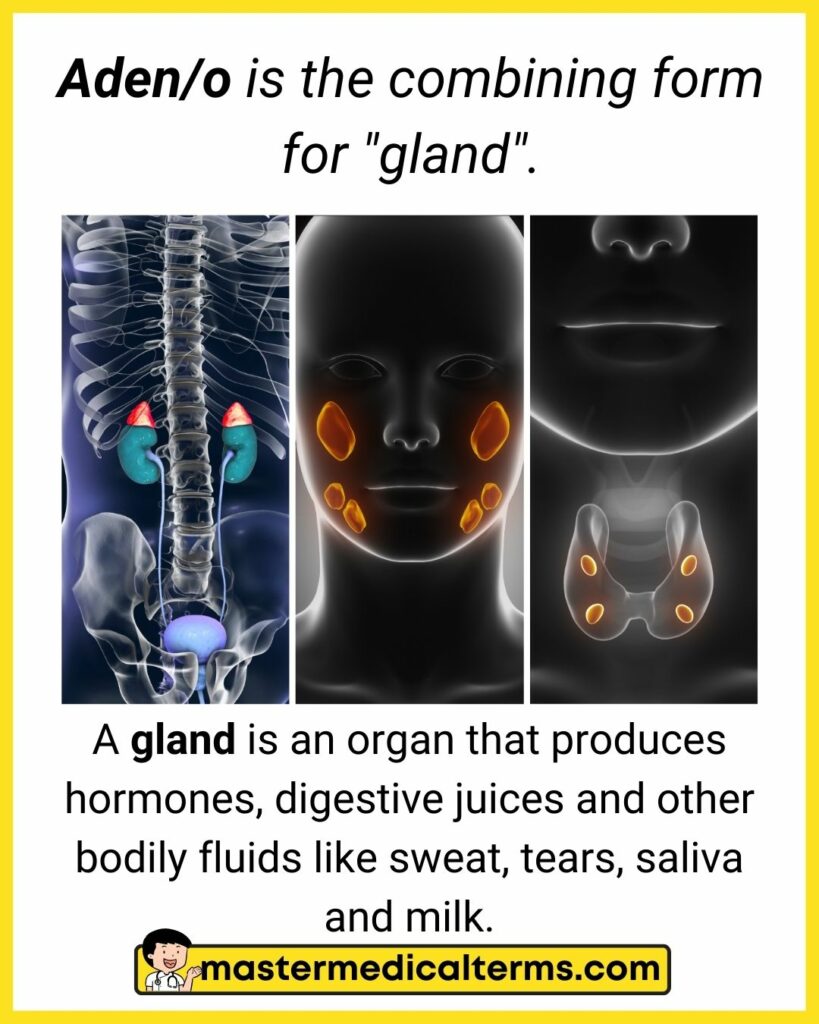
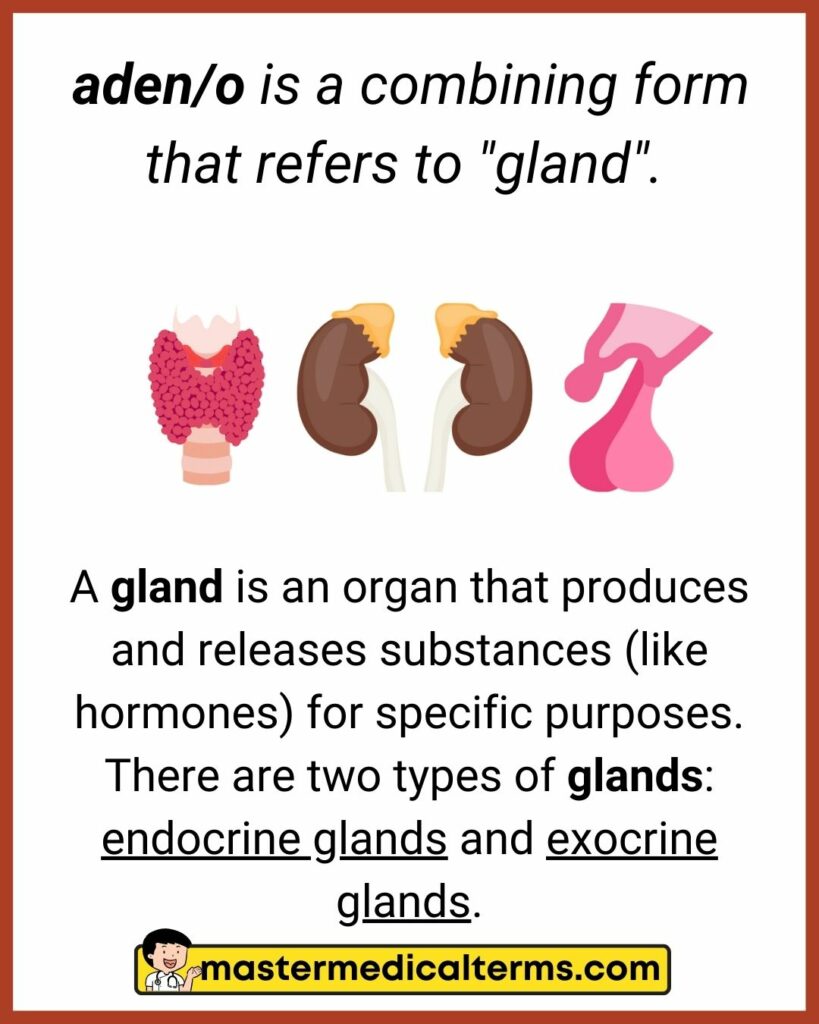
When we deconstruct medical language, we often find that it functions like a precise code. By identifying the root “aden,” one immediately gains insight into the localized area of a condition. Whether a term refers to inflammation, tumor growth, or functional disruption, the presence of this root directs the focus toward the glandular system—a critical network of organs and tissues responsible for synthesizing and secreting substances like hormones, enzymes, and fluids.
The Linguistic Evolution from Greek to Modern Medicine
The transition of adēn into the modern lexicon reflects the history of scientific observation. Ancient physicians recognized the presence of small, secretory bodies within the body, even if their precise physiological roles remained elusive. As anatomy transitioned from observational art to rigorous science, the term “aden-” was formally adopted into Latinized nomenclature. This standardization ensured that a researcher in the 18th century and a digital health analyst today share a common, unambiguous vocabulary.
Clinical Manifestations and Pathological Significance
The clinical importance of the “aden-” root cannot be overstated, as it appears in some of the most critical diagnoses in oncology and endocrinology. By understanding that “aden” implies glandular involvement, we can categorize several prevalent medical conditions that impact human health on a global scale. This categorization is essential for medical software developers creating diagnostic AI tools, as it forms the basis of the taxonomies used to organize patient data.
Adenitis: The Inflammation of Glands
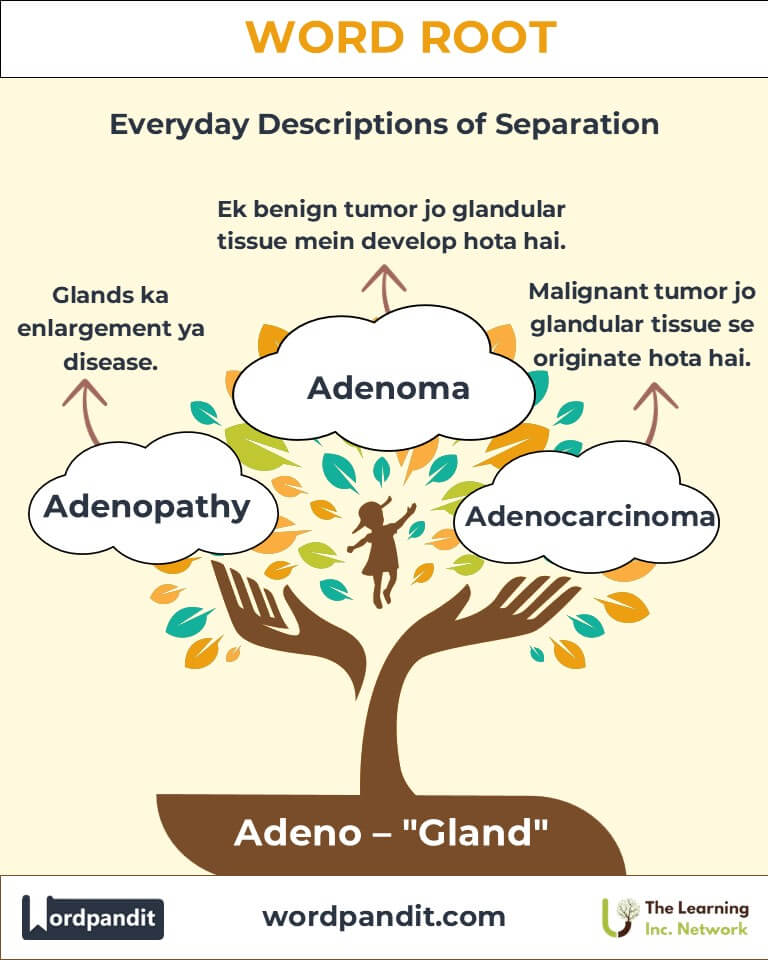
One of the most straightforward applications of the root is in the term “adenitis.” Simply put, this indicates the inflammation of a gland. This condition can affect various parts of the body, such as the lymph nodes (lymphadenitis) or the salivary glands. For clinicians, the suffix “-itis” indicates the pathological process—inflammation—while the prefix confirms the anatomical site. This modular construction allows for a clear, concise reporting style that is universally understood in digital health records.
Adenoma: The Benign Growth
Perhaps the most common use of the root in modern oncology is the “adenoma.” An adenoma is a benign tumor of glandular origin. These growths can occur in many organs, including the colon, the pituitary gland, and the thyroid. Distinguishing an adenoma from other types of tumors is critical for treatment strategy. When software platforms scan patient imagery or pathology reports, identifying the “aden-” prefix serves as a primary flag for the system to categorize the growth as glandular, thereby streamlining the diagnostic workflow for the attending physician.
Adenocarcinoma: The Malignant Challenge
The transition from a benign adenoma to an “adenocarcinoma” marks a significant shift in medical strategy. The suffix “-carcinoma” denotes a cancer of epithelial origin, and when combined with “aden-,” it specifically refers to a cancer that originates in glandular tissue. Adenocarcinomas are some of the most frequently diagnosed cancers, including those of the breast, prostate, lung, and colon. The linguistic precision of this term is not just semantic; it dictates the treatment plan, the prognostic outlook, and the selection of targeted therapies—such as hormonal interventions—that are specific to glandular tissues.
Technological Integration and Semantic Analysis in Healthcare
In the era of Digital Health, the interpretation of medical prefixes has moved beyond textbooks and into the realm of Natural Language Processing (NLP). Large-scale health informatics systems rely on the consistent use of roots like “aden-” to perform semantic mapping. When a doctor inputs clinical notes into an Electronic Health Record (EHR) system, the software must “understand” that a mention of “adenoidectomy” relates to the removal of glandular tissue (specifically the adenoids).
Semantic Indexing in Medical Databases
For software developers, the root “aden-” acts as a keyword for indexing. By categorizing medical literature and patient history under this root, developers can create powerful search functionalities that allow specialists to retrieve all relevant data regarding glandular health within seconds. This process reduces the “data noise” that often plagues large medical databases, ensuring that clinicians can focus on the specific anatomical structures relevant to their patient’s case.
AI and Diagnostic Pattern Recognition
Modern AI diagnostic tools are trained to identify patterns within radiology reports and pathology slides. By training these models on the etymological relationships between terms like “adenopathy” (the swelling of glands) and “adenocarcinoma,” the software learns to associate specific morphological shapes and cellular structures with their linguistic counterparts. This synergy between etymology and machine learning is driving the next generation of precision medicine, where automated systems can offer preliminary insights that are as linguistically accurate as they are clinically relevant.
The Broader Impact on Medical Communication and Patient Literacy
While the “aden-” root is essential for practitioners, its role in patient communication is equally significant. As digital platforms become the primary interface for patients to manage their health, the clarity of medical terminology plays a major role in health literacy.
Simplifying Complex Information
When patients receive a diagnosis that includes “aden-,” they are often met with confusion. Providing clear, accessible digital resources that define these roots empowers patients to participate in their own care. Educational apps and patient portals that offer definitions of medical terminology can bridge the gap between complex pathology and patient comprehension. By understanding that “aden” implies a gland, a patient gains a clearer conceptual model of where their condition is located and what that organ system’s function is.
Standardization for Global Health Coordination
The uniformity of medical nomenclature, supported by roots like “aden-,” facilitates international cooperation. In an interconnected global healthcare environment, consistency is life-saving. Whether a surgical procedure occurs in Tokyo, New York, or Berlin, the designation of a glandular condition using the same roots ensures that medical records are transferable and understandable. This level of standardization is the invisible infrastructure of the modern medical industry, built upon the sturdy foundations of Greek and Latin roots.
Future Prospects: Beyond the Prefix
As we look toward the future of medical technology, the importance of these linguistic foundations will only increase. With the rise of genomics and molecular pathology, we are seeing new terms emerging that combine the traditional root “aden-” with contemporary prefixes and suffixes related to genetic markers and molecular signaling pathways.
The digital transformation of healthcare ensures that while the root “aden-” dates back thousands of years to the roots of Western medicine, its utility is as modern as the latest AI-driven diagnostic scanner. By maintaining a rigorous understanding of these fundamental components, the technology sector can continue to build systems that are not only efficient but also linguistically robust, ensuring that the precision of our language continues to mirror the precision of our science.
In summary, the root “aden-” serves as more than just a piece of medical vocabulary. It is a navigational tool for the human body, a key for diagnostic software, and a critical component of professional communication. Its continued relevance highlights the enduring power of language to organize our understanding of the biological world, proving that even as our technology evolves, the essential building blocks of our knowledge remain constant.
aViewFromTheCave is a participant in the Amazon Services LLC Associates Program, an affiliate advertising program designed to provide a means for sites to earn advertising fees by advertising and linking to Amazon.com. Amazon, the Amazon logo, AmazonSupply, and the AmazonSupply logo are trademarks of Amazon.com, Inc. or its affiliates. As an Amazon Associate we earn affiliate commissions from qualifying purchases.