
In the intricate landscape of academic regalia, graduation cords serve as a visual shorthand for achievement, community, and institutional values. Among the myriad colors draped across the shoulders of graduating seniors—gold, blue, green, and red—the white cord often stands out for its simplicity and the weight of its symbolism. While university protocols can vary significantly from one institution to the next, the white cord is predominantly associated with specific academic honors, cultural organizations, or membership in prestigious professional societies. Understanding the meaning behind this accessory is essential for students, faculty, and families looking to appreciate the specific milestones represented on the commencement stage.
The Academic Honors Connection
In many collegiate settings, the white cord is primarily utilized to denote academic excellence. Unlike the gold cord, which is almost universally reserved for Latin honors such as Summa Cum Laude or Magna Cum Laude, the white cord is frequently employed to signal induction into specific academic honor societies.
Departmental Recognition
Many universities designate white cords for students who have excelled within a particular discipline. For example, a student graduating with a major in the humanities, social sciences, or nursing may be awarded a white cord upon reaching a high-ranking GPA within their specific department. This acts as an internal marker, allowing the faculty of a specialized program to honor their top performers beyond the university-wide recognition. By wearing the cord, the student signals a deep dedication to their field of study and an adherence to the rigorous standards set by their professors.
Interdisciplinary Honor Societies
Beyond departmental recognition, white cords are frequently associated with national honor societies that reward interdisciplinary scholarship. Organizations such as Phi Kappa Phi or regional branches of honor societies often utilize white or white-and-another-color braided cords to distinguish members. In this context, the white cord is not merely a sign of a high grade point average; it is a signifier of engagement in a scholarly community that emphasizes service, leadership, and ethical commitment to one’s profession.
Cultural and Service-Based Significance
While academic achievement is a primary driver for the distribution of honor cords, the white cord also carries profound meaning within the context of student organizations, volunteerism, and cultural representation. In the modern university environment, colleges and universities are increasingly using regalia to highlight the well-rounded nature of a student’s undergraduate experience.
Service and Philanthropy
Some institutions award white cords to students who have demonstrated an extraordinary commitment to community service. If a student has logged a specific number of volunteer hours or led significant philanthropic initiatives on campus, the university may bestow a white cord as a badge of honor. This practice aligns with the evolving mission of higher education, which seeks to prioritize not only intellectual growth but also the development of a student’s sense of civic duty.
Cultural and Identity-Based Organizations
In some instances, white cords are used by cultural or identity-based student organizations to signify membership and pride. Whether representing a cultural union, a mentorship program, or an advocacy group, these cords serve to bridge the gap between institutional formalities and the individual student’s personal identity. The color white, often associated with purity, beginnings, and clarity, is frequently chosen by these organizations to symbolize the clean slate of the future and the light shed by the group on the campus community.

Navigating Institutional Variations
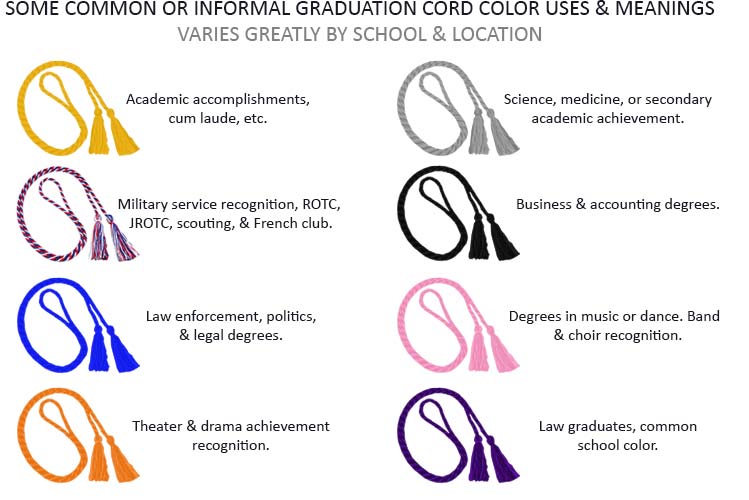
A critical reality of graduation regalia is the lack of a standardized universal code. A white cord at one university may signify something entirely different than a white cord at another institution. This lack of uniformity can often cause confusion for families and guests observing the ceremony.
Consulting the Commencement Handbook
To truly understand the meaning of a white cord in a specific ceremony, one must refer to the official commencement handbook or the graduation website provided by the university. These documents function as the authoritative source for the institution’s regalia guidelines. They typically contain a “key” that explains the color-coding system, detailing which cords represent honor societies, which represent departmental awards, and which represent co-curricular activities.
The Role of Campus Customs
Traditions are deeply rooted in the history of individual colleges. Some older, private institutions may have long-standing protocols where a white cord represents a specific legacy or a traditional honor that has persisted for decades. Conversely, larger state universities may adopt more utilitarian color-coding systems that are updated periodically based on the growth of new academic departments and student organizations. Recognizing that these meanings are “living” traditions is key to understanding why the same colored cord can carry drastically different meanings across the higher education landscape.
The Significance of Symbolism in Academic Tradition
The practice of wearing cords—often called “honor cords”—is an extension of the long history of academic regalia that dates back to the medieval universities of Europe. At that time, hoods, gowns, and caps were not merely ceremonial; they were practical items of clothing that indicated a student’s status, field of study, and level of degree.
From Practicality to Representation
As academic fashion evolved, the utilitarian purpose of these garments faded, giving way to the highly symbolic regalia we see today. The white cord, as a modern addition to this tradition, represents the contemporary desire to recognize diverse forms of student achievement. In an era where students are encouraged to be more than just their GPAs—where they are expected to be leaders, volunteers, and active participants in campus life—the graduation cord provides a necessary visual vocabulary.
The Emotional Weight of the Cord
For the graduate, the white cord is more than a piece of twisted fabric; it is a physical manifestation of long nights of study, community involvement, and the navigation of the academic journey. When a student places that cord over their neck, they are acknowledging the specific community or accomplishment that defined their time at the university. It marks the transition from a student who is learning to a professional who has demonstrated competence and commitment.

A Legacy for Future Generations
Furthermore, the white cord serves as an inspiration for those who follow. During the commencement procession, younger students in the audience look to the graduating class to understand what is valued within their academic environment. By displaying these cords, the university implicitly sets the bar for what they hope the next generation of students will aspire to—whether that is academic rigor, community service, or leadership.
In conclusion, the white cord is a multifaceted symbol that reflects the complexity of the modern university experience. Whether it represents a high GPA in a difficult major, years of service to the community, or induction into a prestigious honor society, it remains a hallmark of the dedication required to complete a degree. By looking beyond the surface-level color and examining the institutional context, we can better appreciate the depth of hard work and achievement that these small, braided strands of fabric truly represent on the most significant day of a student’s academic career.
aViewFromTheCave is a participant in the Amazon Services LLC Associates Program, an affiliate advertising program designed to provide a means for sites to earn advertising fees by advertising and linking to Amazon.com. Amazon, the Amazon logo, AmazonSupply, and the AmazonSupply logo are trademarks of Amazon.com, Inc. or its affiliates. As an Amazon Associate we earn affiliate commissions from qualifying purchases.