
In the precision-driven world of scientific instrumentation, few tools possess the enduring legacy and reliability of the triple beam balance. While modern laboratories have increasingly embraced digital sensors and automated data logging, the triple beam balance remains a staple in educational institutions, industrial quality control labs, and research facilities. At its core, the device is a fundamental tool for measurement, but understanding its specific function requires a deeper look into the physics of mass and the mechanics of balance.
Understanding the Fundamental Measurement of Mass
At its most basic level, the triple beam balance measures the mass of an object. While it is common to speak of “weighing” items, a triple beam balance does not measure weight—which is a measure of the force exerted by gravity—but rather mass, which is a measure of the amount of matter within an object.
The Physics of Equilibrium
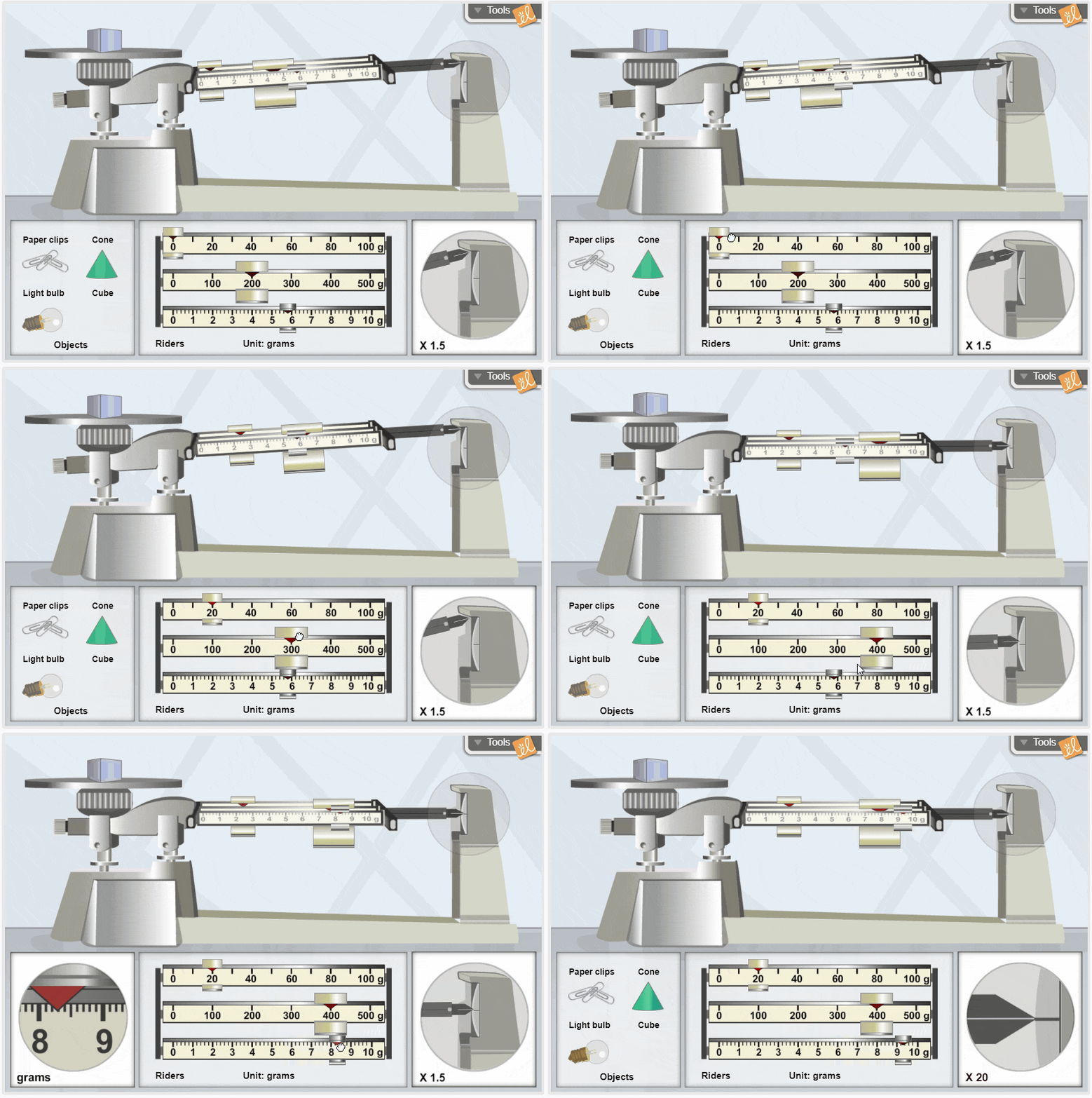
The functionality of a triple beam balance is rooted in the principle of equilibrium. Unlike a spring scale, which relies on the deformation of a metal coil to calculate force, the triple beam balance uses a system of counterweights and a fulcrum to compare the object on the pan against a known standard of mass. When the pointer aligns with the zero mark on the scale, the mass of the object on the pan is exactly equal to the sum of the masses indicated by the positions of the riders on the three beams.
Precision and Sensitivity
The primary reason this instrument remains a classroom and laboratory standard is its high degree of sensitivity. Because it functions mechanically without the need for electronic calibration or potential software drift, it offers a consistent, repeatable measurement. Depending on the specific model, a standard triple beam balance can typically measure mass to a precision of 0.1 grams. This level of accuracy is more than sufficient for most chemical preparations, biological dissections, and introductory physics experiments, where extreme sub-milligram precision is not the primary requirement.
Mechanics of the Triple Beam System
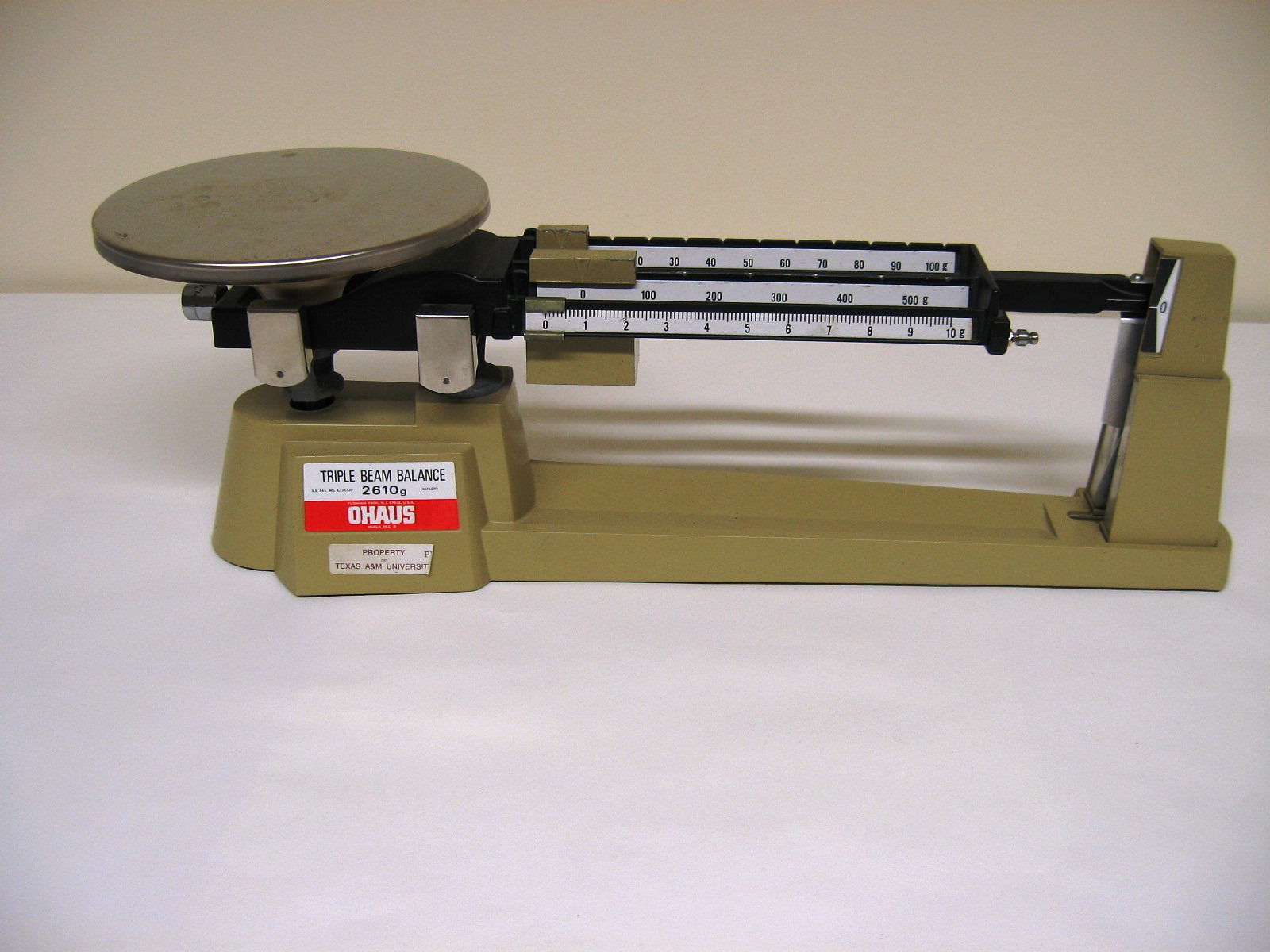
The term “triple beam” refers to the three horizontal bars, or beams, that run parallel to one another. Each beam serves as a scale with a different degree of magnitude, allowing for a cumulative reading that provides both a wide range of measurement and high resolution.
The Function of the Three Beams
Each beam is notched and calibrated to represent different increments of mass:
- The Rear Beam (The Hundreds): This beam is typically calibrated in 100-gram increments. It is the primary beam used for large measurements, allowing the user to quickly identify the general mass range of the sample.
- The Middle Beam (The Tens): This beam usually measures in 10-gram increments. It provides the secondary level of precision necessary to narrow down the measurement once the hundred-gram rider is set.
- The Front Beam (The Units and Decimals): This beam is the most sensitive, often calibrated in 1-gram or 0.1-gram increments. It is the final beam adjusted to achieve the perfect balance point, bringing the pointer to the zero mark.
The Importance of the Rider and Fulcrum
The “riders” are the sliding weights that move along the beams. By sliding these weights to the right, the user effectively increases the counter-torque on the balance arm. The fulcrum, acting as the pivot point, ensures that the beam remains level only when the force exerted by the object on the pan is perfectly compensated by the positions of the three riders. This mechanical simplicity is the reason why these devices can last for decades with minimal maintenance, provided they are kept clean and stored in a low-vibration environment.
Applications Across Scientific and Industrial Disciplines
While the triple beam balance is synonymous with the high school chemistry lab, its utility spans a much wider variety of professional fields. The ability to measure mass without dependence on power sources or complex circuitry makes it a ruggedized solution for many environments.
Laboratory Research and Education
In academic settings, the triple beam balance is essential for teaching the scientific method. Students learn about the importance of “zeroing” the balance—or “taring”—to ensure that the weight of a container (like a beaker or an evaporating dish) does not interfere with the measurement of the substance being studied. This teaches the fundamental practice of subtracting container mass from the total mass, a skill critical for all quantitative scientific work.
Industrial Quality Control
In smaller-scale manufacturing and quality control, the triple beam balance is often used to ensure the consistency of raw materials. Whether measuring the mass of reagents for a chemical batch or weighing small metal components for uniformity, the balance provides a tangible, tactile experience that digital scales sometimes lack. In industries where static electricity or electromagnetic interference could jeopardize sensitive electronic scales, the triple beam balance remains the preferred, interference-free tool.
Fieldwork and Portable Requirements
For researchers conducting fieldwork in remote locations, power availability is often a limiting factor. A triple beam balance is entirely self-contained. It requires no batteries, no power cords, and no initialization sequence. As long as the surface is level and the environment is relatively stable, the device can deliver accurate mass measurements in the field, making it an invaluable tool for geology, ecology, and environmental science studies conducted far from grid power.
Maintenance and Best Practices for Accurate Readings
The accuracy of a triple beam balance is entirely dependent on its physical condition. Because the instrument relies on the balance of mechanical parts, even minor issues—such as dust buildup or a slightly uneven surface—can lead to significant errors in data collection.
Calibration and Zeroing
Before every session of measurements, the balance must be “zeroed.” This involves sliding all three riders to their zero positions on the far left. If the pointer does not align perfectly with the zero mark on the end of the beam, the adjustment knob (usually located at the base of the balance) must be turned until the pointer is level. This process compensates for environmental changes and ensures that the readings are accurate from the start.
Handling and Cleaning
The sensitivity of the balance is highly vulnerable to contamination. Even a few grains of sand or a spill of chemical residue on the pan can throw off the mass reading. Users must ensure that no chemicals come into direct contact with the pan; weighing paper or a weigh boat should be used as a buffer. Additionally, the pivot points of the balance arm must remain free of debris. If the balance seems to stick or return to different positions, it is often a sign that the knife-edges (the pivot points) need to be cleaned gently with a soft cloth.
Environmental Considerations
The triple beam balance is highly sensitive to air currents. Even a gentle breeze from an open window or an air conditioning vent can cause the beam to fluctuate, making it difficult to find the exact balance point. For this reason, balances are often kept in draft-free corners or equipped with protective screens. Furthermore, the surface upon which the balance rests must be vibration-free. Heavy machinery running in an adjacent room or constant foot traffic near the balance station can induce vibrations that cause the beam to oscillate, compromising the integrity of the measurement.

Why the Triple Beam Balance Persists
In an era of rapid digital transformation, one might assume that the mechanical triple beam balance would have become obsolete. However, its continued presence in laboratories and schools speaks to the value of fundamental physics. Digital scales, while faster and capable of instant data transfer, can fail due to battery depletion, circuit board failure, or software bugs. The triple beam balance offers a “fail-safe” approach to measurement. It requires no interpretation of pixels or digital signals; it relies on the undeniable physics of gravity and mass.
By providing a hands-on, intuitive way to understand mass, the triple beam balance serves as more than just a measurement tool; it is a gateway to the scientific mindset. It forces the user to interact with the object being measured, to adjust the weight systematically, and to observe the balance point with focused attention. As we move further into a world of automated instrumentation, the triple beam balance serves as a vital reminder that precision and reliability are often best found in the elegance of simple, time-tested mechanical design. Whether used for a simple science fair project or a complex industrial batch, the triple beam balance remains an essential, unshakeable cornerstone of empirical measurement.
aViewFromTheCave is a participant in the Amazon Services LLC Associates Program, an affiliate advertising program designed to provide a means for sites to earn advertising fees by advertising and linking to Amazon.com. Amazon, the Amazon logo, AmazonSupply, and the AmazonSupply logo are trademarks of Amazon.com, Inc. or its affiliates. As an Amazon Associate we earn affiliate commissions from qualifying purchases.