
The concept of “generational curses”—the idea that the sins, mistakes, or financial failures of parents are hard-coded into the financial destiny of their offspring—is a pervasive narrative in both cultural and theological discourse. However, when we analyze this through the lens of personal finance and wealth-building strategy, the focus shifts from mystical inheritance to the concrete mechanics of financial literacy, systemic privilege, and behavioral economics. In the New Testament, the narrative regarding inherited burdens is fundamentally restructured, moving away from deterministic failure toward a model of individual agency, stewardship, and personal accountability.
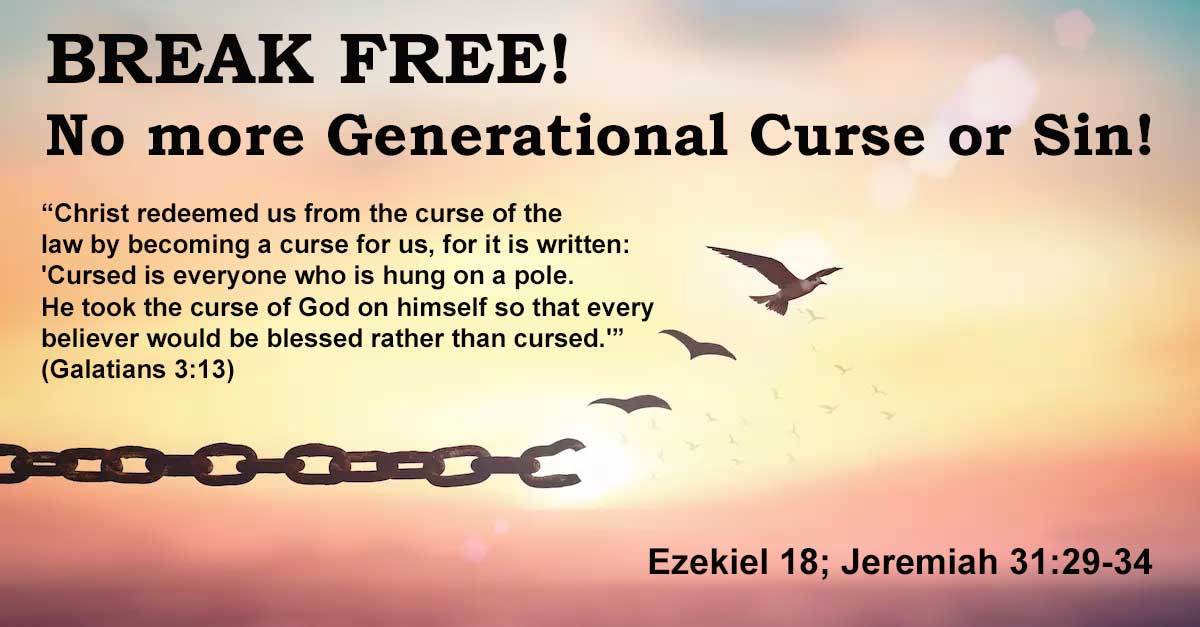
For the modern professional or investor, understanding the New Testament’s perspective on these “curses” provides a compelling framework for breaking cycles of poverty and establishing sustainable financial health. It challenges the victimhood mindset that often plagues wealth creation, suggesting instead that the legacy one leaves is a matter of present-day choices rather than inherited biological or spiritual debt.
Redefining Inheritance: From Debt to Stewardship
In the ancient world, and frequently in our modern financial landscape, debt was often treated as a hereditary condition. If a family name carried the weight of bankruptcy or poor credit, the individual was viewed as being under a “curse” of financial instability. The New Testament writers, particularly in the Pauline epistles, introduce a radical shift: the concept of the individual as a steward of assets rather than a prisoner of lineage.
The Breakdown of Deterministic Cycles
The New Testament rejects the notion that the sins of the father must inevitably dictate the economic outcomes of the son. In the context of finance, this translates to the principle that past family failures—whether they be reckless spending habits, lack of investment acumen, or a history of bankruptcy—do not hold the power of law over a current financial plan. By focusing on “stewardship,” the New Testament emphasizes that assets are entrusted to individuals to be managed with foresight and discipline.
The Investor’s Mindset
From a financial strategy perspective, this means that your current net worth is not a result of your parents’ financial “karma.” It is a result of your current allocation of resources, your risk tolerance, and your commitment to compound interest. When you stop viewing yourself as the heir to a financial curse, you begin to view yourself as the primary actor in your own financial ecosystem. The “curse” is effectively broken the moment the individual takes full, documented control of their balance sheet, assets, and liabilities.
Breaking the Cycle: Behavioral Finance and Discipline
One of the most profound takeaways from New Testament teaching is the emphasis on renewal and transformation—concepts that are directly applicable to personal finance. If you have grown up in a household where financial literacy was ignored or where consumer debt was normalized, you are dealing with a learned pattern, not a spiritual curse. The New Testament encourages a complete “renewing of the mind,” which, in modern terms, is the cognitive reframing required to shift from a consumerist mindset to an investor mindset.
Replacing Inherited Habits
Many financial struggles are generational simply because they are taught and modeled. If your parents never taught you the power of index funds, the importance of an emergency fund, or the danger of high-interest credit cards, you are essentially starting with a knowledge deficit. The New Testament approach to “breaking the cycle” involves identifying these patterns and deliberately replacing them with disciplined, objective-based financial behaviors. This is not about seeking supernatural intervention to clear your debts; it is about the cold, hard work of budgeting, saving, and investing.

The Role of Personal Accountability
The principle of individual accountability is central to the New Testament’s economic teachings. No one else is responsible for your retirement account. No one else is responsible for your tax strategy. When you embrace this, you effectively dismantle the excuse that your financial struggles are “just the way it is for my family.” By applying the biblical virtue of diligence, you move from being a passive recipient of your family’s financial history to an active architect of your future prosperity.
Systemic Wealth vs. Generational Burden
In modern marketing and brand strategy, we often talk about the “legacy” a company or individual leaves behind. In the New Testament, the emphasis is heavily placed on how our present actions impact those who come after us. It suggests that while you are not responsible for the debts of your ancestors, you are absolutely responsible for the financial trajectory you set for your descendants.
Building a Legacy of Capital
True wealth is not just about personal consumption; it is about creating a surplus that can be passed down. This is the New Testament concept of “storing up” not for greed, but for utility. By building wealth, you provide your descendants with the tools—education, capital, and a stable foundation—that allow them to start ahead of where you started. You aren’t just paying off your own debt; you are changing the financial DNA of your future family tree.
The Power of Compound Influence
Just as interest compounds over time, so do habits and financial literacy. By becoming the first person in your family to master the basics of investing, you are effectively “de-risking” the future for the next generation. The New Testament calls for wisdom and foresight, qualities that are the bedrock of any successful wealth management plan. When you act with long-term vision, you negate the possibility of your descendants suffering from the “curse” of financial ignorance.
The Financial Theology of Agency
The New Testament provides a blueprint for what we might call the “Financial Theology of Agency.” It suggests that humans are empowered actors capable of making rational, moral, and strategic decisions that have real-world consequences. This is the antithesis of the “curse” narrative. If you are struggling financially, the strategy is not to wait for a generational reversal of fortune; it is to engage in the immediate, tactical steps of wealth acquisition.
Strategic Asset Allocation
The biblical directive to be a “wise steward” is a call to action. In finance, this means diversifying your investments, minimizing unnecessary debt, and planning for contingencies. These are not merely practical tips; they are the active manifestation of someone who has rejected the idea of being bound by the past. The individual who manages their portfolio with skill and discipline is the one who has successfully broken the “curse” of poverty.

Conclusion: The Future is a Choice
Ultimately, the New Testament narrative posits that the past is a closed chapter, and the future is an open book. For those navigating their personal financial journeys, this should serve as the ultimate motivation. You are not a victim of your family’s financial history. You are the CEO of your own life, the architect of your family’s economic future, and the owner of your financial results.
The “generational curse” is often nothing more than a lack of financial literacy passed down from one generation to the next. By committing to continuous learning, practicing disciplined saving, and focusing on long-term growth, you can effectively terminate any negative patterns of the past. The legacy you create is a direct reflection of the values you choose to hold today. Stop looking backward at what your predecessors failed to achieve and start building the foundation that will ensure your successors thrive. Your financial freedom is not an inheritance you are waiting for; it is a destiny you are building, one investment at a time.
aViewFromTheCave is a participant in the Amazon Services LLC Associates Program, an affiliate advertising program designed to provide a means for sites to earn advertising fees by advertising and linking to Amazon.com. Amazon, the Amazon logo, AmazonSupply, and the AmazonSupply logo are trademarks of Amazon.com, Inc. or its affiliates. As an Amazon Associate we earn affiliate commissions from qualifying purchases.