
When you examine the sidewall of a tire, you are met with a cryptic sequence of letters and numbers—a tire’s “DNA,” if you will. Among these specifications, the aspect ratio is arguably the most misunderstood. While many drivers associate a tire’s profile solely with aesthetics—the sleek look of a low-profile tire on a sports car versus the meaty, rugged appearance of an off-road tire—the aspect ratio is, in reality, a critical engineering parameter that dictates vehicle dynamics, handling precision, and overall ride comfort.
In the world of automotive technology and engineering, the aspect ratio serves as a vital bridge between the mechanical capabilities of the vehicle and the physical contact patch on the road. Understanding this value is not just about choosing the right replacement tire; it is about grasping how your vehicle communicates with the pavement beneath it.

Decoding the Technical Specification
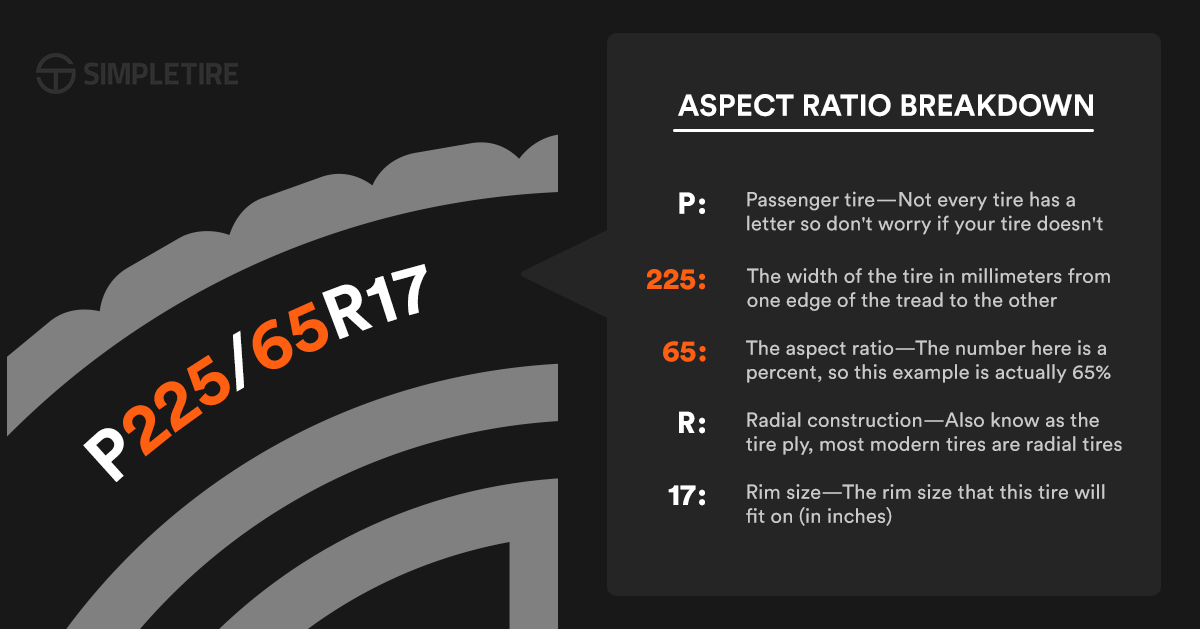
The aspect ratio is the second number in the sequence typically found on a tire sidewall (e.g., 225/50R17). It is expressed as a percentage, not a measurement in inches or millimeters. It represents the ratio of the tire’s cross-sectional height to its width.
How the Calculation Works
If you look at the tire size 225/50R17, the “225” indicates the width of the tire in millimeters from sidewall to sidewall. The “50” is the aspect ratio. This tells us that the sidewall height is 50% of the width. By performing a simple calculation—225 millimeters multiplied by 0.50—we find that the sidewall height of this specific tire is 112.5 millimeters.
The Evolution of Profile Heights
Historically, tires were much taller. Early automotive designs featured “bias-ply” tires where the height of the sidewall was nearly equal to the width of the tread (an aspect ratio of 80 or 90). Over the decades, as automotive technology progressed toward higher cornering speeds and more responsive steering, engineering trends shifted toward lower aspect ratios. This shift was fueled by the need to reduce sidewall flex, which occurs when a tire deforms under lateral force during hard cornering.
The Engineering Implications of Sidewall Height
The aspect ratio is a primary lever that engineers pull when designing the “personality” of a vehicle. A lower aspect ratio (often referred to as a “low-profile” tire) acts differently than a higher aspect ratio tire, and these differences impact everything from steering feedback to structural integrity.
Steering Response and Lateral Stability
The primary advantage of a lower aspect ratio is the reduction of sidewall flex. When a driver turns the steering wheel, the tire must transmit that force to the road. A tall sidewall acts like a soft spring; it allows for some “lag” or “mushiness” before the tire actually bites into the turn. A short, low-profile sidewall is structurally stiffer, providing an almost instantaneous transmission of steering input to the road. This is why performance cars utilize low-profile tires—they provide the sharp, precise handling required for high-speed maneuvers.
Ride Comfort and Impact Absorption
Conversely, the sidewall of a tire serves as a secondary suspension component. A higher aspect ratio means there is more rubber and air between the rim and the road. This larger cushion excels at absorbing road irregularities, such as potholes, expansion joints, and rough asphalt. By choosing a higher aspect ratio, manufacturers can significantly soften the ride, making it more comfortable for passengers. The trade-off, however, is a loss of steering “sharpness” and increased body roll during aggressive cornering.
Balancing Performance, Safety, and Aesthetics
The automotive aftermarket industry is obsessed with “plus-sizing”—the process of fitting larger wheels and lower-profile tires to a vehicle. While this can enhance the aesthetic appeal of a car, it is a technical modification that requires careful consideration of the vehicle’s original design intent.
The Compromise of Low-Profile Tires
While a low aspect ratio looks aggressive and improves cornering, it comes with inherent risks. Because the sidewall is shorter, there is less volume to absorb the kinetic energy of an impact. Consequently, hitting a significant pothole at speed with a low-profile tire is much more likely to result in a bent rim, a tire blowout, or even suspension damage. Furthermore, because these tires are often wider and made from softer, high-grip compounds to maximize performance, they often result in increased road noise and a shorter tread life compared to their high-profile counterparts.
Impact on Vehicle Calibration
Modern vehicles are sophisticated machines governed by Electronic Control Units (ECUs) and Advanced Driver Assistance Systems (ADAS). These systems are calibrated to the rotational speed and circumference of the factory-specified tires. Altering the aspect ratio significantly can change the overall diameter of the wheel-and-tire package. This inaccuracy can cause a cascade of issues:
- Speedometer Error: A change in tire diameter means the wheel rotates at a different speed for a given velocity, leading to incorrect speedometer and odometer readings.
- Traction Control Interference: Systems like Anti-lock Braking (ABS) and Electronic Stability Control (ESC) rely on precise data about how each wheel is spinning. If the aspect ratio—and thus the outer diameter—is altered beyond a certain threshold, these systems may trigger unnecessarily or fail to engage when needed.
Selecting the Right Profile for Your Needs
When it comes time to replace tires, the decision should be guided by a balance of environment, driving style, and vehicle purpose. There is no single “correct” aspect ratio, only one that is correct for a specific set of operational requirements.
Assessing Driving Environments
If your daily commute involves navigating urban environments with decaying infrastructure, a higher aspect ratio is objectively superior. The extra sidewall depth provides the durability needed to survive the hazards of city driving. Conversely, if you drive on well-maintained highways and prioritize spirited driving or weekend track events, a lower aspect ratio will provide the handling precision that makes modern sports sedans and coupes enjoyable to drive.

The Role of Technological Advancement
It is worth noting that tire technology is advancing rapidly. Manufacturers are now utilizing sophisticated rubber compounds and reinforced sidewall construction (such as run-flat technologies) to bridge the gap between performance and comfort. Modern low-profile tires are becoming increasingly adept at dampening road noise, while high-profile tires are being engineered with stiffer internal structures to provide better handling than those of previous generations.
Ultimately, the aspect ratio is a fundamental variable in the architecture of your vehicle. It is a constant negotiation between the desire for comfort and the demand for performance. By understanding what that percentage on your sidewall represents, you gain a deeper appreciation for the engineering balance—and the inherent compromises—that allow your vehicle to perform safely and reliably across the diverse conditions of the modern road. Whether you prioritize the plush ride of a touring sedan or the surgical precision of a performance machine, the aspect ratio is the hidden spec that defines how your car feels beneath you.
aViewFromTheCave is a participant in the Amazon Services LLC Associates Program, an affiliate advertising program designed to provide a means for sites to earn advertising fees by advertising and linking to Amazon.com. Amazon, the Amazon logo, AmazonSupply, and the AmazonSupply logo are trademarks of Amazon.com, Inc. or its affiliates. As an Amazon Associate we earn affiliate commissions from qualifying purchases.