
In the lexicon of digital gaming and virtual environments, few terms are as fundamental yet frequently misunderstood as the “spawn point.” While casual observers might categorize it simply as a starting location, its implications stretch deep into the architecture of software development, user experience (UX) design, and the intricate balance of multiplayer competitive ecosystems. Understanding the mechanics behind these coordinate systems is essential for anyone interested in how modern software engineers manage player flow, data initialization, and the seamless integration of digital assets within virtual worlds.
The Technical Architecture of Digital Spawning
At its core, a spawn point is a predefined set of coordinates within a virtual environment where a digital object—usually an avatar, NPC (non-player character), or interactive item—is instantiated. In technical terms, “spawning” is the process of loading an asset into the active memory of a game engine and placing it within the game’s coordinate system (often represented as a Vector3 in engines like Unity or Unreal Engine).
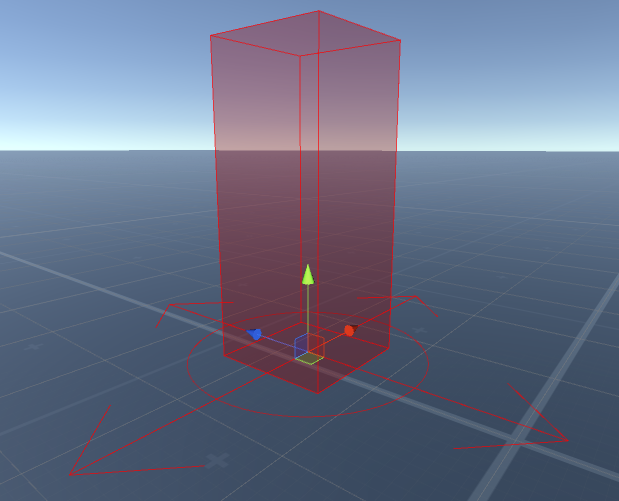
Initialization and Memory Management
When a user “spawns,” the system must perform a rapid series of calculations. The server or client must load the 3D model, the associated physics assets, and the unique state variables (such as health, inventory, or custom cosmetic skins) associated with that entity. By designating specific points in the code as “spawn zones,” developers create controlled environments for this data injection. This prevents the “memory spike” that would occur if assets were initialized randomly across the entire map. By routing all spawning through specific, tested coordinate arrays, software developers ensure stability and prevent game-crashing glitches that might arise from improper object placement.
Coordinate Systems and Vector Math
Every virtual world operates on a Cartesian coordinate system, utilizing X, Y, and Z axes. A spawn point is essentially a fixed point in this grid. When a player connects to a server, the server transmits a packet containing the player’s unique ID and the coordinates of the assigned spawn point. If a player were to “spawn” at coordinates outside the map’s floor mesh, they would fall into an infinite void—a classic bug that highlights the necessity of rigorous spawn point validation during the software testing phase. Modern development tools now utilize “spawn manager” scripts that check for environmental collisions before finalizing an entity’s placement, ensuring that a player never materializes inside a wall or static object.
The Role of Spawn Points in UX and Level Design
Beyond the backend code, the strategic placement of spawn points is a masterclass in user experience design. How and where a player enters the digital world dictates their initial emotional state and their understanding of the software’s interface.
Managing Cognitive Load and First Impressions
In software design, the “First Time User Experience” (FTUE) is critical. The spawn point acts as the anchor for this experience. If a user is dropped into an overly complex area of an application without context, the cognitive load can lead to immediate abandonment. Developers use spawn points to guide the user toward interactive tutorials, dashboards, or “safe zones.” By controlling the initial viewport orientation, developers can force the user to look at specific UI elements, ensuring the interface is intuitive from the first millisecond of engagement.
Flow and Pacing in Virtual Environments
In massive multiplayer online (MMO) environments, spawn points function as traffic control systems. By using multiple spawn points scattered across a map, developers prevent “spawn camping” or “bottlenecking,” where too many users arrive at the same destination simultaneously, causing lag or server stuttering. Efficient software architects use load-balancing algorithms to dynamically assign users to the least-congested spawn point. This keeps the application feeling fluid and responsive, maintaining a high frame rate and low latency, which are the hallmarks of well-optimized software.
Strategic Variations: Respawning and Dynamic Reinstantiation

The concept of a spawn point evolves significantly when we move from initial loading to “respawning.” In interactive software, the ability to reset state is a critical function that demonstrates the robustness of the application’s memory handling.
State Resetting and Garbage Collection
When a player is eliminated or an item is consumed, the software must perform “garbage collection.” It cleans up the temporary memory used by that entity. “Respawning” is the cycle of re-initializing that entity at a new or designated point. This process is a repetitive strain on resources. Skilled developers use “object pooling” to manage this. Instead of destroying and recreating objects—which is computationally expensive—the software keeps a pool of inactive entities in memory. When a respawn command is triggered, the system simply moves an existing, pre-loaded entity to a new spawn point and toggles its visibility. This reduces CPU spikes and keeps the digital environment performing smoothly over long sessions.
Dynamic Spawn Logic in AI-Driven Environments
In modern AI-integrated software, spawn points are no longer static. They have become dynamic, responding to the behavior of the system. For instance, in an AI-powered simulation, spawn points might move based on where the “action” is detected. If an AI agent identifies that users are clustered in the northern quadrant of a map, it can dynamically re-route incoming assets or new players to different spawn points to balance the server load or optimize the simulation density. This requires sophisticated backend scripts that can evaluate the environment’s state in real-time and make split-second decisions on where to instantiate data.
Security Implications and Exploitation Mitigation
Because spawn points represent an entry vector into the system, they are often a focal point for digital security vulnerabilities. Understanding how to secure these points is a fundamental task for software engineers.
Protecting Against Injection and Clipping
Hackers often attempt to manipulate the packet data sent during the spawn process. If the server does not strictly validate the coordinates received or requested during a spawn event, malicious actors can perform “teleportation hacks” or force their entities to spawn inside restricted areas. Robust software requires server-side authoritative validation—meaning the server ignores any spawn instructions sent from the client and instead forces the client to acknowledge the server’s pre-approved coordinate list.
Preventing Resource Exhaustion (DoS)
Improper management of spawn points can also be a security weakness in terms of Denial-of-Service (DoS). If a system is configured to instantly spawn an entity without rate-limiting, an attacker could theoretically trigger thousands of spawn requests, effectively overwhelming the server’s memory and CPU capacity. Modern software development includes “spawn throttles,” which place a hard limit on how many assets can be initialized within a specific timeframe. By treating the spawn point as a secure gateway rather than just a coordinate, developers protect the integrity of the entire ecosystem.
Future Trends: Procedural Generation and Global Persistence
As we look toward the future of virtual environments and the “metaverse,” the definition of a spawn point is becoming increasingly fluid. We are moving away from fixed, developer-placed locations toward procedurally generated worlds where spawn points are determined by algorithms based on the user’s previous history and digital footprint.
Procedural Integration
In procedurally generated software, no two spawn points are identical. The algorithm calculates a safe location based on the geometry it has just created in real-time. This requires an incredible level of precision in spatial mapping. The software must verify that the ground is solid, that there are no conflicting assets, and that the location is aesthetically appropriate for a user’s entry.

Persistence Across Digital Realms
As users move between different software applications, the idea of a “persistent spawn point” is gaining traction. Imagine a scenario where a user’s session is saved, and they return to the exact spatial coordinate where they left off. This creates a seamless digital identity. Achieving this requires complex database synchronization, where the state of the world and the exact vector of the user are stored in the cloud. When the user re-enters, the system fetches this data and instantiates the user at their “last known spawn point.” This is the ultimate goal of seamless software integration: a world that remembers where you are, regardless of when you log in.
The spawn point is far more than a simple coordinate. It is a vital junction where memory, physics, user interface design, and security intersect. By mastering the nuances of this foundational concept, developers create environments that are not only performant but also intuitive and secure. As our digital worlds grow in complexity, the mechanics behind these initialization points will continue to serve as the silent, essential backbone of the software experience.
aViewFromTheCave is a participant in the Amazon Services LLC Associates Program, an affiliate advertising program designed to provide a means for sites to earn advertising fees by advertising and linking to Amazon.com. Amazon, the Amazon logo, AmazonSupply, and the AmazonSupply logo are trademarks of Amazon.com, Inc. or its affiliates. As an Amazon Associate we earn affiliate commissions from qualifying purchases.