
In the modern marketplace, the concept of “validation” has shifted from a psychological internal state to a fundamental pillar of personal branding and professional growth. Whether you are an entrepreneur launching a startup, a consultant establishing authority, or an executive climbing the corporate ladder, the pursuit of external acknowledgement serves as a diagnostic tool for your market presence. In the context of brand strategy, seeking validation is not merely a sign of insecurity; it is a calculated effort to align your identity with the expectations and desires of your target audience.
The Strategic Anatomy of External Validation
Brand validation is the process of confirming that your brand’s perceived identity matches the reality of how your audience experiences your products or services. It is the bridge between internal branding—what you say you are—and external reputation—what the market believes you to be.
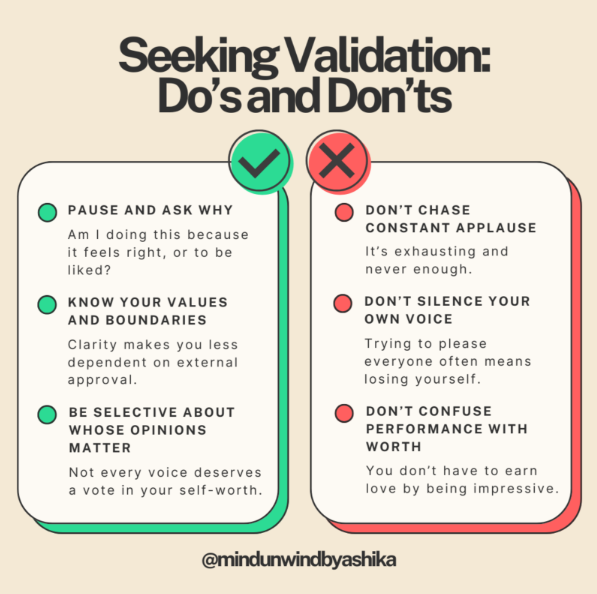
The Feedback Loop as a Competitive Advantage
At its core, seeking validation is an exercise in data collection. Successful brands do not operate in a vacuum; they function within a complex ecosystem of competitors, shifting consumer trends, and evolving economic climates. When a brand actively seeks validation, it is essentially asking the market to stress-test its value proposition. By soliciting reviews, analyzing sentiment, and monitoring engagement metrics, you are gathering the raw materials necessary to refine your brand narrative. If you are not actively seeking this feedback, you are effectively flying blind, allowing your market position to be dictated by passive assumptions rather than proactive strategy.
Differentiating Between Approval and Alignment
A critical distinction must be made between “seeking approval” and “seeking alignment.” Seeking approval is a bottom-of-the-funnel symptom of an inconsistent brand; it implies a lack of clarity in your value proposition, causing the brand to fluctuate in response to every critique. Conversely, seeking alignment is a high-level strategic maneuver. It is the process of testing your core messaging against the needs of your audience to ensure that your brand architecture supports the desired business outcomes. Alignment is about resonance, not just popularity. A brand that seeks alignment uses validation to identify which elements of its identity are magnetic and which are noise.
The Role of Social Proof in Personal and Corporate Branding
Social proof is the most quantifiable form of validation in the digital age. It serves as a psychological shortcut for potential clients and partners, signaling that your brand is a safe, reputable, and high-value choice.
The Psychology of Authority Building
When a brand showcases testimonials, industry certifications, or collaborative partnerships, it is leveraging the “Bandwagon Effect.” By demonstrating that others have already validated your services, you reduce the perceived risk for new prospects. In professional services—such as consulting, creative agencies, or coaching—your reputation is your product. Therefore, the strategic pursuit of validation from high-authority figures or recognized publications acts as a multiplier for your brand equity. It is the difference between telling the market you are an expert and having the market tell you that you are one.
Quantifying Credibility through Engagement
Beyond static testimonials, modern brand strategy requires the continuous validation of your content ecosystem. Engagement metrics—shares, comments, and saves—are quantitative markers of validation. When your target audience interacts with your content, they are providing a form of social currency that validates your thought leadership. If your branding strategy focuses on producing content that generates this validation, you are moving away from traditional advertising and toward community building. In this model, seeking validation is synonymous with maintaining a pulse on what your audience finds relevant and actionable.

Navigating the Pitfalls of Validation Bias
While the search for validation is necessary, it carries the inherent risk of “Validation Bias”—a cognitive trap where a brand strategist focuses only on feedback that confirms their existing narrative while ignoring critical data that could trigger necessary pivots.
The Echo Chamber Effect
One of the primary dangers of building a strong personal brand is the tendency to surround yourself with an audience that mirrors your existing beliefs. If you only seek validation from your “inner circle” or a loyal niche that already agrees with your methodology, you will miss the insights required to expand your market share. An effective brand strategy requires you to seek validation from the “fringes”—those who are skeptical of your approach or those who fall outside your current demographic. This dissenting feedback is far more valuable than the validation of supporters because it highlights the specific barriers preventing you from reaching the next tier of the market.
Pivoting Based on Market Sentiment
True strategic validation involves knowing when to ignore the noise and when to pivot. Sometimes, seeking validation reveals that your current trajectory is misaligned with market realities. For instance, if you receive consistent feedback that your pricing structure is confusing or your service delivery is lacking, clinging to your original plan for the sake of “brand consistency” is a tactical error. Validation is a tool for evolution. The brands that survive market volatility are those that can distinguish between constructive criticism that informs a pivot and trend-chasing that dilutes brand identity.
Building a Sustainable Validation Framework
To move beyond the aimless pursuit of external praise, you must construct a framework for validation that is objective, recurring, and actionable.
Integrating Analytics and Intuition
A robust validation framework combines the cold, hard data of analytics with the qualitative insights of personal interaction. Analytics tell you what is happening—which pages are visited, which products are purchased, and where users drop off in the conversion funnel. Your brand intuition, honed through experience, must then interpret why these behaviors are occurring. By pairing conversion data with direct client feedback, you create a holistic view of your brand’s performance. Never prioritize one over the other; data without context is confusing, and context without data is purely anecdotal.
The Iterative Branding Lifecycle
Think of your brand not as a static statue, but as an iterative piece of software. Every release, every marketing campaign, and every client interaction is a version update. By establishing a schedule for seeking validation—perhaps through quarterly brand audits, customer surveys, or pilot programs—you institutionalize the habit of growth. This cycle ensures that you are constantly refining your brand narrative, stripping away the components that no longer serve your business objectives, and doubling down on the strategies that produce tangible results.

Conclusion: Validation as an Asset
Seeking validation is not a pursuit to be ashamed of; it is a fundamental requirement for anyone operating in a competitive business environment. When done with intent, it transforms from a need for reassurance into a core component of your strategic roadmap. By viewing validation as a diagnostic, you gain the ability to sharpen your message, deepen your influence, and grow your brand equity.
Your reputation is the sum of the validation you have earned over time. Therefore, the strategic pursuit of this validation—through disciplined engagement, data analysis, and an openness to necessary pivots—is the most reliable path to achieving long-term authority. Stop viewing validation as a reflection of your worth and start viewing it as the fuel for your brand’s scalability. In the end, the brands that thrive are those that listen intently to the market, filter the feedback through a strategic lens, and translate that validation into a superior, more resonant brand identity.
aViewFromTheCave is a participant in the Amazon Services LLC Associates Program, an affiliate advertising program designed to provide a means for sites to earn advertising fees by advertising and linking to Amazon.com. Amazon, the Amazon logo, AmazonSupply, and the AmazonSupply logo are trademarks of Amazon.com, Inc. or its affiliates. As an Amazon Associate we earn affiliate commissions from qualifying purchases.