
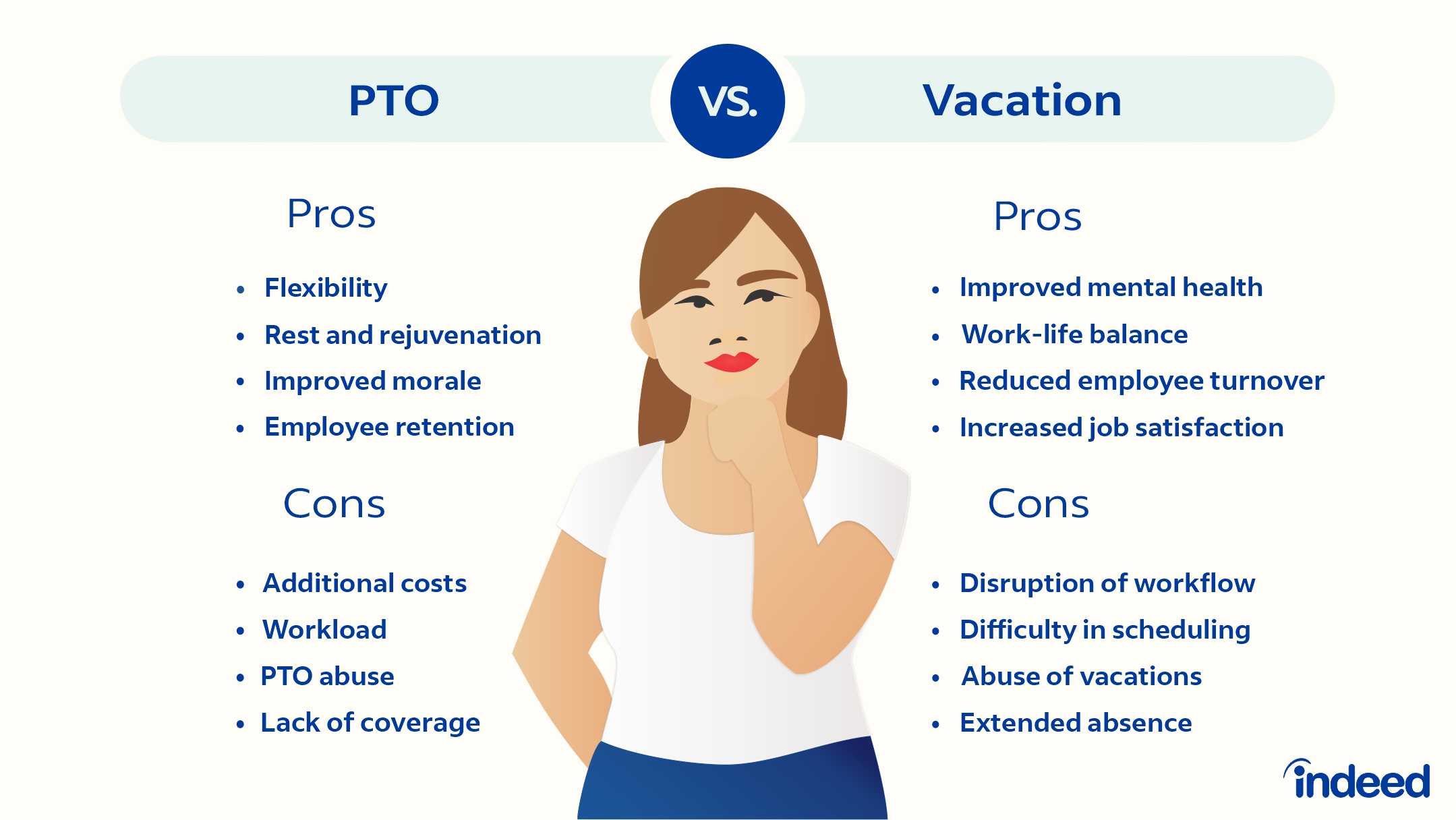
In the modern landscape of corporate culture, the traditional structure of employee benefits is undergoing a radical transformation. Among the most significant shifts is the transition from “accrued” time-off policies—where employees earn a fixed number of vacation days per pay period—to flexible Paid Time Off (PTO) models. Often marketed under names like “Unlimited PTO” or “Open Leave,” this benefit has become a cornerstone of contemporary talent acquisition strategies. However, for both employers and employees, understanding the financial and operational mechanics of flexible PTO is essential to ensuring it functions as a sustainable business asset rather than a source of hidden liability.

The Financial Mechanics of Flexible PTO
To understand flexible PTO, one must first view it through the lens of business finance and accounting. Unlike traditional PTO, which represents a vested liability on a company’s balance sheet, flexible PTO is designed to neutralize that debt.
Removing Accrued Liability
In a traditional system, unused vacation days are considered an earned wage. If an employee leaves a company with 10 days of banked time, the employer is legally obligated to pay out that balance in many jurisdictions. This creates a “vacation liability” that sits on the corporate books, requiring companies to set aside cash reserves to cover potential payouts.
By switching to a flexible or unlimited model, companies effectively remove this line item. Because the days are not “earned” in the sense of a bank balance, there is no accrued value to pay out upon termination. From a CFO’s perspective, this stabilizes cash flow and eliminates the unpredictable financial impact of a mass exodus or the end-of-year payout spikes.
Impact on Operating Expenses
While the liability is removed, the impact on operating expenses remains a calculation of productivity versus cost. Employers often find that flexible PTO creates a culture where employees feel a greater sense of ownership over their work-life balance. However, the financial risk shifts from a balance sheet liability to an operational one: the risk of burnout or understaffing. Smart businesses manage this by setting clear KPIs and deliverables, ensuring that the “flexibility” does not translate into a decline in output that would ultimately hurt the bottom line.
Cultural Branding and the Recruitment Advantage
Beyond the accounting department, flexible PTO serves as a powerful instrument in a company’s branding strategy. In an era where top talent prioritizes autonomy, the absence of rigid vacation tiers is a major selling point.
Positioning as a “High-Trust” Employer
Flexible PTO acts as a signal of a company’s internal culture. It tells potential hires that the organization values results over “butt-in-seat” time. When a firm brands itself as a flexible PTO adopter, it is essentially declaring that it trusts its workforce to manage their own schedules. This can lead to higher employee retention and a stronger employer brand, which ultimately reduces the high costs associated with turnover and recruitment.
Mitigating the “Always-On” Trap
The brand risk, however, is significant. If a company promotes “unlimited” time off but creates a culture where taking that time is frowned upon, the benefit becomes a negative branding tool. Employees quickly realize when a policy is performative. For the brand to remain authentic, leadership must model the behavior. If managers are taking time off, it gives permission for the rest of the staff to do the same, reinforcing the company’s commitment to employee well-being as a core corporate value.
Strategic Implementation and Productivity Risks
Implementing a flexible PTO policy requires more than just changing the wording in an employee handbook. It requires a fundamental shift in how a business measures performance.
Moving Toward Output-Based Management
When vacation time is no longer tracked, management must move away from monitoring hours worked and toward monitoring objectives achieved. This is an inherently more difficult management style to execute. It requires managers to be highly skilled at setting clear, measurable goals. If an employee is hitting their targets and contributing to the business, the number of days they are physically present becomes secondary to the value they create.
The Problem of “Vacation Guilt”
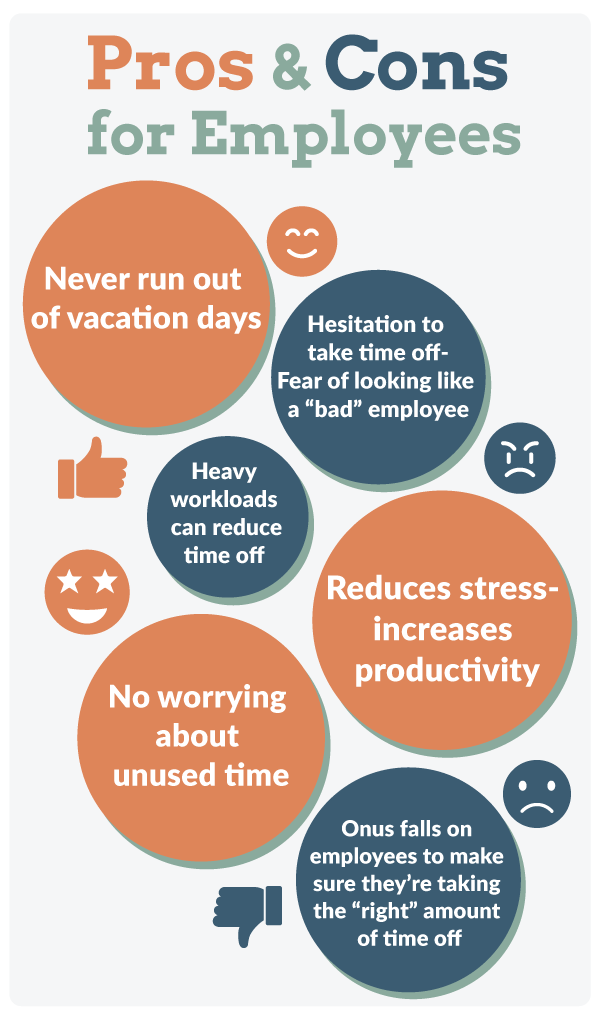
One of the most paradoxical findings in human resources research is that under “unlimited” policies, employees often take less time off than they did under a fixed accrual system. This is driven by “vacation guilt” and a lack of clear parameters. Without a set “allotment,” employees may feel hesitant to take time off for fear of appearing lazy or uncommitted.
To combat this, forward-thinking organizations are adopting “minimum” PTO requirements. By mandating that every employee takes at least three or four weeks off per year, the company protects its workforce from burnout. This is a strategic move: a burnt-out employee is a financial liability in terms of decreased quality of work, higher error rates, and potential health-related absenteeism.
Operational Sustainability: Ensuring the Model Works
To make flexible PTO a viable long-term strategy, organizations must integrate it into their broader operational workflows.
Planning for Coverage
The biggest operational challenge of flexible PTO is coverage. If a team is small and everyone decides to take a week off at the same time, the project flow suffers. Companies that successfully implement these policies use robust project management tools to visualize team capacity. By requiring employees to request time off well in advance and coordinating team calendars, businesses can prevent the “hidden” cost of production bottlenecks.
Transparency and Communication
Success depends on clear, written guidelines. Even in a flexible model, there should be expectations regarding notice periods and the status of projects before a leave begins. Transparency regarding these expectations allows employees to enjoy their time off without the lingering stress of unfinished business.
The Future of Workplace Benefits
The move toward flexible PTO is not merely a passing trend; it is a response to the evolving nature of the digital workplace. As we move further into a globalized, asynchronous economy, the rigid “10 days per year” model feels increasingly archaic.
A Component of Total Compensation
We are seeing a trend where PTO is treated as part of a total compensation package that includes remote work options, flexible hours, and professional development budgets. For the business owner, this means recognizing that talent is no longer attracted by fixed benefits alone. The ability to command one’s own time is now viewed as a form of currency.
Long-Term Value Creation
Ultimately, the organizations that thrive under flexible PTO are those that treat the policy as a partnership. It is a social contract: the company provides the freedom to manage personal life, and in exchange, the employee provides high-level results without the need for constant supervision. This alignment of interests—where the employer’s need for productivity is met by the employee’s need for flexibility—is the hallmark of a mature, modern business.
Flexible PTO is not a “free” benefit; it is an organizational choice that trades the simplicity of accrual tracking for the complexity of output-based management. For firms that can bridge that gap, the rewards are clear: a more energized workforce, a more attractive employer brand, and a streamlined approach to managing human capital in an increasingly competitive market.
aViewFromTheCave is a participant in the Amazon Services LLC Associates Program, an affiliate advertising program designed to provide a means for sites to earn advertising fees by advertising and linking to Amazon.com. Amazon, the Amazon logo, AmazonSupply, and the AmazonSupply logo are trademarks of Amazon.com, Inc. or its affiliates. As an Amazon Associate we earn affiliate commissions from qualifying purchases.