
The concept of “breaking the sound barrier” is one of the most iconic benchmarks in the history of aerospace technology. While it sounds like a cinematic term reserved for high-budget action films, it describes a specific, challenging phenomenon in fluid dynamics and aeronautical engineering. To understand what this means, one must move past the pop-culture spectacle of sonic booms and delve into the technical reality of how vehicles interact with the air at extreme velocities.
The Physics of Transonic Flight
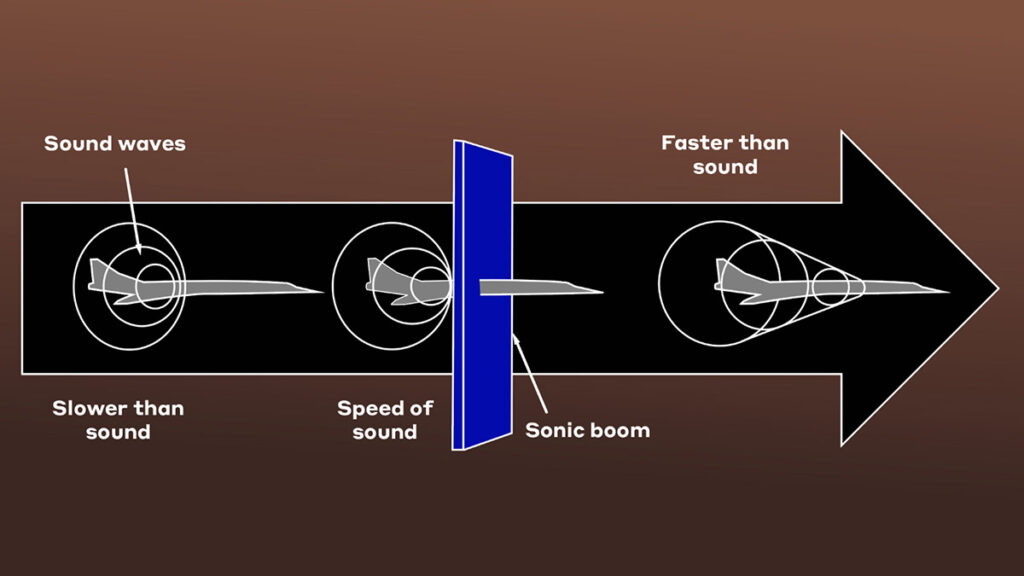
At its core, breaking the sound barrier is about overcoming the invisible walls constructed by air pressure. Sound travels through the air as a series of pressure waves. These waves move outward from a source, much like ripples in a pond. When an aircraft is stationary or flying at subsonic speeds, these pressure waves radiate ahead of the plane, signaling the air molecules to move out of the way.

The Compression Effect
As an aircraft approaches the speed of sound—known as Mach 1—these pressure waves can no longer propagate forward because the aircraft is traveling at the same speed as the waves themselves. The waves begin to bunch up, or “compress,” at the front of the aircraft. This creates a high-pressure zone that acts as a physical wall, increasing drag exponentially and potentially destabilizing the flight surfaces of the craft.
The Transonic Regime
The “transonic” zone, typically between Mach 0.8 and Mach 1.2, is where the most significant technical challenges reside. In this phase, air flowing over the curved surfaces of the wings accelerates to supersonic speeds even while the aircraft itself remains technically subsonic. This leads to the formation of localized shockwaves. These shockwaves disrupt airflow, leading to “wave drag,” which can cause severe buffeting, loss of control, and structural failure. Engineers must design airframes with swept-back wings or area-ruled fuselages to mitigate these pressure imbalances.
Engineering Challenges and the Sonic Boom
For decades, the “sound barrier” was considered a lethal threshold. In the early days of aviation, pilots attempting high-speed dives would experience intense vibration and a loss of elevator effectiveness, leading to catastrophic crashes. The industry faced a massive technological hurdle: how to build a craft that could maintain structural integrity while pushing through a wall of compressed air.
Structural Integrity and Aeroelasticity
To successfully break the sound barrier, aerospace engineers had to solve the problem of aeroelastic flutter. When shockwaves hit the wings, they cause rapid, violent oscillations. If these oscillations match the natural frequency of the wing structure, the wings can literally tear themselves apart. The development of advanced materials, such as titanium alloys and composites, combined with computer-aided design (CAD), allowed engineers to stiffen airframes to withstand these punishing forces.
The Nature of the Sonic Boom
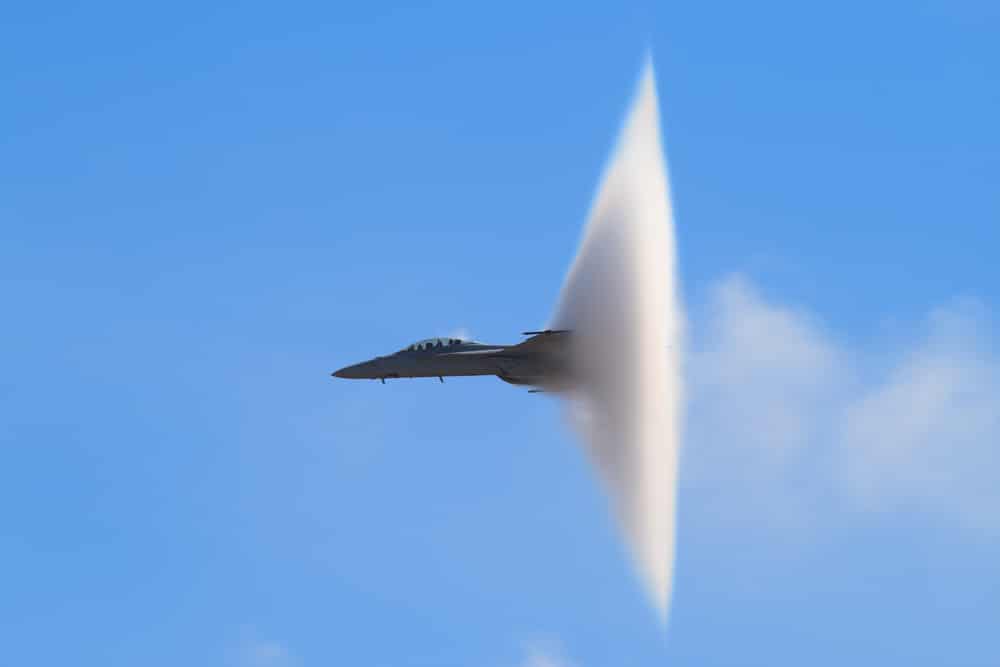
The sonic boom is the audible manifestation of the pressure waves being compressed. When an aircraft flies at or above Mach 1, it does not “break” a solid barrier; rather, it outruns its own sound. The pressure waves that would normally move ahead of the plane are forced to coalesce into a singular, intense shockwave that trails behind the aircraft in a conical shape. When this shockwave passes an observer on the ground, the sudden change in air pressure is perceived as a loud, explosive noise. Understanding this pressure distribution is critical in modern aerospace design, particularly as manufacturers aim to create supersonic commercial flights that can minimize noise pollution.
Evolution of Supersonic Technology
The transition from the experimental Bell X-1—the first aircraft to officially break the sound barrier in level flight in 1947—to the advanced stealth fighters and experimental jets of today represents a massive leap in computational fluid dynamics (CFD).
The Role of Computational Fluid Dynamics (CFD)
In the mid-20th century, testing required physical wind tunnels and dangerous test flights. Today, CFD software allows engineers to simulate the complex interactions between shockwaves and airframes at a molecular level. By running millions of iterations, software can predict exactly where shockwaves will form and how they will interact with the control surfaces. This has transformed the design process from one of “trial and error” to one of “precision optimization.”
Beyond Mach 1: Hypersonic Frontiers
The definition of breaking the sound barrier has shifted. Today, the aerospace industry is focused not just on crossing Mach 1, but on maintaining stable flight at Mach 5 and beyond—the hypersonic regime. This introduces a new set of technological hurdles, primarily thermal management. At hypersonic speeds, the friction between the air and the skin of the craft creates temperatures capable of melting conventional metals. The development of heat-resistant ceramics and active cooling systems is the new “barrier” that engineers are currently working to overcome.
The Future of Supersonic Commercial Travel
The goal of “breaking the sound barrier” is no longer just a military pursuit. The next generation of aerospace tech is aimed at returning supersonic travel to the commercial sector. Following the retirement of the Concorde, which proved that supersonic travel was possible but economically and environmentally difficult, new startups are leveraging modern propulsion and materials science to make it viable again.
Noise Mitigation and Environmental Standards
One of the primary technological constraints currently being solved is the “low-boom” flight design. By reshaping the nose and fuselage of an aircraft, engineers are finding ways to dissipate the shockwave so that it reaches the ground as a soft “thump” rather than a window-shattering boom. This is a triumph of geometry and fluid dynamics, proving that the sound barrier is not a physical wall that must be smashed, but a set of fluid equations that can be manipulated through intelligent design.
Propulsion and Fuel Efficiency
Breaking the sound barrier requires massive amounts of thrust, which historically translated to massive fuel consumption. Modern engine technology, utilizing high-bypass turbofans and sustainable aviation fuels (SAF), is drastically changing the efficiency profile of supersonic transit. By utilizing digital twin technology, manufacturers can optimize engine performance in real-time, adjusting intake geometry to maintain optimal airflow at varying transonic speeds.
In conclusion, breaking the sound barrier is an ongoing technological masterclass in managing the interaction between solid objects and fluid environments. It signifies the point where aerospace engineering must transition from traditional aerodynamic principles to high-speed compressible flow dynamics. As software-driven design and advanced materials continue to evolve, the barrier that once seemed insurmountable has become merely another operational envelope—a testament to how far technology has pushed the boundaries of human transit and physical capability.
aViewFromTheCave is a participant in the Amazon Services LLC Associates Program, an affiliate advertising program designed to provide a means for sites to earn advertising fees by advertising and linking to Amazon.com. Amazon, the Amazon logo, AmazonSupply, and the AmazonSupply logo are trademarks of Amazon.com, Inc. or its affiliates. As an Amazon Associate we earn affiliate commissions from qualifying purchases.