
The imagery of mountains permeates the biblical narrative, serving as more than mere geographical markers. From the peaks where divine covenants were forged to the desolate heights of temptation, the mountain acts as a quintessential symbol of spiritual elevation, divine encounter, and the intersection of heaven and earth. To understand the mountain in a biblical context is to understand the geography of faith itself—a landscape where the finite human experience meets the infinite nature of the Creator.
The Mountain as a Site of Divine Revelation and Covenant
In the biblical tradition, the mountain is the premier “thin place”—a location where the veil between the mundane world and the divine realm is at its thinnest. This is where God chooses to speak, revealing laws, purposes, and destinies that transform the course of human history.
The Lawgiver’s Ascent
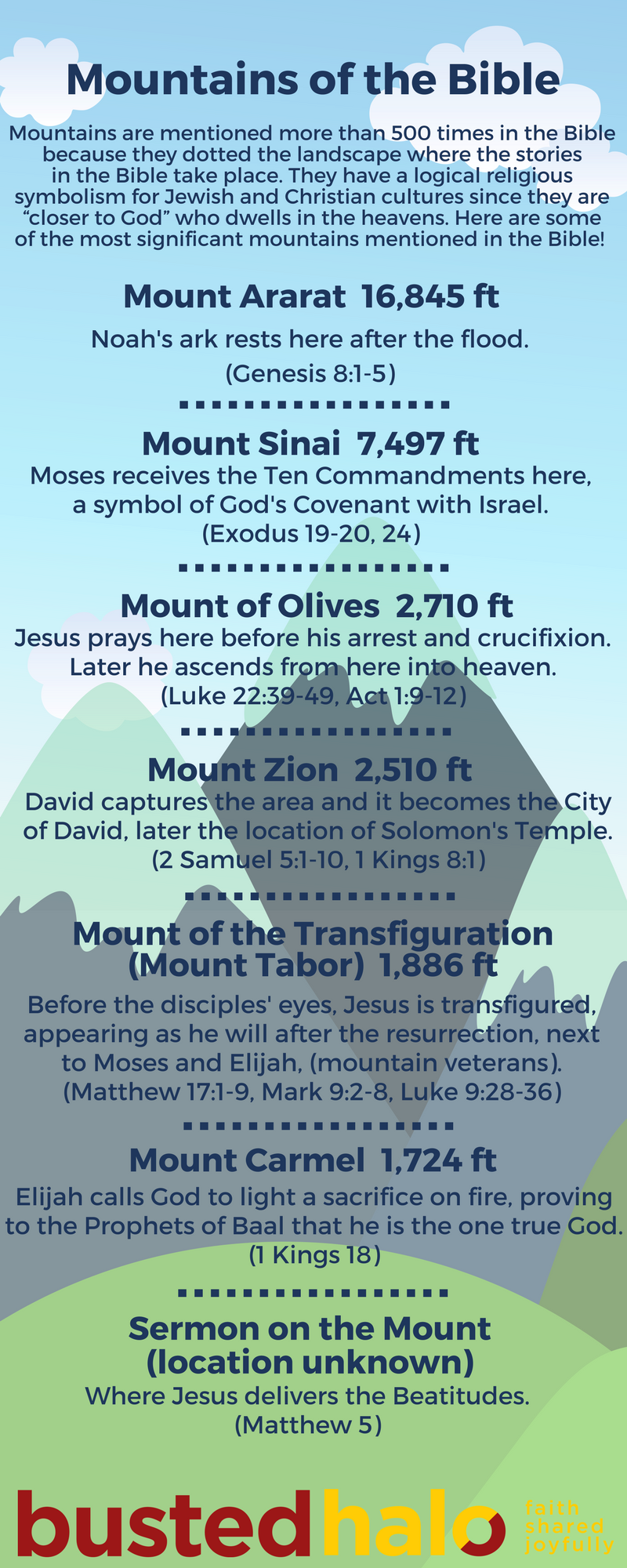
The most definitive example of this occurs at Mount Sinai (also referred to as Horeb). When Moses ascended the mountain, he did not merely climb a geological formation; he entered into a state of intense, consecrated communion. The mountain functioned as a sanctuary, an elevated platform that separated the prophet from the distractions of the camp below. The thunder, the lightning, and the thick cloud described in Exodus represent the overwhelming, unapproachable holiness of God. By descending the mountain with the Ten Commandments, Moses established the mountain as the source of moral and ethical law. The mountain, therefore, symbolizes the authority of God’s will over the life of the individual and the community.
The Covenantal Anchor
Beyond the Law, mountains serve as anchors for God’s promises. Throughout the Old Testament, the act of “going up” is synonymous with seeking God’s presence. When Abraham took Isaac to Mount Moriah, the mountain became a crucible for faith and obedience. The symbolic weight here is placed on the difficulty of the ascent; reaching the top represents the culmination of a trial, a place where one’s ultimate loyalties are tested and ultimately rewarded by divine intervention.
The Mountain as a Symbol of Stability and Divine Sovereignty
The Psalms frequently invoke the imagery of mountains to describe the unshakeable character of God. In a world characterized by chaos, shifting alliances, and human frailty, the mountain represents an immutable, permanent reality.
The Foundation of Truth
“I lift up my eyes to the mountains—where does my help come from?” The psalmist’s question highlights the mountain as a focal point of hope. Because mountains are immovable, they serve as natural metaphors for God’s righteousness and justice. When the Bible describes God’s kingdom as a “mountain established above the hills,” it is asserting the ultimate supremacy of divine rule over all human empires. The mountain signifies stability in a changing world; it is the point of reference that remains consistent even when the “nations are in uproar.”
The Shadow of the Almighty
The mountain also represents protection. Much like a fortress built on high ground, the presence of God is described as a high tower or a mountain stronghold. For the believer, the mountain is not just a place of work or encounter; it is a place of refuge. The symbolism here shifts from the arduous climb to the security found at the peak. When one is stationed on the mountain of the Lord, the perspective shifts—the problems that seemed insurmountable from the valley are viewed from a position of divine vantage.

The Mountain as a Place of Transformation and Testing
While the mountain represents divine glory, it is also the location where humanity is stripped of its pretensions. Transformation requires the thin air of the mountain, where ego and worldly concerns must be left behind.
The Transfiguration and the Glimpse of Glory
In the New Testament, the Mount of Transfiguration marks a pivotal shift in the understanding of Christ’s identity. When Peter, James, and John accompanied Jesus to the mountain, they were not just witnessing a private prayer session; they were being prepared for the trauma of the crucifixion. The mountain here symbolizes the revelation of truth. Seeing Jesus in his glorified state, flanked by Moses and Elijah, condensed the entire history of the law and the prophets into a singular moment of realization. It taught the disciples that the mountain is the place where one receives the spiritual fortitude necessary to endure the descent back into the valley of human suffering.
The Crucible of Temptation
Conversely, the mountain can be a place of intense testing. During the temptation in the wilderness, the devil takes Jesus to a very high mountain to show him all the kingdoms of the world. Here, the mountain represents the temptation of earthly power and the illusion of human control. The symbolism is distinct: while God uses the mountain to draw humanity upward into spirit, the adversary uses the mountain to offer an horizontal view of power. The victory of Jesus on that mountain demonstrates that true dominion is not found in the acquisition of earthly empires, but in total alignment with the Father.
The Future Hope: The Mountain of the Lord’s House
The biblical narrative concludes with a vision of a mountain. In the prophetic literature, the mountain is the final destination of history—the place toward which all nations will flow.
The Gathering of the Nations
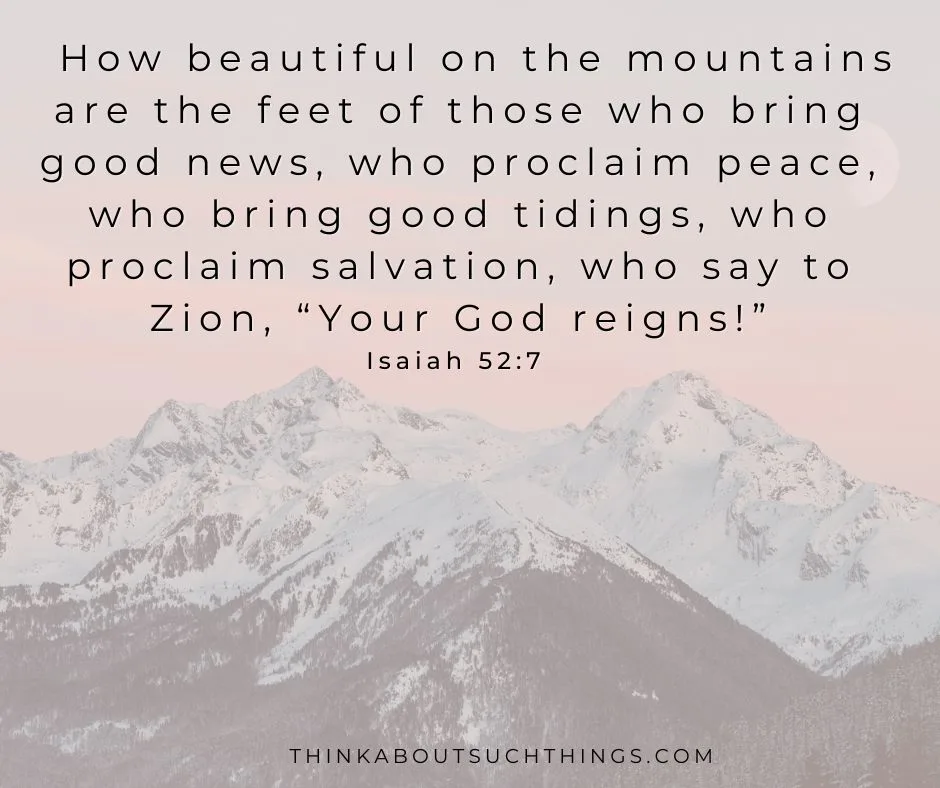
Isaiah speaks of the “mountain of the Lord’s house” being established as the highest of the mountains, with all nations streaming toward it. This is the ultimate symbolic evolution of the mountain: it ceases to be a site of exclusive revelation for a single nation and becomes a global center of peace and justice. It represents the restoration of the harmony that was lost in the garden. The mountain, in this eschatological sense, symbolizes the complete integration of God’s rule into the fabric of creation.
The End of the Ascent
As the biblical story draws to a close in the Book of Revelation, the imagery persists. Even when the author describes a “new heaven and a new earth,” the mountain remains a core element of the landscape of the New Jerusalem. It represents the finality of God’s presence. There is no longer a need to climb to find God, for the mountain is now the dwelling place where God lives among his people. The symbol has come full circle: from the terrifying peaks of Sinai, where man was kept at a distance, to the invitation of the new earth, where the mountain is the throne room of an accessible and ever-present King.
Conclusion: The Call to the Ascent
The symbolism of the mountain in the Bible serves as a persistent call to the reader. It is a reminder that faith is not a flat, static existence but an upward journey. Whether we are facing the trials of the valley or the clarity of the peak, the mountain reminds us that there is a perspective higher than our own. It invites us to leave behind the lowlands of mediocrity, fear, and distraction to seek a vantage point where we can hear the voice of the divine.
To embrace the mountain in the biblical sense is to accept the discipline of the climb. It is to recognize that when we seek God, we must be willing to endure the rarified air of his presence, where our assumptions are challenged and our purpose is refined. The mountain remains the enduring sign that God is both high and lifted up, and yet intimately concerned with the path we take to reach his heights. In every age, the mountain stands as the silent, unshakeable witness to the reality that we are made for more than the valley—we are made for the summit.
aViewFromTheCave is a participant in the Amazon Services LLC Associates Program, an affiliate advertising program designed to provide a means for sites to earn advertising fees by advertising and linking to Amazon.com. Amazon, the Amazon logo, AmazonSupply, and the AmazonSupply logo are trademarks of Amazon.com, Inc. or its affiliates. As an Amazon Associate we earn affiliate commissions from qualifying purchases.