
In today’s rapidly evolving world, the ability to learn effectively is no longer a luxury; it’s a fundamental necessity for personal and professional growth. Whether you’re a student, a seasoned professional, or an entrepreneur navigating the complexities of the modern landscape, understanding how you learn best can significantly impact your success. While the concept of learning might seem straightforward, a deeper dive reveals that it’s a nuanced process. This article will explore the three primary types of learning, offering insights that can be applied across the vast domains of technology, brand building, and financial management.

The Foundations of Learning: A Tripartite Approach
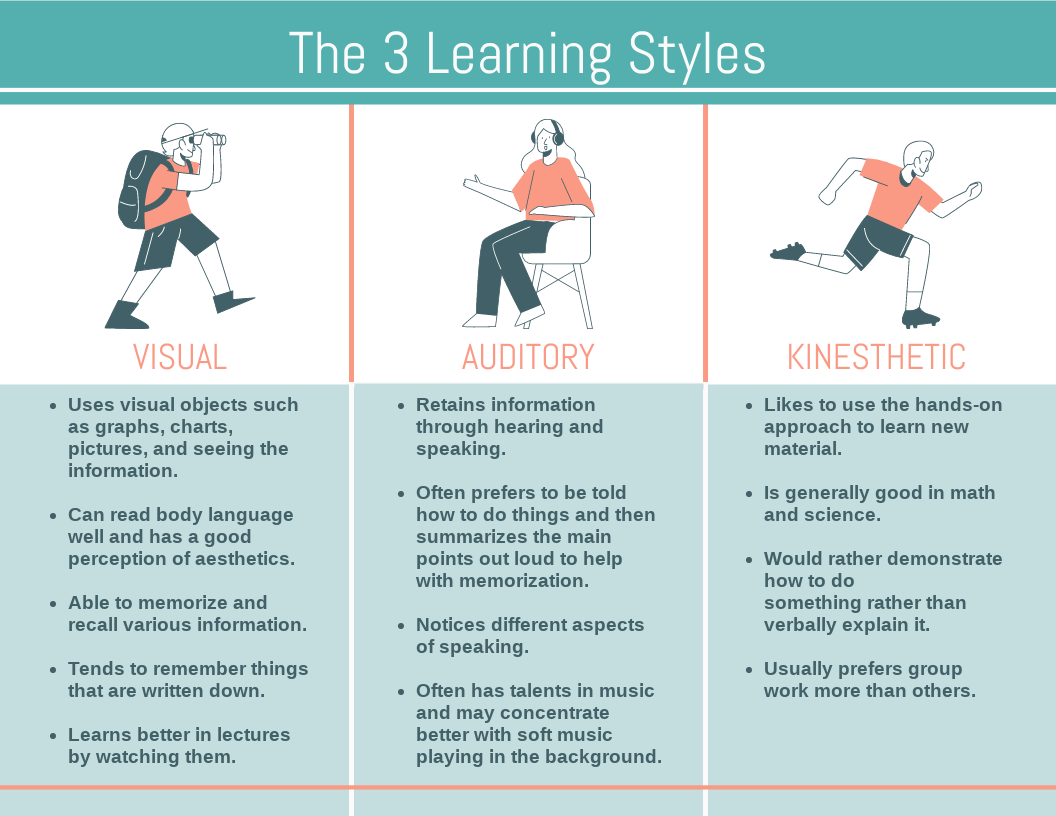
At its core, learning is the acquisition of knowledge or skills through experience, study, or being taught. However, the pathways through which we absorb, process, and retain information are diverse. For the purposes of this discussion, we will focus on three widely recognized and distinct categories of learning: Kinesthetic Learning, Auditory Learning, and Visual Learning. These categories, while often overlapping and interacting, represent the primary modalities through which individuals engage with new information and develop understanding. Recognizing your dominant learning style, or understanding how different styles function, can empower you to tailor your learning strategies for maximum efficacy. This is particularly relevant in fields like tech, where rapid innovation demands constant upskilling, in brand building, where understanding consumer psychology is key, and in finance, where complex concepts require clear comprehension.
1. Kinesthetic Learning: Learning by Doing
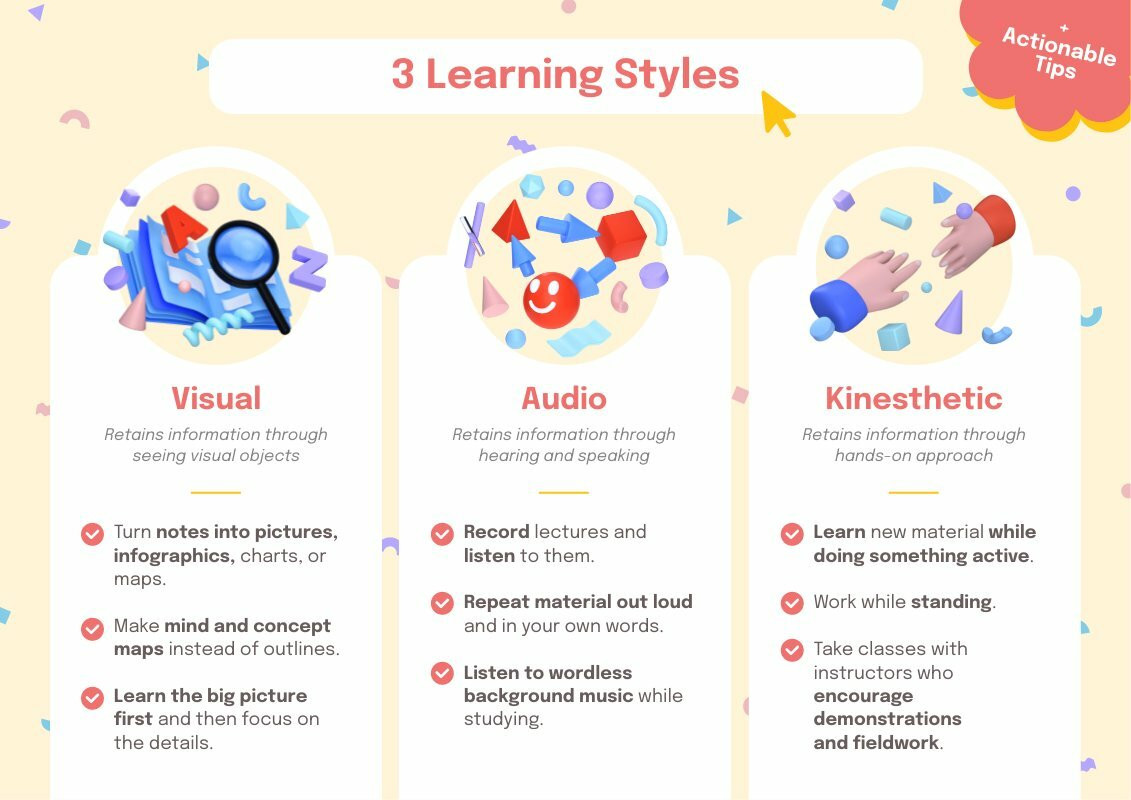
Kinesthetic learning, often referred to as tactile or hands-on learning, is characterized by the preference for physical engagement and experiential learning. Individuals who primarily learn kinesthetically need to do something to truly understand it. They absorb information best through movement, touch, and active participation. This is the learning style that thrives on experimentation, manipulation of objects, and real-world application.
The Power of Practice in Tech
In the realm of Tech, kinesthetic learning is paramount. Consider learning a new programming language. Simply reading about syntax will only get you so far. True mastery comes from writing code, debugging errors, and building projects. The act of typing commands, observing the immediate feedback (or lack thereof), and troubleshooting the issues directly engages the kinesthetic learner. Similarly, understanding how a new software application works is often best achieved by clicking through its menus, experimenting with its features, and applying it to a real task.
For those exploring AI tools, kinesthetic learning means actively prompting the AI, observing its outputs, and refining your prompts based on the results. It’s about the iterative process of input, observation, and adjustment. When learning about new gadgets, it’s not enough to read reviews; it’s about holding the device, using its interface, and experiencing its functionality firsthand. Tutorials that involve step-by-step practical exercises, allowing users to replicate the actions, are highly beneficial for kinesthetic learners. Digital security, too, can be better understood through simulated exercises or by actively configuring security settings. The core principle for kinesthetic learners in tech is that theory must be translated into tangible action.
Building Brands Through Experience
Brand building also benefits significantly from kinesthetic approaches. While strategy and marketing plans are crucial, the execution often involves hands-on activities. For personal branding, this might mean actively networking, practicing public speaking, or even physically creating and arranging your workspace to reflect your professional image. Corporate identity is brought to life through the design and implementation of physical spaces, product packaging, and even the customer service experience.
Marketing campaigns that involve interactive elements, live events, or product demonstrations cater directly to kinesthetic learners. Case studies become more impactful when one can imagine themselves implementing the strategies or experiencing the results. Design, in a kinesthetic sense, can involve sketching, prototyping, or using design software to physically manipulate elements and see them come to life. Reputation management, while often abstract, can be improved through active engagement in community forums or by proactively responding to customer feedback in a tangible way. The brand becomes real when it is experienced and interacted with.
Financial Literacy Through Action
In Money matters, kinesthetic learning translates to practical application and tangible results. Personal finance is best learned by actively tracking expenses, creating a budget, and physically allocating funds. Investing becomes clearer when one can actually place a trade, observe the market’s response, and experience the emotional rollercoaster of gains and losses. Online income and side hustles often require hands-on experimentation with different platforms and strategies.
Business finance is deeply rooted in kinesthetic understanding. Managing inventory, processing transactions, and observing the flow of cash are all tactile experiences. Financial tools, whether budgeting apps or investment platforms, are best mastered by actively using them. The concept of wealth building is more concrete when one is actively saving, investing, and seeing their portfolio grow (or shrink). For kinesthetic learners, understanding money is about managing it, not just reading about it.
2. Auditory Learning: Learning Through Sound
Auditory learning is characterized by a preference for learning through listening and speaking. Individuals who learn auditorily absorb information best when they hear it. They often benefit from lectures, discussions, podcasts, and music. They might find it easier to remember information if they say it out loud or engage in conversations about the topic.
The Sound of Innovation in Tech
In the Tech world, auditory learning plays a crucial role in knowledge dissemination. Podcasts are a goldmine for auditory learners, offering in-depth discussions on technology trends, interviews with industry leaders, and explanations of complex software concepts. Online courses often include video lectures and audio explanations that cater to this learning style. Tutorials that involve clear verbal instructions, even if they are screen recordings, can be effective if the narration is well-delivered.
AI tools can be interacted with through voice commands, allowing auditory learners to engage without needing to read extensive documentation. The development of voice assistants has opened up new avenues for auditory learners to interact with technology. Discussions in online forums, webinars, and even the sound design of apps and software can contribute to an auditory learning experience. For those learning about digital security, listening to expert advice or engaging in debates about best practices can be highly effective. Productivity can be enhanced by listening to audiobooks on time management or using spoken reminders.
The Resonance of Brand Messaging
Brand building heavily relies on auditory elements to create an emotional connection and convey a message. Marketing campaigns often utilize jingles, memorable taglines, and compelling voiceovers to capture attention and leave a lasting impression. Corporate identity can be reinforced through consistent brand messaging in speeches, presentations, and internal communications.
Personal branding can be amplified through public speaking engagements, podcasts, and interviews where individuals can articulate their value proposition verbally. The tone of voice used in customer service interactions significantly impacts brand perception. Case studies, when presented as audio narratives or discussed in webinars, can resonate deeply with auditory learners. Design, from a branding perspective, can also have an auditory component, such as the notification sounds of an app or the background music in a retail store. Reputation is often built and disseminated through word-of-mouth, a purely auditory channel.
The Dialogue of Financial Acumen
In the realm of Money, auditory learning thrives on explanations and discussions. Personal finance advice is often best absorbed through seminars, radio shows, and podcasts dedicated to financial literacy. Investing strategies can be clarified through conversations with financial advisors or by listening to market commentary. Online income opportunities can be explored through webinars and audio tutorials.
Business finance lectures and discussions provide a foundational understanding of financial concepts. Financial tools can be explained through guided audio walkthroughs or by listening to user testimonials. Side hustles often involve learning from others who share their experiences and strategies verbally. The ability to articulate financial goals and discuss investment options is crucial, making auditory learning a valuable asset for anyone seeking financial well-being.
3. Visual Learning: Learning Through Sight
Visual learning is characterized by a preference for learning through seeing. Individuals who learn visually absorb information best through charts, graphs, diagrams, images, and written text. They often benefit from note-taking, mind mapping, and visual aids. They tend to have good spatial reasoning and can easily recall information presented in a visual format.
Illuminating Tech with Visuals
In the world of Tech, visual learning is indispensable. Technology trends are often best understood through infographics, data visualizations, and compelling presentations. Software interfaces are inherently visual, with buttons, menus, and layouts designed for visual comprehension. AI tools are often explained through flowcharts and diagrams illustrating their underlying architecture and functionalities.
Apps are designed with user interfaces that appeal to visual learners. Gadget reviews often feature high-quality images and videos showcasing the product from every angle. Tutorials that use screen recordings with clear annotations, demonstrations with visual cues, and step-by-step illustrated guides are highly effective for visual learners. Digital security concepts can be illustrated through diagrams of network structures or visual representations of threats and defenses. Productivity tools often employ visual dashboards and timelines to help users manage their tasks.
Crafting Brands Through Imagery
Brand building is a deeply visual endeavor. Corporate identity is largely conveyed through logos, color palettes, typography, and overall visual aesthetics. Marketing campaigns rely heavily on visually appealing advertisements, social media graphics, and website design. Personal branding often involves carefully curated visual representations, from professional headshots to consistent social media imagery.
Design is at the heart of visual branding, with graphic designers and visual artists creating the tangible elements that define a brand. Case studies can be presented in visually engaging formats, such as slide decks with compelling imagery and infographics. Reputation management can be influenced by the visual presentation of a company’s products, services, and online presence. Even online income streams, like selling visual art or e-books, rely heavily on visual appeal.
Picturing Financial Success
In Money management, visual learning can make abstract concepts concrete. Personal finance is often clarified through budgeting spreadsheets, pie charts illustrating spending habits, and visual representations of savings goals. Investing can be better understood through stock charts, portfolio performance graphs, and visual comparisons of different investment options. Online income can be visualized through revenue dashboards and progress trackers.
Business finance is often explained using charts and graphs to illustrate financial statements, profit margins, and cash flow. Financial tools, such as accounting software and investment platforms, are designed with visual interfaces to facilitate data input and analysis. Side hustles can be tracked with visual project management tools. The journey to financial well-being is often more comprehensible when visualized through clear, data-driven graphics and charts.
The Synergy of Learning Styles
It’s crucial to remember that most individuals are not purely one type of learner. We often exhibit a blend of learning styles, with one or two being dominant. The most effective learning often occurs when these styles are combined. For example, a kinesthetic learner might benefit from watching a visual tutorial (visual) and then immediately applying the steps (kinesthetic). An auditory learner might listen to a podcast (auditory) and then take notes in a visually organized manner (visual).
In the dynamic fields of Tech, Brand, and Money, embracing a multi-modal approach to learning is key. By understanding the principles of kinesthetic, auditory, and visual learning, you can strategically tailor your educational pursuits. This involves actively seeking out resources that align with your preferred style, while also challenging yourself to engage with information through other modalities. Whether you’re mastering a new software, crafting a compelling brand identity, or navigating the intricacies of personal finance, a conscious and informed approach to learning will undoubtedly pave the way for greater understanding and sustained success. The journey of knowledge is continuous, and by understanding the “what” and the “how” of our learning, we can unlock our full potential in every aspect of our lives.
aViewFromTheCave is a participant in the Amazon Services LLC Associates Program, an affiliate advertising program designed to provide a means for sites to earn advertising fees by advertising and linking to Amazon.com. Amazon, the Amazon logo, AmazonSupply, and the AmazonSupply logo are trademarks of Amazon.com, Inc. or its affiliates. As an Amazon Associate we earn affiliate commissions from qualifying purchases.