
Understanding how to calculate your annual wages is more than just a mathematical exercise; it is a fundamental pillar of personal financial literacy. Whether you are budgeting for a new home, negotiating a salary for a potential job, or preparing your annual tax returns, having a precise grasp of your yearly earnings is essential. While the concept may seem straightforward—multiplying a paycheck by the number of periods in a year—the reality is often more complex, involving variables like overtime, bonuses, deductions, and varying pay frequencies.
In this guide, we will break down the mechanics of wage calculation across different employment structures, explore the nuances of total compensation, and discuss how to use these figures to optimize your financial health.
Understanding the Fundamentals of Annual Wage Calculation
To calculate annual wages accurately, one must first distinguish between various types of pay and the terminology used by payroll departments and financial institutions. Misunderstanding these basics can lead to significant errors in budgeting or tax planning.
Hourly vs. Salaried Compensation
The method of calculation begins with your employment status. Salaried employees are typically quoted an annual figure (e.g., $75,000 per year) and receive a fixed amount each pay period, regardless of the hours worked. For these individuals, calculating annual wages involves looking at the gross pay before any deductions.
Hourly employees, however, must account for the number of hours worked per week and the number of weeks worked per year. The standard baseline for a full-time employee in the United States is 2,080 hours per year (40 hours per week multiplied by 52 weeks). However, this number can fluctuate based on unpaid leave, seasonal shifts, or overtime opportunities.
Gross Wages vs. Net Pay
A common pitfall in personal finance is confusing gross annual wages with net annual income.
- Gross Wages: This is the total amount earned before taxes, insurance premiums, and retirement contributions are deducted. This is the figure lenders use for mortgage applications and the number you negotiate during a job interview.
- Net Pay: Often called “take-home pay,” this is what actually hits your bank account. While net pay is crucial for daily budgeting, “annual wages” almost always refers to the gross amount. Understanding the gap between the two is vital for realistic financial planning.
Step-by-Step Methodology for Different Pay Structures
Not every worker receives a check at the same interval. To find your annual wage, you must apply the correct multiplier to your specific pay cycle.
Calculating for Hourly Workers
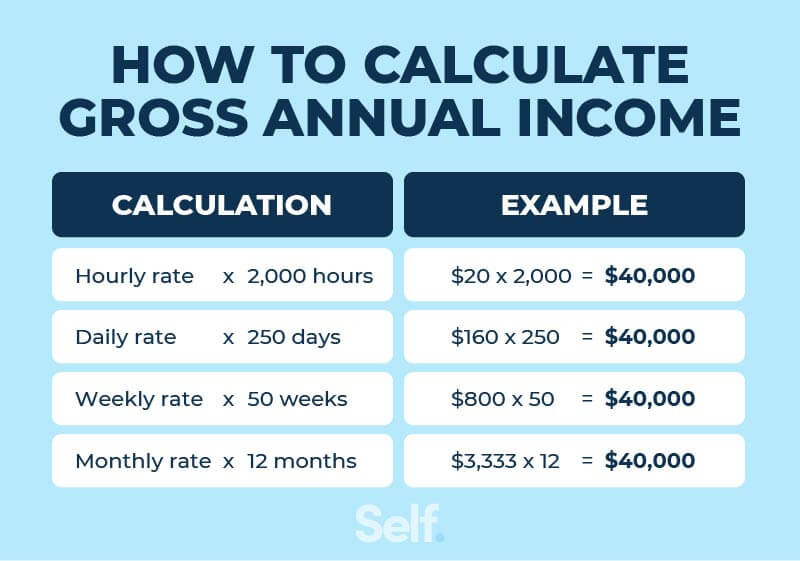
For those paid by the hour, the calculation is a two-step process. First, determine your weekly income, then scale it to the year.
- Formula: (Hourly Rate × Hours per Week) × 52 Weeks = Annual Gross Wage.
- Example: If you earn $25 per hour and work a consistent 40-hour week, your weekly pay is $1,000. Multiplying this by 52 results in an annual wage of $52,000.
A helpful “rule of thumb” for quick estimations is the “Double It” method: take your hourly rate, double it, and add three zeros. For instance, $30/hour becomes 60, which becomes $60,000. This assumes a standard 2,000-hour work year (accounting for two weeks of unpaid time), providing a conservative estimate.
Factoring in Overtime and Variable Hours
If your role includes “time and a half” for overtime, your calculation becomes more granular. You must average your overtime hours over a month or a quarter to project an annual figure. If you consistently work 5 hours of overtime per week at a $25 base rate, your overtime rate is $37.50.
- Annual Base: $25 × 40 × 52 = $52,000
- Annual Overtime: $37.50 × 5 × 52 = $9,750
- Total Annual Wage: $61,750
Bi-weekly, Semi-monthly, and Monthly Conversions
Pay frequency significantly impacts your monthly cash flow, even if the annual total remains the same.
- Bi-weekly (26 pay periods): You are paid every two weeks. In most months, you receive two checks, but twice a year, you receive three. To find your annual wage, multiply one gross paycheck by 26.
- Semi-monthly (24 pay periods): You are paid twice a month (usually the 1st and 15th). Multiply one gross paycheck by 24.
- Monthly (12 pay periods): Multiply one gross paycheck by 12.
Navigating Complexities: Bonuses, Commissions, and Benefits

For many professionals in the modern economy, a base salary is only one component of their annual wages. To get a true picture of your financial standing, you must account for variable compensation.
Including Non-Discretionary Bonuses and Commissions
If you work in sales or a corporate role with performance incentives, your annual wages should include these “variable” components. When calculating for the purpose of a loan or a tax estimate, it is best to look at your Year-to-Date (YTD) earnings on your final December paystub from the previous year.
If you are projecting for the current year, use a conservative average of your commissions over the last two years. Non-discretionary bonuses—those promised as part of an employment contract based on specific milestones—should be added directly to your base salary calculation.
The Impact of Fringe Benefits and 401(k) Matching
While not “wages” in the sense of cash in your pocket, “Total Compensation” is a critical metric in personal finance. This includes the dollar value of:
- Employer-paid health insurance premiums: Often worth $5,000–$15,000 annually.
- 401(k) Matching: If your employer matches 6% of your $100,000 salary, that is an additional $6,000 in wealth created annually.
- Equity and Stock Options: For those in tech or executive roles, Restricted Stock Units (RSUs) can significantly inflate annual earnings, though they are subject to vesting schedules and market volatility.
Strategic Financial Planning Using Your Annual Wage Data
Once you have calculated your annual wages, the next step is applying that data to your broader financial strategy. This number is the “top line” of your personal profit and loss statement.
Tax Planning and Effective Tax Rates
Knowing your gross annual wage allows you to estimate your tax bracket. In a progressive tax system, not all of your income is taxed at the same rate. By knowing your total annual wage, you can calculate your “Effective Tax Rate”—the actual percentage of your income that goes to the IRS after deductions and credits.
For example, if you earn $100,000, you might fall into the 22% bracket, but your effective rate might only be 15% after your standard deduction and 401(k) contributions. Accurate wage calculation prevents “tax bill shock” in April.
Budgeting and Debt-to-Income (DTI) Ratios
Financial institutions use your gross annual wage to determine your creditworthiness. The Debt-to-Income ratio is calculated by dividing your monthly debt payments by your monthly gross income (Annual Wage ÷ 12).
- Healthy DTI: Most lenders prefer a DTI below 36%.
- Strategic Planning: If you know your annual wage is $84,000 ($7,000/month), and your total debt payments (car, student loans, credit cards) are $2,500, your DTI is 35.7%. If you plan to buy a home, you now know exactly how much “room” you have for a mortgage payment before exceeding lender limits.
Leveraging Wage Data for Career Growth and Negotiation
Finally, calculating your annual wages provides the empirical evidence needed for career advancement. You cannot effectively ask for a raise if you do not know exactly what you are currently earning in comparison to the market.
Market Benchmarking
Use your calculated annual wage to compare your earnings against industry standards on platforms like Glassdoor, Payscale, or the Bureau of Labor Statistics (BLS). If your calculation shows you are earning $60,000 but the median for your role and geographic location is $72,000, you have a data-backed case for a salary adjustment.

Total Compensation vs. Base Salary in Negotiations
When considering a new job offer, never look at the base salary in isolation. Use the calculation methods discussed earlier to compare two offers holistically.
- Job A: $90,000 salary, no bonus, expensive health insurance.
- Job B: $80,000 salary, 15% target bonus ($12,000), 100% employer-paid benefits.
While Job A has a higher “base,” Job B’s calculated annual wages and benefits package likely result in a higher net worth increase over time. By mastering these calculations, you move from being a passive recipient of a paycheck to an active manager of your financial destiny.
In conclusion, calculating your annual wages is the foundation upon which all other financial decisions are built. By understanding the difference between gross and net, accounting for variable pay, and using that data for tax and career planning, you gain a level of control that is essential for long-term wealth building and financial security.
aViewFromTheCave is a participant in the Amazon Services LLC Associates Program, an affiliate advertising program designed to provide a means for sites to earn advertising fees by advertising and linking to Amazon.com. Amazon, the Amazon logo, AmazonSupply, and the AmazonSupply logo are trademarks of Amazon.com, Inc. or its affiliates. As an Amazon Associate we earn affiliate commissions from qualifying purchases.