
In the landscape of personal finance, few voices from antiquity carry as much weight or provoke as much debate as that of Jesus of Nazareth. While often categorized solely through a theological lens, his teachings on money, resources, and material possession constitute a profound psychological and strategic framework for wealth management. Whether viewed as religious dogma or historical philosophy, the principles attributed to Jesus offer a radical departure from modern consumerist culture, prioritizing long-term stewardship over immediate accumulation.
The Psychology of Stewardship Over Ownership
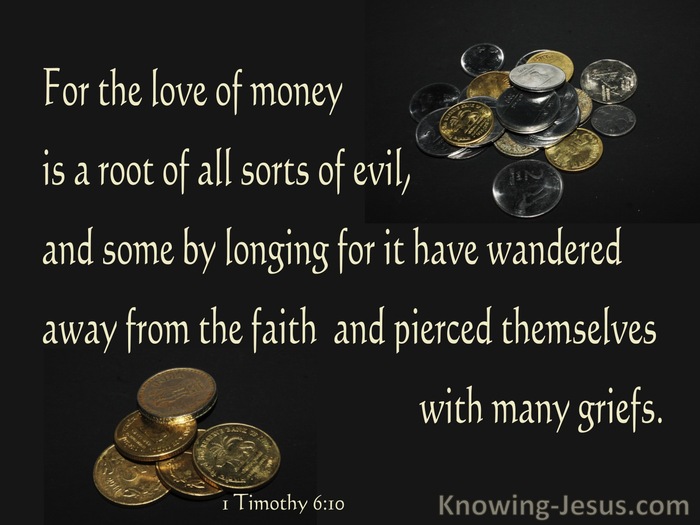
The core of Jesus’ financial philosophy rests on the concept of stewardship. In the modern financial lexicon, we often confuse ownership with utility. We view our bank accounts, property, and assets as absolute possessions over which we have total dominion. Jesus, however, posited that individuals are merely “managers” of resources entrusted to them. This shift in perspective is critical for personal finance because it changes the emotional attachment to capital.
Detachment and Rational Asset Allocation
When an individual views themselves as an owner, the potential for irrational behavior—such as hoarding, panic selling, or reckless spending—increases due to fear-based attachment. By adopting the “stewardship” model, the investor becomes a trustee. This psychological distance allows for more disciplined, objective decision-making. If you do not view your portfolio as the absolute defining factor of your identity, you are less likely to fall prey to the emotional volatility that characterizes the stock market.
The Problem of Divided Loyalty
“No one can serve two masters,” is perhaps the most cited financial warning in the New Testament. In contemporary business terms, this speaks to the opportunity cost of total fixation on capital gain. If one’s primary life goal is the infinite growth of wealth, every other asset—time, mental bandwidth, and social capital—becomes a secondary concern. Jesus identified this as a fundamental systemic flaw. When money becomes the “master,” it dictates the risk appetite and the strategic horizon of the individual, often leading to burnout or the degradation of other essential life investments, such as health and relationships.
The Strategic Asset Allocation of Generosity
Critics often mistakenly interpret Jesus’ views as a condemnation of wealth itself. However, a deeper reading suggests that his critique was directed at the utility and circulation of wealth. In modern financial terms, Jesus advocated for a high “velocity of money.” He spoke against the stagnation of capital, suggesting that wealth serves a higher purpose when it is deployed rather than cached.
Micro-Investing in Human Capital
One of the most radical suggestions found in his teachings is the idea of investing in “treasure in heaven”—which, when extrapolated into a personal finance strategy, refers to investing in human capital and community impact. While modern investing focuses on dividends and compound interest, Jesus pointed toward the “ROI” of social impact. From a strategic perspective, this is a form of networking and long-term community building. By circulating capital to solve problems for others, one creates a social safety net and an ecosystem of goodwill that serves as a hedge against the unpredictability of economic downturns.

The Trap of Consumption
Jesus frequently warned against the “cares of this world and the deceitfulness of riches.” In modern parlance, this is a critique of consumer debt and lifestyle creep. He understood that wealth is often neutralized by an equal or greater expansion of liability. If an individual’s wealth grows by 10% but their consumption habits grow by 15%, they are effectively in a state of financial insolvency, regardless of the size of their portfolio. The teachings emphasize lean living and the necessity of maintaining a wide margin between income and expenditure—a fundamental rule of wealth building that many modern earners overlook in their pursuit of vanity metrics.
Mitigating Risk Through Diversification of Values
A sophisticated approach to personal finance requires an understanding of systemic risk. Jesus’ teachings suggest that focusing entirely on material accumulation is a form of single-asset concentration, which leaves the individual vulnerable to complete loss. Life, he argued, does not consist in the abundance of possessions. This is not merely an ascetic suggestion; it is a risk management strategy.
Protecting Against the “Rust and Moth”
When Jesus spoke of “moth and rust” destroying treasures, he was describing the reality of depreciation and asset obsolescence. Any wealth tied solely to physical, material, or liquid assets is subject to inflation, market crashes, and physical degradation. By diversifying one’s “portfolio” to include character, knowledge, and altruistic contributions, one creates a set of assets that are inflation-proof. These intangible assets cannot be devalued by the Federal Reserve or erased by a market correction.
The Role of Long-Term Horizon
In modern finance, we are often obsessed with quarterly earnings and annual growth. Jesus’ teachings insist on a multi-generational, or even eternal, time horizon. This shift encourages investors to avoid short-term “get-rich-quick” schemes that prioritize high-risk, speculative assets. Instead, it invites a “value investing” mindset: holding assets that provide sustainable, long-term utility rather than chasing the volatility of fads.
Redefining Wealth for a Modern Economy
What does this mean for the modern investor, entrepreneur, or corporate professional? It requires a redefinition of what we consider “wealthy.” If we adopt the Jesus-centered approach to personal finance, we must measure our success not just by the balance sheet, but by the efficiency with which our resources move through the world.
Wealth as a Tool, Not a Destination
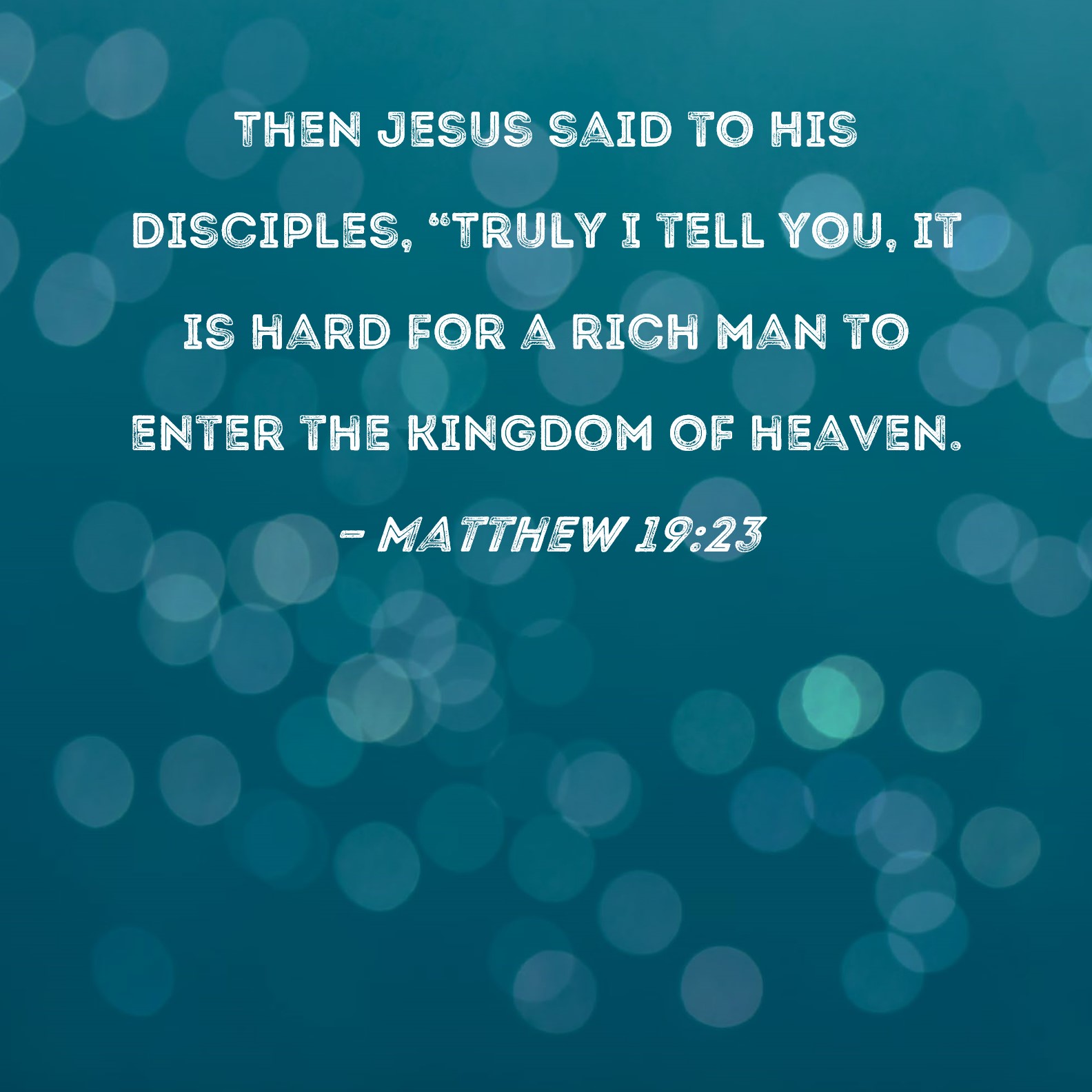
Wealth is a multiplier. Just as technology is a tool meant to make our lives more efficient, wealth is a tool meant to provide security, freedom, and the ability to act on one’s values. If we treat the tool as the final product, we lose the utility of the wealth itself. Those who manage their money with the understanding that they are stewards are generally more composed, more ethical in their business dealings, and more resilient in the face of economic uncertainty.
Practical Steps for Implementation
To integrate these principles into a modern financial strategy, one might consider the following:
- Define the “Enough” Line: Determine what amount of money is sufficient to cover your needs and your family’s security. Anything beyond that becomes “stewardship capital” to be deployed for broader purposes.
- Prioritize Intangible Assets: Increase your investment in education, relationships, and health. These assets often offer higher, more reliable yields than traditional market instruments.
- Audit Your Motivations: Regularly assess whether your financial decisions are driven by the fear of loss (scarcity mindset) or the desire to add value to your community (abundance mindset).
- Practice Strategic Giving: Incorporate philanthropy into your budget not as an afterthought, but as a primary line item. This keeps the ego in check and prevents the stagnation of resources.
In conclusion, the teachings of Jesus on wealth are not merely ancient platitudes. They offer a rigorous, psychological framework for wealth management that prioritizes sustainability over spectacle. By focusing on stewardship, rejecting the slavery of consumerism, and prioritizing long-term, intangible growth, the modern individual can achieve a level of financial health that is both mathematically sound and emotionally secure. Money is a powerful instrument, but like any instrument, its value is determined by the hands that hold it and the purpose for which it is played. When managed with a clear, detached, and purposeful strategy, wealth becomes not a master, but a remarkably effective tool for building a legacy that endures far longer than any ledger.
aViewFromTheCave is a participant in the Amazon Services LLC Associates Program, an affiliate advertising program designed to provide a means for sites to earn advertising fees by advertising and linking to Amazon.com. Amazon, the Amazon logo, AmazonSupply, and the AmazonSupply logo are trademarks of Amazon.com, Inc. or its affiliates. As an Amazon Associate we earn affiliate commissions from qualifying purchases.