
In an increasingly digital world, the concept of a physical headquarters might seem anachronistic, yet for global behemoths like Amazon, these central locations remain pivotal. More than mere administrative centers, Amazon’s headquarters are carefully curated spaces that embody its corporate identity, fuel innovation, attract top talent, and strategically position its brand in the public consciousness. Understanding “where Amazon’s headquarters is” delves deeper than a simple geographical pinpoint; it unveils a fascinating interplay of history, ambition, urban development, and cutting-edge brand strategy.
Amazon officially maintains two primary headquarters: its historic, sprawling campus in Seattle, Washington, and its newer, rapidly developing campus in Arlington, Virginia, officially known as Amazon HQ2. These dual anchors represent different facets of the company’s evolution and strategic direction, each playing a vital role in shaping the Amazon brand narrative.

Seattle’s Emerald City Legacy: The Original Brand Anchor
The story of Amazon’s headquarters begins, as does Amazon itself, in Seattle. This vibrant Pacific Northwest city has been the crucible for Amazon’s meteoric rise from an online bookseller to an e-commerce titan and cloud computing leader. The Seattle campus is not just a collection of buildings; it is a living monument to Amazon’s entrepreneurial spirit and relentless pursuit of innovation.
From Garage to Global Giant: Roots and Evolution
Jeff Bezos founded Amazon in a Bellevue garage in 1994, quickly relocating to Seattle. The company’s early days were characterized by rapid expansion, which saw its operations spill across various buildings in downtown Seattle. This organic growth mirrored Amazon’s agile, experimental culture. Over the decades, Amazon gradually consolidated its presence, transforming vast swathes of Seattle’s South Lake Union neighborhood into a high-tech urban campus. This evolution from a humble garage to a multi-block corporate city within a city is a powerful testament to the brand’s transformative power and ambition, deeply intertwining Amazon’s identity with that of its home city. The brand’s origin story, firmly rooted in Seattle’s tech-savvy environment, continues to be a cornerstone of its narrative.
Architectural Identity and Corporate Culture
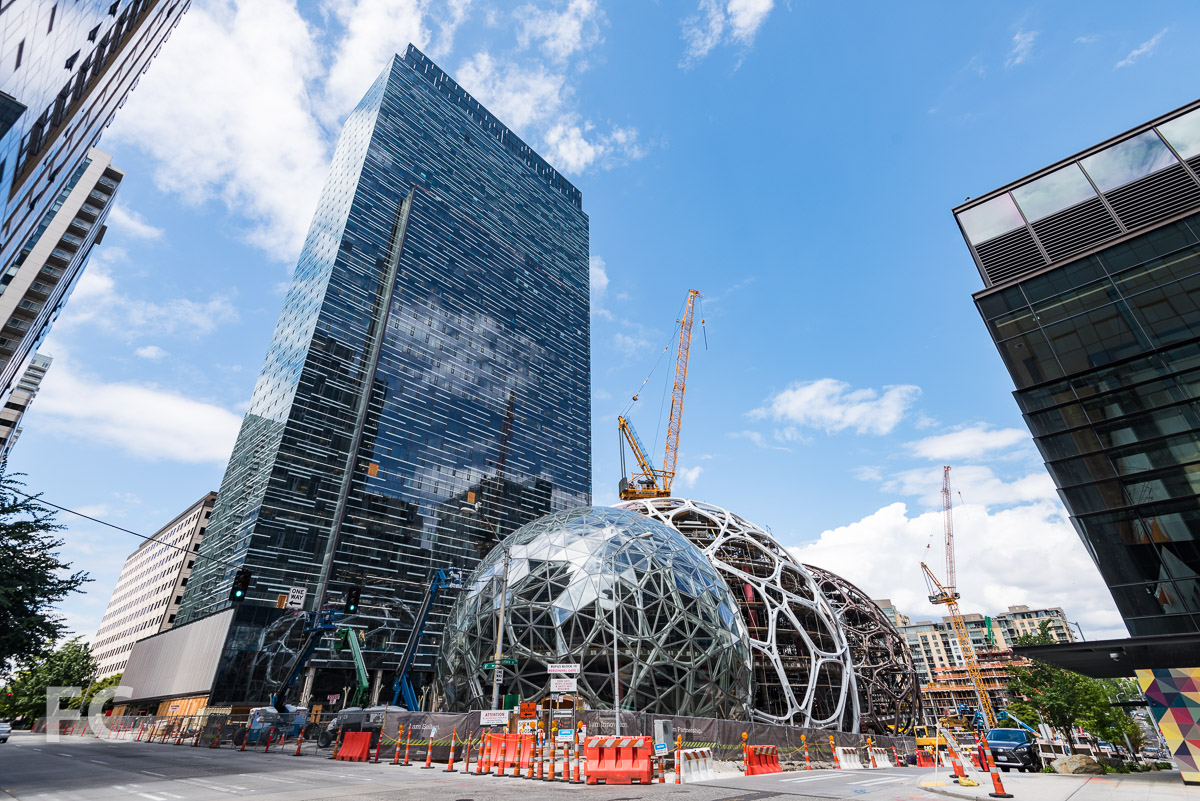
Amazon’s Seattle headquarters is instantly recognizable, particularly due to its iconic Spheres – three colossal glass-and-steel conservatories housing thousands of plant species. These structures are more than just aesthetically pleasing; they are a deliberate architectural statement reflecting Amazon’s brand values. They speak to innovation, sustainability, and a unique approach to the employee experience, fostering a biophilic environment designed to spark creativity and collaboration. Beyond the Spheres, the campus architecture is a blend of modern design and functional spaces, from towering office buildings to communal areas. This physical environment is designed to embody Amazon’s corporate culture: fast-paced, data-driven, and focused on challenging norms. It’s a tangible manifestation of a brand that prides itself on being “Day 1” – constantly innovating and avoiding complacency. The campus design implicitly communicates Amazon’s commitment to pushing boundaries and creating a distinctive workplace experience, reinforcing its brand as a leader in forward-thinking design and employee engagement.
Community Engagement and Brand Perception
Amazon’s massive footprint in Seattle has had profound and complex effects on the city. On one hand, it has brought immense economic prosperity, creating tens of thousands of high-paying jobs and fueling a construction boom. On the other hand, its rapid expansion has been associated with significant challenges, including skyrocketing housing costs, increased traffic congestion, and gentrification. Navigating these community impacts has been a constant exercise in brand management for Amazon. The company has engaged in various philanthropic initiatives and community partnerships, yet its relationship with Seattle has often been characterized by a love-hate dynamic. This complex interplay between corporate growth and urban impact highlights the challenges of maintaining a positive brand perception when a company becomes so inextricably linked to its host city’s identity and livelihood. For Amazon, its Seattle headquarters is not just an operational base but a constant negotiation of its brand image within its most important local community.
The HQ2 Saga: A Masterclass in Brand Strategy and Public Relations
In 2017, Amazon initiated a highly publicized search for a second North American headquarters, famously dubbed “HQ2.” This unprecedented corporate beauty pageant was not merely a search for office space; it was a carefully orchestrated branding and public relations spectacle that demonstrated Amazon’s immense influence and strategic prowess.
The Grand Experiment: A Nation-Wide Brand Audition
The announcement of HQ2 represented a groundbreaking approach to corporate expansion. Amazon sought to identify a city that could offer a large talent pool, robust infrastructure, and a high quality of life, promising an investment of $5 billion and 50,000 high-paying jobs. By publicly inviting proposals from cities across North America, Amazon transformed a typically private corporate decision into a national competition. This strategy generated an unparalleled volume of media coverage, positioning Amazon as a powerful economic engine whose favor was hotly contested. The brand leverage was immense; Amazon was not just choosing a location, it was challenging cities to articulate their own brand value proposition to a corporate giant, highlighting Amazon’s stature as a dominant force in the global economy.
The Branding Implications of the Search
The HQ2 competition became a national conversation, a captivating narrative that allowed Amazon to subtly reinforce its brand image as an innovator, a job creator, and an economic game-changer. Cities engaged in elaborate campaigns, showcasing their unique strengths and making compelling pitches, often offering substantial tax incentives and infrastructure improvements. This public bidding war, while controversial for some, undeniably solidified Amazon’s reputation as a corporate entity capable of reshaping regional economies. The sheer scale and visibility of the process ensured that Amazon remained at the forefront of public discourse for months, demonstrating its brand’s pervasive influence and its ability to command national attention. It was a masterclass in earned media, generating immense brand visibility without traditional advertising spend, simply by virtue of its economic promise.

Arlington, Virginia: A Strategic Selection for Brand Expansion
After sifting through 238 initial proposals and narrowing it down to a shortlist of 20 finalists, Amazon ultimately selected Northern Virginia (specifically the National Landing area encompassing parts of Arlington and Alexandria) as one of the two sites for its new headquarters (the other being a smaller presence in New York City, which was later withdrawn due to local opposition). The choice of Arlington was a highly strategic move for the Amazon brand. Proximity to Washington D.C. offers unparalleled access to government and policy makers, crucial for a company facing increasing regulatory scrutiny. The area also boasts a highly educated workforce, excellent transportation infrastructure, and a strong tech talent pipeline. Amazon’s decision for Arlington signals a deliberate brand expansion into a new strategic geography, diversifying its talent acquisition and solidifying its influence on the East Coast. This move projects Amazon’s brand as not just a tech and e-commerce leader, but also a significant player in the spheres of defense, government contracting, and public policy.
Beyond Bricks and Mortar: The Distributed Brand Ecosystem
While Seattle and Arlington serve as Amazon’s primary headquarters, the company’s brand identity and operational reach extend far beyond these two central hubs. Amazon’s global presence is a complex, distributed ecosystem, where “headquarters” is a concept that increasingly transcends a single physical address.
Global Footprint, Local Presence
Amazon’s brand is felt globally through its vast network of fulfillment centers, data centers (AWS regions), research and development centers, and satellite offices spread across dozens of countries. Each of these localized presences contributes to Amazon’s overall brand experience, from the efficiency of its logistics to the reliability of its cloud services. While Seattle and Arlington are the strategic command centers, the day-to-day interactions consumers and businesses have with Amazon are facilitated by this extensive global network. This distributed model allows Amazon to maintain a local presence in diverse markets, adapting its services and offerings to regional preferences, while still operating under a unified global brand identity. The headquarters may set the strategic direction, but the global footprint delivers the brand promise.
The Brand in a Remote-First World
The COVID-19 pandemic accelerated a fundamental shift in how companies view physical office spaces, and Amazon, like many tech giants, adapted by embracing more flexible work models. While committed to its headquarters campuses, Amazon also recognized the importance of hybrid and remote work. This evolution impacts the very definition of “headquarters” and, by extension, corporate brand. It challenges the notion that innovation and culture are solely cultivated within specific physical walls. For Amazon, maintaining its strong brand identity and corporate culture in a more distributed workforce environment requires intentional digital strategies and leadership, ensuring that its values and collaborative spirit permeate beyond physical office spaces, reaching employees wherever they are. The physical headquarters now act as central gravitational points within a much wider, more fluid organizational structure.
The Headquarters as a Living Brand Statement
Ultimately, Amazon’s headquarters, both established and emerging, are more than just buildings; they are dynamic, living manifestations of its brand. They symbolize Amazon’s journey, its ambitions, and its impact on the world.
Symbol of Innovation and Power
The imposing scale and innovative design of Amazon’s campuses, particularly in Seattle, unequivocally symbolize the company’s pioneering spirit and immense economic power. These structures convey a message of global leadership and a commitment to pushing the boundaries of technology and commerce. They stand as physical monuments to Amazon’s brand promise of continuous innovation, efficiency, and customer obsession. The architectural grandeur and technological sophistication of the headquarters themselves become part of the brand storytelling, communicating Amazon’s status as a formidable and forward-thinking entity.
Employee Experience and Talent Branding
For a company that relies heavily on attracting and retaining top-tier talent, the headquarters play a crucial role in talent branding. The design, amenities, and overall environment of the campuses are meticulously crafted to provide a stimulating and attractive workplace. Features like the Spheres, diverse dining options, fitness centers, and collaborative spaces are all part of Amazon’s strategy to project an image as a desirable employer. By investing in these impressive physical spaces, Amazon reinforces its brand as an organization that values its workforce, offering a unique and inspiring environment that fosters creativity and well-being, thereby strengthening its appeal in a competitive talent market.
Future-Proofing the Brand: Adapting to New Realities
As Amazon continues its relentless expansion and diversification into new industries, its headquarters strategy will likely continue to evolve. The concept of physical hubs will remain important for fostering collaboration and culture, but they will operate within a broader, increasingly distributed global framework. The challenge for Amazon’s brand will be to continuously adapt its physical and virtual presence to reflect its evolving corporate identity, maintain its innovative edge, and address societal expectations in an ever-changing world. The headquarters will remain a flexible asset, serving as a beacon for the brand while allowing for the agility required of a global leader.
In conclusion, “where is headquarters for Amazon” is a question that unveils a layered narrative of brand strategy. From its historical roots in Seattle to its strategic expansion into Arlington, each headquarters location is a deliberate choice, a physical embodiment of Amazon’s corporate identity, its culture of innovation, and its immense influence on both local communities and the global economy. These sites are not merely places of business; they are powerful, tangible expressions of the Amazon brand, reflecting its past achievements, present dynamics, and future aspirations.
aViewFromTheCave is a participant in the Amazon Services LLC Associates Program, an affiliate advertising program designed to provide a means for sites to earn advertising fees by advertising and linking to Amazon.com. Amazon, the Amazon logo, AmazonSupply, and the AmazonSupply logo are trademarks of Amazon.com, Inc. or its affiliates. As an Amazon Associate we earn affiliate commissions from qualifying purchases.