
Understanding “how much are stocks” goes far beyond simply looking at a ticker price. A stock’s price at any given moment is a complex interplay of numerous factors, reflecting both a company’s fundamental health and broader market sentiment. For new investors, deciphering this can seem daunting, but breaking down the components of stock valuation reveals that it’s a dynamic system with underlying logic. This exploration delves into what a stock price truly represents, the forces that shape it, the actual cost of acquiring shares, and the metrics used to assess a stock’s inherent value.
Deconstructing Stock Prices: More Than Just a Number
The sticker price displayed for a single share of stock—whether it’s $10, $100, or $1,000—is just one piece of a much larger puzzle. It’s crucial to understand what this number signifies and why it fluctuates constantly.
What a Share Price Represents
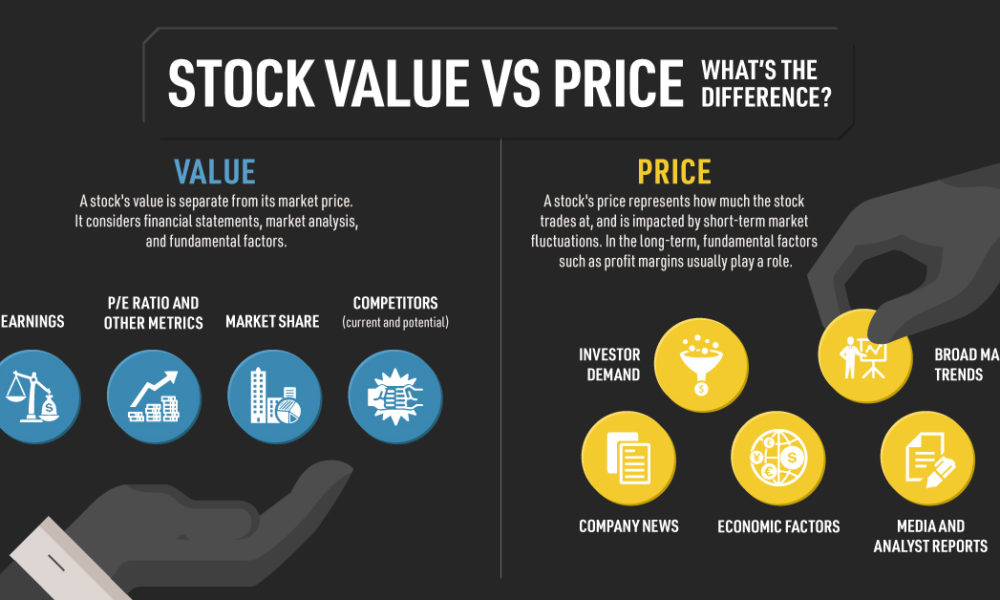
At its core, a single share of stock represents a tiny fraction of ownership in a public company. The share price is derived from the company’s total market capitalization, which is the aggregate value of all its outstanding shares. If a company has 100 million shares outstanding and its market capitalization is $10 billion, then each share would theoretically trade around $100. This price is determined by the last transaction between a buyer and a seller on a stock exchange, reflecting the consensus value at that precise moment. It’s not a fixed cost, but rather a constantly updated valuation based on supply and demand.
The Illusion of “Cheap” and “Expensive”
A common misconception among novice investors is equating a low share price with a “cheap” stock and a high share price with an “expensive” one. This is often misleading. A $10 stock with poor earnings, high debt, and little growth potential might be far more “expensive” in terms of its underlying value than a $1,000 stock belonging to a highly profitable, rapidly growing company with a strong balance sheet. The actual “cost” or “value” of a stock isn’t determined by its per-share price alone but by its price in relation to its earnings, assets, and future prospects. Context is paramount.
Supply and Demand Dynamics
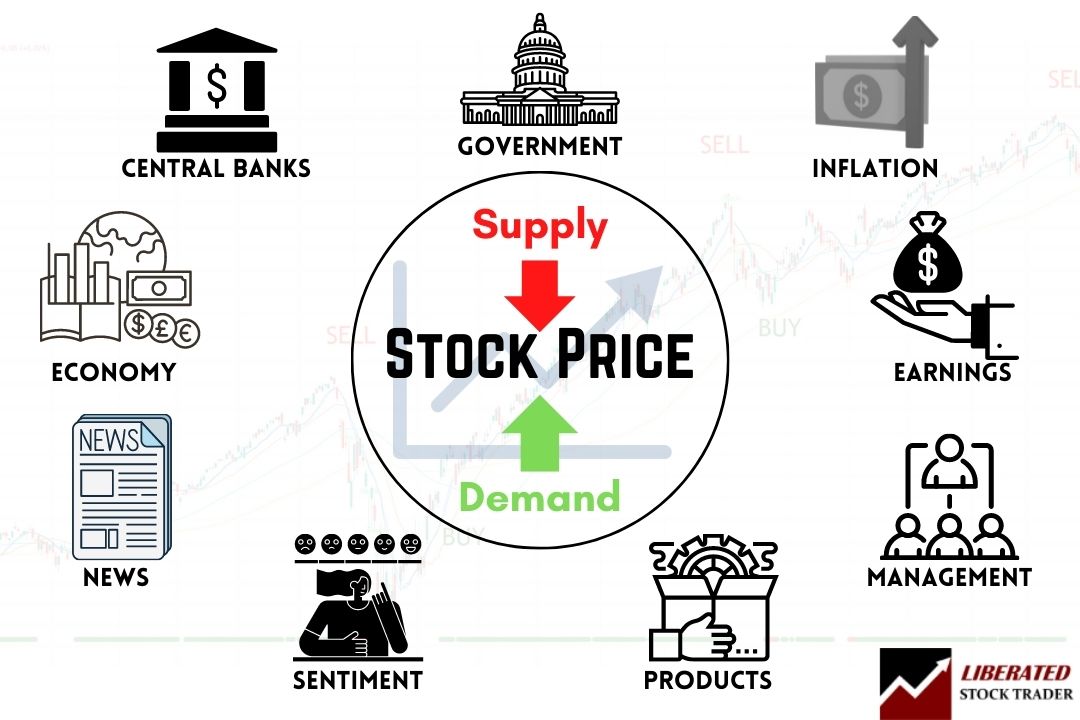
Like any other commodity, stock prices are fundamentally driven by the forces of supply and demand. When more investors want to buy a particular stock than sell it, demand outstrips supply, pushing the price upward. Conversely, if more investors are looking to sell than buy, supply exceeds demand, causing the price to fall. This dynamic is influenced by a continuous stream of information, from company earnings reports and product launches to macroeconomic data and geopolitical events, all impacting investor perception and willingness to buy or sell.
Key Factors Influencing Stock Valuation
A stock’s price is a barometer of a company’s perceived worth and future potential. Numerous interconnected factors contribute to this perception, constantly shifting the price point.
Company Fundamentals and Performance
The bedrock of any stock’s value lies in the company’s financial health and operational performance. Strong fundamentals typically translate to higher investor confidence and, consequently, a higher stock price. Key metrics include:
- Earnings and Revenue Growth: Consistent increases in sales and profits are powerful indicators of a healthy, growing business.
- Profit Margins: A company’s ability to turn revenue into profit signifies efficiency and pricing power.
- Balance Sheet Health: Low debt, ample cash reserves, and manageable liabilities suggest financial stability.
- Cash Flow: Positive and growing cash flow indicates a company’s ability to generate cash from its operations, crucial for reinvestment and debt repayment.
- Management Quality: Experienced, ethical, and visionary leadership can significantly enhance a company’s prospects.
Industry Trends and Competitive Landscape
A company rarely operates in a vacuum. The industry it belongs to, along with its position within that industry, profoundly impacts its stock valuation.
- Sector Growth: Companies in rapidly expanding sectors (e.g., renewable energy, artificial intelligence) often command higher valuations due to greater growth potential.
- Competitive Advantage (Moat): Companies with sustainable competitive advantages—such as strong brands, patents, network effects, or cost leadership—are often more resilient and valuable.
- Disruptive Innovation: The threat or emergence of disruptive technologies can rapidly alter an industry’s landscape, impacting incumbents’ valuations.
Macroeconomic Conditions
Broader economic factors play a significant role in determining how much stocks are worth across the market.
- Interest Rates: Higher interest rates can make bonds more attractive relative to stocks and increase borrowing costs for companies, often putting downward pressure on stock prices.
- Inflation: High inflation can erode purchasing power, increase input costs for businesses, and reduce corporate profits, negatively impacting stock valuations.
- GDP Growth: A robust economy generally supports stronger corporate earnings and higher stock prices, while a slowing economy or recession typically has the opposite effect.
- Consumer Confidence and Spending: A confident consumer base is more likely to spend, boosting corporate revenues and profits.
Market Sentiment and Investor Psychology
While fundamentals provide a logical basis for valuation, human emotion and collective sentiment can significantly sway stock prices, especially in the short term.
- News and Media: Major news events, analyst ratings, and media coverage can trigger rapid shifts in investor perception.
- Fear and Greed: These powerful emotions often drive irrational exuberance or panic selling, leading to market bubbles or crashes.
- Geopolitical Events: Wars, political instability, and trade disputes can create uncertainty, prompting investors to pull back from riskier assets like stocks.
The Actual Cost of Entry: Investing in the Stock Market
Beyond the price of a single share, understanding “how much are stocks” also involves the practicalities of investing. What’s the minimum to get started, and what are the associated costs?
Minimum Investment Requirements
The good news for new investors is that the barrier to entry for stock market investing has significantly lowered.
- Fractional Shares: Many brokerages now offer fractional shares, allowing investors to buy a portion of a share for as little as $1. This means you don’t need hundreds or thousands of dollars to invest in a high-priced stock like Amazon or Google.
- Exchange-Traded Funds (ETFs) and Mutual Funds: These funds allow you to invest in a basket of stocks or other assets with a single purchase. The minimum investment for ETFs is often just the price of one share, while mutual funds might have minimums ranging from $500 to $3,000, though some offer lower starting points.
- No Official Minimum for All Stocks: While individual shares have their respective prices, there’s no universal minimum dollar amount required to start investing in the stock market across all brokers or asset classes. You can often begin with very modest sums.
Brokerage Fees and Commissions

The rise of online brokerages has largely eliminated traditional trading commissions for buying and selling stocks and ETFs. However, other potential costs still exist:
- Zero-Commission Trading: Most major online brokers offer commission-free trading for US-listed stocks and ETFs.
- Mutual Fund Expense Ratios: Actively managed mutual funds charge an annual expense ratio, a percentage of your investment, to cover management and operating costs.
- Advisory Fees: If you use a financial advisor or a robo-advisor, you might pay a percentage-based fee for their services.
- Miscellaneous Fees: Smaller fees might include regulatory transaction fees, account maintenance fees (though less common now), or fees for specific services like wire transfers.
The Time Horizon and Opportunity Cost
Investing in stocks isn’t just about the monetary cost; it’s also about committing capital for a period. This involves an opportunity cost—the return you might have earned from an alternative investment or the benefit of using the money for immediate consumption. A long-term investment horizon (e.g., 5-10+ years) is generally recommended for stocks to ride out short-term volatility and allow for compounding returns.
Assessing True Value: Beyond the Price Tag
Sophisticated investors and analysts use various valuation metrics to determine whether a stock is genuinely “cheap” or “expensive” relative to its intrinsic worth, rather than just its per-share price.
Price-to-Earnings (P/E) Ratio
The P/E ratio is one of the most widely used valuation metrics. It’s calculated by dividing a stock’s current share price by its earnings per share (EPS).
- Interpretation: A high P/E ratio might suggest that investors expect high future growth, or that the stock is overvalued. A low P/E might indicate undervaluation or a company facing challenges. It’s best used to compare companies within the same industry or a company’s current P/E to its historical average.
Price-to-Book (P/B) Ratio
The P/B ratio compares a company’s stock price to its book value per share (total assets minus intangible assets and liabilities, divided by the number of shares outstanding).
- Interpretation: It’s particularly useful for asset-heavy industries like banking or manufacturing. A P/B ratio below 1 might suggest the stock is undervalued, while a significantly higher ratio could imply market overvaluation relative to its tangible assets.
Earnings Per Share (EPS)
EPS is a company’s profit divided by the number of outstanding shares of its common stock.
- Interpretation: It’s a key indicator of a company’s profitability and is a direct input for the P/E ratio. Consistent EPS growth is a positive sign.
Dividend Yield
For income-focused investors, dividend yield measures the annual dividend payment per share relative to the stock’s current share price.
- Interpretation: A higher yield means a larger return from dividends relative to the share price, but it’s important to ensure the dividend is sustainable.
Discounted Cash Flow (DCF)
A more complex intrinsic valuation method, DCF analysis attempts to estimate the value of an investment based on its expected future cash flows. It discounts these future cash flows back to the present day to arrive at a current fair value estimate. This method requires many assumptions about future growth rates and discount rates, making it more challenging for individual investors but a staple for professional analysts.
The Dynamic Nature of Stock Prices and Your Investment Strategy
Ultimately, “how much are stocks” is a question with a constantly evolving answer. The price you see today will likely be different tomorrow, reflecting the dynamic nature of markets and the economy.
Volatility is Inherent
Stock prices are inherently volatile, experiencing fluctuations driven by both short-term news and long-term trends. Understanding that this volatility is a normal part of investing is crucial for maintaining a disciplined approach.
Long-Term vs. Short-Term Perspective
For most individual investors, the daily or weekly price changes are less significant than the long-term growth trajectory of their investments. Adopting a long-term perspective allows investors to ride out market corrections and benefit from the power of compounding returns. Focusing on sound companies with strong fundamentals and holding them for years often proves more rewarding than attempting to time market fluctuations.
Personal Financial Goals
The “cost” of investing in stocks should always be viewed through the lens of your personal financial goals and risk tolerance. How much you should invest and in which stocks is a highly individual decision based on factors like your age, income, existing savings, and time horizon. Diversification across different stocks, industries, and asset classes helps manage risk and avoid overexposure to any single investment’s volatility.
Continuous Learning and Due Diligence
The best way to confidently answer “how much are stocks” for any specific company is through continuous learning and diligent research. Understanding the business model, competitive landscape, financial health, and future prospects of a company will empower you to make informed investment decisions that align with your financial objectives.
aViewFromTheCave is a participant in the Amazon Services LLC Associates Program, an affiliate advertising program designed to provide a means for sites to earn advertising fees by advertising and linking to Amazon.com. Amazon, the Amazon logo, AmazonSupply, and the AmazonSupply logo are trademarks of Amazon.com, Inc. or its affiliates. As an Amazon Associate we earn affiliate commissions from qualifying purchases.