
The ebb and flow of financial markets are a fundamental aspect of global economics. While periods of growth and bullish investor sentiment often capture headlines, the inevitable downturns are equally, if not more, crucial for investors and economists to understand. A falling market, often characterized by widespread declines in stock indices, can be a source of significant anxiety, impacting everything from retirement savings to business expansion plans. Understanding the multifaceted reasons behind such corrections is not merely an academic exercise; it’s essential for making informed decisions, mitigating risk, and even identifying potential opportunities.
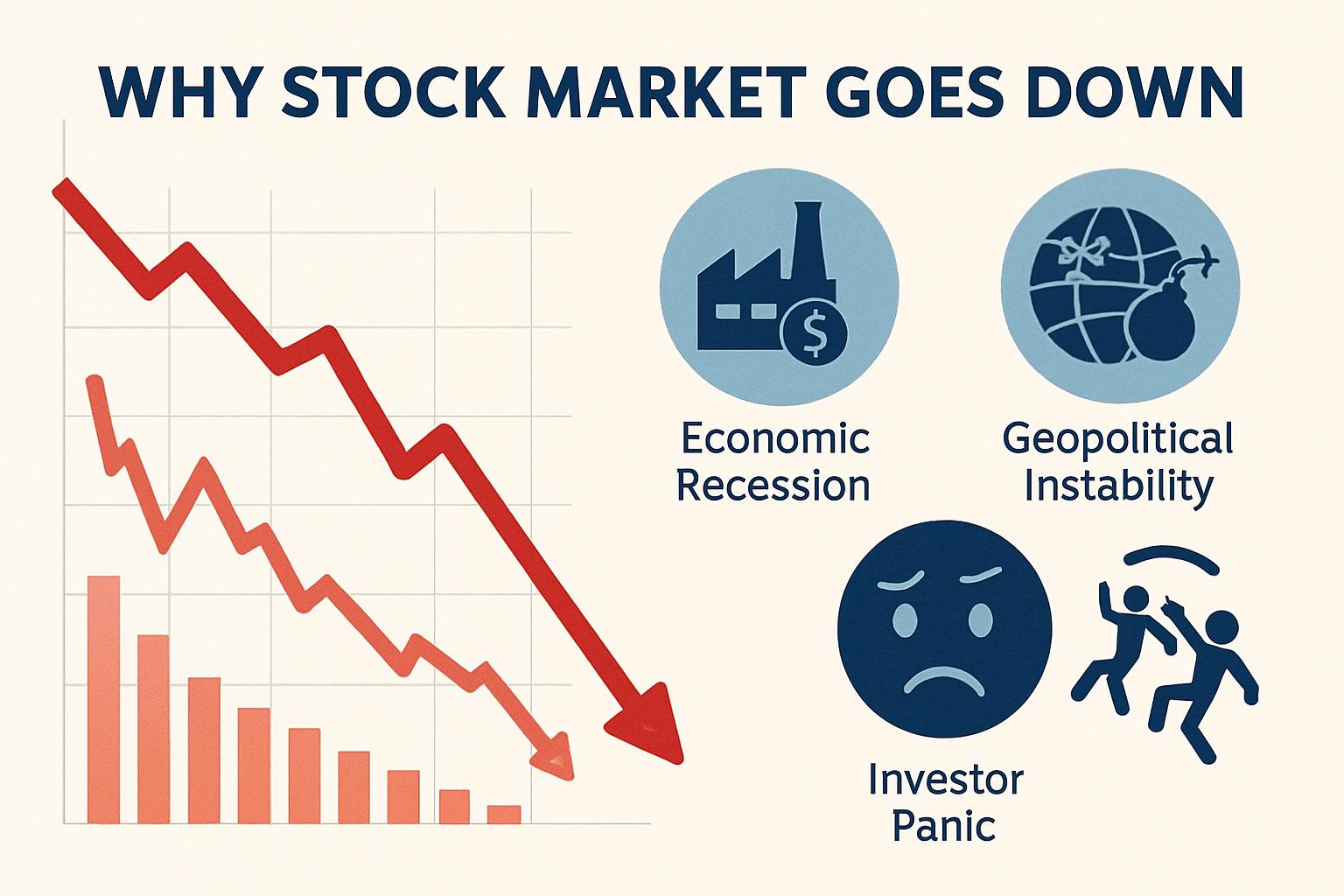
Market downturns are rarely attributable to a single cause. Instead, they typically emerge from a complex interplay of macroeconomic shifts, evolving investor psychology, corporate performance, and the very mechanisms of financial markets themselves. This article will delve into these intricate dynamics, shedding light on the primary drivers behind a declining market and offering insights into how to approach such challenging periods.
Macroeconomic Forces at Play
At the broadest level, the health of the economy exerts the most significant influence on market direction. When fundamental economic indicators signal trouble, investors often react by pulling back their capital, leading to a decline in asset values.
Inflationary Pressures and Interest Rate Hikes
One of the most potent forces driving market downturns is inflation. When the cost of goods and services rises persistently, it erodes the purchasing power of consumers and increases input costs for businesses, squeezing profit margins. In response to high inflation, central banks, such as the U.S. Federal Reserve, typically raise benchmark interest rates. The aim is to cool down the economy by making borrowing more expensive, which discourages consumer spending and business investment.
While necessary to combat inflation, rising interest rates have several direct impacts on financial markets:
- Higher Borrowing Costs: Companies face increased costs for debt, which can reduce their profitability and slow expansion plans.
- Reduced Consumer Spending: Higher interest rates on mortgages, car loans, and credit cards leave consumers with less disposable income, impacting corporate revenues.
- Discounting Future Earnings: In valuation models, higher interest rates are used to discount future corporate earnings, making future profits less valuable in today’s terms. This can lead to a downward revision of stock prices, especially for growth companies whose valuations rely heavily on distant future earnings.
- Attractive Bonds: Higher interest rates make fixed-income investments like government bonds more attractive relative to riskier assets like stocks, prompting a shift in capital.
Geopolitical Instability and Supply Chain Disruptions
Global events, often unpredictable, can send shockwaves through financial markets. Geopolitical instability, such as wars, trade disputes, or major political upheavals in key regions, introduces a high degree of uncertainty. This uncertainty can dampen investor confidence, leading to capital flight from perceived risky assets.
Simultaneously, geopolitical events frequently trigger supply chain disruptions. For instance, regional conflicts can impact the availability and price of critical commodities like oil, natural gas, and various metals. Disruptions to manufacturing hubs or transportation routes can lead to shortages, increased production costs, and delays in product delivery. These issues contribute to inflationary pressures and can severely impair corporate profitability, especially for companies reliant on global supply chains. The resulting scarcity and higher costs cascade through the economy, affecting consumer prices and business viability, ultimately impacting market performance.
Economic Slowdown and Recession Fears
Markets are forward-looking mechanisms, and investors constantly try to anticipate the future state of the economy. When economic indicators point towards a slowdown or an impending recession, markets tend to decline proactively. Key indicators that signal a downturn include:
- Declining GDP Growth: A sustained reduction in a country’s gross domestic product indicates a shrinking economy.
- Rising Unemployment Rates: Job losses signal reduced consumer spending power and a weakening labor market.
- Inverted Yield Curve: Historically, when short-term government bond yields exceed long-term yields, it has often preceded a recession.
- Decreased Consumer Confidence: When consumers feel pessimistic about their financial future, they tend to reduce spending, which impacts businesses.
- Falling Corporate Earnings: Companies reporting lower profits or issuing negative guidance are a direct reflection of a weakening economic environment.
As these signals accumulate, investors anticipate reduced corporate earnings, increased bankruptcies, and a general contraction in economic activity. To protect their capital, they often sell off equities, leading to a broad market decline.
Investor Sentiment and Market Psychology
Beyond the hard economic data, the collective psychology of investors plays a profound role in market movements. Fear, uncertainty, and herd mentality can amplify downturns, sometimes even detaching market movements from underlying economic fundamentals in the short term.
Fear and Uncertainty
Markets thrive on certainty and predictability. When significant unknowns emerge – be it a pandemic, an unprecedented geopolitical event, or a new economic crisis – fear can become the dominant emotion. This fear isn’t always rational; it’s an instinctive reaction to perceived threats to capital. As fear spreads, investors become more risk-averse, preferring to hold cash or safer assets rather than endure potential further losses in volatile markets. This flight to safety leads to widespread selling of riskier assets like stocks.
Uncertainty further exacerbates this. When investors lack clear visibility into future earnings, economic policy, or the resolution of crises, they tend to err on the side of caution. This can lead to a paralysis in investment decisions or a collective retreat, which pushes market prices lower.
Herd Mentality and Panic Selling
Humans are social creatures, and financial markets are no exception to the power of group dynamics. Herd mentality refers to the tendency of investors to follow the actions of a larger group, often without sufficient independent analysis. In a bull market, this can lead to speculative bubbles; in a bear market, it can accelerate panic selling.
When a significant portion of the market starts selling due to fear or negative news, others observe this trend and feel compelled to do the same to avoid being left behind or incurring greater losses. This can create a cascading effect, where selling begets more selling, driving prices down rapidly and often beyond what fundamental valuations would dictate. Panic selling is particularly dangerous because it often leads investors to sell at the bottom, locking in losses that might otherwise have been temporary.
Loss of Confidence
Confidence is the bedrock of investing. Investors need to believe in the integrity of financial systems, the stability of corporate earnings, and the efficacy of economic policies. A significant loss of confidence can trigger a market downturn or exacerbate an existing one. This can stem from various sources:
- Corporate Scandals: Major frauds or accounting irregularities can erode trust in specific companies or even entire sectors.
- Government Policy Mishaps: Poorly executed or unpopular economic policies can shake investor faith in a government’s ability to manage the economy effectively.
- Systemic Financial Risks: Concerns about the stability of banks, the real estate market, or other critical components of the financial system can lead to a systemic loss of confidence, prompting a broad market retreat as investors fear a wider collapse.
When confidence wavers, investors become highly skeptical and are less willing to commit capital, preferring to wait on the sidelines until a clearer, more trustworthy path emerges.
Corporate Performance and Sector-Specific Challenges
While macro factors set the broad economic stage, the performance and prospects of individual companies and sectors are the direct drivers of stock prices and, by extension, market indices.
Earnings Misses and Revenue Declines
The most fundamental determinant of a company’s stock price is its ability to generate profits. When companies consistently fail to meet their earnings expectations (an “earnings miss”) or report declining revenues, it directly impacts their valuation. Analysts and investors adjust their future earnings forecasts downwards, leading to a corresponding drop in the company’s stock price.
A wave of earnings misses across multiple companies or major bellwether stocks can signal broader economic weakness or sector-specific headwinds, dragging down the entire market. This is especially true for companies within benchmark indices like the S&P 500, whose performance directly influences the index’s movement. Investors often react swiftly to negative corporate news, selling shares to minimize potential losses, contributing to market decline.
Valuation Concerns and Overheated Sectors
During periods of sustained market growth, certain sectors or individual stocks can become “overheated” – meaning their prices rise to levels that are difficult to justify based on their fundamental earnings or future growth prospects. This can be fueled by speculative buying, excessive optimism, or a focus on nascent technologies with uncertain profitability.
When market sentiment shifts, or when interest rates rise (making future earnings less valuable), these overvalued assets are particularly vulnerable to sharp corrections. What might start as a pullback in one overextended sector (e.g., technology during a dot-com bubble burst or specific growth stocks) can trigger a broader reassessment of valuations across the market. Investors become more discerning, demanding a stronger link between price and intrinsic value, leading to a broad correction as prices align more closely with fundamentals.
Regulatory Changes and Policy Shifts
Government regulations and policy decisions can have a profound impact on corporate profitability and market dynamics. New regulations designed to curb monopolistic practices, address environmental concerns, or tighten financial oversight can significantly increase compliance costs for businesses, reduce their operational flexibility, or limit their growth potential.
For example, antitrust actions against large tech companies can constrain their future expansion. Stricter environmental policies might increase operating expenses for energy or manufacturing firms. Changes in tax laws (e.g., higher corporate taxes) directly reduce net income. When such policy shifts are enacted or even seriously proposed, they create uncertainty and can directly impact the profitability of specific industries or the broader business environment. Investors react by selling off shares of affected companies, contributing to a market decline.
The Role of Financial Markets and Mechanisms
Beyond economic and psychological factors, the very structure and operational mechanisms of financial markets can also contribute to or amplify downturns.
Quantitative Tightening and Liquidity Withdrawal
In response to economic crises, central banks often engage in Quantitative Easing (QE), buying vast amounts of government bonds and other securities to inject liquidity into the financial system and lower interest rates. The reverse process, Quantitative Tightening (QT), involves central banks reducing their balance sheets by allowing bonds to mature without reinvesting the proceeds, or by actively selling them.
QT effectively withdraws liquidity from the financial system. Less liquidity means less money available for investment in assets like stocks and bonds. This reduction in the money supply can put upward pressure on interest rates, making it more expensive for businesses and individuals to borrow. As liquidity shrinks, asset prices, including stocks, tend to fall because there is less capital chasing them. This tightening of financial conditions can act as a significant headwind for market performance.
Algorithmic Trading and High-Frequency Trading
Modern financial markets are dominated by sophisticated computer programs executing trades at lightning speed. Algorithmic trading and High-Frequency Trading (HFT) systems are designed to identify and exploit tiny price discrepancies or react instantly to news and market data. While they contribute to market efficiency, they can also amplify market movements during periods of volatility.
If a negative news event occurs, algorithms programmed to sell under specific conditions can trigger a rapid cascade of selling orders across numerous securities almost simultaneously. This rapid, automated selling can create flash crashes or accelerate market declines, as human traders struggle to react quickly enough, and the sheer volume of automated orders overwhelms buying interest. The interconnectedness and speed of these systems mean that a downturn can spread and deepen much faster than in previous eras.
Derivatives and Speculative Trading
Derivatives are complex financial instruments whose value is derived from an underlying asset (like stocks, bonds, commodities, or currencies). They include options, futures, and swaps. While useful for hedging risk, derivatives are also extensively used for speculative trading, where investors bet on future price movements.
Excessive speculation, particularly with highly leveraged derivatives, can contribute to market instability. If large speculative bets go wrong, especially in a downturn, it can lead to forced selling of underlying assets to cover margin calls or reduce exposure. This forced selling can exacerbate price declines in the underlying assets, creating a negative feedback loop that deepens the market’s fall. The opaque nature of some derivative markets can also mask systemic risks until it’s too late, potentially triggering broader financial contagion.
Strategies for Navigating a Down Market
Understanding why markets go down is the first step; the next is knowing how to react. While no strategy guarantees immunity from losses, certain approaches can help mitigate risk and even position investors for future recovery.
Maintaining a Long-Term Perspective
Perhaps the most crucial advice during a downturn is to resist the urge to panic sell. Historically, every major market correction or bear market has eventually been followed by a recovery and new highs. For long-term investors, market downturns are often temporary setbacks. Selling out of fear can lock in losses that might otherwise have been recovered. Instead, focusing on long-term goals and understanding that market volatility is a normal part of the investing cycle can help maintain composure.
Diversification and Asset Allocation
Diversification involves spreading investments across various asset classes (stocks, bonds, real estate, commodities), different industries, and geographic regions. This strategy aims to reduce overall portfolio risk because not all assets or sectors decline simultaneously or to the same degree. A well-diversified portfolio might see some segments decline, but others might hold steady or even perform well, cushioning the overall impact. Asset allocation, which involves determining the appropriate mix of these assets based on one’s risk tolerance and investment horizon, is key to building a resilient portfolio.
Dollar-Cost Averaging
Dollar-cost averaging is a strategy where an investor invests a fixed amount of money at regular intervals, regardless of market fluctuations. When market prices are high, the fixed investment buys fewer shares; when prices are low, it buys more shares. Over time, this averages out the purchase price and can reduce the risk of investing a large sum at a market peak. In a down market, dollar-cost averaging allows investors to buy assets at lower prices, positioning them to benefit more significantly when the market eventually recovers.
Reviewing and Rebalancing Your Portfolio
A market downturn is an opportune time to review your portfolio. Assess if your current asset allocation still aligns with your financial goals, risk tolerance, and time horizon. Rebalancing involves adjusting your portfolio back to your target asset allocation. For example, if stocks have fallen significantly, you might find your stock allocation is now lower than your target. Rebalancing would involve buying more stocks (or selling bonds) to restore your desired allocation, effectively buying low. Conversely, if some assets performed well, you might trim them.
Focusing on Quality and Fundamentals
In a downturn, the distinction between fundamentally strong companies and weaker ones often becomes stark. Focus on investing in companies with strong balance sheets, consistent cash flows, sustainable competitive advantages (moats), and proven management teams. These “quality” companies are often more resilient during economic storms and tend to recover faster when the market turns. Researching company fundamentals and avoiding speculative or highly leveraged businesses can significantly improve investment outcomes in volatile environments.

Conclusion
The question “Why is the market going down?” seldom has a simple answer. It’s a complex tapestry woven from global macroeconomic trends, the collective psychological shifts of millions of investors, the health of individual businesses, and the intricate, often high-speed, operations of financial markets. Understanding these contributing factors – from inflationary pressures and geopolitical tensions to investor fear and algorithmic trading – is crucial for navigating periods of economic uncertainty.
While market downturns can be unsettling and even painful, they are an inherent part of the economic cycle. For the informed investor, they also represent a period of opportunity: an chance to re-evaluate strategies, invest in quality assets at reduced prices, and build a more resilient financial future. By maintaining a long-term perspective, diversifying wisely, and adhering to sound financial principles, investors can weather the storm and emerge stronger when the market eventually recovers its footing.
aViewFromTheCave is a participant in the Amazon Services LLC Associates Program, an affiliate advertising program designed to provide a means for sites to earn advertising fees by advertising and linking to Amazon.com. Amazon, the Amazon logo, AmazonSupply, and the AmazonSupply logo are trademarks of Amazon.com, Inc. or its affiliates. As an Amazon Associate we earn affiliate commissions from qualifying purchases.