
The decision for a company to issue stock is a pivotal moment in its lifecycle, marking a significant shift in its operational and financial strategy. Far from a simple transaction, it’s a multifaceted financial maneuver driven by strategic objectives, a quest for growth, and a desire to build long-term value. At its core, issuing stock involves selling ownership stakes in a company to investors in exchange for capital. This fundamental act allows businesses to tap into a vast pool of financial resources that would otherwise be inaccessible, fueling ambition and enabling expansion far beyond what traditional debt financing might permit.

Understanding why companies choose this path requires delving into the intricate world of corporate finance, exploring the immediate capital injection, the strategic advantages it confers, the meticulous process involved, and the inherent trade-offs that come with inviting public ownership. It’s a move that transforms a private entity into a public one, subjecting it to market scrutiny and opening new avenues for growth and shareholder value creation. For both the company seeking funds and the investor seeking returns, comprehending the rationale behind stock issuance is crucial to navigating the complexities of the financial markets.
The Fundamental Purpose: Raising Capital for Growth and Stability
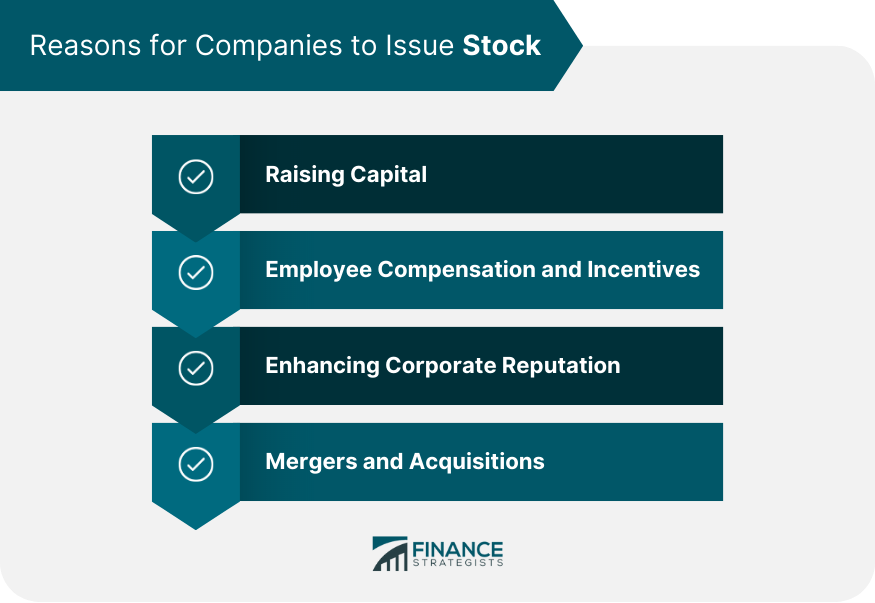
At the heart of every stock issuance lies the primary objective of raising capital. Businesses, regardless of their size or industry, require funds to operate, innovate, and expand. While debt financing (loans) is an option, issuing equity offers distinct advantages, particularly for high-growth companies or those with ambitious long-term projects.
Fueling Growth and Expansion Initiatives
One of the most compelling reasons for a company to issue stock is to finance substantial growth and expansion. This could involve scaling operations domestically or internationally, opening new facilities, expanding product lines, or increasing market share through aggressive marketing campaigns. Such initiatives often demand significant upfront investment that internally generated profits alone cannot support, and taking on too much debt can cripple a company with interest payments and strict covenants. Equity financing provides “patient capital” – funds that don’t need to be repaid with interest, allowing the company to reinvest profits into its core business and growth strategies. This enables a more aggressive and sustained pursuit of market dominance and long-term value creation without the immediate burden of debt servicing.
Funding Research, Development, and Innovation
For many industries, particularly technology, biotechnology, and pharmaceuticals, innovation is the lifeblood of competitive advantage. Research and development (R&D) efforts are often expensive, protracted, and carry inherent risks, with no guarantee of immediate commercial success. Issuing stock provides the substantial capital required to invest in groundbreaking R&D projects, hire top scientific talent, and develop proprietary technologies or products. By mitigating the need to rely solely on short-term profits or high-interest loans, equity financing empowers companies to undertake long-term R&D commitments that can define their future market position and generate significant intellectual property. This strategic investment in innovation is often critical for staying ahead of competitors and securing future revenue streams.
Reducing Debt and Enhancing Financial Flexibility
While debt can be a useful tool, excessive leverage can expose a company to financial instability, especially during economic downturns or periods of high interest rates. Companies may issue stock to pay down existing debt, thereby strengthening their balance sheet, reducing interest expenses, and improving their creditworthiness. A lower debt-to-equity ratio makes a company more resilient and attractive to lenders and investors alike. Furthermore, with less debt, a company gains greater financial flexibility, allowing it to respond more effectively to market opportunities or unforeseen challenges without being constrained by debt obligations or tight lending covenants. This strategic deleveraging can be a critical step in consolidating financial health and preparing for future growth phases.
Financing Mergers, Acquisitions, and Strategic Investments
Growth often comes through inorganic means, such as mergers and acquisitions (M&A). Companies frequently issue stock to finance these strategic transactions, either by using newly issued shares as currency to purchase another company or by raising cash to fund the acquisition. This approach can be particularly attractive when the target company is large, or when the acquiring company wishes to conserve its cash reserves for other operational needs. Using stock as a payment method in M&A also allows the acquiring company to share the future success (or risk) of the combined entity with the acquired company’s shareholders, potentially aligning interests and facilitating smoother integration.
Strategic Advantages Beyond Immediate Capital
While capital raising is the direct incentive, issuing stock, particularly through an Initial Public Offering (IPO), unlocks a host of other strategic benefits that can elevate a company’s standing and operational capabilities.
Enhancing Company Visibility, Credibility, and Reputation
Becoming a publicly traded company significantly boosts a company’s profile and enhances its credibility. The rigorous due diligence and transparency required for an IPO, coupled with ongoing reporting obligations, signal a level of maturity and trustworthiness to customers, suppliers, and potential partners. Public visibility through stock exchange listings, financial media coverage, and analyst reports can act as a powerful marketing tool, increasing brand recognition and legitimacy. This enhanced reputation can lead to stronger business relationships, improved negotiating power, and greater customer loyalty, all contributing to a stronger market position.
Attracting and Retaining Top Talent
In competitive labor markets, particularly in high-growth sectors, attracting and retaining exceptional talent is paramount. Stock options and restricted stock units (RSUs) are powerful incentives that allow employees to share in the future success of the company. By granting employees an ownership stake, companies can align employee interests with shareholder interests, fostering a strong sense of commitment and motivation. These equity-based compensation packages can be particularly attractive to high-skilled professionals, entrepreneurs, and executives, helping companies to recruit the best and brightest and reduce turnover, which can be costly in terms of lost knowledge and recruitment expenses.
Establishing a Market Valuation and Liquidity for Shareholders
Going public establishes a clear, publicly traded market valuation for the company. This objective valuation, determined by supply and demand on stock exchanges, provides a benchmark for future financial transactions, such as secondary offerings or M&A activities. For early investors, founders, and employees, stock issuance provides liquidity – the ability to sell their shares on an open market and realize the value of their investment. Before an IPO, their shares are illiquid, meaning they cannot be easily converted to cash. This liquidity is a critical benefit, offering a clear exit strategy and demonstrating the tangible value created over time.
The Mechanics of Going Public: The IPO Process
The journey from a private entity to a public company through an Initial Public Offering (IPO) is a complex, meticulously regulated process. It is not just about selling shares; it’s about transforming the company’s entire governance and financial structure.
From Private to Public: Key Steps and Preparations
The IPO process typically begins long before the actual stock issuance. It involves a comprehensive audit of the company’s financials, a restructuring of its corporate governance to meet public company standards (e.g., forming an independent board of directors), and meticulous legal preparations. Companies must develop a compelling “story” for investors, outlining their business model, market opportunity, growth strategy, and financial projections. This preparatory phase can take months, or even years, ensuring the company is robust enough to withstand public scrutiny and regulatory demands.
The Role of Investment Banks
Investment banks are central to the IPO process. They act as underwriters, advising the company on valuation, share pricing, and the optimal timing for the offering. They also assemble a syndicate of banks to help market the shares to institutional investors (like mutual funds and pension funds) and individual investors during a “roadshow.” The investment bank facilitates the sale of shares, essentially guaranteeing a certain amount of capital for the company by purchasing the shares themselves and then reselling them to the public. Their expertise is invaluable in navigating the regulatory landscape and generating investor interest.
Regulatory Compliance and Transparency Requirements
A hallmark of public companies is their stringent regulatory compliance. Before an IPO, companies must file extensive documentation with regulatory bodies, such as the Securities and Exchange Commission (SEC) in the United States, outlining detailed financial information, risk factors, and business operations. Once public, companies are subject to ongoing reporting requirements, including quarterly and annual financial statements, disclosures of material events, and adherence to corporate governance standards. This level of transparency protects investors by providing them with accurate and timely information, but it also imposes significant administrative burdens and costs on the company.
Weighing the Trade-offs and Responsibilities of Public Ownership
While issuing stock offers undeniable advantages, it also introduces significant responsibilities and potential downsides that companies must carefully consider.
Dilution of Ownership and Control
When a company issues new stock, it increases the total number of outstanding shares. This means that existing shareholders, including founders and early investors, will own a smaller percentage of the company than they did before the issuance. This “dilution” of ownership can also dilute their voting power and control over company decisions. For founders, giving up a significant portion of control can be a difficult but necessary step to secure the capital needed for massive growth. Managing shareholder expectations and maintaining a strategic vision becomes even more critical in a publicly owned entity.
Increased Scrutiny and Reporting Obligations
As mentioned, public companies operate under a microscope. They are subject to continuous scrutiny from financial analysts, media, regulatory bodies, and their shareholders. Every quarterly earnings report, strategic decision, and executive compensation package is dissected and debated. This increased visibility, while beneficial for credibility, also means that performance pressures are immense. The cost of complying with regulatory requirements, including legal fees, auditing expenses, and investor relations staff, can be substantial, adding to the operational overhead.

Market Volatility and Shareholder Pressure
The stock market is inherently volatile, and a company’s stock price can fluctuate dramatically based on economic conditions, industry trends, company performance, and even investor sentiment. Public companies face constant pressure to meet or exceed market expectations. Failure to do so can lead to a plummeting stock price, negative media coverage, and shareholder activism. Short-term market fluctuations can sometimes force management to prioritize immediate financial results over long-term strategic investments, potentially compromising sustainable growth for the sake of quarterly earnings targets. Navigating these pressures requires a delicate balance and strong leadership.
In conclusion, the decision to issue stock is a strategic imperative driven by the need for capital to fuel ambitious growth, innovation, and strategic maneuvers. It offers unparalleled access to financial resources, enhances credibility, and provides liquidity for early investors. However, this powerful financial tool comes with a weighty set of responsibilities, including dilution of ownership, intense public scrutiny, and the inherent volatility of the market. For companies poised for significant expansion, the benefits often outweigh the challenges, making stock issuance a transformative step on their journey to long-term success and value creation in the vast world of finance.
aViewFromTheCave is a participant in the Amazon Services LLC Associates Program, an affiliate advertising program designed to provide a means for sites to earn advertising fees by advertising and linking to Amazon.com. Amazon, the Amazon logo, AmazonSupply, and the AmazonSupply logo are trademarks of Amazon.com, Inc. or its affiliates. As an Amazon Associate we earn affiliate commissions from qualifying purchases.