
For investors, traders, and even curious onlookers, understanding when financial markets are open or closed is more than just a matter of trivia—it’s a critical component of effective financial planning, risk management, and strategic decision-making. The rhythm of global commerce beats to the pulse of these markets, and knowing their operational schedules is fundamental to navigating the complex world of finance. From the everyday weekend pause to the occasional holiday cessation, market closures can significantly influence trading activity, liquidity, and even the direction of asset prices upon reopening.
This article delves into the various reasons and patterns behind market closures, exploring how different asset classes operate, the impact these shutdowns have on investors, and best practices for managing your portfolio around them. Whether you’re a day trader, a long-term investor, or simply seeking to understand the mechanics of global finance, grasping the nuances of market downtime is essential for making informed and timely financial decisions.
Understanding Market Closures: The Basics
At first glance, the concept of a “closed market” might seem straightforward, but the reality is more nuanced, encompassing a variety of scenarios from routine pauses to unexpected shutdowns. These closures are not arbitrary; they serve specific purposes, often dictated by historical conventions, national holidays, and regulatory frameworks designed to ensure fairness, stability, and efficiency within the financial system.
Regular Weekend Closures
The most universal and predictable market closure occurs every weekend. For the vast majority of traditional financial markets—including major stock exchanges (like the NYSE, NASDAQ, LSE, and Nikkei), bond markets, and commodity futures markets—trading typically ceases on Friday evenings and resumes on Monday mornings, local time. This two-day hiatus is a deeply ingrained convention, offering a structured break from the intense, fast-paced environment of trading.
The primary reasons for weekend closures are multifaceted. Historically, it provided time for manual trade settlement and record-keeping, a practice that has evolved but still necessitates a pause. Psychologically, it offers participants a period of rest and reflection, preventing burnout and allowing for a fresh start each week. From a logistical standpoint, it simplifies regulatory oversight and allows for system maintenance and upgrades without disrupting active trading. While some markets, particularly cryptocurrency and certain forex segments, defy this tradition, the weekend remains a fundamental demarcation for the bulk of global financial activity.
Public and National Holidays
Beyond the regular weekend, public and national holidays are the most common cause of market closures. However, unlike weekends, these closures are highly specific to the country or region where a particular exchange is located. A holiday in one nation might coincide with a full trading day in another, highlighting the decentralized and global nature of financial markets.
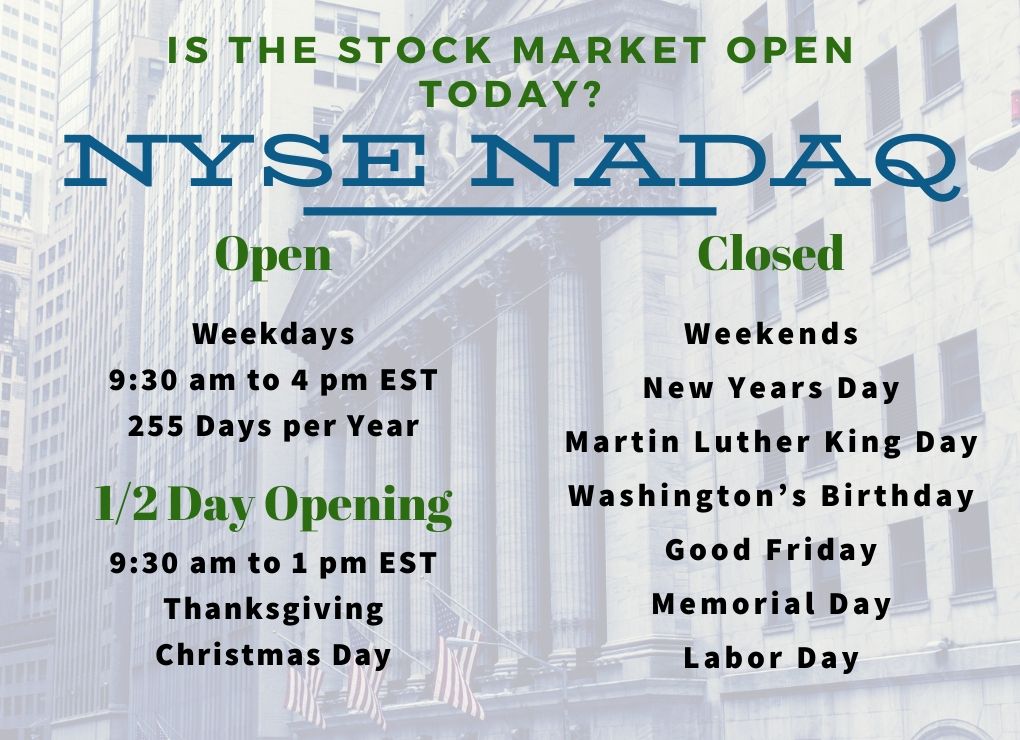
For instance, US markets observe holidays like New Year’s Day, Martin Luther King, Jr. Day, Presidents’ Day, Good Friday, Memorial Day, Juneteenth National Independence Day, Independence Day, Labor Day, Thanksgiving Day, and Christmas Day. During these days, equity, bond, and often commodity markets are completely shut down. The London Stock Exchange, conversely, will observe UK-specific bank holidays, while Asian markets will close for local festivals and national celebrations. Investors with diversified portfolios across different geographies must therefore consult multiple market calendars to stay informed. These holiday closures provide a necessary break for participants and often coincide with reduced economic activity, making continuous trading less meaningful.
Early Closures and Half-Days
In addition to full-day closures, markets occasionally operate on a reduced schedule, closing early or observing “half-days.” These abbreviated trading sessions are typically scheduled around major holidays, acting as a bridge between a full trading week and an extended break. For example, US stock markets might close early on the day before Christmas or on the day before Independence Day.
Early closures serve several purposes. They acknowledge the reduced trading volume and institutional participation often seen around holiday periods, allowing market professionals to join in holiday observances without completely sacrificing a trading day. While trading volumes are generally lighter during these sessions, the market can still experience significant price movements, especially if unexpected news breaks. For investors, it’s crucial to be aware of these shortened hours, as they affect the window for executing trades, managing positions, and reacting to market developments. Missing an early close can lead to being locked into or out of positions for longer than anticipated, potentially exposing an investor to unforeseen overnight risks.
Types of Markets and Their Unique Schedules
The financial landscape is not monolithic; it comprises various markets, each with its own characteristics, participants, and, crucially, operating hours. Understanding these distinctions is vital for anyone engaging with financial assets, as a “closed market” for one asset class might be a bustling trading floor for another.
Stock Markets (Equities)
Stock markets, where shares of publicly traded companies are bought and sold, are perhaps the most commonly referenced when discussing market hours. Major global stock exchanges generally operate during standard business hours in their respective time zones, typically five days a week. For example:
- New York Stock Exchange (NYSE) and NASDAQ: 9:30 AM to 4:00 PM Eastern Time (ET), Monday through Friday.
- London Stock Exchange (LSE): 8:00 AM to 4:30 PM Greenwich Mean Time (GMT), Monday through Friday.
- Tokyo Stock Exchange (TSE): 9:00 AM to 3:00 PM Japan Standard Time (JST), with a lunch break, Monday through Friday.
These schedules are designed to align with typical business operations and allow for efficient trade matching and settlement. While regular hours define the core trading window, many exchanges also offer pre-market and after-hours trading sessions. These extended hours allow institutional investors and, increasingly, retail traders to react to news released outside normal market hours, though liquidity is often thinner, and volatility can be higher.
Bond Markets (Fixed Income)
Bond markets, where debt securities like government and corporate bonds are traded, often have distinct operating hours compared to equity markets. While they also observe weekends and national holidays, their daily trading schedules can sometimes differ. In the US, for instance, the Bond Market Association (BMA) often recommends early closes for bond trading on specific days, particularly before major holidays, even when equity markets remain open for a full session.
The over-the-counter (OTC) nature of many bond trades, involving direct negotiations between parties rather than through a central exchange, can lead to more flexible trading hours, but institutional participants typically adhere to generally accepted industry standards. For individual investors, accessing bond markets through brokers or mutual funds means their ability to transact is tied to the underlying market’s and their broker’s operational hours.
Commodity Markets
Commodity markets, which deal in raw materials like oil, gold, silver, agricultural products (corn, wheat), and natural gas, frequently operate on extended schedules due to their global importance and continuous production cycles. Futures contracts for many commodities, traded on exchanges like the CME Group (which includes NYMEX and COMEX), can have near 24-hour electronic trading capabilities from Sunday evening through Friday afternoon, with short daily breaks for processing.
For instance, crude oil futures might trade from Sunday evening ET straight through to Friday afternoon ET, only pausing for an hour or so each day and for the weekend. This continuous trading is essential because global events impacting supply and demand can occur at any time, and producers and consumers need the ability to hedge their positions around the clock. However, while electronic trading is extensive, the “pit” or open outcry trading, where it still exists, adheres to more conventional daily hours.
Foreign Exchange (Forex) Market
The foreign exchange (forex) market is unique in its operational structure, often described as a 24-hour market, five days a week. Unlike centralized stock exchanges, forex is a global, decentralized OTC market. Trading follows the sun, opening with the Sydney session, moving to Tokyo, then London, and finally New York, before looping back to Sydney.
This overlapping of major financial centers ensures that traders can always access the market from Sunday evening (ET) until Friday evening (ET), pausing only for the weekend. While specific institutional desks might operate within business hours, the underlying market infrastructure is continuously active. This constant availability means there are no “holiday closures” in the traditional sense for the entire forex market, though liquidity can thin out significantly during major national holidays in the primary financial centers.
Cryptocurrency Markets
Cryptocurrency markets stand apart from all traditional financial markets in their operational schedule: they are open 24 hours a day, 7 days a week, 365 days a year. Because cryptocurrencies like Bitcoin and Ethereum are based on decentralized blockchain networks, they are not tied to physical exchanges, national holidays, or traditional banking hours.

This continuous availability means that buying, selling, and trading cryptocur can occur at any moment, regardless of weekends or public holidays. While this offers unparalleled flexibility, it also means that investors are constantly exposed to market movements and volatility without the traditional “breather” periods that other markets offer. This non-stop nature is a defining characteristic of the digital asset space and represents a significant departure from conventional financial market structures.
The Impact of Market Closures on Investors
Market closures, whether for a weekend, a holiday, or an early close, are not merely administrative pauses; they have tangible and often significant implications for investors. Understanding these impacts is crucial for managing portfolios effectively and mitigating potential risks.
Trading Limitations and Liquidity
The most immediate impact of a market closure is the inability to execute trades. During these periods, investors cannot buy or sell securities, adjust positions, or react to new information. This can be particularly problematic for short-term traders or those employing highly time-sensitive strategies. For instance, if unexpected negative news about a company breaks during a market holiday, a shareholder cannot sell their shares until the market reopens, potentially exposing them to a significant loss.
Furthermore, market closures can affect liquidity. While liquidity is obviously zero during a full closure, the periods immediately before and after closures, especially extended ones, can also see reduced liquidity. Many institutional participants and market makers reduce their activity as a holiday approaches, which can lead to wider bid-ask spreads and increased difficulty in executing large orders without impacting prices. Upon reopening, there can be a rush of pent-up demand or supply, sometimes leading to initial volatility before liquidity normalizes.
Information Lag and Price Gaps
One of the most significant consequences of market closures is the potential for information lag and subsequent price gaps. News—whether economic reports, corporate earnings, geopolitical events, or natural disasters—does not adhere to market hours. If critical information is released during an extended closure, market participants cannot immediately factor it into asset prices.
When the market finally reopens, all this accumulated information is suddenly processed, often leading to a sharp adjustment in prices known as a “gap.” A stock might open significantly higher or lower than its previous closing price, without any trading occurring in between. This can be a boon for investors on the right side of the gap, but a severe detriment to those on the wrong side. Long-term investors are generally less susceptible to the immediate shock of price gaps, but even they must be aware that their portfolio’s value could change dramatically overnight after a closure.
Portfolio Management and Strategy Adjustments
Market closures necessitate careful consideration in portfolio management and strategy. Investors need to plan ahead, especially before extended holiday breaks. This might involve:
- Rebalancing: Conducting any necessary portfolio rebalancing before the closure to avoid being unable to adjust positions.
- Order Placement: Understanding that limit orders or stop-loss orders placed before a closure might not be executed if the market opens with a significant gap beyond the specified price. Some platforms offer “gap protection” for stop-loss orders, but it’s not universal.
- Risk Assessment: Reassessing exposure to volatile assets or news-sensitive positions. Some investors choose to reduce their exposure to certain assets before an extended closure to mitigate the risk of adverse price gaps.
- Cash Management: Ensuring sufficient cash reserves for any post-closure opportunities or unexpected margin calls, particularly for leveraged positions.
For active traders, the absence of trading opportunities during closures means their capital is effectively “frozen.” They must adjust their daily strategies to account for these periods, often winding down positions or reducing leverage before market close on the last trading day.
Settlement and Clearing Processes
While less visible to the average retail investor, market closures also affect the backend operations of financial transactions, particularly settlement and clearing. After a trade is executed, there’s a period (typically T+2 for most equities) during which the transaction is finalized, and ownership officially transfers. Market holidays can delay this process, pushing settlement dates further out. This can impact the availability of funds for subsequent trades or withdrawals. Banks and clearinghouses also observe these holidays, which can ripple through the entire financial system. Understanding these underlying mechanics helps in appreciating why closures are not merely about preventing trading but also about allowing the critical support infrastructure of the financial system to reset and process transactions.
Navigating Market Closures: Best Practices
For investors aiming for success in the financial markets, merely knowing when markets are closed is insufficient; developing strategies to effectively navigate these periods is paramount. Proactive planning and a disciplined approach can help mitigate risks and even uncover opportunities that arise from market downtime.
Staying Informed with Market Calendars
The simplest yet most effective best practice is to stay meticulously informed about market holidays and special trading hours. This means regularly consulting official market calendars for all the exchanges where you hold investments or plan to trade. Major financial news outlets, brokerage platforms, and exchange websites typically provide these calendars well in advance.
Maintain a personal calendar or set digital reminders for upcoming full closures, early closes, and half-days, particularly for international markets if your portfolio is globally diversified. This foresight allows you to plan your trading and investment activity accordingly, avoiding last-minute surprises or missed opportunities due to an inability to transact. Being prepared for these breaks is the first line of defense against their potential negative impacts.
Utilizing After-Hours and Pre-Market Trading (where applicable)
For stock market participants, the advent of electronic trading has introduced after-hours and pre-market sessions, offering limited trading opportunities outside regular market hours. While these sessions are not available during full market closures (like weekends or holidays), they can be valuable during overnight periods or around shorter holiday breaks when news might break.
- Pre-Market Trading: Typically runs from 4:00 AM to 9:30 AM ET for US markets.
- After-Hours Trading: Usually from 4:00 PM to 8:00 PM ET for US markets.
These sessions allow investors to react to earnings reports, economic data, or breaking news before the main market opens or after it closes. However, it’s critical to remember that liquidity is generally lower, and volatility can be higher during these extended hours, potentially leading to wider spreads and greater price swings. Use limit orders to control your execution price and be aware of the increased risks associated with trading in thinner markets.
Risk Management Strategies
Market closures inherently introduce periods of illiquidity and the potential for significant price gaps upon reopening. Robust risk management strategies are therefore essential:
- Review Open Positions: Before an extended closure, review all open positions. Consider whether you are comfortable holding them through a period where you cannot react to news.
- Adjust Stop-Loss Orders: If you use stop-loss orders, be aware that these may not protect you against price gaps that occur during market closures. If the market opens below your stop-loss price, your order will likely be executed at the next available price, which could be significantly worse. Some brokers offer guaranteed stop-loss orders (often for a premium) which might provide better protection against gaps. Alternatively, consider closing highly volatile or news-sensitive positions entirely before a long closure.
- Reduce Leverage: For traders using margin or leverage, extended market closures amplify risk. An adverse price gap could lead to a margin call or even forced liquidation upon market reopening. Reducing leverage or closing highly leveraged positions before a closure is a prudent step to protect your capital.
- Diversification: A well-diversified portfolio across different asset classes and geographies can help cushion the impact of a closure in a single market. While one market might be closed, others might be open, potentially offering some liquidity or offsetting movements.
Global Perspective and Diversification
The world’s financial markets are interconnected but not synchronized. When Wall Street is closed, markets in London, Tokyo, or Sydney might be fully operational. Embracing a global perspective and strategically diversifying your investments across different time zones and national markets can offer several advantages:
- Continuous Exposure: While your domestic market is closed, investments in foreign markets might continue to generate returns or provide risk exposure.
- Geographic Diversification: Reduces concentration risk associated with a single economy’s market closures or specific national holidays.
- Information Flow: Observing how other global markets react to overnight news can provide valuable insights and potentially inform your strategy when your primary market reopens.
However, global diversification also requires managing foreign exchange risk and understanding the distinct regulatory environments and trading conventions of each market.
In conclusion, market closures are an inherent part of the financial landscape. By understanding their various forms, the unique schedules of different asset classes, their potential impact on investments, and by employing sound risk management and proactive planning, investors can transform these periods from potential pitfalls into manageable aspects of their overall financial strategy. Staying informed, adaptable, and disciplined remains the cornerstone of navigating the dynamic rhythms of the global markets, whether they are open for business or temporarily paused.
aViewFromTheCave is a participant in the Amazon Services LLC Associates Program, an affiliate advertising program designed to provide a means for sites to earn advertising fees by advertising and linking to Amazon.com. Amazon, the Amazon logo, AmazonSupply, and the AmazonSupply logo are trademarks of Amazon.com, Inc. or its affiliates. As an Amazon Associate we earn affiliate commissions from qualifying purchases.