
Investing in the stock market can seem like a daunting endeavor, shrouded in jargon and perceived complexity. However, for those looking to grow their wealth over the long term, understanding how to invest in stocks is an indispensable skill. It offers a powerful avenue to potentially outpace inflation, generate passive income, and build substantial financial security. This guide aims to demystify the process, providing a clear, professional, and insightful roadmap for anyone ready to embark on their investment journey.
Understanding the Stock Market Basics
Before you commit your hard-earned capital, a foundational understanding of what the stock market is and how it functions is paramount. Investing blindly is akin to sailing without a compass – risky and often unproductive.
What is a Stock?
At its core, a stock (or equity) represents a fractional ownership interest in a company. When you buy a stock, you become a shareholder, meaning you own a small piece of that company. Publicly traded companies issue stocks to raise capital for various purposes, such as expanding operations, research and development, or debt repayment. In return for your investment, shareholders have a claim on the company’s assets and earnings, and often a right to vote on certain corporate matters.
The value of a stock fluctuates based on market demand, company performance, economic conditions, and investor sentiment. When a company performs well, its stock price tends to rise as more investors want to own a piece of that success. Conversely, poor performance or negative economic news can lead to a drop in stock price.
Why Invest in Stocks?
The primary allure of stock market investing lies in its potential for growth and wealth creation. Historically, stocks have outperformed most other asset classes over extended periods.
- Capital Appreciation: The most common way investors profit is through capital appreciation. If you buy a stock at one price and sell it later at a higher price, the difference is your profit.
- Dividends: Many companies share a portion of their profits with shareholders in the form of dividends, typically paid quarterly. These regular payouts can provide a steady stream of income, especially for long-term investors, and can be reinvested to accelerate growth through compounding.
- Beating Inflation: Inflation erodes the purchasing power of your money over time. While savings accounts offer minimal returns, stocks have historically provided returns that significantly outpace inflation, helping your money grow in real terms.
- Accessibility: With the advent of online brokerage platforms and fractional shares, investing in the stock market is more accessible than ever, even with a modest starting capital.
Key Terms to Know
Navigating the stock market requires familiarity with some fundamental terminology.
- Market Capitalization (Market Cap): This is the total value of a company’s outstanding shares, calculated by multiplying the current share price by the number of shares outstanding. It’s often used to classify companies as large-cap, mid-cap, or small-cap.
- Earnings Per Share (EPS): A company’s net profit divided by the number of outstanding shares. It indicates how much money a company makes for each share of its stock.
- Price-to-Earnings (P/E) Ratio: The current share price divided by its EPS. It’s a common valuation metric indicating how much investors are willing to pay per dollar of earnings. A high P/E might suggest investors expect high future growth.
- Diversification: The strategy of spreading your investments across various assets to minimize risk. Instead of putting all your money into one stock, you invest in multiple companies, industries, and asset classes.
- Brokerage Account: An investment account with a financial institution that allows you to buy and sell securities like stocks, bonds, and mutual funds.
Preparing for Your Investment Journey
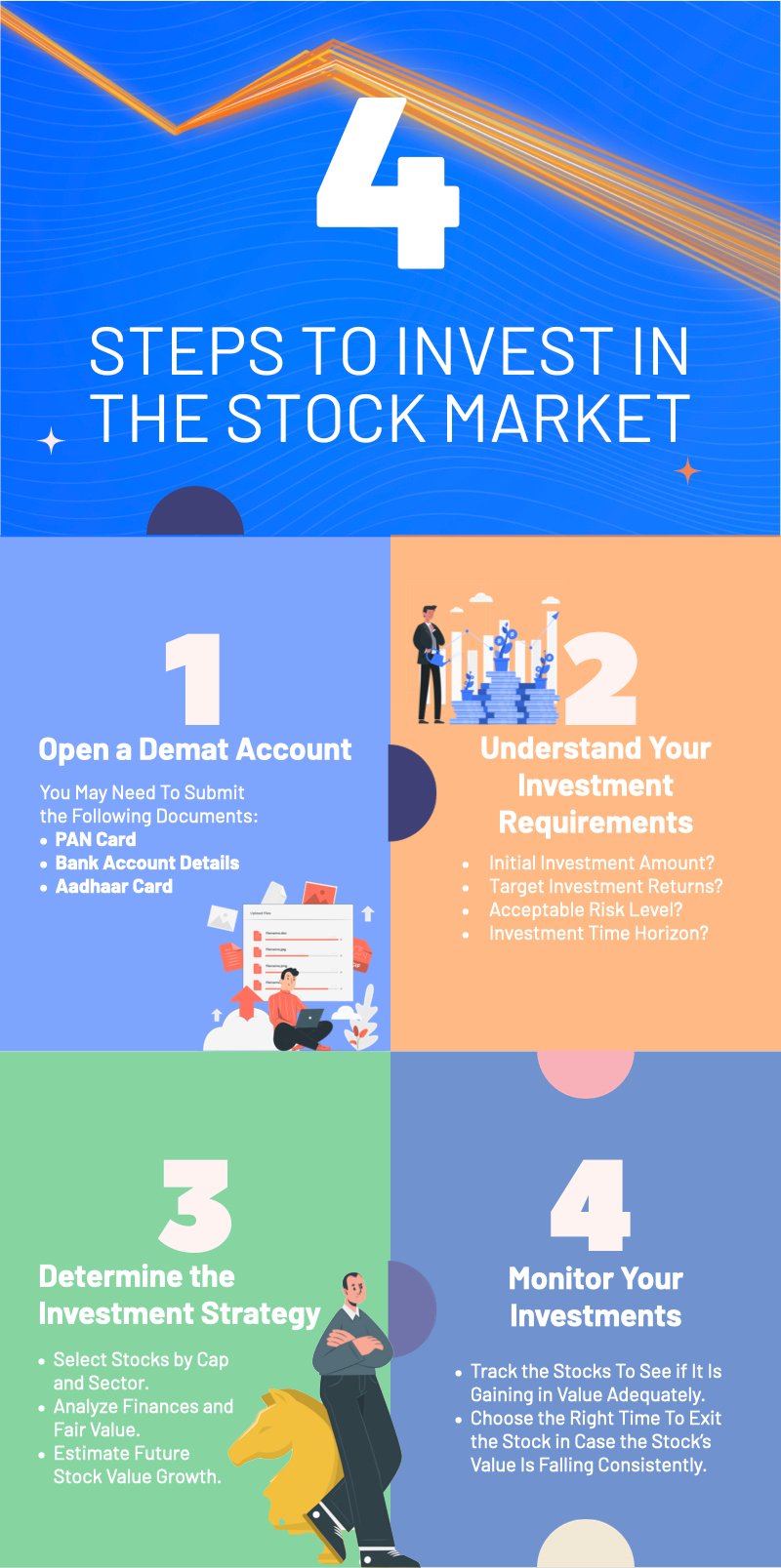
Successful investing isn’t just about picking the right stocks; it begins with robust personal financial planning and self-assessment. Laying a solid groundwork is crucial for long-term success and mitigating potential pitfalls.
Define Your Financial Goals
Before you even think about which stock to buy, clarify why you are investing. Are you saving for retirement, a down payment on a house, your child’s education, or simply aiming for general wealth accumulation?
Defining your goals will help you determine:
- Time Horizon: Short-term (under 5 years) vs. long-term (5+ years). Your time horizon significantly influences the level of risk you can comfortably take.
- Required Returns: How much growth do you realistically need to achieve your goals?
- Investment Amount: How much can you consistently afford to invest?
Specific, measurable, achievable, relevant, and time-bound (SMART) goals provide direction and motivation.
Assess Your Risk Tolerance
Every investment carries a degree of risk, and stocks are no exception. Understanding your personal risk tolerance – your ability and willingness to stomach fluctuations in your investment’s value – is vital.
- Conservative Investors: Prioritize capital preservation, often preferring lower-volatility investments.
- Moderate Investors: Seek a balance between growth and safety, willing to accept some risk for higher potential returns.
- Aggressive Investors: Are comfortable with higher risk in pursuit of maximum growth, understanding that significant losses are also possible.
Be honest with yourself. Experiencing market downturns is inevitable. If you know you’d panic and sell at the first sign of trouble, a less volatile strategy might be more suitable, at least initially.
Build an Emergency Fund First
This step cannot be overstressed. Before you invest in stocks, ensure you have a robust emergency fund in a highly liquid, easily accessible account (like a high-yield savings account). This fund should ideally cover 3 to 6 months (or even more) of essential living expenses.
Why is this critical? If an unforeseen expense arises (job loss, medical emergency, car repair) and you don’t have an emergency fund, you might be forced to sell your investments at an inopportune time, potentially incurring losses or missing out on future gains. An emergency fund acts as a financial buffer, allowing your investments to weather market storms and grow undisturbed.
Research and Education are Key
The stock market is dynamic, and continuous learning is fundamental. Dedicate time to understanding economic principles, company analysis, and market trends. Read financial news, follow reputable financial publications, and consider taking online courses. The more informed you are, the better equipped you’ll be to make sound investment decisions and avoid costly mistakes driven by speculation or hype.
Choosing Your Investment Path
Once you have a solid financial foundation and a clear understanding of your goals and risk tolerance, the next step is to decide how you want to manage your investments. There isn’t a one-size-fits-all solution; the best path depends on your time commitment, expertise, and preference for control.
Self-Directed Investing (DIY)
For those who enjoy research, have a keen interest in individual companies, and are willing to dedicate time to managing their portfolio, self-directed investing might be the ideal route.
- Pros: Complete control over your investments, potentially lower fees (especially with commission-free trading), and the satisfaction of building your own portfolio.
- Cons: Requires significant time commitment for research, analysis, and ongoing portfolio management. Can be emotionally challenging during market volatility, and errors due to inexperience can be costly.
- Best For: Experienced investors, those with a strong interest in finance, and individuals who are comfortable making their own decisions.
Robo-Advisors
Robo-advisors are automated, algorithm-driven financial planning services that manage portfolios with little to no human intervention. You typically answer a questionnaire about your financial goals and risk tolerance, and the robo-advisor builds and manages a diversified portfolio of exchange-traded funds (ETFs) or mutual funds for you.
- Pros: Low fees, easy to use, automated rebalancing and tax-loss harvesting, excellent for beginners or those with limited capital. Provides instant diversification.
- Cons: Less personalized advice than a human advisor, limited investment options (usually ETFs), and may not be suitable for complex financial situations.
- Best For: Beginners, those with smaller portfolios, and investors seeking a low-cost, hands-off approach to diversified investing.
Financial Advisors
A traditional financial advisor is a human professional who provides personalized financial advice, wealth management, and investment planning services. They can help with everything from setting financial goals to retirement planning, tax strategies, and estate planning.
- Pros: Highly personalized advice, comprehensive financial planning, access to a wider range of investment products, and emotional support during market downturns.
- Cons: Higher fees (either as a percentage of assets under management or hourly rates), may require a higher minimum investment.
- Best For: Individuals with complex financial situations, high net worth, those needing comprehensive financial planning, or investors who prefer expert guidance and a hands-on relationship.
Practical Steps to Start Investing
Once you’ve chosen your path, it’s time to move from planning to action. These steps outline the practicalities of opening an account and making your first investments.
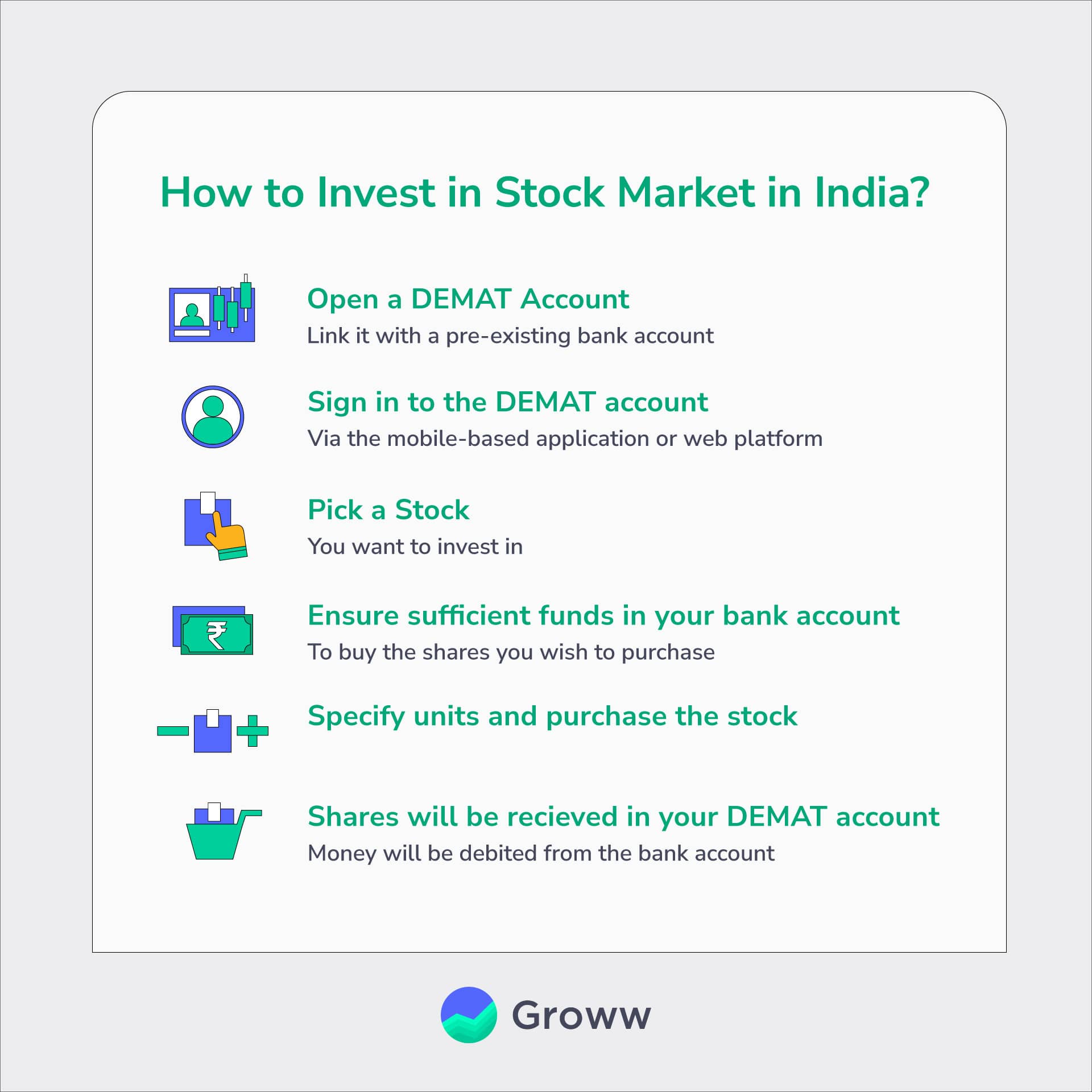
Open a Brokerage Account
This is your gateway to the stock market. You’ll need to choose an online brokerage firm or a financial institution. When selecting a broker, consider:
- Fees and Commissions: Look for commission-free stock and ETF trading.
- Platform and Tools: Is the platform user-friendly? Does it offer research tools, educational resources, and analytical capabilities that meet your needs?
- Investment Options: Does it offer the types of investments you want (individual stocks, ETFs, mutual funds, options)?
- Customer Service: Is reliable customer support available when you need it?
You’ll typically need to provide personal information (SSN, address, employment details) and link a bank account.
Types of Accounts:
- Taxable Brokerage Account: A standard investment account where capital gains and dividends are taxed annually.
- Retirement Accounts (IRA/401(k)): Offer tax advantages, such as tax-deferred growth (Traditional IRA/401(k)) or tax-free withdrawals in retirement (Roth IRA/401(k)). These are often the best places to start investing due to their tax benefits.
Fund Your Account
Once your brokerage account is open, you’ll need to transfer money into it. Common methods include:
- Electronic Funds Transfer (EFT): Linking your bank account for free, automated transfers.
- Wire Transfer: Faster but often incurs a fee.
- Check Deposit: Slower processing time.
- Rollover: Transferring funds from an old retirement account (e.g., old 401(k)).
Start with an amount you are comfortable losing, especially if you are new to investing. It’s better to start small and learn than to invest a large sum and make impulsive decisions.
Diversify Your Portfolio
This is a cardinal rule of investing: do not put all your eggs in one basket. Diversification is the strategy of spreading your investments across various assets, industries, and geographical regions to minimize risk. If one investment performs poorly, others may perform well, cushioning the impact on your overall portfolio.
- Asset Classes: Don’t just stick to stocks. Consider bonds, real estate, or other alternative investments.
- Industries: Invest in companies from different sectors (tech, healthcare, finance, consumer goods).
- Market Capitalization: Include a mix of large-cap, mid-cap, and small-cap companies.
- Geographic Diversification: Look beyond your home country’s market.
ETFs and mutual funds are excellent tools for instant diversification, as they hold baskets of many different stocks or other assets.
Understand Order Types
When you buy or sell stocks, you’ll place an order with your broker. Knowing the common order types can help you execute trades more effectively:
- Market Order: An order to buy or sell immediately at the best available current price. While simple, the execution price might be slightly different from what you saw moments before, especially in volatile markets.
- Limit Order: An order to buy or sell at a specific price or better. For buying, the order will only execute if the stock price drops to your specified limit or lower. For selling, it will execute if the price rises to your limit or higher. This gives you more control over the price.
- Stop-Loss Order: An order to sell a stock if its price falls to a specified level. This is used to limit potential losses. However, in fast-moving markets, the actual execution price might be lower than your stop price.
Strategies for Long-Term Success
Investing in stocks is a marathon, not a sprint. Adopting a long-term perspective and implementing disciplined strategies are crucial for navigating market volatility and achieving your financial goals.
Dollar-Cost Averaging (DCA)
Dollar-cost averaging is an investment strategy where you invest a fixed amount of money at regular intervals (e.g., $100 every month), regardless of the stock’s price.
- Benefit: This strategy reduces the impact of volatility. When prices are high, your fixed amount buys fewer shares; when prices are low, it buys more shares. Over time, this averages out your purchase price and reduces the risk of making a large investment just before a market downturn.
- Simplicity: It automates your investing and takes emotion out of the equation.
Reinvesting Dividends
If you own dividend-paying stocks or ETFs, consider reinvesting those dividends back into the same security. This means instead of receiving cash payouts, your dividends are used to buy additional shares.
- Power of Compounding: Reinvesting dividends allows you to harness the power of compounding, where your earnings generate further earnings. Over long periods, this can significantly accelerate your wealth growth. Many brokerage accounts offer Dividend Reinvestment Plans (DRIPs) automatically.
Regular Portfolio Review and Rebalancing
Your investment portfolio is not a “set it and forget it” affair. It requires periodic review and, if necessary, rebalancing to ensure it remains aligned with your financial goals and risk tolerance.
- Review: Annually or semi-annually, assess your portfolio’s performance, evaluate if your investments still meet your objectives, and check for any changes in your personal financial situation.
- Rebalance: Over time, some assets in your portfolio may grow faster than others, throwing your desired asset allocation out of balance. Rebalancing involves selling some of the outperforming assets and buying more of the underperforming ones to restore your target allocation. This helps manage risk and ensures you’re not overly exposed to any single asset class.

Avoid Emotional Decisions
One of the biggest pitfalls for new investors is allowing emotions to dictate investment decisions. Market fluctuations are normal; there will be periods of growth, stagnation, and decline.
- Resist Panic Selling: During downturns, the urge to sell everything to cut losses can be strong. However, often the best strategy is to stay disciplined and remember your long-term goals. History shows that markets tend to recover.
- Avoid Chasing Hype: Similarly, don’t jump into “hot” stocks solely based on hype or FOMO (Fear Of Missing Out). Thorough research and adherence to your investment plan should always guide your choices.
- Long-Term Perspective: Focus on your long-term objectives. Short-term market noise is just that—noise. Successful investing is about patient, disciplined growth over years, not days or weeks.
Investing in stocks offers a potent avenue for building wealth and achieving financial freedom. While it demands education, discipline, and a willingness to learn, the rewards for those who approach it thoughtfully can be substantial. By understanding the basics, preparing diligently, choosing an appropriate investment path, and adhering to proven strategies, you can confidently embark on your journey to invest money in stocks and secure your financial future.
aViewFromTheCave is a participant in the Amazon Services LLC Associates Program, an affiliate advertising program designed to provide a means for sites to earn advertising fees by advertising and linking to Amazon.com. Amazon, the Amazon logo, AmazonSupply, and the AmazonSupply logo are trademarks of Amazon.com, Inc. or its affiliates. As an Amazon Associate we earn affiliate commissions from qualifying purchases.