
The story of Spirit Airlines, a prominent player in the ultra-low-cost carrier (ULCC) segment, isn’t a singular “lightbulb moment” but rather an evolution rooted in the strategic rebranding and market positioning efforts of a nascent aviation venture. To precisely answer “when did Spirit Airlines start,” one must look at two distinct phases: its foundational origins as a charter operation and its pivotal transformation into a scheduled commercial airline under the Spirit Airlines brand. While its roots trace back to 1983 as a Michigan-based charter tour operator called Charter One, the brand we recognize today as Spirit Airlines officially began scheduled passenger service in 1992. This journey from a regional charter service to an industry-shaping ULCC offers a compelling case study in brand evolution, strategic re-positioning, and the deliberate cultivation of a distinct market identity.

The Genesis of a Disruptor: From Charter to Scheduled Service
The very inception of Spirit Airlines under its current guise was a strategic branding decision, aimed at pivoting from a niche charter operation to a broader market presence. This shift wasn’t merely operational; it was a fundamental redefinition of its corporate identity and market offering.
Early Beginnings: Charter One and its Vision (1983-1992)
Before the iconic yellow planes and “Bare Fare” philosophy, the company began its life as Charter One in 1983. Founded in Macomb County, Michigan, Charter One initially carved out a niche by offering package travel tours to popular destinations like Atlantic City, Las Vegas, and the Bahamas. This early phase was critical in building operational experience and understanding the intricacies of the travel industry. However, the charter model, while profitable for specific segments, limited scale and brand recognition. The vision began to shift towards a more conventional airline model, identifying an opportunity to serve a broader public with scheduled services rather than ad-hoc charters. This period can be seen as the incubation phase, where the underlying operational capabilities and market insights were quietly being developed, setting the stage for a more ambitious brand launch.
The Rebrand and Relaunch: Spirit Airlines Takes Flight (1992)
The true birth of Spirit Airlines as a distinct brand entity occurred in 1992. This year marked the pivotal strategic decision to transition from a charter operator to a scheduled commercial airline. With this transition came a new name, a new operational model, and the beginning of a new brand identity. Spirit Airlines commenced its first scheduled passenger service from Detroit to Atlantic City, signaling a clear departure from its charter roots. This was a deliberate act of rebranding and market entry, positioning the company as a challenger in the competitive airline industry. The change wasn’t just cosmetic; it represented a strategic move to tap into a larger market segment and build a sustainable brand based on consistent, scheduled service. The early routes focused on high-demand leisure destinations, a nod to its charter heritage but now executed within a scheduled framework.
Defining its Niche: The Ultra-Low-Cost Carrier Model Emerges
While the “ultra-low-cost” model wasn’t fully crystallized at Spirit’s inception in 1992, the seeds were sown during this transitional period. The decision to enter the scheduled service market necessitated a clear differentiation strategy. The established legacy carriers dominated the market with full-service offerings and complex fare structures. Spirit, from its earliest days, began to experiment with a more streamlined approach, understanding that cost efficiency would be paramount to competing effectively. This foundational period allowed the company to observe market gaps and customer desires, eventually leading to the refinement of a business model that would become synonymous with its brand: offering extremely low base fares and charging for ancillary services. This strategic direction would later become the defining characteristic of the Spirit Airlines brand, distinguishing it sharply from its competitors.
Crafting a Distinct Identity: Spirit’s Brand Strategy in a Competitive Market
From its official commencement of scheduled services in 1992, Spirit Airlines embarked on a journey to forge a unique brand identity, one that would both attract its target audience and differentiate it within a crowded marketplace. This required a bold and sometimes controversial approach to brand positioning and communication.
The “Bare Fare” Promise: A Bold Positioning
The core of Spirit’s brand strategy, emerging more distinctly in the late 1990s and early 2000s, was the “Bare Fare” promise. This wasn’t merely a pricing strategy; it was a fundamental brand positioning. Spirit essentially declared to the market: “We offer the lowest possible price to get you from point A to point B, and everything else is optional.” This required courage, as it directly challenged the conventional expectations of airline travel. The brand implicitly communicated that convenience, complimentary services, and luxurious amenities were not part of its core offering. Instead, its value proposition was singular: affordability. This clear, albeit stark, promise helped Spirit carve out a loyal customer base of budget-conscious travelers who prioritized price above all else, establishing a clear brand identity around cost savings.
Communicating Value (and Controversy): The Brand Voice
Spirit Airlines’ brand voice has always been unapologetically direct, often playful, and sometimes provocative. From its advertising campaigns to its in-flight announcements, the brand has consistently used humor and blunt language to reinforce its “you get what you pay for” message while simultaneously highlighting its low fares. This distinct brand voice has served multiple purposes: it cuts through the noise, it resonates with a segment of the audience that appreciates transparency, and it manages expectations upfront. While this communication style has sometimes drawn criticism and generated controversy, it has undoubtedly made the Spirit brand highly recognizable and memorable. It reflects a strategic choice to be distinctive and stand out, even if it meant alienating those who prefer a more traditional, less audacious brand persona. The brand’s use of colorful, often pun-filled slogans reinforces this irreverent yet direct approach.
Visual Identity: Yellow and Black, Unmistakable Presence

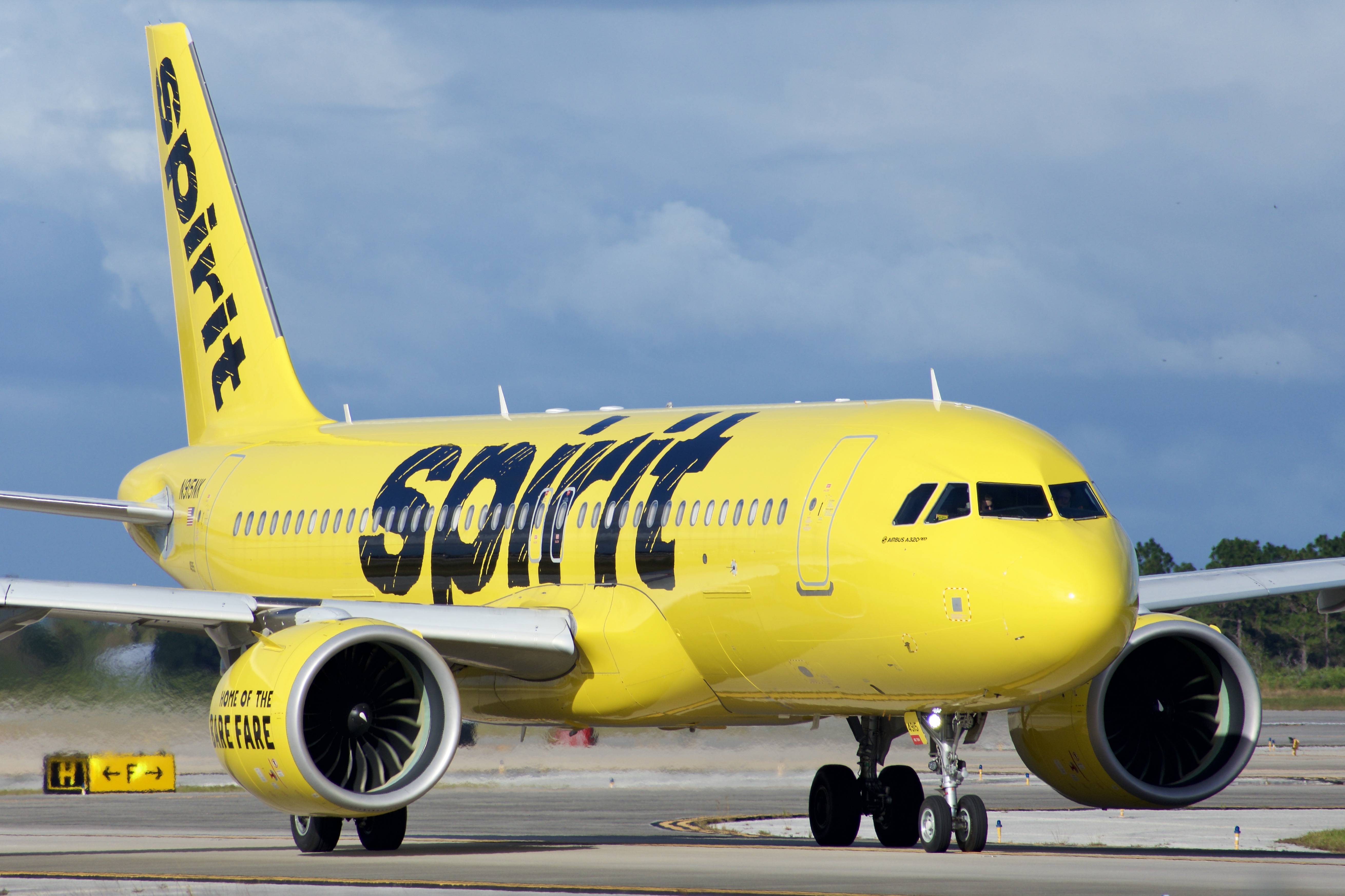
A crucial element in cementing Spirit Airlines’ brand presence has been its distinctive visual identity. The adoption of a vibrant yellow livery, often accented with black, makes Spirit’s aircraft instantly recognizable. In an industry where many airlines opt for shades of blue, white, or red, Spirit’s choice of yellow is a bold statement. Yellow, often associated with energy, optimism, and attention, perfectly aligns with the brand’s energetic and no-frills attitude. This strong visual branding ensures high visibility and helps reinforce brand recall, whether on the tarmac, in airport terminals, or in advertising. The consistent application of this color scheme across its fleet, branding materials, and digital platforms creates a cohesive and unmistakable corporate identity, an essential component of any successful brand strategy.
Evolution of a Brand: Adapting to Market Dynamics and Consumer Perception
Since its 1992 launch as a scheduled carrier, Spirit Airlines has continuously evolved its brand, not just in terms of operations but also in how it presents itself and manages its public perception amidst changing market dynamics.
Growth and Expansion: Scaling the Brand
The early 2000s saw Spirit Airlines embark on significant growth, expanding its route network and fleet. This expansion was a critical phase for the brand, as it moved beyond its initial regional focus to become a national, and eventually international, player. Scaling a brand requires consistency in delivering its core promise across new markets and to a larger customer base. Spirit achieved this by relentlessly sticking to its ULCC model, ensuring that its brand promise of low fares remained central to its offering, regardless of the destination. This strategic growth allowed the Spirit brand to permeate more markets, increasing its recognition and market share, albeit not without challenges in maintaining service perceptions.
Managing Brand Reputation: Challenges and Opportunities
The “Bare Fare” model, while effective in attracting a specific demographic, has also presented significant brand reputation challenges. The public’s perception of Spirit Airlines is often polarized, with some applauding its affordability and others criticizing its additional fees and perceived lack of amenities. Spirit has had to actively manage this dual perception. Its strategy has often involved leaning into its identity, emphasizing that the “price is right” for those who understand and accept its model. This involves continuous communication efforts to educate consumers about how the ULCC model works and to reinforce the transparency of its pricing. For a brand like Spirit, its reputation is intrinsically linked to its business model, and managing that narrative is a constant, ongoing effort in brand stewardship.
The Impact on the Airline Industry’s Brand Landscape
Spirit Airlines’ consistent adherence to its ULCC model since its scheduled service launch in 1992 has had a profound impact on the broader airline industry. It didn’t just compete; it forced other airlines, including legacy carriers, to re-evaluate their own pricing strategies and service offerings. The rise of Spirit and similar ULCC brands demonstrated a significant market appetite for extremely low-cost travel, prompting competitors to introduce basic economy fares or even launch their own low-cost subsidiaries. This ripple effect illustrates how a clearly defined brand, even one with a controversial model, can fundamentally shift market expectations and brand strategies across an entire sector. Spirit’s brand, in essence, helped democratize air travel, making it accessible to a wider demographic, and in doing so, reshaped the competitive branding landscape of the airline industry.
Lessons in Brand Building from Spirit Airlines’ Journey
Spirit Airlines’ journey from Charter One in 1983 to a scheduled carrier in 1992 and beyond offers valuable insights into brand building, particularly for those operating in highly competitive or disruptive market segments.
Clarity of Brand Promise
One of the most enduring lessons from Spirit Airlines’ brand history is the power of a clear and unwavering brand promise. From its early days as a scheduled carrier, and increasingly as it refined its ULCC model, Spirit has consistently communicated one core message: lowest possible base fare. This clarity, even when controversial, ensures that consumers know exactly what to expect. A brand without a clear promise struggles to differentiate itself and resonate with a target audience. Spirit’s brand isn’t for everyone, but for its intended market, its promise is unambiguous.
Resilience and Adaptability
The transformation from a charter service to a scheduled airline and then to a dominant ULCC required significant resilience and adaptability. The brand had to adapt its operational model, its marketing, and its customer service approach to align with each new phase. This journey underscores that successful brands are not static; they evolve with market opportunities while retaining core elements of their identity. Spirit’s ability to withstand criticism and remain steadfast in its unique brand positioning demonstrates a powerful resilience in the face of conventional industry norms.
Understanding Your Target Audience
Spirit Airlines’ brand strategy is a masterclass in understanding and serving a specific target audience. The brand doesn’t try to be all things to all people. Instead, it precisely targets the budget-conscious traveler who prioritizes price above all else, understanding their needs and pain points. By focusing intensely on this segment, Spirit has been able to build a brand that, while polarizing, is incredibly effective within its niche. This specialized approach, honed since its pivot to scheduled service in 1992, highlights the importance of deep audience insight in developing a brand that truly connects and delivers value.
aViewFromTheCave is a participant in the Amazon Services LLC Associates Program, an affiliate advertising program designed to provide a means for sites to earn advertising fees by advertising and linking to Amazon.com. Amazon, the Amazon logo, AmazonSupply, and the AmazonSupply logo are trademarks of Amazon.com, Inc. or its affiliates. As an Amazon Associate we earn affiliate commissions from qualifying purchases.