
Investing in stocks can seem like a daunting endeavor, a complex world reserved for financial gurus and Wall Street titans. Yet, for countless individuals, it represents a powerful pathway to wealth creation, financial independence, and the achievement of long-term financial goals. The truth is, with the right knowledge, disciplined approach, and a clear understanding of your personal financial landscape, stock market investing is accessible to everyone. This comprehensive guide will demystify the process, breaking down the essential steps to help you confidently embark on your journey as a stock market investor.
Understanding the Fundamentals of Stock Market Investing
Before diving into the mechanics of buying and selling, it’s crucial to grasp the foundational concepts that underpin the stock market. A solid understanding here will serve as your compass in navigating the often-volatile seas of investment.
What is a Stock?
At its core, a stock (also known as equity) represents a share of ownership in a company. When you buy a stock, you’re essentially buying a tiny piece of that company. As a shareholder, you gain a claim on the company’s assets and earnings. Publicly traded companies issue stocks to raise capital, which they then use to fund operations, expand, or develop new products. The value of these shares can fluctuate based on the company’s performance, industry trends, economic conditions, and investor sentiment.
Why Invest in Stocks?
The primary motivations for investing in stocks revolve around two key benefits:
- Capital Appreciation (Growth): This is perhaps the most alluring aspect. As a company grows, increases its profits, and expands its market share, the value of its stock typically rises. If you bought shares at $50 and they later trade at $100, you’ve seen a 100% capital appreciation.
- Dividends: Some companies, especially established and profitable ones, distribute a portion of their earnings to shareholders in the form of dividends. These are typically paid quarterly and can provide a steady stream of income, especially for retirement-focused portfolios. Reinvesting these dividends can significantly accelerate wealth accumulation through the power of compounding.
Understanding Risk and Return
It’s imperative to understand that investing in stocks always involves risk. There’s no guarantee of returns, and you could lose money. The value of your investment can go down as well as up. However, historically, stocks have offered higher returns over the long term compared to other asset classes like bonds or cash, compensating investors for taking on greater risk.
- Market Risk: The overall stock market can decline due to economic recessions, geopolitical events, or other broad factors.
- Company-Specific Risk: A particular company’s stock can fall due to poor management, competitive pressures, or adverse news, even if the broader market is performing well.
- Liquidity Risk: While most major stocks are highly liquid, meaning they can be easily bought and sold, some smaller company stocks might be harder to offload quickly without impacting their price.
The key is to manage these risks through diversification, long-term perspective, and continuous learning.
Preparing for Your Investment Journey
Successful investing isn’t about impulsive decisions; it’s about thoughtful preparation and a strategic mindset. Before you place your first trade, lay a solid foundation.
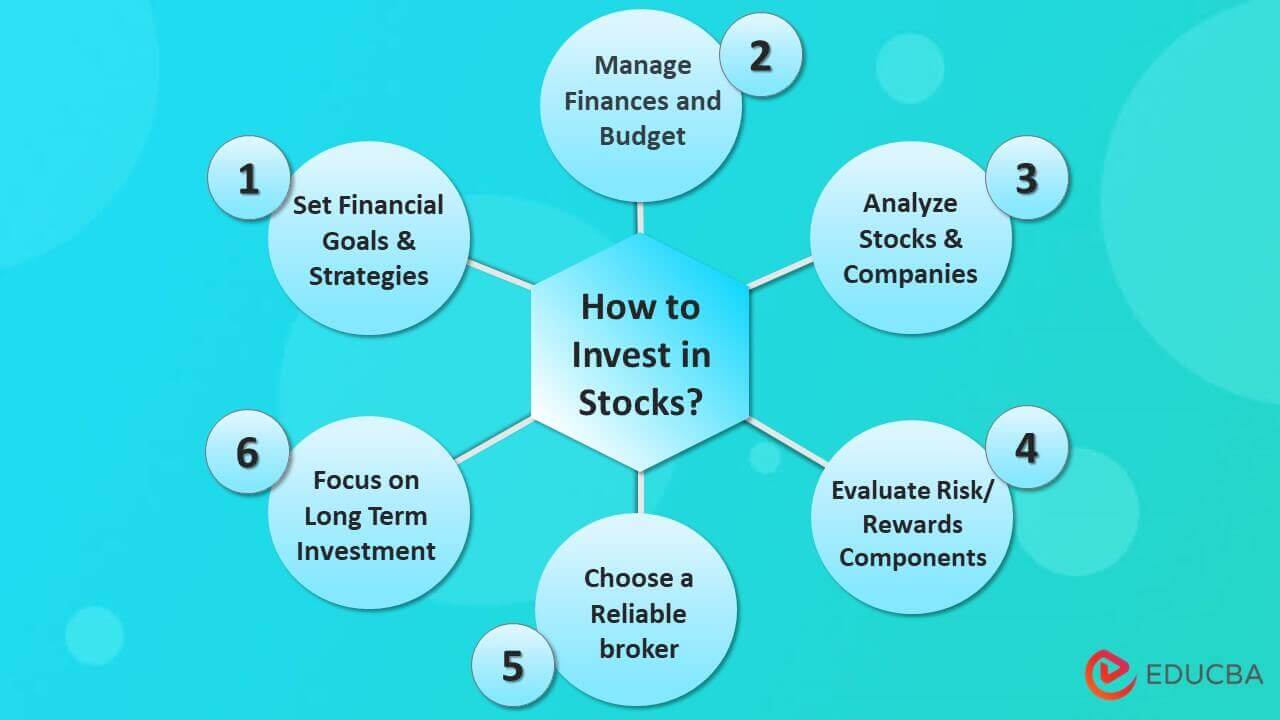
Define Your Financial Goals and Time Horizon
What are you investing for? Retirement? A down payment on a house? Your children’s education? Your goals will dictate your investment strategy.
- Short-term goals (under 3 years): Stocks are generally not recommended due to their volatility.
- Medium-term goals (3-10 years): A balanced approach with a mix of stocks and potentially less volatile assets might be suitable.
- Long-term goals (10+ years): Stocks are often the preferred choice for long-term growth, as their historical performance tends to outperform other assets over extended periods, allowing time to recover from market downturns.
Assess Your Risk Tolerance
How comfortable are you with the potential for your investments to fluctuate in value, even significantly? Your risk tolerance is a psychological and financial factor.
- Conservative investors: May prefer lower-risk investments, even if it means lower potential returns.
- Moderate investors: Are willing to take on some risk for potentially higher returns.
- Aggressive investors: Are comfortable with significant fluctuations in pursuit of maximum growth.
Understanding this will help you choose appropriate investments and avoid making panic-driven decisions during market dips.
Build an Emergency Fund
Before allocating money to stocks, ensure you have a robust emergency fund – typically 3 to 6 months’ worth of living expenses – held in an easily accessible, liquid account like a savings account. This fund acts as a financial safety net, preventing you from being forced to sell your investments at an inopportune time to cover unexpected expenses.
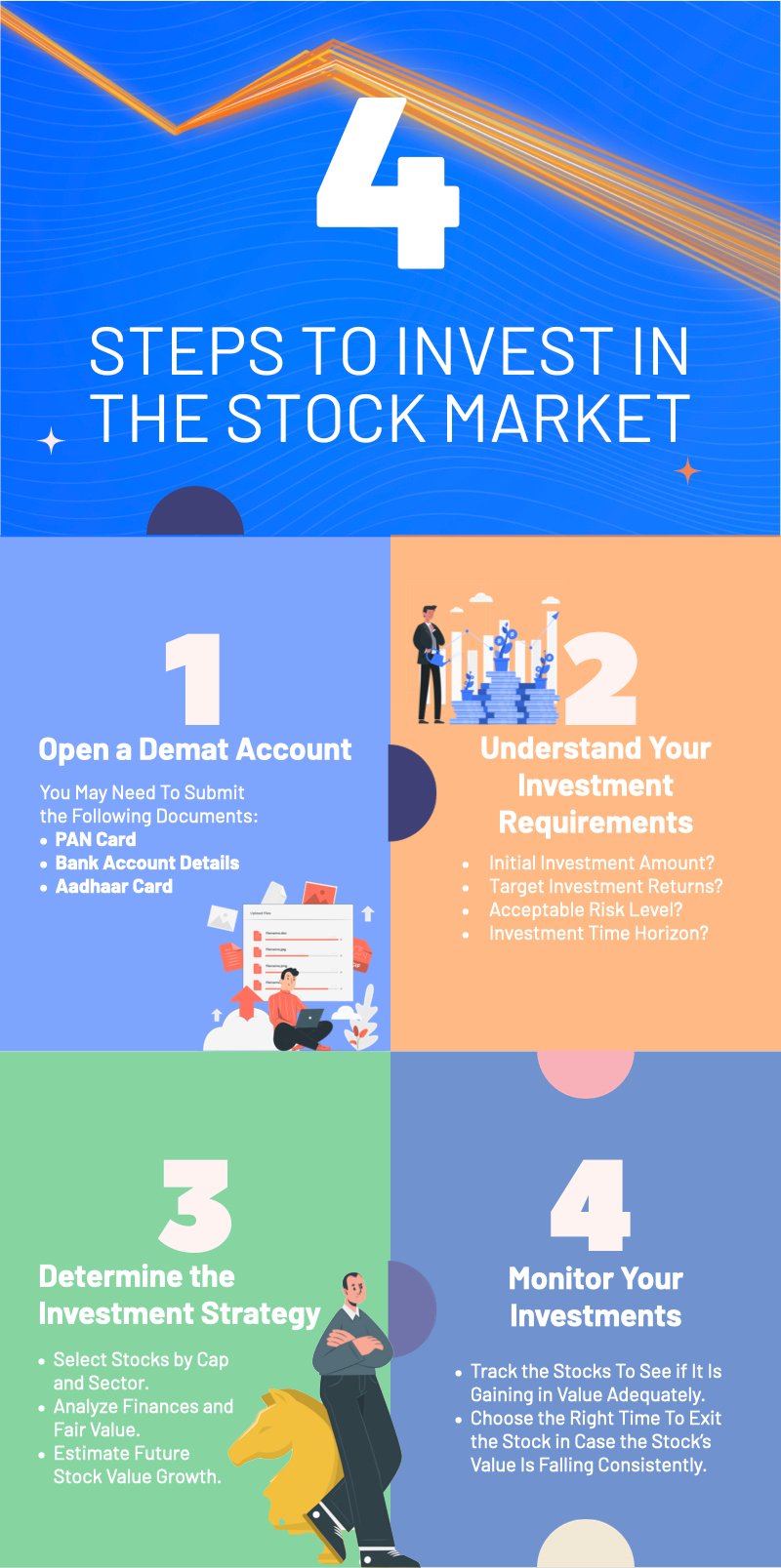
Choose a Brokerage Account
To buy and sell stocks, you’ll need a brokerage account. These are accounts opened with financial institutions that facilitate investment transactions.
- Online Discount Brokers: These are the most popular choice for individual investors. They offer low fees (often commission-free trades), user-friendly platforms, and a wealth of educational resources. Examples include Charles Schwab, Fidelity, Vanguard, E*TRADE, and Robinhood.
- Full-Service Brokers: These offer personalized advice, portfolio management, and a wider range of services, but come with significantly higher fees. They are typically suited for high-net-worth individuals who require extensive financial planning.
When choosing, consider factors like fees, minimum deposits, investment options, research tools, customer service, and the ease of use of their platform.
Strategies for Stock Selection and Portfolio Building
Once your foundation is set, the next step involves deciding what to invest in and how to structure your holdings. This is where strategy comes into play.
Researching Individual Stocks (Fundamental vs. Technical Analysis)
- Fundamental Analysis: This involves evaluating a company’s intrinsic value by examining its financial statements (revenue, earnings, debt), management quality, industry position, competitive advantages, and macroeconomic factors. The goal is to identify undervalued companies with strong growth potential. Key metrics include P/E ratio, P/B ratio, debt-to-equity, and revenue growth.
- Technical Analysis: This approach focuses on analyzing price charts and trading volumes to identify patterns and predict future price movements. Technical analysts believe that all relevant information is already reflected in the stock’s price. Indicators like moving averages, relative strength index (RSI), and MACD are commonly used.
For most long-term investors, a blend of fundamental analysis combined with a macro understanding of the market is usually more effective than relying solely on technical indicators.
Diversification: The Key to Risk Management

“Don’t put all your eggs in one basket” is the golden rule of investing. Diversification means spreading your investments across various assets, industries, and geographies to reduce overall risk.
- Across Companies: Invest in multiple stocks rather than just one or two.
- Across Industries: Don’t concentrate solely on tech or healthcare; spread your investments across different sectors.
- Across Asset Classes: While this article focuses on stocks, consider including other assets like bonds, real estate, or commodities in your broader portfolio as you gain experience.
- Globally: Invest in companies from different countries to mitigate country-specific risks.
Different Investment Approaches (Growth, Value, Income)
Your investment philosophy will guide your stock choices:
- Growth Investing: Focuses on companies expected to grow at an above-average rate, often reinvesting earnings back into the business rather than paying dividends. These stocks can be more volatile but offer higher potential returns.
- Value Investing: Seeks out companies that appear to be trading below their intrinsic value. Value investors often look for established companies with strong fundamentals that might be temporarily out of favor or overlooked by the market.
- Income Investing: Prioritizes stocks that pay regular dividends, providing a steady income stream. These are often mature, stable companies in sectors like utilities or consumer staples.
Considering ETFs and Mutual Funds
For many beginners, and even experienced investors, Exchange Traded Funds (ETFs) and Mutual Funds offer an excellent way to gain immediate diversification without the need to research individual stocks.
- ETFs: These are collections of stocks (or other assets) that trade like individual stocks on an exchange. They often track a specific index (e.g., S&P 500 ETF), sector, or theme. They offer low expense ratios and liquidity.
- Mutual Funds: Professionally managed portfolios of stocks (or other assets). While they offer diversification and professional management, they typically have higher expense ratios and are bought and sold only once a day based on the end-of-day net asset value.
Investing in broad market index ETFs or mutual funds is often recommended for those starting out, as it provides instant diversification and generally outperforms active stock picking for most individual investors over the long term.
Navigating the Investment Process and Beyond
Investing is an ongoing process, not a one-time event. Once you’ve chosen your investments, you need to manage them.
Placing Your First Trade
With your brokerage account funded and your investment choices made, placing a trade is straightforward.
- Search for the stock/ETF ticker symbol.
- Specify the number of shares you wish to buy or the dollar amount (some brokers offer fractional shares).
- Choose your order type:
- Market Order: Buys or sells immediately at the best available current price.
- Limit Order: Buys or sells at a specified price or better. This gives you more control over the price but might not execute immediately if the price isn’t met.
- Review and confirm your order.
For beginners, using limit orders for purchases can be a prudent way to avoid unexpected price movements.
Monitoring Your Investments
While it’s crucial not to obsess over daily fluctuations, regularly monitoring your investments is important. This involves:
- Staying informed: Keep an eye on the news, company earnings reports, and economic trends that might impact your holdings.
- Reviewing performance: Periodically check how your portfolio is performing relative to your goals and relevant benchmarks.
- Avoiding emotional reactions: Don’t let short-term dips trigger panic selling. Remember your long-term goals.
Rebalancing Your Portfolio
Over time, different investments in your portfolio will grow at different rates, potentially skewing your original asset allocation. Rebalancing involves adjusting your portfolio back to your desired allocation. If stocks have performed exceptionally well, you might sell some stock to buy other assets (or less performing stocks) to maintain your target risk level. This can be done annually or semi-annually.
The Importance of Long-Term Perspective
The most successful stock investors share a common trait: a long-term perspective. Stock market returns are often volatile in the short term, but historically, they have delivered substantial returns over decades. Patience, discipline, and the willingness to ride out market downturns are vital. The power of compounding, where your earnings generate further earnings, is most evident over extended periods.
Common Pitfalls and How to Avoid Them
Even with the best intentions, new investors can fall prey to common mistakes. Recognizing and actively avoiding these pitfalls is crucial for long-term success.
Emotional Decision Making
Fear and greed are powerful emotions that can derail investment plans. Panic selling during market downturns or chasing “hot” stocks during bull runs often leads to poor outcomes. Stick to your investment plan, which should be based on rational analysis and your financial goals, not on fleeting market sentiment.
Chasing Hot Tips
Beware of unsolicited advice, “guaranteed” returns, or hyped-up penny stocks. Most “hot tips” are speculative and rarely pan out. Base your investments on thorough research and fundamental analysis, not on social media buzz or casual recommendations.
Over-Concentration
Putting too much of your capital into a single stock or a small number of stocks, or even a single industry, exposes you to excessive risk. While a single successful stock can generate huge returns, a single failure can wipe out a significant portion of your portfolio. Diversification is your best defense against this.
Neglecting Ongoing Education
The financial markets are dynamic and constantly evolving. Successful investors are lifelong learners. Dedicate time to reading financial news, books, and reputable investment articles. Understand new investment vehicles, economic indicators, and how global events can impact your portfolio. The more you learn, the better equipped you’ll be to make informed decisions.
Investing in stocks is a journey that requires continuous learning, discipline, and patience. By understanding the fundamentals, preparing diligently, applying sound strategies, and avoiding common mistakes, you can build a resilient portfolio capable of achieving your financial aspirations. Start small, stay consistent, and remember that time in the market often beats timing the market.
aViewFromTheCave is a participant in the Amazon Services LLC Associates Program, an affiliate advertising program designed to provide a means for sites to earn advertising fees by advertising and linking to Amazon.com. Amazon, the Amazon logo, AmazonSupply, and the AmazonSupply logo are trademarks of Amazon.com, Inc. or its affiliates. As an Amazon Associate we earn affiliate commissions from qualifying purchases.