
The digital revolution has democratized entrepreneurship, making it more accessible than ever for individuals to launch and grow businesses from virtually anywhere. “How to start a business online” isn’t merely a question of setting up a website; it’s fundamentally about understanding the financial dynamics, identifying profitable opportunities, and building a sustainable revenue model in the vast online landscape. This guide delves into the financial core of establishing an online enterprise, focusing exclusively on the monetary strategies, income generation, and fiscal management critical for success in the digital age.
Laying the Financial Foundation: Business Planning & Funding
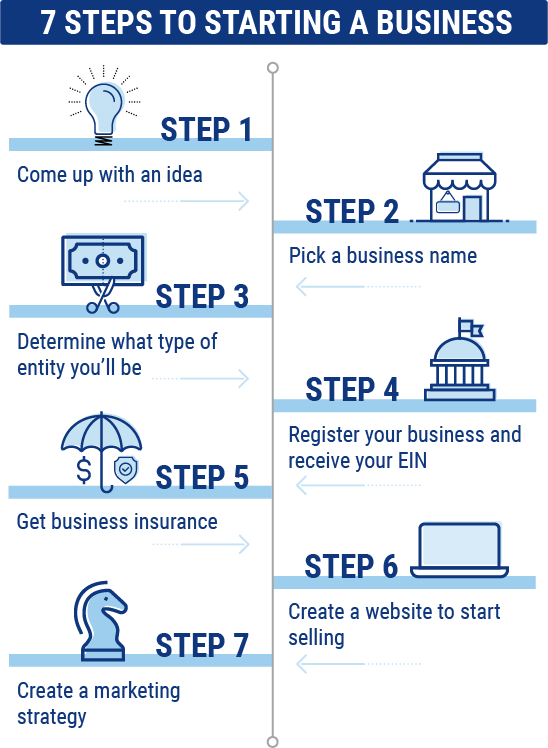
Before any product is sold or service rendered, the financial bedrock of your online business must be meticulously laid. This involves more than just having a good idea; it requires rigorous financial planning, understanding your market’s economic viability, and securing the necessary capital to launch and sustain operations.
Defining Your Niche and Market Value (Monetization Potential)
The first financial step is to identify a niche that not only resonates with your passion but also possesses clear monetization potential. A niche market, though smaller, often has specific, unmet needs that customers are willing to pay to solve. Conducting thorough market research involves analyzing demand, competitor pricing, and the size of the target audience’s disposable income relative to their need for your solution.
- Problem-Solution Fit: Identify a specific pain point or desire within your target market. How much are people currently paying to solve this problem, or what value would they place on a new solution?
- Competitor Analysis: Evaluate the financial health and pricing strategies of existing online businesses in your desired niche. Can you offer comparable value at a better price, or superior value at a premium?
- Value Proposition: Clearly articulate the unique financial benefit or value your online business provides. This isn’t just about features; it’s about how your offering saves money, makes money, or improves the financial well-being of your customers.
Crafting a Robust Business Plan with Financial Projections
A business plan serves as your financial roadmap, outlining how your online venture will generate revenue, manage expenses, and ultimately achieve profitability. For an online business, this plan should be highly detailed concerning digital marketing costs, platform fees, and projected online sales funnels.
- Executive Summary: A concise overview of your business model, highlighting key financial objectives and projected returns.
- Market Analysis: Detailed insights into your target market’s economic behavior, purchasing power, and potential for growth.
- Services/Products: A clear description of what you offer and its pricing structure.
- Marketing & Sales Strategy: How you plan to attract customers online and convert them into paying clients, including estimated customer acquisition costs (CAC) and customer lifetime value (CLV).
- Financial Projections: This is the heart of the money-focused plan. Include:
- Startup Costs: Initial investments for website development, domain registration, software subscriptions, initial marketing campaigns.
- Operating Expenses: Recurring costs like hosting, subscription services, payment processing fees, content creation, and ongoing marketing.
- Revenue Forecasts: Realistic projections of sales volumes and corresponding income over the first 1-3 years.
- Break-Even Analysis: The point at which your total revenue equals your total expenses, indicating when your business will become profitable.
- Cash Flow Statement: A detailed look at the money coming in and going out of your business over time.
- Profit and Loss (P&L) Statement: Projected income, costs, and profit over specific periods.
Exploring Funding Options for Your Online Venture
Unlike traditional businesses that might require significant physical infrastructure, many online businesses can start with minimal capital. However, understanding potential funding avenues is crucial for growth and scaling.
- Bootstrapping: Self-funding your business using personal savings or initial profits. This minimizes debt and gives you complete control, but growth might be slower. It’s often ideal for online businesses with low overhead.
- Personal Loans/Credit Cards: A common initial funding source, but high interest rates can quickly become a financial burden if not managed carefully.
- Friends and Family: Often a more flexible option than traditional loans, but requires clear financial agreements to avoid strain on relationships.
- Small Business Loans: Banks and credit unions offer various loan products for small businesses. You’ll need a solid business plan and often collateral.
- Grants: Government or private organizations sometimes offer grants for businesses in specific industries or those addressing particular social needs. These are non-repayable but highly competitive.
- Angel Investors/Venture Capital (VC): For high-growth potential online businesses, investors might provide capital in exchange for equity. This typically requires a robust pitch deck and a clear exit strategy.
Setting Up Your Business Structure and Legality (Tax & Liability)
The legal structure of your online business has significant financial implications, affecting liability, taxation, and administrative burden.
- Sole Proprietorship: Simple to set up, but offers no personal liability protection. All business income is personal income, simplifying tax filing but increasing personal financial risk.
- Partnership: Similar to sole proprietorship but with multiple owners. Financial responsibilities and profits are shared as per the partnership agreement.
- Limited Liability Company (LLC): Offers personal liability protection for owners, separating personal and business assets. Profits and losses can be passed through to owners’ personal income, avoiding corporate double taxation, or the LLC can elect to be taxed as a corporation. This is often a popular choice for online businesses.
- Corporation (S-Corp, C-Corp): Provides the strongest liability protection but involves more complex setup and compliance. C-Corps are subject to double taxation (corporate and individual), while S-Corps avoid this by passing profits/losses directly to owners’ personal income.
- Tax Implications: Each structure has different tax requirements (e.g., self-employment tax, corporate tax, payroll taxes if you hire employees). Consulting with a tax professional early on can save significant money and prevent compliance issues. Understanding deductible expenses for your online business is also critical for reducing your taxable income.
Strategizing for Profitability: Pricing, Products, and Services
Profitability is the ultimate financial goal for any business. For an online venture, this requires a keen understanding of how to develop offerings that customers value highly, price them effectively, and manage the underlying costs to maximize profit margins.
Developing High-Value Products/Services with Clear Monetization Paths
The core of your online business is what you sell. For financial success, your products or services must not only meet a market need but also be designed with clear monetization paths.
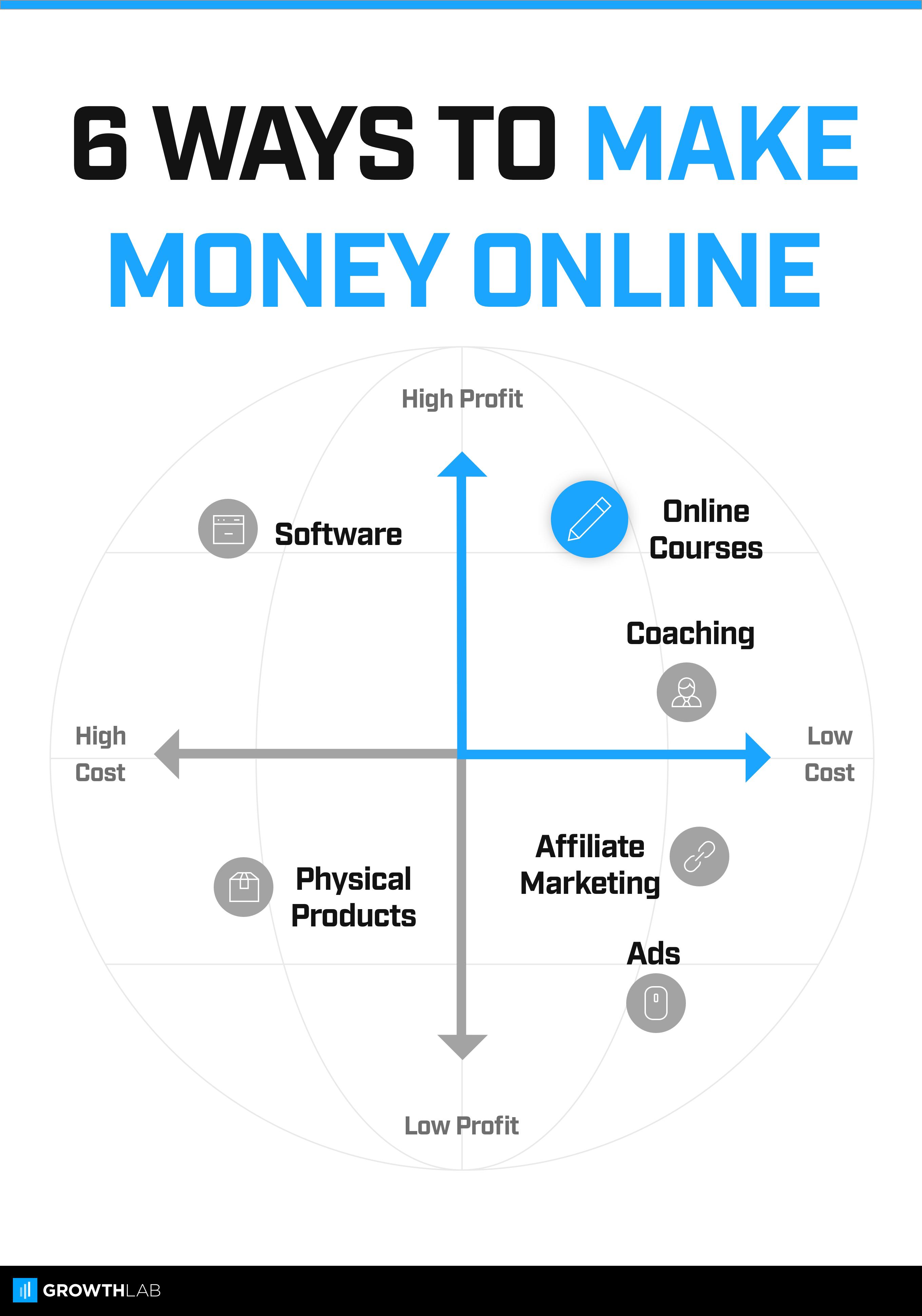
- Digital Products: E-books, online courses, software subscriptions (SaaS), templates, stock photos/videos, music. These often have high-profit margins due to low replication costs after initial development.
- Physical Products: E-commerce stores selling anything from handcrafted goods to drop-shipped items. Consider inventory costs, shipping fees, and return logistics, which directly impact profitability.
- Services: Consulting, coaching, freelance writing, graphic design, virtual assistance, web development. These are often time-based and can have high hourly rates, but scalability can be a challenge.
- Monetization Models:
- One-time Sale: Simple transaction for a product or service.
- Subscription: Recurring revenue model (SaaS, content subscriptions, membership sites), providing predictable income.
- Freemium: Offer a basic version for free and charge for premium features.
- Affiliate Marketing: Promote other companies’ products and earn a commission on sales, a low-cost entry point for online income.
- Advertising: Displaying ads on your website or platform, often scaled by traffic.
Mastering Your Pricing Strategy: Value, Cost, and Competition-Based Pricing
Pricing is a critical financial lever. Too low, and you undervalue your offering and erode profit margins; too high, and you deter potential customers. A balanced approach considers multiple factors.
- Cost-Plus Pricing: Calculate all costs associated with producing/delivering your product/service, then add a desired profit margin. Simple, but might not reflect market value.
- Value-Based Pricing: Price your offering based on the perceived value it delivers to the customer, rather than just your costs. If your solution saves a business $1,000 per month, charging $200 per month could be seen as a bargain. This often yields higher profits for unique or high-impact solutions.
- Competitor-Based Pricing: Benchmark your prices against competitors. You might price slightly lower to attract customers, match prices, or price higher to signal premium quality.
- Psychological Pricing: Utilizing strategies like charm pricing (e.g., $9.99 instead of $10.00) or tiered pricing (offering multiple packages at different price points) to influence purchasing decisions and increase average transaction value.
- Dynamic Pricing: Adjusting prices in real-time based on demand, competitor pricing, and other market factors.
Understanding Operating Costs and Maximizing Profit Margins
For online businesses, overhead can be deceptively low, but hidden or recurring digital costs can accumulate. Diligent cost management is paramount for maintaining healthy profit margins.
- Variable Costs: Costs that change with the volume of sales (e.g., payment processing fees per transaction, cost of goods sold for physical products, advertising spend per lead).
- Fixed Costs: Costs that remain relatively constant regardless of sales volume (e.g., website hosting, software subscriptions, domain registration, monthly internet).
- Software & Tool Subscriptions: Identify essential tools (CRM, email marketing, accounting software) and consolidate or negotiate where possible to reduce recurring expenses.
- Marketing & Advertising Budget: Treat this as an investment, not just an expense. Track Return on Ad Spend (ROAS) and Cost Per Acquisition (CPA) meticulously to ensure financial efficiency.
- Outsourcing Costs: If you outsource tasks (e.g., content creation, virtual assistance), negotiate rates and monitor output to ensure value for money.
- Calculating Profit Margin:
- Gross Profit Margin: (Revenue – Cost of Goods Sold) / Revenue. This indicates the profitability of your core product/service before operating expenses.
- Net Profit Margin: (Net Profit / Revenue). This shows the overall profitability after all expenses, including taxes. Aim to maximize both.
Diversifying Revenue Streams for Financial Resilience
Relying on a single income source for your online business can be risky. Diversifying revenue streams creates financial stability and opens up new growth opportunities.
- Complementary Products/Services: Offer upsells, cross-sells, or related products that enhance the value of your core offering. For an online course creator, this could be a private community subscription or one-on-one coaching.
- Affiliate Programs: Integrate relevant affiliate links into your content or product recommendations to earn commissions without developing new products.
- Advertising/Sponsorships: If your online platform attracts significant traffic or has a highly engaged audience, consider offering ad space or sponsored content opportunities.
- Licensing: License your digital products (e.g., software, templates) for others to use, generating passive income.
- Consulting/Coaching: Leverage your expertise by offering high-ticket consulting or coaching services alongside your primary online offerings.
Generating and Managing Online Income Streams
Once your business model is refined and profitability strategies are in place, the focus shifts to actively generating income and efficiently managing the financial flow of your online operations. This involves setting up reliable payment systems, optimizing sales processes, and constantly monitoring financial performance.
Setting Up E-commerce Platforms and Payment Gateways
The backbone of any online business is its ability to securely and efficiently process transactions. Choosing the right platforms is crucial for customer experience and your financial operations.
- E-commerce Platforms:
- Shopify, WooCommerce, BigCommerce: These platforms provide robust storefronts, inventory management, and integration capabilities for selling physical or digital products. They come with monthly fees and often transaction fees.
- Etsy, Amazon FBA: Marketplaces that provide an existing audience but come with listing fees, transaction fees, and often stricter rules.
- Gumroad, Sellfy: Simpler platforms ideal for selling digital products directly with lower overheads.
- Payment Gateways:
- Stripe, PayPal, Square: These services enable you to accept credit card payments, bank transfers, and other digital payment methods. Understand their transaction fees, which typically range from 1.5% to 3.5% + a fixed fee per transaction. These fees directly impact your gross profit margin.
- International Payments: If targeting a global audience, ensure your payment gateway supports multiple currencies and payment methods relevant to your target regions.
- Security and Compliance: Invest in SSL certificates for your website and ensure your payment processes are PCI DSS compliant to protect customer financial data and avoid costly breaches. This builds trust and reduces financial risk.
Implementing Effective Sales Funnels and Conversion Strategies
A sales funnel guides potential customers through the buying journey, from awareness to purchase. Optimizing each stage can significantly boost conversion rates and, by extension, your online income.
- Awareness Stage (Top of Funnel): Attract potential customers through financially targeted content marketing (e.g., blog posts on “saving money with X product”), social media advertising, and search engine optimization (SEO) focused on commercial keywords.
- Interest/Consideration Stage (Middle of Funnel): Nurture leads with valuable, free resources like webinars, e-books, or email sequences that demonstrate the financial benefits of your offering. Build trust and highlight ROI.
- Decision/Action Stage (Bottom of Funnel): Convert leads into paying customers with compelling offers, clear calls to action, testimonials highlighting financial results, and limited-time discounts.
- Conversion Rate Optimization (CRO): Continuously test and refine elements of your website and sales pages (e.g., headlines, button colors, pricing display, checkout process) to maximize the percentage of visitors who make a purchase. Even a small increase in conversion rate can lead to significant financial gains.
- Cart Abandonment Recovery: Implement strategies like automated email reminders for abandoned carts, often with a small discount, to recover lost sales.
Leveraging Affiliate Marketing and Advertising for Additional Revenue
Beyond direct sales, online businesses have numerous avenues to generate supplementary income, enhancing overall financial health.
- Affiliate Marketing: As an affiliate, you promote other companies’ products or services and earn a commission for every sale or lead generated through your unique link. This is a low-risk, low-overhead way to add income, particularly if you have an audience interested in related offerings. Choose programs with good commission rates and products that genuinely align with your brand.
- Advertising Income: If your online business generates significant web traffic (e.g., a blog, news site, or community forum), you can monetize it through display advertising networks like Google AdSense or Mediavine. Revenue is typically generated per impression or click.
- Sponsored Content: Collaborate with brands to create sponsored posts, videos, or social media content. This can be a lucrative income stream, but ensure transparency and alignment with your audience’s interests to maintain trust.
- Partnerships and Joint Ventures: Partner with complementary online businesses to create bundled offers or co-promote each other’s services, expanding your reach and revenue potential with shared effort.
Tracking Key Financial Metrics for Growth and Optimization
“What gets measured, gets managed.” For an online business, continuous monitoring of financial metrics is essential for informed decision-making and sustainable growth.
- Revenue Growth Rate: Track how quickly your income is increasing over time (monthly, quarterly, annually).
- Customer Acquisition Cost (CAC): The total cost of marketing and sales efforts required to acquire one new customer. Aim to keep this low relative to CLV.
- Customer Lifetime Value (CLV): The total revenue a business can reasonably expect to earn from a single customer account over the average customer relationship. A high CLV compared to CAC indicates a healthy business model.
- Average Order Value (AOV): The average amount of money a customer spends per transaction. Strategies like upselling and cross-selling can increase AOV.
- Churn Rate: The percentage of customers who stop using your service or buying your products over a given period. High churn significantly impacts recurring revenue and profitability.
- Gross Profit Margin & Net Profit Margin: As discussed earlier, these are crucial indicators of your business’s efficiency in converting sales into profit.
- Return on Investment (ROI) for Marketing Campaigns: Measure the financial return generated by your advertising and marketing spend to optimize future investments.
Financial Management and Scaling Your Online Business
Once your online business is generating consistent income, the focus shifts to strategic financial management that supports sustained growth, manages cash flow, and plans for the long-term financial health and potential scalability of your venture.
Essential Financial Tools and Software for Online Entrepreneurs
Leveraging technology to manage your finances is not just a convenience; it’s a necessity for accuracy, efficiency, and compliance.
- Accounting Software:
- QuickBooks Online, Xero, FreshBooks: These cloud-based platforms automate invoicing, expense tracking, bank reconciliation, and generate essential financial reports (P&L, balance sheet, cash flow). They streamline tax preparation and provide a clear overview of your business’s financial status.
- Budgeting and Forecasting Tools:
- Spreadsheets (Excel, Google Sheets): Customizable for detailed budgeting, forecasting future revenues and expenses, and running “what-if” scenarios.
- Dedicated Budgeting Apps: Many accounting software packages include budgeting features, or you can use specialized tools to track your spending against your budget.
- Payment Processing Analytics: Most payment gateways (Stripe, PayPal) offer dashboards with detailed transaction histories, fee breakdowns, and payout reports.
- Time Tracking Software (for service-based businesses): Tools like Toggl or Clockify help you accurately bill clients for your time, ensuring no revenue is left on the table.
- Inventory Management Software (for e-commerce): Helps track stock levels, manage suppliers, and prevent costly stockouts or overstocking, directly impacting your cash flow.
Budgeting for Growth: Reinvestment, Marketing, and Operations
Effective budgeting is the cornerstone of financially sustainable growth. As your online business expands, so too will the demands on your financial resources.
- Reinvestment Strategy: Decide how much of your profit will be reinvested back into the business for growth initiatives. This could be for product development, expanding into new markets, or enhancing existing services.
- Marketing Budget Allocation: As you scale, your marketing budget often needs to increase. Allocate funds strategically across different channels (paid ads, content marketing, social media) based on their proven ROI. Don’t be afraid to experiment with new channels if they promise a better financial return.
- Operational Scaling Costs: Account for increased costs as your business grows: more expensive software plans, hiring virtual assistants or employees (payroll, benefits), increased hosting capacity, and larger payment processing volumes.
- Emergency Fund: Always maintain a financial buffer, typically 3-6 months of operating expenses, to weather unexpected downturns, software failures, or market shifts without jeopardizing your business.
Managing Cash Flow and Preparing for Financial Fluctuations
Cash flow is the lifeblood of any business, online or offline. Positive cash flow ensures you have enough liquidity to meet your obligations, invest in growth, and manage day-to-day operations.
- Cash Flow Monitoring: Regularly review your cash flow statements to understand the movement of money into and out of your business. Identify seasonal trends or periods of lower sales.
- Invoice Management: For service-based online businesses, send invoices promptly and follow up on overdue payments to ensure timely cash inflow. Offer incentives for early payment or set clear payment terms.
- Expense Management: Automate bill payments where possible to avoid late fees. Review recurring subscriptions regularly to cut unnecessary costs.
- Line of Credit: Establish a business line of credit for short-term cash flow gaps. This can be a more flexible and cost-effective option than high-interest credit cards for managing temporary financial fluctuations.
- Diversify Payment Options: Offering various payment methods can improve customer convenience and reduce reliance on a single processing system, preventing potential bottlenecks in cash flow.
Planning for Long-Term Financial Sustainability and Exit Strategies
A truly successful online business is built for longevity and has a clear vision for its future financial trajectory, including potential exit strategies.
- Retirement Planning/Personal Finance Integration: As an online business owner, your personal and business finances are often intertwined. Plan for your personal financial goals (retirement, savings) alongside your business’s growth. Consider setting up a SEP IRA or Solo 401(k) to maximize tax-advantaged savings.
- Profit First Methodology: Consider implementing systems like “Profit First,” which advocates for allocating a percentage of revenue to profit and taxes before expenses, ensuring profitability from day one.
- Valuation for Acquisition: If an exit is a long-term goal, understand how online businesses are valued (e.g., multiple of earnings, recurring revenue, intellectual property). Building a business with clear, documented processes, strong financials, and a loyal customer base significantly increases its financial valuation.
- Succession Planning: Even if you don’t plan to sell immediately, consider what would happen if you were unable to run your business. Document processes, diversify client relationships, and train key personnel to maintain financial stability.
- Continuous Learning: The online financial landscape is constantly evolving. Stay informed about new online income models, digital payment trends, tax regulations, and financial technologies to adapt and ensure long-term sustainability.
Starting an online business is a journey deeply rooted in financial strategy. By diligently planning, optimizing for profitability, skillfully managing income streams, and making astute financial decisions, entrepreneurs can not only launch but also scale thriving ventures that deliver lasting monetary success in the digital realm.
aViewFromTheCave is a participant in the Amazon Services LLC Associates Program, an affiliate advertising program designed to provide a means for sites to earn advertising fees by advertising and linking to Amazon.com. Amazon, the Amazon logo, AmazonSupply, and the AmazonSupply logo are trademarks of Amazon.com, Inc. or its affiliates. As an Amazon Associate we earn affiliate commissions from qualifying purchases.