
Securing investment is a critical juncture for many small businesses, marking a transition from bootstrapping to accelerated growth. The pursuit of capital requires a comprehensive understanding of your financial needs, a compelling presentation of your business’s financial viability, and strategic engagement with potential investors. This process is deeply rooted in business finance, demanding precision in projections, clarity in valuation, and shrewd navigation of funding avenues.
Understanding Your Financial Needs and Business Valuation
Before approaching any investor, a small business must meticulously define its financial requirements and realistically assess its current and future value. This foundational work ensures you ask for the right amount of capital and understand the equity you might exchange.
Determine Your Capital Requirements
The first step is to precisely identify how much money you need and, more importantly, why. A vague request will deter investors. Develop a detailed breakdown of how the investment will be allocated: for instance, a specific percentage for product development, another for marketing and sales, inventory, working capital, or expansion. Articulate the expected impact of this investment on your business’s growth trajectory and profitability. This clarity demonstrates fiscal responsibility and a strategic approach to capital deployment. Investors want to see a clear path to how their money will be put to work and generate returns.
Project Your Financials
Robust financial projections are the cornerstone of any investor pitch. This typically includes a pro forma profit and loss statement, cash flow statement, and balance sheet for the next three to five years. These projections should be based on realistic assumptions, backed by market research, and demonstrate a clear path to profitability and positive cash flow. Highlight key metrics relevant to your industry, such as customer acquisition cost (CAC), customer lifetime value (CLTV), average revenue per user (ARPU), or gross profit margin. Ensure your projections show how the requested investment directly contributes to achieving these financial milestones and generating a substantial return for investors.
Valuing Your Small Business
Understanding your business’s valuation is crucial as it dictates the equity stake you’ll offer for the investment. For early-stage small businesses, traditional valuation methods can be challenging due to limited historical data. Common approaches include:
- Discounted Cash Flow (DCF): Projecting future cash flows and discounting them back to a present value.
- Asset-Based Valuation: Summing the fair market value of your business’s tangible and intangible assets.
- Market Multiple Approach: Comparing your business to similar companies that have recently been valued or acquired.
- Venture Capital Method: Often used for startups, calculating post-money valuation based on an investor’s desired return.
Be prepared to articulate your chosen valuation method and justify it with data and market comparisons. It’s also important to understand that early-stage valuations are often a negotiation, influenced by market conditions, investor appetite, and your business’s unique potential.
Crafting a Compelling Investor Pitch and Financial Story
With a clear understanding of your financial needs and valuation, the next step is to synthesize this information into a compelling narrative that showcases your business’s potential for financial returns. This involves more than just numbers; it’s about telling a story rooted in financial opportunity.
Develop a Robust Business Plan
The business plan remains the foundational document for any serious investor conversation. It should comprehensively detail your company’s mission, market analysis (including target market, competition, and market size), operational plan, management team’s expertise, and, most critically, your detailed financial projections. This document provides the depth and context that your pitch deck summarizes, demonstrating that you have thoroughly thought through every aspect of your business’s financial and operational future. It should clearly articulate the problem you solve, your unique solution, and how this translates into a scalable and profitable business model.
Create an Engaging Pitch Deck
A pitch deck is a concise visual presentation, typically 10-15 slides, designed to capture investor interest and communicate the most vital aspects of your business. Beyond a general overview, a strong pitch deck for investors must prominently feature your financial narrative. This includes:
- Problem & Solution: Clearly defining the market gap and how your business fills it.
- Market Opportunity: Quantifying the total addressable market (TAM) and your realistic share, highlighting the revenue potential.
- Business Model: Explaining how your company generates revenue and achieves profitability, often including unit economics.
- Financial Traction: Showcasing any existing revenue, growth rates, key performance indicators (KPIs), or user acquisition metrics that demonstrate market validation and financial momentum.
- Team: Highlighting the financial and business acumen of your leadership.
- Financial Projections & Use of Funds: A clear summary of your 3-5 year financial forecasts and exactly how the requested investment will accelerate these projections.
- The Ask & The Offer: Stating the amount of investment sought and the equity or terms you are offering in return.
Focus on compelling visuals and succinct points that underscore the financial upside for potential investors.
Highlight Your Financial Traction
For businesses that are already operational, demonstrating financial traction is paramount. This can include current revenue figures, customer growth rates, customer acquisition costs (CAC) versus customer lifetime value (CLTV), gross margins, and early profitability. These metrics provide concrete evidence of market acceptance and financial viability, significantly de-risking the investment proposition. Even for pre-revenue businesses, demonstrating strong market validation through pilot programs, pre-orders, letters of intent, or detailed market research on purchasing intent can serve as a proxy for financial traction. The goal is to show a proven ability to generate revenue or a clear, data-backed path to doing so.
Present Your Exit Strategy
Investors, particularly those providing venture capital or significant angel investments, are not just interested in your business’s growth; they are ultimately looking for a substantial return on their investment. Therefore, presenting a credible exit strategy is crucial. This outlines how investors will eventually liquidate their equity stake and realize their financial gains. Common exit strategies include:
- Acquisition: Being acquired by a larger company in your industry.
- Initial Public Offering (IPO): Listing your company on a stock exchange.
- Secondary Sale: Selling shares to another investor or a different fund.
- Recapitalization: Restructuring the company’s debt and equity.
While an IPO might be a long-term goal for many small businesses, a more realistic initial focus on potential acquisition targets within your industry shows investors you have considered their financial payoff.

Exploring Funding Avenues for Small Businesses
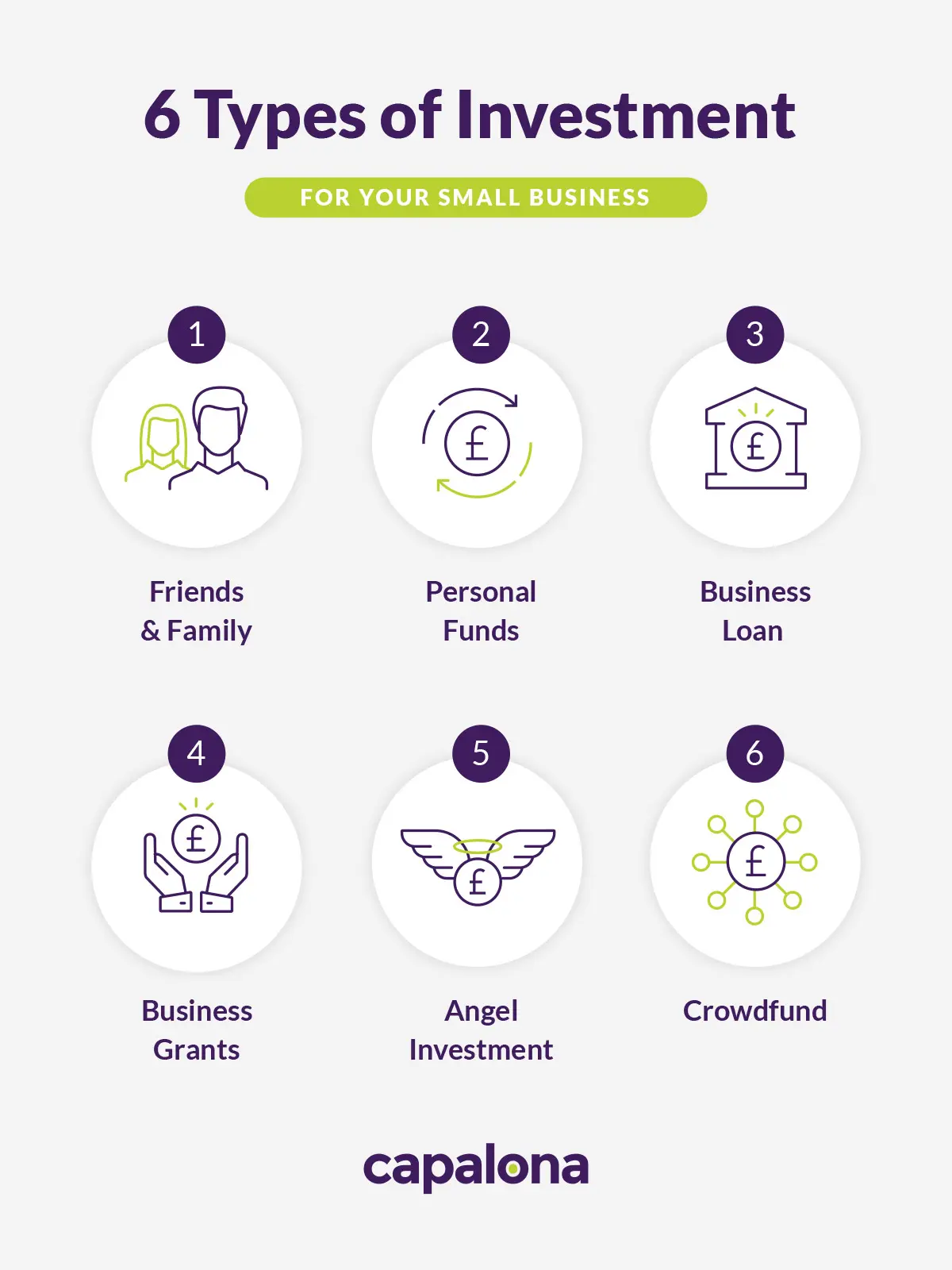
Identifying the right type of investor is as crucial as preparing a strong financial case. Different funding sources cater to businesses at various stages and with distinct financial needs.
Personal Savings and Bootstrapping
Many small businesses begin with personal savings, loans from retirement accounts, or by reinvesting all profits back into the business. Bootstrapping maintains full equity ownership and forces lean operations, proving financial discipline. This early self-funding demonstrates to future investors a strong personal commitment and an ability to achieve milestones with minimal external capital, significantly enhancing your appeal.
Friends and Family (F&F)
Often the first external capital comes from friends and family. While seemingly straightforward, it’s vital to treat these investments professionally. Draft clear loan agreements or equity stakes, detailing interest rates, repayment schedules, or equity percentages, to avoid future financial misunderstandings. This formal approach protects relationships and sets a precedent for how you manage external capital.
Angel Investors
Angel investors are high-net-worth individuals who provide capital for small businesses or startups, typically in exchange for equity. They often invest earlier than VCs and can also bring valuable industry experience and networks. Finding them involves leveraging professional networks, attending pitch events, or using online platforms specializing in angel investing. Angel investors are often looking for innovative ideas, strong management teams, and significant growth potential, with a clear path to financial return within a few years.
Venture Capital (VC) Firms
Venture capital firms manage funds from institutional investors and high-net-worth individuals, investing larger sums into high-growth potential companies with scalable business models. VC firms are selective, focusing on businesses that can demonstrate exponential growth and significant market disruption. They often invest in rounds (seed, Series A, B, etc.) and expect a seat on the board and active involvement. Accessing VCs typically requires warm introductions and a compelling narrative of market leadership and financial scalability.
Crowdfunding Platforms
Equity crowdfunding allows a large number of individuals to invest small amounts in a business in exchange for equity. Platforms like SeedInvest, StartEngine, or Republic have democratized access to capital, enabling businesses to raise funds from their customer base or the general public. This method can also serve as a powerful marketing tool, building a community of financially invested customers. Due to regulatory requirements (like Regulation CF or Reg A+ in the US), careful financial disclosure is mandatory.
Government Grants and Loans
While not equity investments, government grants and small business loans (e.g., through the Small Business Administration in the U.S.) are vital sources of business finance. Grants do not require repayment and are often tied to specific industries, research, or societal benefits. Loans offer capital at potentially favorable terms, often requiring collateral and a solid business plan demonstrating repayment capacity. These options can reduce the need for equity dilution or complement other investment rounds.
Navigating the Investor Relationship and Due Diligence
Once you’ve identified potential investors, the process shifts to building relationships, undergoing scrutiny, and formalizing the investment terms. This phase demands transparency, financial readiness, and skilled negotiation.
Networking and Introductions
Warm introductions are significantly more effective than cold outreach. Leverage your professional network, mentors, and advisors to get introductions to relevant investors. Attend industry conferences, pitch competitions, and entrepreneur meet-ups where investors are present. Building genuine relationships before needing capital can prove invaluable, as investors often prefer to back people they know and trust. Focus on demonstrating a keen understanding of your business’s financial health and growth prospects during these interactions.
Managing Due Diligence
Once an investor expresses serious interest, they will initiate a rigorous due diligence process. This involves an in-depth examination of your business’s financials, legal documents, operational plans, intellectual property, market analysis, customer contracts, and management team. Be prepared to provide comprehensive documentation, demonstrating complete transparency and integrity. Having your financial statements, tax returns, legal agreements, and business records meticulously organized will streamline this process and instill confidence in potential investors. Any red flags or inconsistencies during due diligence can derail a deal.
Term Sheets and Negotiation
If due diligence is successful, the investor will present a term sheet outlining the proposed terms of the investment. This document covers critical financial and legal aspects, including valuation, equity stake, liquidation preferences, board seats, anti-dilution provisions, and investor rights. It’s crucial to understand every clause and negotiate terms that are fair and beneficial for both your business and its existing shareholders. Seeking legal counsel experienced in venture capital and corporate finance is essential during this phase to ensure you fully comprehend the implications of the agreement.

Post-Investment Relationship Management
An investor is a partner in your business’s financial journey. Maintaining a transparent and communicative relationship post-investment is vital. Provide regular financial reports, share updates on key performance indicators, and communicate challenges and successes openly. Leverage their expertise and network strategically, but also manage expectations. Active engagement, transparency, and demonstrating consistent financial progress will foster a strong partnership, potentially leading to future funding rounds or valuable strategic guidance.
aViewFromTheCave is a participant in the Amazon Services LLC Associates Program, an affiliate advertising program designed to provide a means for sites to earn advertising fees by advertising and linking to Amazon.com. Amazon, the Amazon logo, AmazonSupply, and the AmazonSupply logo are trademarks of Amazon.com, Inc. or its affiliates. As an Amazon Associate we earn affiliate commissions from qualifying purchases.