
The phrase “monthly payment” is ubiquitous in personal finance, a recurring theme in nearly every adult’s financial journey. From the rent or mortgage that secures your roof overhead to the car payment that gets you to work, the monthly outlay for necessities and desires shapes your budget, dictates your spending power, and profoundly influences your financial future. Understanding what constitutes a monthly payment, how it’s calculated, and its broader implications is fundamental to sound financial management. It’s more than just a number; it’s a commitment that impacts your present cash flow and long-term financial health.
Understanding the Fundamentals of Monthly Payments
At its core, a monthly payment represents a regular, scheduled remittance made to a lender or service provider over a predetermined period. These payments are designed to cover the cost of an asset, a service, or to repay borrowed funds, typically broken down into manageable installments.
Defining “Monthly Payment” in Personal Finance
In the realm of personal finance, a “monthly payment” is a recurring financial obligation that you are committed to paying each month. It’s a fixed or variable sum that contributes to servicing debt, renting an asset, or subscribing to a service. These payments are critical for budgeting as they represent non-discretionary spending that must be accounted for before any other financial allocation. From the perspective of a lender, it’s the consistent income stream that allows them to recoup their principal and earn interest. For consumers, it’s the gateway to acquiring assets or services that might otherwise be out of reach for an upfront lump-sum payment.
Common Scenarios Involving Monthly Payments
Monthly payments crop up in various aspects of our financial lives:
- Loans: These are perhaps the most prominent. Mortgages for homes, auto loans for vehicles, student loans for education, and personal loans for various needs all come with a structured monthly repayment schedule. These payments typically consist of both principal (the amount borrowed) and interest (the cost of borrowing).
- Credit Cards: While often seen as flexible, credit cards demand a minimum monthly payment to keep your account in good standing. This payment often largely covers interest, perpetuating the debt if only the minimum is paid.
- Rent: For those who don’t own a home, rent is the most significant recurring monthly expense, covering the use of property.
- Subscriptions: In the digital age, subscriptions for streaming services, software, gym memberships, and various online tools have become a significant, often underestimated, category of monthly payments.
- Utilities: While sometimes variable, essential utilities like electricity, water, gas, and internet often have a monthly billing cycle, representing another fixed or semi-fixed expense.
The Core Components: Principal and Interest
For most loan-based monthly payments, the sum is composed primarily of two elements:
- Principal: This is the original amount of money borrowed or the remaining balance of the debt. Each monthly payment contributes to reducing this principal amount.
- Interest: This is the cost of borrowing money, expressed as a percentage of the principal. It’s the lender’s profit for extending credit. In the early stages of a loan, a larger portion of your monthly payment often goes towards interest, gradually shifting to more principal repayment over time, a concept known as amortization.
Understanding these components is crucial because it highlights how much of your payment is actually reducing your debt versus how much is purely the cost of borrowing.
Deconstructing Loan Payments: Mortgages and Auto Loans
Loans for significant assets like homes and cars represent some of the largest and longest-term monthly commitments for most individuals. Their structure and calculation are particularly complex and impactful.
Mortgage Payments: A Deep Dive
Mortgage payments are often the single largest monthly expense for homeowners and are typically more complex than other loan payments. They usually encompass several components:
- Principal & Interest (P&I): This is the core of the payment, calculated based on the loan amount, interest rate, and loan term (e.g., 15, 20, or 30 years). Early payments heavily favor interest, slowly shifting to more principal over the loan’s life through an amortization schedule.
- Escrow: Many lenders require an escrow account, where a portion of your monthly payment goes towards property taxes and homeowner’s insurance. The lender collects these funds and pays the bills on your behalf when they are due. This helps ensure these critical expenses are covered and protects the lender’s interest in the property.
- Private Mortgage Insurance (PMI): If your down payment is less than 20% of the home’s purchase price, lenders typically require PMI. This protects the lender if you default on the loan. PMI adds to your monthly payment but can often be removed once you achieve sufficient equity in your home.
- Other Potential Fees: In some cases, homeowners association (HOA) fees or other specific local assessments might also be collected monthly, though not always through the mortgage servicer.
Factors significantly affecting your mortgage payment include the loan amount, the interest rate (fixed vs. adjustable), the loan term, and the ever-changing costs of property taxes and homeowner’s insurance. Even small changes in the interest rate can translate to substantial differences in monthly payments and the total cost over decades.
Auto Loan Payments: Simpler but Still Significant
Auto loan payments are generally less complex than mortgages but still represent a substantial monthly outflow for many. They primarily consist of:
- Principal & Interest (P&I): Similar to mortgages, this covers the repayment of the borrowed amount for the vehicle and the cost of borrowing.
- Factors: The key determinants of your auto loan payment are the total loan amount (purchase price minus any down payment or trade-in value), the interest rate, and the loan term (e.g., 36, 48, 60, or 72 months). A larger down payment reduces the loan amount, thus lowering the monthly payment. Shorter terms mean higher monthly payments but less overall interest paid, while longer terms offer lower monthly payments but increase the total interest cost.
The Role of Interest Rates and Loan Terms
Interest rates and loan terms are the two most powerful levers influencing the size of your monthly payment and the total cost of borrowing. A higher interest rate directly translates to a larger portion of your payment going to the lender and a higher overall cost. Similarly, a longer loan term (e.g., a 30-year mortgage vs. a 15-year mortgage) will result in lower monthly payments but significantly more interest paid over the life of the loan. Conversely, a shorter term means higher monthly payments but drastically reduces the total interest paid and accelerates debt freedom. Understanding this trade-off is vital when choosing loan options.
Credit Card Payments and Other Recurring Expenses
Beyond major loans, other common financial instruments and services also demand regular monthly payments, each with unique implications for your financial well-being.
Credit Card Minimum Payments: A Financial Trap

Credit cards offer flexibility but come with a potent caveat: the minimum monthly payment. While seemingly manageable, paying only the minimum can be a significant financial trap. Credit card interest rates are often much higher than those for mortgages or auto loans. When you pay only the minimum, a large portion of that payment typically goes towards interest, leaving only a small amount to reduce the principal balance. This can lead to debt revolving for years, costing you significantly more in interest over time and keeping you tied to debt for much longer than anticipated. It creates an illusion of affordability while eroding your financial progress.
Personal Loans and Lines of Credit
Personal loans typically have fixed monthly payments over a set term, similar to auto loans. They can be secured or unsecured and are used for a variety of purposes, from debt consolidation to home improvements. Lines of credit, on the other hand, offer more flexibility, allowing you to borrow and repay funds up to a certain limit. Payments on lines of credit can be variable, depending on your outstanding balance and usage. Both types of credit introduce new monthly payment obligations that need to be carefully budgeted for, impacting your debt-to-income ratio and overall financial liquidity.
Recurring Subscriptions and Utilities
In the modern economy, a new category of recurring monthly payments has emerged: subscriptions. From streaming services and fitness apps to cloud storage and meal kits, these “micro-payments” can quickly accumulate into a substantial drain on your monthly budget. Because they are often small individually and set to auto-renew, they can easily go unnoticed.
Utilities (electricity, gas, water, internet, phone) also form a crucial part of monthly expenses. While some might fluctuate based on usage, they represent essential services with consistent billing cycles. Regularly reviewing your subscriptions and utility usage can uncover opportunities to cut unnecessary expenses, negotiate better rates, or simply be more mindful of where your money is going. These “invisible” payments can collectively reduce your disposable income more than you realize.
Calculating Your Monthly Payment and Its Impact on Your Finances
Knowing how to estimate and account for your monthly payments is a cornerstone of effective financial planning. Leveraging tools and understanding your budget are crucial.
Essential Formulas and Online Calculators
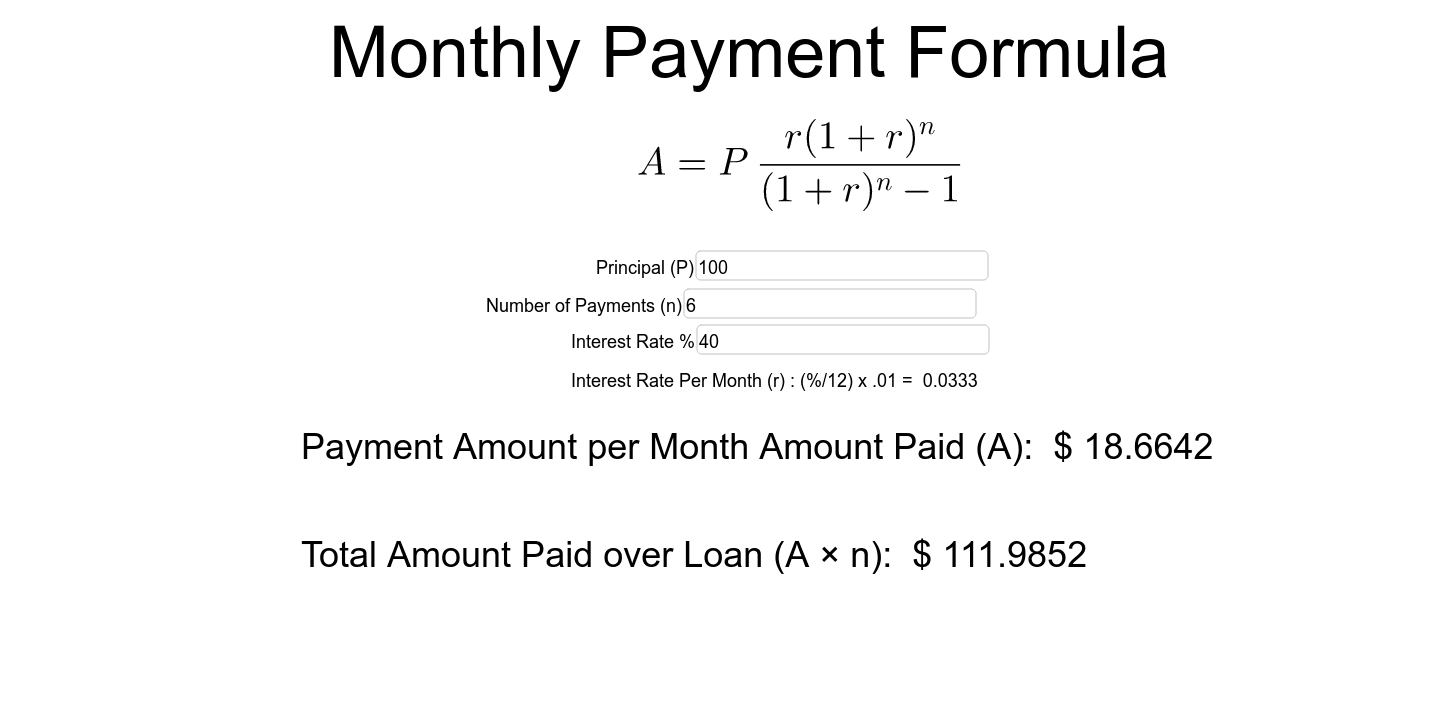
While complex loan payment formulas exist (e.g., for amortized loans), most individuals don’t need to perform these calculations manually. The good news is that numerous online calculators are readily available for virtually any type of loan:
- Mortgage Calculators: Allow you to input loan amount, interest rate, term, property taxes, and insurance to estimate your full monthly payment, including P&I, escrow, and potentially PMI.
- Auto Loan Calculators: Help determine payments based on loan amount, interest rate, and term, often allowing for down payment and trade-in value adjustments.
- Personal Loan Calculators: Provide quick estimates for various loan amounts and terms.
These tools are invaluable for understanding how different variables affect your monthly obligation and for comparing various loan scenarios before making a commitment.
The Importance of Budgeting and Cash Flow
Integrating your monthly payments into a comprehensive budget is non-negotiable for financial stability. Your budget provides a clear picture of your income versus your expenses, ensuring you can meet all your recurring obligations without strain. Popular budgeting frameworks like the 50/30/20 rule (50% for needs, 30% for wants, 20% for savings/debt repayment) help allocate your income effectively.
Before committing to any new monthly payment, it’s essential to assess its affordability. Does it fit comfortably within your current budget? Will it strain your cash flow, leaving little room for savings or emergencies? A clear understanding of your cash flow – the money coming in versus the money going out – will prevent over-committing and financial stress.
Managing and Optimizing Your Monthly Payments
Actively managing your monthly payments can lead to significant savings and improved financial health:
- Refinancing: For mortgages or personal loans, refinancing to a lower interest rate can substantially reduce your monthly payment or allow you to pay off the loan faster for the same payment.
- Making Extra Payments: Even small additional payments towards the principal of a loan can significantly reduce the total interest paid and shorten the loan term.
- Debt Consolidation: Combining multiple high-interest debts (like credit cards) into a single personal loan with a lower interest rate can simplify payments and reduce your overall monthly outflow and interest costs.
- Negotiating Terms: For some services or even certain loans, there might be room to negotiate better interest rates or payment schedules, especially if you have a strong credit history.
- Reviewing Subscriptions: Periodically auditing your recurring subscriptions and canceling unused services can free up surprising amounts of cash.
Beyond the Number: The Broader Financial Implications
The monthly payment is more than just an accounting entry; it has far-reaching consequences for your financial freedom and future.
Debt-to-Income (DTI) Ratio
Your monthly payments are a critical component of your Debt-to-Income (DTI) ratio, a key metric lenders use to assess your ability to manage monthly payments and repay new debts. A low DTI indicates you have a good balance between debt and income, making you a more attractive borrower. Conversely, a high DTI can hinder your ability to secure new loans, such as a mortgage or auto loan, and signals potential financial strain.
Impact on Credit Score
Timely and consistent monthly payments are paramount for building and maintaining a strong credit score. Payment history is the single most important factor in calculating your FICO score. Missing payments, paying late, or defaulting on a loan can severely damage your credit score, making it harder and more expensive to borrow money in the future, if at all. Conversely, a history of reliable payments demonstrates financial responsibility and can open doors to better interest rates and financial products.
Freedom and Flexibility
Effectively managing your monthly payments directly impacts your financial freedom and flexibility. Lower and manageable monthly obligations free up cash flow that can be directed towards savings, investments, or discretionary spending, offering more choices in your life. High or overwhelming monthly payments, however, can stifle your financial growth, limit your ability to save for emergencies or retirement, and create significant stress. The goal is to structure your monthly payments so they serve your financial goals, rather than dominating them.

Long-Term Wealth Building
Ultimately, understanding and mastering your monthly payments is a foundational step towards long-term wealth building. By minimizing interest paid, accelerating debt repayment, and maintaining a healthy DTI ratio, you free up capital that can be invested. This allows you to leverage compound interest, building assets and securing your financial future. Every dollar saved on interest or freed from a monthly obligation can be a dollar put to work for your wealth, contributing to a more stable and prosperous financial life.
aViewFromTheCave is a participant in the Amazon Services LLC Associates Program, an affiliate advertising program designed to provide a means for sites to earn advertising fees by advertising and linking to Amazon.com. Amazon, the Amazon logo, AmazonSupply, and the AmazonSupply logo are trademarks of Amazon.com, Inc. or its affiliates. As an Amazon Associate we earn affiliate commissions from qualifying purchases.