
Bitcoin, the pioneering decentralized digital currency, has captivated global attention since its inception in 2009. Its journey has been marked by unparalleled volatility, meteoric rises, and sharp corrections, prompting a persistent question among investors, economists, and individuals alike: what truly is the value of bitcoins? Understanding this requires a multi-faceted approach, examining its intrinsic characteristics, market dynamics, and evolving role within the broader financial ecosystem.
Deconstructing Bitcoin’s Intrinsic Value Proposition
Unlike traditional fiat currencies backed by governments or commodities like gold, Bitcoin’s value is derived from a unique blend of technological innovation, economic principles, and network effects. Its core attributes contribute significantly to its perceived worth as a financial asset.

Scarcity and the Digital Gold Narrative
Perhaps Bitcoin’s most compelling intrinsic value driver is its absolute scarcity. Capped at a finite supply of 21 million coins, this mathematical certainty mirrors the scarcity of precious metals. This fixed supply, combined with a predictable issuance schedule (halving events), creates a deflationary asset by design. In an era of expansive monetary policies and increasing inflation concerns, Bitcoin’s scarcity positions it as a potential hedge against currency debasement, leading to its popular moniker: “digital gold.” Investors are drawn to assets that cannot be arbitrarily inflated, making Bitcoin an attractive alternative to traditional stores of value.
Decentralization and Censorship Resistance
Bitcoin operates on a decentralized blockchain network, meaning no single entity—government, corporation, or individual—controls it. This decentralization offers profound benefits from a financial perspective. Transactions are verified by a global network of computers, making them resistant to censorship, seizure, or reversal by any central authority. For individuals and businesses operating in unstable political climates, or those seeking to transact without intermediary oversight, this censorship resistance provides a unique and valuable utility. It empowers individuals with sovereign control over their financial assets, a stark contrast to traditional banking systems.
Global Accessibility and Borderless Transactions
Bitcoin’s global, permissionless nature allows anyone with an internet connection to send and receive value across borders instantly and often at lower costs than traditional remittance services. This makes it a powerful tool for international trade, remittances, and cross-border payments, particularly for the unbanked or underbanked populations worldwide. Its accessibility transcends geographical and political boundaries, creating a unified global ledger that facilitates economic activity on a scale previously unimaginable without intermediaries.
Utility as a Medium of Exchange and Store of Value
While its volatility often overshadows its utility as a medium of exchange, Bitcoin’s foundational design enables peer-to-peer transactions without the need for banks or payment processors. Over time, increasing merchant adoption and the development of layer-2 solutions like the Lightning Network are enhancing its transactional efficiency. More critically, its role as a “store of value” has gained significant traction. For long-term investors, holding Bitcoin is akin to holding a long-term savings account outside the traditional financial system, offering potential appreciation against inflationary pressures.
Market Dynamics and Price Discovery
Beyond its intrinsic characteristics, Bitcoin’s market value is a dynamic reflection of supply and demand, influenced by a complex interplay of economic, regulatory, and psychological factors.
Supply and Demand Fundamentals
Like any asset, Bitcoin’s price is fundamentally determined by the balance between its limited supply and the demand from buyers. Demand can stem from various sources: retail investors seeking speculative gains, institutional investors looking for portfolio diversification, businesses utilizing it for payments, or individuals using it for remittances. Significant buying pressure against a fixed supply drives prices up, while selling pressure can lead to corrections. The halving events, which reduce the supply of new bitcoins entering the market, historically lead to increased scarcity and often precede significant price rallies, underscoring the power of supply-side economics.
Macroeconomic Factors
Global macroeconomic conditions exert a significant influence on Bitcoin’s perceived value. During periods of high inflation or economic uncertainty, investors often seek alternative assets outside the traditional financial system. Bitcoin, with its deflationary properties and limited supply, can be seen as a safe haven or an “inflation hedge,” attracting capital from those concerned about the depreciating value of fiat currencies. Conversely, rising interest rates or a strengthening dollar might draw capital away from speculative assets, impacting Bitcoin’s price. Its correlation with other risk-on assets, such as tech stocks, also suggests its sensitivity to broader market sentiment.
Regulatory Landscape and Geopolitical Events
The regulatory environment plays a crucial role in shaping investor confidence and market sentiment. Clear, favorable regulations can legitimize Bitcoin as an asset class, encouraging broader institutional adoption and reducing perceived risks. Conversely, restrictive regulations, outright bans, or uncertainty can trigger sell-offs. Geopolitical events, such as international conflicts, sanctions, or major government policy shifts, can also directly impact Bitcoin’s value. Its perceived neutrality and censorship resistance make it an attractive asset during times of geopolitical instability, acting as an escape valve for capital in certain regions.
Institutional Adoption vs. Retail Speculation
Early on, Bitcoin’s market was dominated by retail speculators. However, recent years have witnessed a significant shift with increasing institutional adoption. Publicly traded companies adding Bitcoin to their balance sheets, the launch of Bitcoin exchange-traded funds (ETFs) and futures markets, and investment by large asset managers have brought new levels of capital and legitimacy to the ecosystem. Institutional involvement provides deeper liquidity, reduces overall market volatility (to some extent), and integrates Bitcoin more tightly into mainstream finance, thereby bolstering its perceived and actual value.
Bitcoin as an Investment Asset: Strategy and Outlook
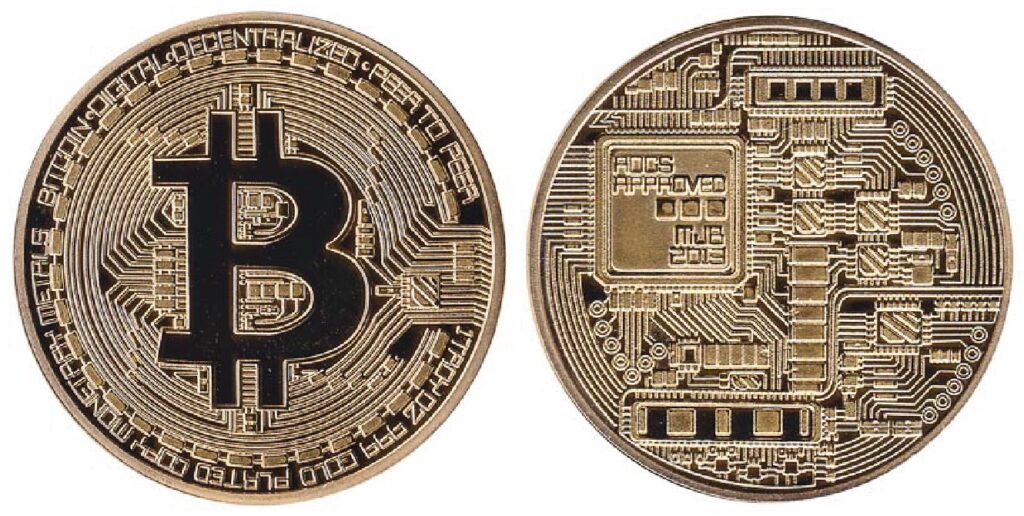
For investors, Bitcoin presents a unique set of opportunities and challenges. Its performance metrics often dictate its inclusion in diverse financial portfolios.
Portfolio Diversification
Many financial advisors and investors consider Bitcoin as a non-correlated asset that can potentially enhance portfolio diversification. Its price movements have historically shown a low correlation with traditional asset classes like stocks and bonds, particularly over longer time horizons. Including a small allocation to Bitcoin within a diversified portfolio could theoretically improve risk-adjusted returns, offering exposure to an emerging asset class with significant growth potential, while potentially hedging against traditional market downturns.
Long-Term vs. Short-Term Investment Horizons
Bitcoin’s extreme volatility makes it less suitable for short-term speculation for many retail investors. However, a “Hodl” (hold on for dear life) strategy, advocating long-term holding, has proven historically successful for many, riding out market corrections in anticipation of future growth. The long-term investment thesis often hinges on Bitcoin’s continued adoption, its finite supply, and its role as digital gold. Short-term trading strategies, while offering opportunities for profit, expose investors to significant risks due to rapid price swings.
Risk Management and Volatility Considerations
Investing in Bitcoin requires a robust understanding of risk management. Its price can fluctuate by tens of percent in a single day, influenced by news, whale movements, or broader market sentiment. Investors must be prepared for significant drawdowns and should only allocate capital they are comfortable losing. Diversifying within the crypto space, using dollar-cost averaging to mitigate entry price risk, and setting clear stop-loss orders are common strategies to manage exposure to Bitcoin’s inherent volatility.
Practical Applications and Financial Integration
Beyond speculation, Bitcoin is steadily establishing itself with practical financial applications, bridging the gap between innovative technology and everyday financial operations.
Peer-to-Peer Transactions and Remittances
Bitcoin’s foundational utility as a peer-to-peer electronic cash system continues to evolve. In regions with underdeveloped banking infrastructure or high inflation, Bitcoin serves as a vital tool for conducting business and preserving wealth. Its use in remittances offers a cheaper and faster alternative to traditional money transfer services, directly benefiting individuals sending money across borders and injecting value into local economies that might otherwise be stifled by exorbitant fees.
Merchant Adoption and Payment Gateways
While not yet ubiquitous, an increasing number of merchants, both online and physical, are accepting Bitcoin as payment. This adoption is facilitated by payment processors and gateways that convert Bitcoin into fiat currency for businesses, mitigating their exposure to volatility. As the infrastructure for Bitcoin payments matures, its utility as a transactional currency will likely grow, further cementing its role in global commerce and everyday financial interactions.
Financial Products and Their Impact
The emergence of Bitcoin-related financial products, such as futures contracts, options, and particularly spot Bitcoin ETFs, signifies its increasing integration into traditional finance. These products provide regulated avenues for institutions and retail investors to gain exposure to Bitcoin without directly holding the underlying asset. Spot ETFs, in particular, democratize access to Bitcoin investment, potentially drawing in vast amounts of capital from conventional investment channels and solidifying its position as a legitimate asset class within broader financial markets.
The Future Outlook: Challenges and Opportunities
The value of Bitcoin remains a dynamic and evolving landscape, marked by both formidable challenges and significant opportunities that will shape its future trajectory.
Scalability and Transaction Costs
One ongoing challenge for Bitcoin’s value proposition as a medium of exchange is its scalability. The underlying blockchain processes a limited number of transactions per second, leading to slower confirmation times and higher fees during periods of network congestion. Solutions like the Lightning Network are addressing this by enabling off-chain transactions, but widespread adoption and seamless integration are still works in progress. Improving scalability is crucial for Bitcoin to fully realize its potential as a global payment network.
Regulatory Certainty and Mass Adoption
The path to mass adoption is inextricably linked to regulatory certainty. Governments worldwide are grappling with how to classify and regulate cryptocurrencies. A clear, consistent, and supportive regulatory framework would foster greater institutional confidence, attract more traditional capital, and provide consumer protection, all of which are vital for Bitcoin’s long-term growth and stability. Conversely, overly restrictive or fragmented regulations could hinder its progress.

Competition from Other Cryptocurrencies and CBDCs
Bitcoin operates within a rapidly expanding crypto ecosystem, facing competition from thousands of altcoins, some of which offer different technological approaches or specialized use cases. Furthermore, central bank digital currencies (CBDCs) being explored by governments globally could pose a competitive threat, offering digital versions of fiat currency with centralized control. Bitcoin’s unique value proposition, however, remains its decentralization and absolute scarcity, which differentiate it fundamentally from both altcoins and CBDCs, preserving its niche as a decentralized, censorship-resistant store of value and medium of exchange.
In conclusion, the value of bitcoins is a multifaceted construct, stemming from its inherent scarcity, decentralized architecture, and utility in an increasingly digital and interconnected world. While subject to significant market volatility, its growing institutional acceptance, evolving practical applications, and compelling investment thesis as “digital gold” position it as a formidable asset in the modern financial landscape. Understanding its value requires looking beyond short-term price fluctuations and appreciating its profound implications for personal finance, global investing, and the future of money itself.
aViewFromTheCave is a participant in the Amazon Services LLC Associates Program, an affiliate advertising program designed to provide a means for sites to earn advertising fees by advertising and linking to Amazon.com. Amazon, the Amazon logo, AmazonSupply, and the AmazonSupply logo are trademarks of Amazon.com, Inc. or its affiliates. As an Amazon Associate we earn affiliate commissions from qualifying purchases.