
In the dynamic world of finance, few metrics capture the collective pulse of the stock market quite like the Dow Jones Industrial Average (DJIA). When investors and casual observers alike ask, “What’s the Dow average right now?”, they’re seeking more than just a number; they’re looking for a quick snapshot of market sentiment, an indicator of the health of America’s largest publicly traded companies, and often, a signal for broader economic trends. While its specific value fluctuates second by second during trading hours, understanding what the Dow represents, how it’s influenced, and how to interpret its movements is crucial for anyone interested in personal finance, investing, or business economics.

This article will delve into the Dow’s significance, unravel the forces that shape its performance, guide you on where to find its most up-to-date figures, and explain how its current average fits into a comprehensive financial perspective.
Understanding the Dow Jones Industrial Average (DJIA)
Before diving into its current value, it’s essential to grasp what the Dow Jones Industrial Average truly is and why it commands such attention. Often simply referred to as “the Dow,” it stands as one of the oldest and most frequently quoted market indices globally.
More Than Just a Number: What the Dow Represents
The DJIA is a price-weighted average of 30 significant stocks traded on the New York Stock Exchange (NYSE) and NASDAQ. These aren’t just any 30 companies; they are carefully selected to be leaders in their respective industries and are considered “blue-chip” stocks, representing large, well-established, and financially sound corporations. Historically, the Dow was dominated by industrial companies, hence its name. While it still includes industrial giants, its composition has evolved to reflect the modern American economy, encompassing technology, healthcare, finance, consumer goods, and more.
The 30 companies in the Dow represent a substantial portion of the U.S. stock market’s value and economic output. Therefore, its movements are often seen as a barometer for the broader U.S. economy’s health, or at least the health of its most prominent corporate citizens. A rising Dow generally signals investor confidence and economic growth, while a falling Dow can indicate pessimism or looming economic challenges.
The Calculation: Price-Weighted vs. Market-Cap Weighted
Unlike many modern indices, such as the S&P 500, which are weighted by market capitalization (meaning companies with larger total market value have a greater impact), the Dow is a price-weighted index. This means that stocks with higher share prices have a greater influence on the index’s value than stocks with lower share prices, regardless of their total market capitalization.
To calculate the Dow, the sum of the prices of its 30 component stocks is divided by a special number called the “Dow Divisor.” This divisor is adjusted periodically to account for stock splits, dividends, and changes in the index’s components, ensuring that the index’s value remains comparable over time despite these corporate actions. This unique calculation method is a point of frequent discussion among financial analysts, with some arguing it doesn’t fully reflect the true scale of impact of larger companies compared to a market-cap-weighted index.
Why the Dow Matters to Investors
For individual and institutional investors, the Dow serves several critical purposes:
- Market Barometer: It offers a quick, albeit sometimes superficial, glance at the market’s direction.
- Benchmarking: Many investors use the Dow’s performance as a benchmark to assess how their own large-cap stock holdings are performing.
- Sentiment Indicator: Sharp moves in the Dow, whether up or down, often reflect significant shifts in investor sentiment regarding the economy or specific sectors.
- Historical Context: Its long history allows for comparisons of current market conditions against past economic cycles and financial crises.
While a single index cannot capture the full complexity of the entire market, its prominence makes it an undeniable focal point for financial news and analysis.
Real-Time Market Dynamics: What Moves the Dow?
The Dow’s current average is not a static figure; it’s a living number, constantly reacting to a myriad of forces. Understanding these influences is key to interpreting its movements and appreciating the intricate web of global finance.
Corporate Earnings and Outlooks
Given that the Dow is comprised of 30 specific companies, the financial performance of these individual giants plays a direct and significant role in its daily fluctuations. When one of these Dow components announces stronger-than-expected earnings, raises its profit outlook, or unveils an innovative product, its stock price tends to rise, contributing positively to the Dow’s overall average. Conversely, disappointing earnings reports, guidance cuts, or negative news from a heavily weighted Dow component can drag the entire index down. Major corporate actions like mergers, acquisitions, or significant management changes within these companies also routinely impact their stock prices and, by extension, the Dow.
Economic Indicators and Federal Reserve Policy
Beyond individual company news, broader macroeconomic factors exert immense influence. Key economic indicators provide insights into the health of the economy, which in turn affects corporate profitability and investor confidence:
- Inflation Reports: Rising inflation can erode purchasing power and corporate margins, potentially leading to lower stock valuations.
- Employment Data: Strong job growth often signals a robust economy, while rising unemployment can be a precursor to recession.
- Gross Domestic Product (GDP): This measure of economic output directly reflects the overall growth or contraction of the economy.
- Consumer Spending: As a major driver of economic activity, consumer confidence and spending patterns are closely watched.
Perhaps the most significant external influence on the Dow is the monetary policy set by the Federal Reserve. Decisions regarding interest rates, quantitative easing, or tightening can profoundly impact borrowing costs for companies, the attractiveness of bonds versus stocks, and the overall liquidity in the financial system. Higher interest rates, for instance, can make bonds more appealing and increase borrowing costs for businesses, potentially dampening stock market enthusiasm.
Geopolitical Events and Global Trends
In an interconnected world, the Dow is not immune to events beyond U.S. borders. Geopolitical tensions, trade disputes, international conflicts, and global economic shifts can all send ripples through financial markets:
- Trade Wars: Tariffs or trade barriers between major economies can disrupt supply chains, increase costs for multinational corporations, and weigh on global growth.
- Oil Prices: Fluctuations in crude oil prices can affect energy companies, transportation costs, and consumer spending power.
- Global Pandemics or Health Crises: As seen with COVID-19, widespread health emergencies can trigger massive economic disruptions and market volatility.
- Political Instability: Elections, policy changes, or civil unrest in key global regions can create uncertainty that impacts international trade and investment.
These events often lead to increased market volatility as investors reassess risks and adjust their portfolios.
Market Sentiment and Investor Psychology
Finally, the Dow’s movements are heavily influenced by the collective mood of investors. Market sentiment, driven by fear, greed, optimism, or pessimism, can create powerful trends that may sometimes defy fundamental analysis. News headlines, analyst upgrades or downgrades, and even social media trends can all contribute to psychological shifts that trigger buying or selling frenzies. Herd mentality, where investors follow the actions of others, can amplify these movements, leading to periods of irrational exuberance or panic selling that temporarily disconnect market prices from underlying economic realities.
Interpreting the Dow’s Movements: Beyond the Daily Fluctuation
While asking “what’s the Dow average right now” provides an immediate data point, a more insightful approach involves understanding the context of its movements. The daily ebb and flow of the Dow are just one piece of a much larger puzzle.

Short-Term Volatility vs. Long-Term Trends
It’s crucial not to conflate short-term volatility with long-term investment trends. The Dow can experience significant swings within a single trading day, week, or month due to immediate news, technical trading, or fleeting sentiment. Reacting emotionally to these daily fluctuations is a common pitfall for new investors. A truly insightful perspective involves stepping back and observing the Dow’s performance over quarters, years, or even decades.
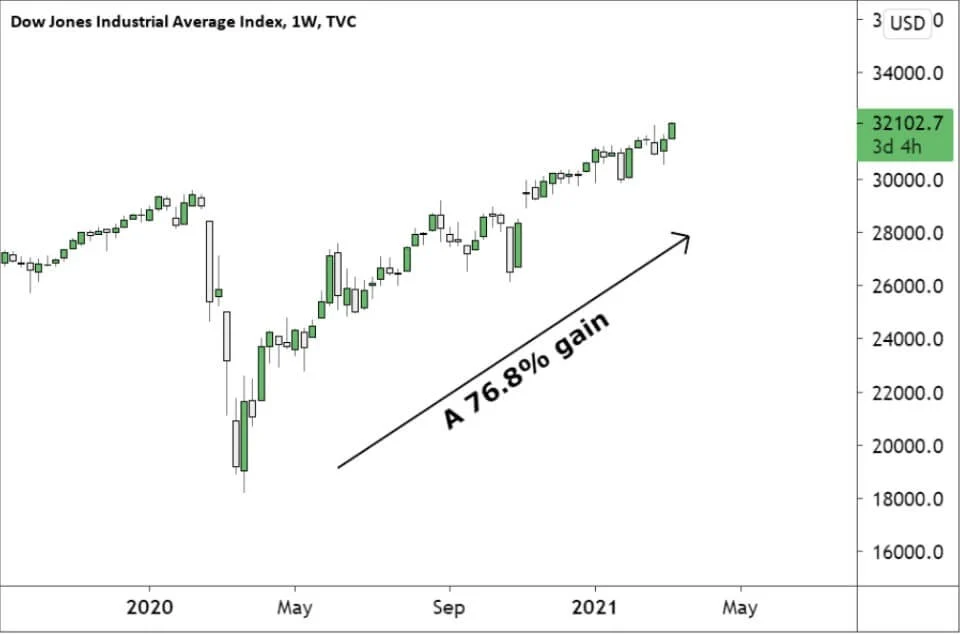
Historically, despite numerous downturns, market crashes, and periods of stagnation, the Dow has shown an upward long-term trend, reflecting the growth and innovation of the American economy. Investors with a long-term horizon understand that daily volatility is part and parcel of equity investing and focus instead on the underlying economic drivers and corporate performance that shape enduring trends.
The Dow as a Leading vs. Lagging Indicator
Financial indicators can be categorized as leading (predicting future economic events), lagging (confirming past events), or coincident (occurring simultaneously with events). The Dow, like other stock market indices, is generally considered a leading indicator, albeit an imperfect one. It often moves in anticipation of future economic conditions. For instance, the market might start to rally when economic data is still poor, anticipating a recovery. Conversely, it might begin to decline while the economy is still strong, forecasting a slowdown.
However, the Dow isn’t a flawless crystal ball. Its leading nature means it can sometimes provide false signals or react more to sentiment than to concrete economic shifts. It’s best used in conjunction with a broader array of economic data and expert analysis.
Benchmarking Your Portfolio: How the Dow Fits In
For many investors, the Dow serves as a benchmark. If your portfolio is heavily invested in large-cap U.S. stocks, you might compare its performance to the Dow. However, it’s vital to remember that the Dow only represents 30 companies. A truly diversified portfolio will likely include hundreds or thousands of stocks across various sizes (small-cap, mid-cap), sectors, and geographies, as well as other asset classes like bonds, real estate, and commodities.
Therefore, while the Dow provides a useful reference point for a segment of the market, it should not be the sole benchmark for evaluating a well-diversified portfolio’s overall success. A broader index like the S&P 500 or even a total market index like the Wilshire 5000 is often a more appropriate benchmark for a broadly diversified U.S. equity portfolio.
Where to Find the Dow’s Current Value and Track Its Performance
In today’s digital age, obtaining the Dow’s current average is remarkably easy. Numerous platforms offer real-time or near real-time data, allowing investors to stay updated during trading hours.
Reputable Financial News Sites and Data Providers
These are often the go-to sources for up-to-the-minute market information:
- Bloomberg.com / Bloomberg Terminal: For professional-grade, real-time data and comprehensive news.
- Reuters.com: Offers extensive financial news and market data.
- The Wall Street Journal (WSJ.com): A leading source for financial journalism, with detailed market coverage.
- Yahoo Finance (finance.yahoo.com): Provides free, widely accessible delayed and often real-time quotes, charts, and news.
- Google Finance (google.com/finance): Offers a user-friendly interface for tracking indices, stocks, and portfolios.
- CNBC.com / MarketWatch.com: Popular financial news outlets with live market updates and analysis.
Most of these sites will prominently display the Dow’s current value (along with other major indices like the S&P 500 and Nasdaq Composite) on their homepages during market hours.
Brokerage Platforms and Investment Apps
If you have an investment account with a brokerage firm (e.g., Fidelity, Charles Schwab, E*TRADE, Vanguard), their proprietary platforms and mobile apps typically offer integrated, real-time streaming data for major indices and your individual holdings. These platforms often provide advanced charting tools, watchlists, and personalized alerts to help you track performance more effectively.
Understanding Delayed vs. Real-Time Quotes
It’s important to differentiate between real-time and delayed quotes. Many free online sources provide data that is delayed by 15-20 minutes, while professional terminals and some brokerage platforms offer true real-time streaming data. For most long-term investors, a slight delay is insignificant. However, for active day traders, real-time data is critical. Be aware of the data’s freshness, especially if you’re making time-sensitive decisions.
Integrating the Dow into Your Investment Strategy
Knowing “what’s the Dow average right now” is a starting point, but integrating this information effectively into a sound investment strategy is what truly matters.
The Dow as a Component of a Diversified Portfolio
While you can’t directly “buy the Dow,” you can invest in exchange-traded funds (ETFs) or mutual funds that aim to replicate its performance. These funds hold shares of the 30 component companies in proportions designed to mirror the index. Investing in a Dow-tracking fund can be a way to gain exposure to large-cap U.S. companies.
However, remember that investing solely in a Dow-tracking fund still means concentrating your portfolio in just 30 large companies. A well-diversified strategy typically involves:
- Broad Market Exposure: Investing in total market index funds or ETFs that cover thousands of U.S. stocks.
- International Diversification: Including developed and emerging market stocks to reduce reliance on a single economy.
- Asset Allocation: Balancing equities with fixed income (bonds) and potentially other asset classes to manage risk according to your personal financial goals and risk tolerance.
- Sector Diversification: Ensuring your investments aren’t overly concentrated in a single industry, even within the Dow components.
Avoiding Emotional Trading: A Long-Term Perspective
The daily swings of the Dow can be exhilarating or terrifying, but successful investing rarely comes from reacting emotionally to short-term market noise. A long-term perspective, often spanning decades, is crucial. Strategies like dollar-cost averaging (investing a fixed amount regularly, regardless of market highs or lows) can help mitigate the impact of market volatility and build wealth over time. Focus on your financial goals, maintain a diversified portfolio, and avoid the temptation to time the market based on daily Dow headlines.
Professional Advice vs. DIY Investing
For many, managing investments can be complex and time-consuming. Financial advisors can help you understand the Dow’s relevance to your specific situation, design a diversified portfolio tailored to your goals and risk tolerance, and provide guidance during market volatility. While tools and resources for DIY investing are abundant, professional advice can be invaluable for navigating complex financial landscapes and maintaining discipline.
Conclusion
When you ask “what’s the Dow average right now?”, you’re tapping into a century-old tradition of market analysis and economic observation. The Dow Jones Industrial Average remains a prominent, though imperfect, barometer for the U.S. stock market and the health of its most influential corporations. Its value is a real-time reflection of countless interconnected factors, from corporate earnings and interest rates to global events and investor psychology.
While its immediate number offers a snapshot, a deeper understanding requires appreciating its historical context, the forces that drive its movements, and its role within a broader, diversified investment strategy. For the savvy investor, the Dow is not just a fluctuating figure; it’s a constant reminder of the dynamic nature of finance and the importance of informed, patient decision-making in the pursuit of long-term financial success.
aViewFromTheCave is a participant in the Amazon Services LLC Associates Program, an affiliate advertising program designed to provide a means for sites to earn advertising fees by advertising and linking to Amazon.com. Amazon, the Amazon logo, AmazonSupply, and the AmazonSupply logo are trademarks of Amazon.com, Inc. or its affiliates. As an Amazon Associate we earn affiliate commissions from qualifying purchases.