
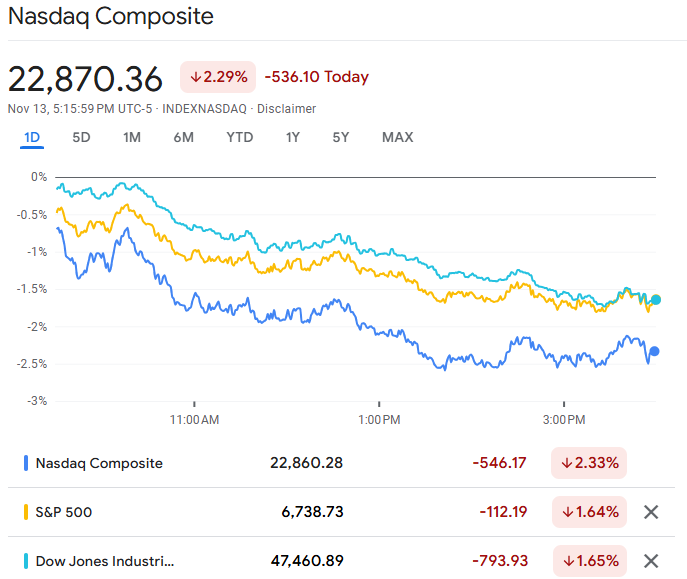
The stock market, a dynamic barometer of economic health and corporate performance, frequently experiences fluctuations, and a significant drop on any given day can trigger widespread anxiety among investors, analysts, and the general public. While it’s tempting to seek a singular, definitive cause, the reality is often far more complex, a confluence of macroeconomic forces, corporate performance, market mechanics, and investor psychology. Understanding these underlying drivers is crucial not just for making sense of the immediate downturn, but also for navigating the broader landscape of personal finance and investment strategy. Today’s market decline, like many before it, likely stems from a combination of prevailing economic headwinds, shifts in corporate outlook, and technical trading patterns that amplify sentiment.
Macroeconomic Headwinds and Shifting Investor Sentiment
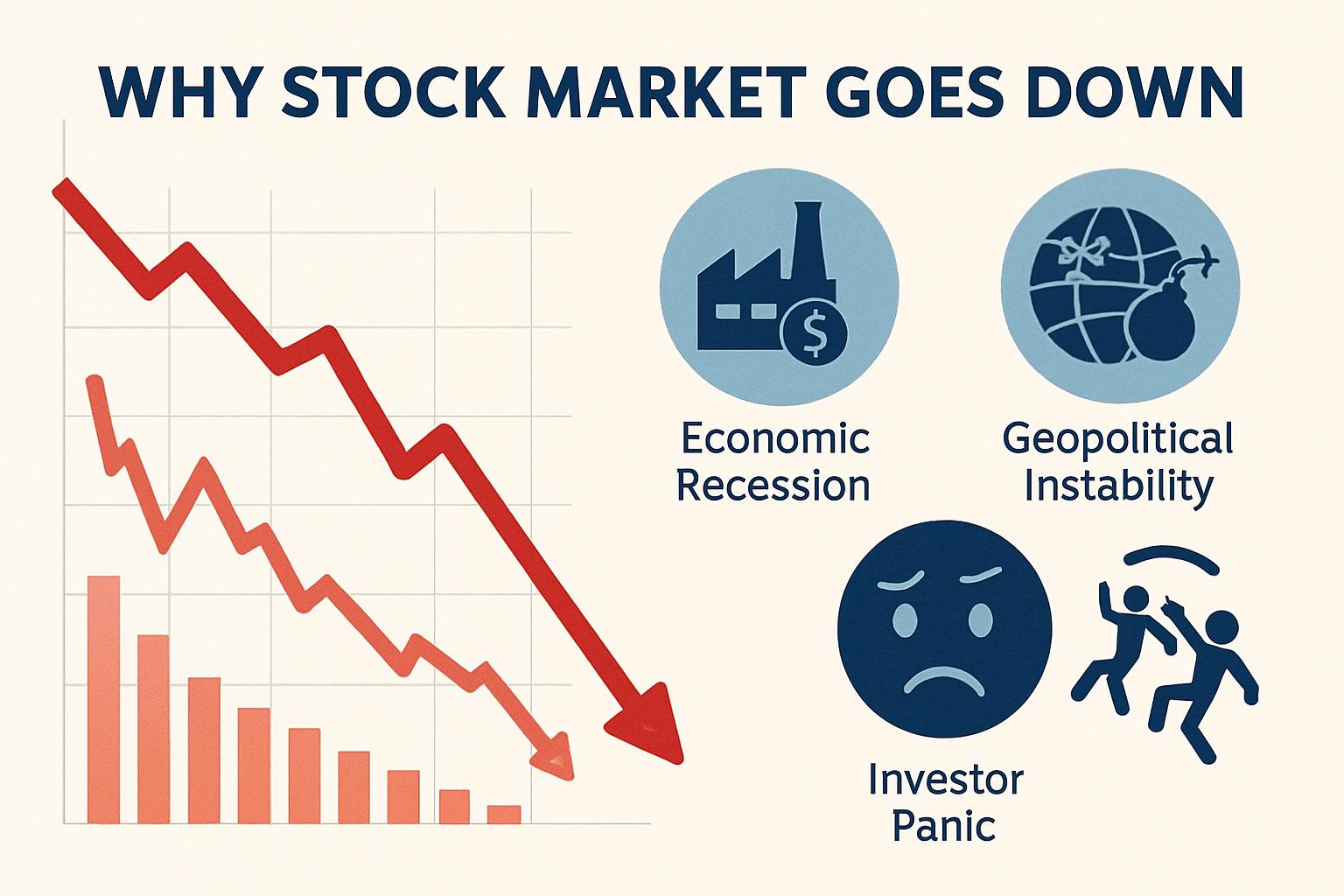
A significant portion of daily stock market movements can be attributed to the broader economic environment. Global economic conditions, central bank policies, and geopolitical events create a backdrop against which all investment decisions are made. When this backdrop becomes uncertain or deteriorates, investor confidence wanes, leading to capital flight from riskier assets like stocks.
Inflationary Pressures and Interest Rate Hikes
One of the most potent forces impacting markets recently has been persistent inflation. When the cost of goods and services rises steadily, it erodes the purchasing power of consumers and increases the operational costs for businesses, ultimately squeezing profit margins. Central banks, in their mandate to maintain price stability, typically respond to high inflation by raising benchmark interest rates. While necessary to cool down an overheating economy, higher interest rates have several direct impacts on the stock market. Firstly, they increase the cost of borrowing for companies, making expansion plans more expensive and reducing profitability. Secondly, higher rates make fixed-income investments, like bonds, more attractive relative to stocks, as they offer a better risk-free return, drawing money away from equities. This shift makes future corporate earnings less valuable in present terms, prompting investors to re-evaluate stock valuations downwards.
Geopolitical Instability and Supply Chain Disruptions
The interconnectedness of the global economy means that events in one region can have far-reaching consequences. Geopolitical tensions, such as conflicts, trade wars, or significant political shifts, introduce a layer of uncertainty that investors inherently dislike. Such instability can disrupt critical supply chains, leading to shortages, production delays, and increased costs for raw materials and finished goods. For example, disruptions in energy markets due to geopolitical events can send oil and gas prices soaring, impacting every sector of the economy from transportation to manufacturing, and ultimately eating into corporate profits. This uncertainty makes it difficult for companies to forecast future earnings accurately, leading to cautious investment and potential market pullbacks.
Slowing Global Economic Growth
Concerns about an impending recession or a significant slowdown in global economic growth are major catalysts for market drops. When leading economic indicators point towards weaker consumer spending, reduced industrial output, and declining business investment, it signals a challenging environment for corporate profitability. Major economies experiencing a slowdown, particularly those that are large importers or exporters, can have a ripple effect across the world. Lower economic growth translates directly into lower expected earnings for companies, prompting investors to sell shares as they anticipate weaker financial performance in the quarters ahead. This collective expectation of slower growth can create a self-fulfilling prophecy, as businesses and consumers become more cautious, further dampening economic activity.
Corporate Earnings, Valuations, and Sector-Specific Challenges
While macroeconomic factors set the stage, the specific performance and outlook of individual companies and sectors play a crucial role in determining the market’s daily trajectory. Disappointing corporate results or sector-wide pressures can trigger sharp declines.
Disappointing Earnings Reports and Outlooks
Corporate earnings season is a critical period for the stock market. When companies report their quarterly or annual financial results, investors closely scrutinize whether they met, exceeded, or fell short of analyst expectations for revenue and profit. A string of disappointing earnings reports, particularly from large, influential companies (often referred to as “bellwethers”), can signal broader economic weakness or sector-specific problems. Even more impactful is a downward revision of future earnings guidance. If a company signals that it expects future performance to be weaker than previously forecast, it can trigger a significant sell-off in its stock and potentially drag down the entire sector or market, as investors extrapolate those challenges to other firms. The market is forward-looking, and any indication of future difficulties is usually priced in immediately.
Sectoral Vulnerabilities and Shifting Tides
Not all sectors are equally affected by economic shifts. Some industries are inherently more sensitive to changes in interest rates, consumer spending, or commodity prices. For instance, the technology sector, often reliant on future growth and discounted cash flows, tends to be particularly vulnerable to rising interest rates, which devalue future earnings. Consumer discretionary companies, which sell non-essential goods and services, are often hit hard during periods of high inflation or economic uncertainty as consumers cut back on spending. Conversely, sectors like utilities or consumer staples might be more resilient. A significant downturn in one or two major sectors due to specific challenges (e.g., regulatory changes, technological disruption, or supply gluts) can have a disproportionate impact on the broader market indices, especially if those sectors represent a large portion of the market’s capitalization.
High Valuations and Profit-Taking
Following periods of sustained market growth, valuations can become stretched, meaning stock prices rise faster than underlying corporate earnings. When valuations reach historically high levels, investors become more sensitive to any negative news or signs of economic weakness. In such an environment, even minor triggers can lead to widespread profit-taking. Investors who have seen substantial gains in their portfolios may decide to lock in those profits, leading to selling pressure. This phenomenon often contributes to market corrections, where the market pulls back after an extended bull run, re-calibrating prices to more sustainable levels based on fundamental earnings and economic realities.
Market Mechanics and Psychological Factors

Beyond fundamental economic and corporate drivers, the internal dynamics of the market itself, coupled with the often-irrational behavior of human investors, can significantly amplify downward movements.
Algorithmic Trading and High-Frequency Trading
Modern financial markets are heavily influenced by sophisticated algorithmic trading systems and high-frequency trading (HFT) firms. These automated systems execute trades at lightning speed, often based on pre-programmed rules triggered by specific market indicators, news events, or price movements. While these systems contribute to market liquidity, they can also exacerbate volatility. A significant sell order or a piece of negative news picked up by algorithms can trigger a cascade of automated sell orders across multiple firms, leading to rapid and steep declines that can overwhelm human traders. This can create “flash crashes” or rapid sell-offs that are not necessarily tied to immediate changes in fundamental value but rather to the mechanics of automated trading.
Margin Calls and Forced Selling
Many investors use leverage, borrowing money to buy securities, a practice known as margin trading. When the value of the securities purchased on margin falls significantly, the brokerage firm may issue a “margin call,” demanding that the investor deposit additional funds or sell some of their holdings to meet the maintenance margin requirements. If an investor cannot meet a margin call, the brokerage can forcibly sell their securities. This forced selling can create a downward spiral during market downturns, as falling prices trigger more margin calls, leading to more forced selling, further accelerating the market’s decline. This mechanism can transform a moderate decline into a more severe correction as liquidity dries up and selling pressure intensifies.
Psychological Factors and the Fear Index (VIX)
Investor psychology plays a profound role in market movements. Fear and greed are powerful emotions that can drive irrational decisions. During periods of uncertainty, fear can become contagious, leading to herd mentality where investors panic-sell assets simply because others are doing so, regardless of fundamental value. This emotional reaction often overrides rational analysis, pushing prices below what might be justified by economic fundamentals. The CBOE Volatility Index (VIX), often called the “fear index,” measures the market’s expectation of future volatility. A sharp rise in the VIX typically signals increased investor anxiety and expectations of further market declines, often preceding or accompanying significant market drops. Understanding this psychological aspect is crucial, as market corrections can often be overshoots driven by fear, presenting opportunities for long-term investors.
The Role of Government Policy and Regulation
Government actions, both fiscal and regulatory, have a substantial impact on economic stability and market confidence. Shifts in these policies can either assuage fears or introduce new uncertainties.
Fiscal Policy and Debt Concerns
Government fiscal policy, encompassing spending levels, taxation, and national debt management, profoundly influences the economic environment. Large fiscal deficits and rising national debt can raise concerns among investors about future economic stability, inflation, or the government’s ability to manage its finances. If investors perceive that a government’s fiscal policy is unsustainable or will lead to higher taxes or less economic dynamism in the future, it can reduce confidence and lead to capital outflow, impacting stock valuations. Conversely, well-managed fiscal policies that promote growth and stability can bolster market confidence.
Regulatory Changes and Industry Impact
Changes in government regulation can significantly affect specific industries or the broader economy. New regulations, particularly those that increase compliance costs, restrict business practices, or alter competitive landscapes, can impact corporate profitability and investor sentiment. For example, stricter environmental regulations might increase costs for manufacturing industries, while new antitrust laws could affect large technology companies. Anticipation of such changes, or their actual implementation, can introduce uncertainty and cause investors to re-evaluate the risk and return profiles of affected companies and sectors, potentially leading to sell-offs.
Navigating Market Downturns: An Investor’s Perspective
While understanding the causes of a market drop is essential, knowing how to react as an investor is equally critical. Market downturns, though unsettling, are a normal and inevitable part of the investment cycle.
Diversification and Long-Term Strategy
One of the most robust defenses against market volatility is a well-diversified investment portfolio. Spreading investments across different asset classes (stocks, bonds, real estate), geographies, and industries can help cushion the blow when one particular segment of the market underperforms. Equally important is adopting a long-term investment horizon. Attempting to time the market—selling before a drop and buying before a rise—is notoriously difficult and often leads to missed opportunities and suboptimal returns. History shows that markets tend to recover and reach new highs over extended periods, making patience and a consistent strategy key.
Rebalancing and Opportunity
Market downturns, while painful, also present opportunities for savvy investors. When asset prices fall, quality companies may become available at more attractive valuations. A disciplined approach often includes periodically rebalancing one’s portfolio to maintain the desired asset allocation. During a downturn, this might involve selling assets that have performed well and now represent a larger portion of the portfolio, and buying assets that have fallen in value but retain strong long-term prospects. This “buy low” strategy can enhance long-term returns by acquiring more shares of solid companies at discounted prices.
Avoiding Panic Selling
Perhaps the most crucial advice during a market drop is to avoid panic selling. Emotional decisions driven by fear often result in investors locking in losses that would otherwise be temporary. Instead of reacting impulsively, it’s vital to revisit your original investment thesis, assess whether the fundamental reasons for holding an asset have changed, and stick to your predetermined investment plan. For those with a long-term perspective, market corrections are often viewed not as crises, but as temporary setbacks or even strategic buying opportunities.
In conclusion, “what is causing the stock market to drop today” is rarely a simple question with a simple answer. It’s typically a mosaic of macroeconomic forces like inflation and interest rates, geopolitical tensions, specific corporate challenges, market-internal mechanics, and the powerful influence of investor psychology. Understanding these multifaceted drivers provides crucial context, helping investors to move beyond immediate fear and adopt a more informed, disciplined, and ultimately more successful approach to navigating the inherent volatility of financial markets.
aViewFromTheCave is a participant in the Amazon Services LLC Associates Program, an affiliate advertising program designed to provide a means for sites to earn advertising fees by advertising and linking to Amazon.com. Amazon, the Amazon logo, AmazonSupply, and the AmazonSupply logo are trademarks of Amazon.com, Inc. or its affiliates. As an Amazon Associate we earn affiliate commissions from qualifying purchases.