
The question “how much is the Dow today?” is more than just a casual inquiry; it’s a daily ritual for millions of investors, economists, and curious onlookers worldwide. It represents a quick pulse check on the health of the U.S. stock market and, by extension, a significant portion of the global economy. While the immediate answer might be a specific number of points, understanding what that number truly signifies requires delving deeper into the Dow Jones Industrial Average (DJIA), its composition, and the myriad factors that drive its daily movements.
For many, the Dow is synonymous with “the stock market.” Its ups and downs frequently dominate financial headlines, influencing everything from retirement account statements to dinner table conversations. But beyond the daily fluctuations, lies a complex interplay of corporate performance, economic indicators, geopolitical events, and investor sentiment. This article aims to demystify the Dow, explaining its relevance, how to interpret its daily score, and its broader implications for your financial journey and the economy at large.

Understanding the Dow Jones Industrial Average
To truly grasp the significance of “how much the Dow is today,” one must first understand what the Dow is. It’s not just a random collection of stocks; it’s a carefully curated index designed to provide a snapshot of the U.S. industrial landscape, albeit one that has evolved dramatically over time.
What Exactly is the Dow?
The Dow Jones Industrial Average, often simply called “the Dow,” is one of the oldest and most widely recognized stock market indices in the world. Created by Charles Dow in 1896, it was initially composed of 12 industrial companies. Its purpose was to serve as a proxy for the broader U.S. economy, specifically tracking the performance of the nation’s leading industrial firms.
Today, the Dow comprises 30 large, publicly traded companies that are leaders in their respective industries. These aren’t necessarily “industrial” in the traditional manufacturing sense anymore; the list includes technology giants, financial institutions, healthcare companies, and consumer goods conglomerates. The selection process is not based on rigid quantitative rules but rather on the committee’s discretion, aiming for robust companies that represent a significant portion of the U.S. economy and have a history of generating investor interest. Examples of current components might include Apple, Microsoft, Goldman Sachs, Johnson & Johnson, and Nike.
Unlike other prominent indices like the S&P 500, which is market-capitalization weighted, the Dow is a price-weighted index. This means that stocks with higher share prices have a greater impact on the index’s value than those with lower share prices, regardless of their total market capitalization. This methodology is a historical legacy and can sometimes lead to situations where a small percentage change in a high-priced stock can move the index more than a larger percentage change in a lower-priced stock.
Why the Dow is a Key Market Barometer
Despite its unique price-weighted methodology and limited number of components, the Dow remains an incredibly important market barometer. Its daily performance is closely watched for several reasons:
Firstly, its long history provides a continuous narrative of market cycles, economic expansions, and contractions, offering valuable context for current market conditions. Secondly, the 30 companies it tracks are generally household names, often leaders in their fields, and their collective performance offers a glimpse into the health of corporate America and, by extension, consumer spending and business investment. Finally, its simplicity – a single number representing a broad market trend – makes it highly accessible and digestible for the general public, even if they don’t fully understand the underlying mechanics. While some analysts argue that indices like the S&P 500 or the Wilshire 5000 offer a more comprehensive view of the market due to their broader composition, the Dow’s cultural significance and historical prominence ensure its status as a critical indicator.
Who are the “Industrials” Today?
The term “Industrial” in Dow Jones Industrial Average is largely a historical artifact. When the index was conceived in the late 19th century, the U.S. economy was heavily reliant on manufacturing and heavy industry. However, as the economy diversified and evolved, so too did the composition of the Dow. Today, the 30 companies reflect a broad cross-section of the modern U.S. economy, including sectors like technology (e.g., Apple, Microsoft), finance (e.g., Goldman Sachs, JPMorgan Chase), healthcare (e.g., Johnson & Johnson, UnitedHealth Group), consumer discretionary (e.g., Home Depot, McDonald’s), and more.
The selection committee for the Dow periodically reviews its components, adding and removing companies to ensure the index remains relevant and representative of current economic trends. These changes, though infrequent, are significant and can often lead to temporary volatility for the companies involved. This evolution underscores the Dow’s adaptability and its continued effort to reflect the changing face of American business leadership.
Deconstructing Today’s Dow Movement
When someone asks “how much is the Dow today?”, they’re typically looking for a current numerical value and, more importantly, whether it’s up or down, and by how much. Interpreting this daily score requires understanding where to find the information and what factors are currently moving the needle.
Real-Time Tracking: Where to Find the Current Value
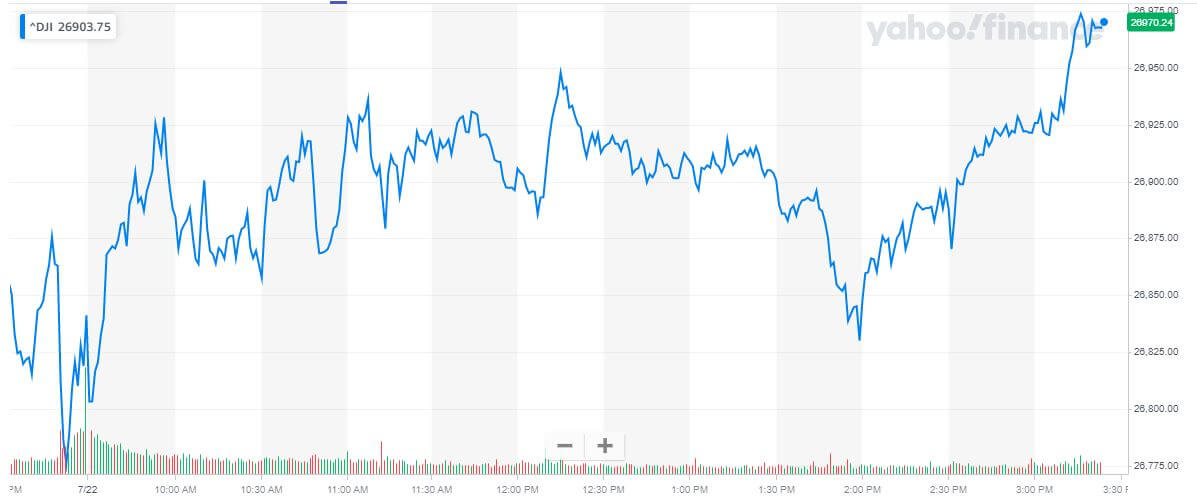
Accessing the Dow’s current value is easier than ever in the digital age. Financial news websites (e.g., Wall Street Journal, Bloomberg, Reuters), dedicated stock market apps (e.g., Google Finance, Yahoo Finance), and brokerage platforms provide real-time or near real-time updates on the DJIA. These platforms typically display the current point value, the net change in points from the previous close, and the percentage change. They also often include a daily chart showing the Dow’s movement throughout the trading session.
Understanding the difference between the point change and the percentage change is crucial. A 100-point move might sound substantial, but if the Dow is at 35,000, it’s a relatively small percentage change (less than 0.3%). Conversely, a 100-point move when the Dow was at 10,000 in the past would have been a 1% change, indicating a much more significant shift in market sentiment. Focusing on the percentage change often provides a more accurate sense of the market’s conviction in its daily direction.
Primary Drivers of Daily Fluctuation
The Dow’s daily performance is a complex tapestry woven from countless threads of information and expectation. Several key factors consistently influence its daily fluctuations:
- Economic Reports: Data releases like inflation rates (Consumer Price Index), unemployment figures, GDP growth, retail sales, and manufacturing indices can instantly shift market sentiment. Positive data often signals economic strength, potentially leading to higher stock prices, while negative data can spark sell-offs.
- Corporate Earnings: The performance of the 30 companies within the Dow, particularly their quarterly earnings reports, can have an outsized impact. Strong earnings and positive outlooks from a few key components can lift the entire index, and vice-versa.
- Interest Rates and Monetary Policy: Decisions by central banks, especially the U.S. Federal Reserve, on interest rates or quantitative easing, have a profound effect. Higher interest rates can increase borrowing costs for companies and make bonds more attractive than stocks, often leading to market declines.
- Geopolitical Events: International conflicts, political instability, trade disputes, and major global news events can create uncertainty, prompting investors to pull back from riskier assets like stocks.
- Market Sentiment and Technical Factors: Investor psychology, including fear and greed, plays a massive role. Momentum trading, where investors buy or sell based on recent price trends, and technical analysis, which studies chart patterns, can also influence short-term movements.
Interpreting the Daily Score
Interpreting “today’s Dow score” goes beyond simply noting if it’s up or down. It involves understanding the context. A slight dip on a day with no major news might indicate profit-taking, while a significant surge following a positive jobs report signals genuine optimism. Conversely, a sharp decline might be a reaction to an unexpected inflation number or geopolitical tension.
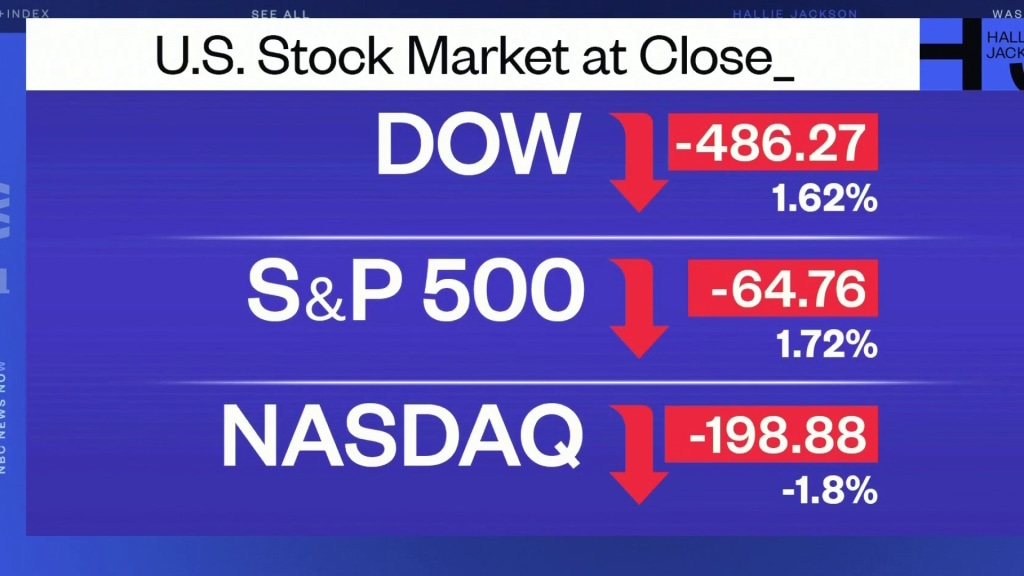
It’s also important to consider the day’s movement in relation to broader market trends. Is the Dow moving in sync with other major indices like the S&P 500 and the Nasdaq, or is it an outlier? Discrepancies can reveal specific sector strengths or weaknesses, as the Dow has a heavier weighting in certain traditional sectors compared to the tech-heavy Nasdaq, for instance. Ultimately, the daily score is just one data point in a much larger, ongoing narrative of market and economic evolution.
Beyond the Daily Ticker: The Dow in Your Financial Journey
While the daily “how much is the Dow today?” provides a snapshot, smart investors understand that focusing solely on day-to-day fluctuations can be misleading and even detrimental. The Dow’s true value for your financial journey lies in understanding its long-term trends and its influence on broader investment strategies.
Short-Term Volatility vs. Long-Term Growth
The stock market, including the Dow, is inherently volatile in the short term. Daily swings of hundreds of points, even thousands, are not uncommon. These movements can be driven by a confluence of factors, many of which are temporary or speculative. Reacting emotionally to every dip or surge is a common pitfall for new investors. Selling during a downturn out of panic locks in losses, while chasing a rapidly rising market can lead to buying at the peak.
Historically, despite numerous crashes, recessions, and global crises, the Dow (and the broader market) has shown a remarkable upward trend over the long term. This long-term growth is fueled by innovation, corporate earnings, economic expansion, and a relentless human drive for progress. For individual investors, this means adopting a long-term perspective, focusing on consistent investing, and riding out the short-term storms. A portfolio diversified across various assets and sectors, rather than solely dependent on the Dow, is often the most prudent approach.
The Dow’s Influence on Investment Portfolios
Even if you don’t directly invest in individual Dow components, the index’s performance significantly impacts most investment portfolios. Many popular retirement vehicles, such as 401(k)s and IRAs, are invested in mutual funds or Exchange Traded Funds (ETFs) that track broad market indices, including the Dow. For instance, a “large-cap blend” fund will likely hold many of the same companies found in the Dow.
Therefore, when the Dow performs well, there’s a good chance your retirement accounts and other diversified investments are also seeing positive returns. Conversely, a prolonged decline in the Dow will likely reflect negatively on your portfolio’s value. Understanding this connection helps investors gauge their portfolio’s health relative to a widely recognized benchmark. It emphasizes the importance of regular portfolio reviews, rebalancing, and ensuring your investments align with your financial goals and risk tolerance.
Making Informed Investment Decisions
Navigating the financial markets successfully requires more than just knowing “how much the Dow is today.” It demands a strategic approach centered on informed decision-making.
- Avoid Emotional Trading: The most crucial piece of advice is to separate your emotions from your investment choices. Panicking during market downturns or getting overly euphoric during bull markets can lead to poor decisions.
- Diversification: Do not put all your eggs in one basket. While the Dow represents major U.S. companies, a truly diversified portfolio includes a mix of domestic and international stocks, bonds, real estate, and other asset classes to mitigate risk.
- Long-Term Strategy: Develop a clear investment plan with defined goals and stick to it. Practices like dollar-cost averaging (investing a fixed amount regularly, regardless of market fluctuations) can help smooth out returns over time.
- Continuous Learning: Stay informed about economic trends, market news, and financial principles. Understanding the “why” behind market movements empowers you to make more confident decisions.
- Seek Professional Advice: For complex financial situations or if you’re unsure about your investment strategy, consulting with a qualified financial advisor can provide personalized guidance tailored to your specific circumstances.
Broader Economic Implications of the Dow’s Performance
The Dow’s daily value isn’t just a number for investors; it’s also a significant indicator for economists, policymakers, and businesses, offering insights into the broader health and future direction of the economy.
The Dow as a Leading Economic Indicator
While the Dow reacts to current news, its movements can also serve as a leading economic indicator, often anticipating future economic activity. A prolonged bull market in the Dow often precedes periods of economic expansion, as rising stock prices reflect investor confidence in future corporate profits and economic growth. Conversely, a sustained downturn can signal an impending recession, as investors begin to price in future economic weakness.
However, it’s crucial to remember that the stock market is not the economy. There can be periods where the market performs well while the broader economy struggles (a “disconnect”), or vice-versa. Factors like corporate buybacks, low interest rates, and speculative trading can inflate market values even when underlying economic fundamentals are less robust. Therefore, economists typically look at a wide array of indicators, with the Dow being one piece of a much larger puzzle.
Impact on Consumer and Business Confidence
The performance of the Dow and the broader stock market can have a tangible psychological impact on both consumers and businesses. When the market is consistently rising, individuals feel wealthier due to their growing retirement accounts and investment portfolios. This “wealth effect” can lead to increased consumer spending, which in turn fuels economic growth. Conversely, a falling market can make people feel poorer and more cautious, potentially leading to reduced spending and investment.
For businesses, a strong stock market can make it easier to raise capital through stock offerings, signaling investor confidence in their growth prospects. This can encourage expansion, hiring, and innovation. A weak market, however, can make capital more expensive and signal caution, potentially slowing business development. The Dow, therefore, plays a role in shaping the collective sentiment that drives economic activity.
Government Policy and Market Response
Government policies, particularly those related to fiscal spending, taxation, and monetary policy (controlled by the Federal Reserve), have a direct and often immediate impact on the Dow. For example:
- Federal Reserve Decisions: Changes in interest rates by the Fed are meticulously watched. Lower rates generally make borrowing cheaper, encouraging business investment and making stocks more attractive relative to bonds, often boosting the Dow. Higher rates have the opposite effect.
- Fiscal Policy: Government spending initiatives (e.g., infrastructure projects), tax reforms, and regulatory changes can significantly affect corporate profitability and economic sectors, prompting market reactions.
- Geopolitical Stance: Policies related to international trade, tariffs, or diplomatic relations can create certainty or uncertainty, influencing investor sentiment towards global corporations, many of which are in the Dow.
Understanding “how much the Dow is today” in the context of government policy helps in anticipating future market movements and understanding the broader economic landscape that these policies are trying to shape.
In conclusion, “how much is the Dow today?” is a question laden with significance. While the immediate answer is a number, the deeper understanding involves appreciating its historical context, its role as a market indicator, the forces driving its daily dance, and its profound implications for personal finance and the national economy. For anyone navigating the world of money, keeping an eye on the Dow – with a healthy dose of perspective – remains a crucial practice.
aViewFromTheCave is a participant in the Amazon Services LLC Associates Program, an affiliate advertising program designed to provide a means for sites to earn advertising fees by advertising and linking to Amazon.com. Amazon, the Amazon logo, AmazonSupply, and the AmazonSupply logo are trademarks of Amazon.com, Inc. or its affiliates. As an Amazon Associate we earn affiliate commissions from qualifying purchases.