
For investors and traders, the precise moment financial markets open is far more than a simple timestamp on a clock. It signifies the commencement of a new cycle of economic activity, a fresh canvas for price discovery, and a critical juncture for executing strategies. Understanding market opening times, not just for your local exchange but across the global financial landscape, is fundamental to informed decision-making, risk management, and capitalizing on opportunities. In today’s interconnected world, where news travels at light speed and capital flows freely across borders, knowing “what time the market opens today” is the first step in a strategic journey that spans continents and asset classes.

Understanding the Global Tapestry of Market Hours
The concept of “the market” is a vast, multifaceted entity encompassing numerous exchanges, asset classes, and geographical regions, each with its own operational schedule. Navigating this global patchwork of opening and closing bells requires a keen understanding of the specifics, as well as the underlying reasons for their variations.
The Core U.S. Equity Markets: NYSE and NASDAQ
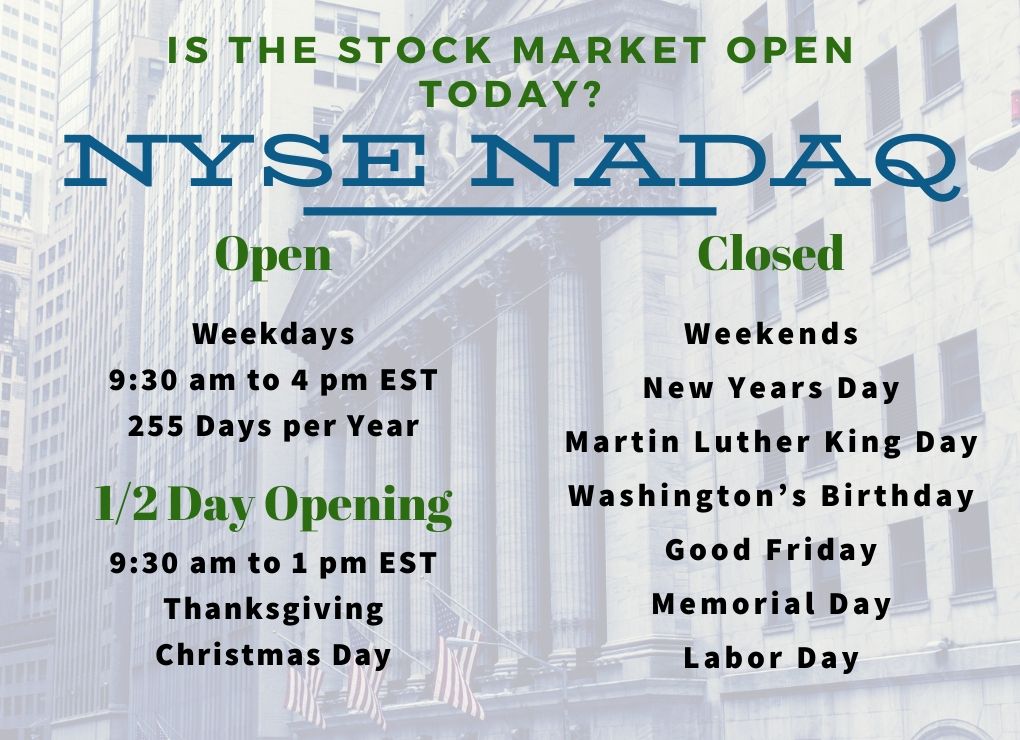
The New York Stock Exchange (NYSE) and the NASDAQ Stock Market are arguably the two most prominent equity exchanges globally, serving as benchmarks for much of the world’s financial activity. For most retail investors focused on U.S. stocks, these are the primary markets of interest. Their standard trading hours are from 9:30 AM to 4:00 PM Eastern Time (ET), Monday through Friday, excluding public holidays. This seven-and-a-half-hour window is when the vast majority of trading volume occurs and when listed securities are most liquid. However, this standard period tells only part of the story, as extended-hours trading has become increasingly significant.
Navigating International Equity Exchanges
Beyond the U.S., major equity markets operate according to their respective local time zones, creating a continuous flow of trading activity around the globe. Understanding these schedules is crucial for investors with international portfolios or those affected by global events. For instance:
- London Stock Exchange (LSE): Generally 8:00 AM to 4:30 PM Greenwich Mean Time (GMT).
- Tokyo Stock Exchange (TSE): Typically 9:00 AM to 11:30 AM and 12:30 PM to 3:00 PM Japan Standard Time (JST), with a midday break.
- Shanghai Stock Exchange (SSE): 9:30 AM to 11:30 AM and 1:00 PM to 3:00 PM China Standard Time (CST).
- Euronext (Paris, Amsterdam, Brussels, Lisbon): 9:00 AM to 5:30 PM Central European Time (CET).
These examples highlight the diversity in trading hours, including potential lunch breaks and different time zone alignments. For an investor in New York, the Tokyo market’s morning session concludes well before the NYSE opens, while European markets overlap significantly with U.S. trading hours, facilitating cross-market arbitrage and price discovery.
The 24/5 World of Forex and Commodities
Unlike equity markets, which typically operate on a fixed daily schedule, the foreign exchange (forex) market and many commodity markets exhibit a near 24-hour trading cycle throughout the business week. The forex market, in particular, is decentralized and global, operating through a network of banks, brokers, and institutions. It essentially opens on Sunday evening EST with the Sydney market and rolls through Tokyo, London, and New York, before closing on Friday afternoon EST. This continuous operation, pausing only for weekends and major global holidays, means that “opening time” is less about a single bell and more about the cyclical handover of liquidity and focus from one major financial center to the next. Similarly, futures markets for commodities like oil, gold, and agricultural products also offer extensive trading hours, often extending far beyond standard equity market times.
The Always-On Nature of Cryptocurrency Markets
In a league of its own is the burgeoning cryptocurrency market. Bitcoin, Ethereum, and thousands of altcoins trade on a multitude of exchanges that operate 24 hours a day, 7 days a week, 365 days a year. There is no “opening bell” or “closing bell” in the traditional sense for crypto. This perpetual trading environment presents unique challenges and opportunities, driven by global liquidity and an absence of conventional market-hour constraints. Investors in this space must contend with constant price action, removing the periodic breaks that allow for reflection and strategy adjustments in traditional markets.
Why Market Opening Matters: Beyond Just the Clock
The exact timing of market open is not merely an administrative detail; it profoundly influences market behavior, trading strategies, and the flow of information that drives financial decisions.
The “Opening Bell” Effect: Volatility and Opportunity
The initial moments after a market opens, often referred to as the “opening bell” period, are typically characterized by heightened volatility and significant trading volume. This surge is due to a confluence of factors:
- Accumulated News: Traders and investors have had hours (or even days over a weekend) to digest news, economic reports, and company announcements released outside of market hours. The opening provides the first opportunity to react to this information.
- Order Backlog: Buy and sell orders that accumulated overnight or during pre-market sessions are executed, creating immediate price pressure.
- Institutional Activity: Large institutional players often execute significant orders at the open, aiming to establish positions or adjust portfolios based on new information.
This period can present considerable opportunities for day traders seeking to capitalize on rapid price movements but also carries elevated risk due to unpredictable swings.
Pre-Market and After-Hours Trading: Extending the Day
Modern financial markets have significantly extended their reach beyond the standard trading day through pre-market and after-hours sessions.
- Pre-Market Trading: For U.S. equities, this typically begins as early as 4:00 AM ET, extending up to the standard 9:30 AM ET open.
- After-Hours Trading: This can run from 4:00 PM ET until 8:00 PM ET.
These extended hours allow investors to react promptly to earnings reports, news events, and global market movements that occur outside regular hours. While providing flexibility, these sessions usually have lower liquidity and wider bid-ask spreads, making price action more susceptible to manipulation and increasing the risk for less experienced traders. It’s a critical bridge connecting one trading day to the next, shaping sentiment and expectations before the official opening.
Synchronizing with Economic Data Releases and News
A substantial portion of market movement is driven by economic data releases (e.g., inflation reports, employment figures, GDP growth) and corporate news (e.g., earnings announcements, mergers and acquisitions). These events are frequently scheduled to occur just before or after major market openings to maximize their immediate impact and ensure fair dissemination of information. For instance, key U.S. economic data is often released at 8:30 AM ET, giving market participants an hour to process the information before the 9:30 AM ET equity market open. Similarly, many companies release earnings after the market closes, allowing time for analysts and investors to digest the results before trading resumes the next day. Aligning your awareness of market opening times with these crucial information releases is paramount for strategic positioning.
Strategic Approaches to Market Open
The period around market opening is a distinct phase in the trading day, demanding specific strategic considerations for different types of investors.
Preparing for the Trading Day: Research and Analysis
Regardless of your investment horizon, proper preparation before the market opens is non-negotiable. This involves:
- Reviewing Overnight News: Catching up on major headlines from international markets, company-specific news, and geopolitical developments that occurred while your local market was closed.
- Analyzing Economic Calendars: Identifying upcoming data releases and speeches from central bank officials that could impact market sentiment.
- Assessing Pre-Market Activity: Observing price action in futures, commodities, and pre-market equity sessions to gauge early sentiment and potential market direction.
- Defining Your Watchlist and Strategy: Identifying key stocks or assets, setting potential entry/exit points, and formulating a hypothesis for the day based on your research. This proactive approach ensures you’re not merely reacting to events but are prepared to act decisively.
Exploiting Initial Volatility: Scalping and Day Trading
For active traders, particularly day traders and scalpers, the market open is often the most lucrative yet riskiest period. Strategies revolve around:
- Gap Trading: Identifying stocks that have “gapped up” or “gapped down” significantly from their previous close due to overnight news and betting on a continuation or reversal of that momentum.
- Breakout Trading: Looking for assets that break above or below key support/resistance levels in the initial surge of volume.
- High-Frequency Trading (HFT): Algorithmic systems are specifically designed to capitalize on the rapid, high-volume activity at the open, often executing thousands of trades in milliseconds.
These strategies demand quick decision-making, robust risk management, and a deep understanding of technical analysis, as the intense volatility can lead to substantial gains or devastating losses in a short timeframe.
Long-Term Investing: How Market Opens Inform Decisions
While long-term investors may not actively trade at the opening bell, understanding its dynamics is still vital.
- Valuation Impact: Major news or economic shifts unveiled at the open can fundamentally alter a company’s or an asset’s long-term valuation prospects, influencing decisions to buy, hold, or sell over months or years.
- Portfolio Rebalancing: The market open can be an opportune time to execute larger portfolio rebalancing trades, leveraging the initial liquidity burst to minimize market impact, especially for less liquid assets.
- Trend Confirmation: Observing how the market reacts to significant news at the open can help confirm or challenge a long-term investment thesis, prompting a review of existing positions. For example, a strong positive reaction to an earnings report at the open might reinforce conviction in a growth stock.
Risk Management and the Early Hours
The increased volatility at market open necessitates a disciplined approach to risk management.
- Stop-Loss Orders: Employing tight stop-loss orders is critical to limit potential losses if a trade moves against you rapidly.
- Position Sizing: Reducing position sizes during highly volatile periods can help manage overall exposure.
- Avoid Overtrading: The temptation to participate in every volatile move at the open can lead to impulsive decisions. Sticking to a well-defined trading plan is key.
- Understanding Liquidity: Being aware that less liquid assets can experience exaggerated price swings at the open, making entries and exits more challenging and potentially costly. Acknowledging the inherent unpredictability of the open ensures that capital preservation remains a priority.
Tools and Resources for Tracking Market Hours
In the digital age, a wealth of tools and resources are available to help investors stay on top of market opening times and critical financial data.
Real-Time Data Providers and Brokerage Platforms
Almost every modern online brokerage platform offers real-time quotes, market hours, and news feeds directly integrated into their interface. Major financial data providers like Bloomberg Terminal, Refinitiv Eikon, or even consumer-friendly platforms like TradingView, Yahoo Finance, and Google Finance provide comprehensive coverage of global market hours, pre-market/after-hours data, and customizable watchlists. These platforms are indispensable for active traders and investors who need immediate access to information and trading capabilities.
Global Economic Calendars
Economic calendars are essential for tracking scheduled economic data releases, central bank meetings, and other market-moving events. Websites like Investing.com, ForexFactory, and DailyFX offer detailed calendars that can be filtered by country, impact level, and time zone, ensuring investors are aware of when key reports will drop relative to market openings. Synchronizing your trading day with these calendars helps anticipate potential volatility and formulate strategies around critical announcements.
Leveraging News Feeds and Social Media
Reputable financial news outlets (e.g., The Wall Street Journal, Reuters, Bloomberg News, Financial Times) provide breaking news and analysis that often dictate market sentiment before and during the open. Setting up alerts for relevant companies or sectors can provide a competitive edge. Furthermore, financial social media platforms (like X, formerly Twitter, and specialized investing forums) can offer real-time insights and discussions, though careful discernment is needed to filter reliable information from speculation. The immediacy of these channels means that news can impact market movements instantaneously, often setting the tone for the market open.
The Evolving Landscape: Future of Market Hours
The financial world is dynamic, and market hours are not immune to change. Technological advancements, globalization, and shifting investor demands are continually reshaping how and when markets operate.
The Push for Extended Trading and 24/7 Markets
The success of cryptocurrency markets in maintaining 24/7 operation has sparked discussions about extending trading hours for traditional assets. Calls for continuous trading in equities or even longer pre-market/after-hours sessions are growing, driven by the desire for greater access, quicker reaction to global news, and alignment with the increasingly “always-on” nature of modern life. While regulatory and logistical hurdles remain significant, the trend towards longer market accessibility appears irreversible.
Technological Advancements and Algorithmic Trading
Technological advancements, particularly in algorithmic and high-frequency trading, are redefining the market open. Algorithms can process news and execute trades in fractions of a second, often before human traders can fully comprehend developments. This hyper-efficiency at the open further intensifies competition and demands even greater sophistication from market participants. The automation of trading around market open also contributes to the rapid price discovery and increased liquidity observed during these periods.
Impact of Globalization and Interconnectedness
The increasing globalization of financial markets means that an event in Tokyo can ripple through London and impact New York before the U.S. market even opens. This interconnectedness makes a holistic understanding of global market hours and their interdependencies more crucial than ever. Investors must adopt a global perspective, recognizing that “what time the market opens today” is a question with many answers, each bearing implications for their financial success. As capital continues to flow across borders with unprecedented speed, the integration of global market intelligence into daily trading and investing strategies will become not just an advantage, but a necessity.
In conclusion, understanding “what time market opens today” is a multifaceted inquiry that goes far beyond a simple clock reading. It delves into the geography of global finance, the psychology of market behavior, and the strategic underpinnings of successful investing. For every participant, from the individual retail investor to the institutional giant, mastering the nuances of market hours is a cornerstone of prudent financial management and a pathway to seizing the opportunities that arise with each new trading day.
aViewFromTheCave is a participant in the Amazon Services LLC Associates Program, an affiliate advertising program designed to provide a means for sites to earn advertising fees by advertising and linking to Amazon.com. Amazon, the Amazon logo, AmazonSupply, and the AmazonSupply logo are trademarks of Amazon.com, Inc. or its affiliates. As an Amazon Associate we earn affiliate commissions from qualifying purchases.