
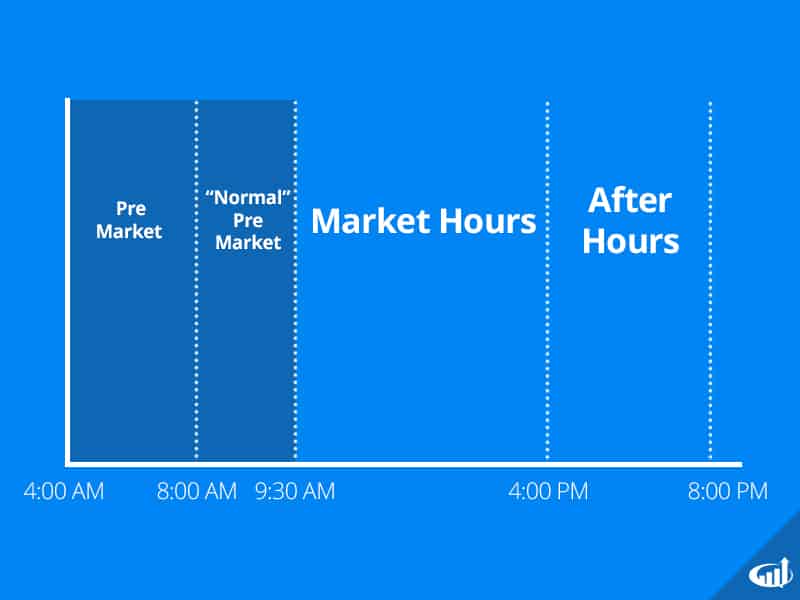
Trading in premarket hours represents a unique segment of the financial landscape, offering both compelling opportunities and heightened risks for investors. Unlike the familiar bustle of the regular trading session between 9:30 AM and 4:00 PM ET, premarket activity occurs before the official opening bell, typically between 4:00 AM and 9:30 AM ET. This period is a critical window for market participants to react to overnight news, earnings reports, economic data releases, and other significant catalysts that emerge outside standard market hours. Understanding how to navigate this less liquid, often more volatile environment is crucial for anyone looking to capitalize on early market movements.
Understanding the Landscape of Premarket Trading
Premarket trading isn’t merely an extension of the regular trading day; it operates under a distinct set of conditions that demand careful consideration. Its very existence is rooted in the need for investors to process and react to information as it becomes available, rather than waiting for the market’s official open.
What is Premarket Trading?
Premarket trading refers to the buying and selling of securities that takes place on major stock exchanges, such as the New York Stock Exchange (NYSE) and NASDAQ, before their standard operating hours. While the exact duration can vary by brokerage, common premarket hours span from 4:00 AM ET to 9:30 AM ET. This window allows institutional investors, market makers, and, increasingly, retail traders to execute trades in response to news that might significantly impact a stock’s value. This could include quarterly earnings reports released after the previous day’s close or before the current day’s open, merger and acquisition announcements, regulatory approvals, or breaking geopolitical developments. The ability to trade during these hours offers a strategic advantage to those who can act quickly and decisively on new information.
Key Characteristics of Premarket
The premarket environment is characterized by several distinct features that differentiate it from regular trading hours:
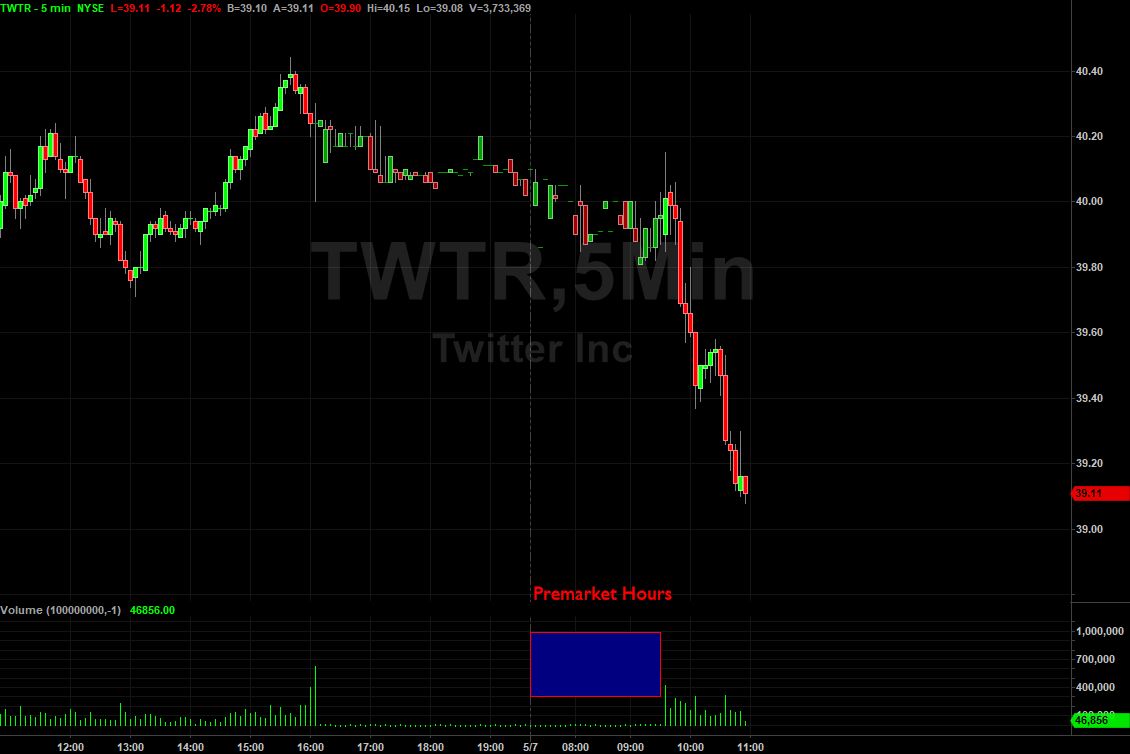
- Lower Liquidity: One of the most significant characteristics of premarket trading is its reduced liquidity. Fewer participants are actively trading compared to regular hours, which means there are fewer buyers and sellers at any given price point. This can lead to wider bid-ask spreads, making it more challenging to execute trades at desired prices without significant slippage.
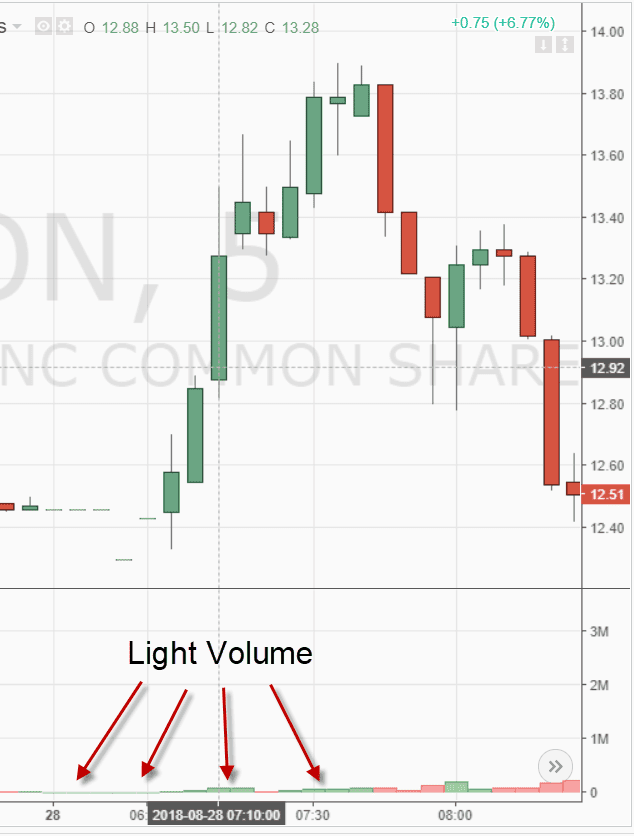
- Higher Volatility: Due to lower liquidity and the often news-driven nature of premarket activity, stocks can experience amplified price swings. A relatively small number of shares traded can have a substantial impact on a stock’s price, leading to rapid and dramatic movements in either direction. This volatility presents both increased risk and potential for quick profits.
- Reduced Information Availability: While major news catalysts drive premarket trading, the overall breadth of information and analysis available to traders can be narrower. Fewer analysts are actively covering stocks, and fewer news sources are providing real-time updates and commentary compared to the full trading day. This can create information asymmetries, favoring larger institutions with dedicated research teams.
- Institutional Dominance: Historically, premarket trading was predominantly the domain of institutional investors and market makers. Their ability to access specialized trading platforms and leverage their capital gave them a distinct advantage. While retail access has expanded significantly through online brokerages, institutional participation still plays a substantial role in shaping premarket price action.
Navigating the Mechanics of Premarket Trading
Engaging in premarket trading requires not only an understanding of its unique characteristics but also familiarity with the specific tools and procedures involved. Access, order types, and the underlying market infrastructure all play a role in successful execution.
Accessing Premarket Trading
For most retail investors, accessing premarket trading begins with their brokerage account. Many major online brokers, including Fidelity, Charles Schwab, E*TRADE, Interactive Brokers, and TD Ameritrade (now Schwab), offer extended-hours trading. However, this access is not always automatic. Investors typically need to:
- Opt-in to Extended Hours Trading: Many brokers require clients to explicitly agree to an extended-hours trading agreement. This involves acknowledging the increased risks associated with trading outside regular market hours.
- Select “Extended Hours” when Placing an Order: When entering a trade, there will often be an option to specify whether it’s a “Day” order (regular market hours only) or an “Extended Hours” order. Failing to select the latter will result in the order only being active during the standard trading session.
It’s crucial to confirm your broker’s specific premarket hours and requirements, as these can vary.
Order Types in Premarket
The choice of order type is paramount in the premarket environment, largely due to the inherent volatility and lower liquidity.
- Limit Orders are Essential: Unlike regular market hours where market orders might be acceptable for highly liquid stocks, market orders are generally discouraged in premarket trading. A market order instructs your broker to buy or sell immediately at the best available price. In a low-liquidity, high-volatility environment, this can lead to significant slippage, meaning your order gets filled at a much worse price than anticipated. Limit orders, conversely, allow you to specify the maximum price you’re willing to pay (for a buy order) or the minimum price you’re willing to accept (for a sell order). This control is vital for managing risk during erratic premarket movements.
- Time-in-Force Instructions: Along with the order type, you must also specify its “time-in-force.” Common options for extended hours include:
- Good ‘Til Canceled (GTC) – Extended Hours: The order remains active until it’s executed or you cancel it, and it will participate in both premarket, regular, and after-hours sessions.
- Day – Extended Hours: The order is active only for the current day’s premarket, regular, and after-hours sessions, expiring at the end of extended hours if not filled.
- Some brokers may also have specific “EXT” (Extended) options that apply to particular extended sessions. Always confirm your broker’s specific designations.
Understanding Electronic Communication Networks (ECNs)
Premarket and after-hours trading primarily occurs on Electronic Communication Networks (ECNs). These are automated systems that match buy and sell orders directly, bypassing traditional stock exchange specialists or market makers. ECNs allow for continuous trading outside standard exchange hours. While they provide efficiency, it’s important to remember that the order flow on ECNs during extended hours is typically lower than on primary exchanges during regular hours, contributing to the liquidity challenges. The fragmentation of orders across various ECNs can also make it harder to get a complete picture of market depth compared to regular trading sessions.
Mitigating Risks and Capitalizing on Opportunities
Premarket trading, while potentially lucrative, comes with amplified risks. Successful engagement requires a disciplined approach to risk management and the adoption of specific strategies tailored to its unique dynamics.
The Elevated Risks of Premarket Trading
Understanding the inherent risks is the first step toward mitigating them:
- Liquidity Risk: As discussed, the reduced number of participants can make it difficult to enter or exit positions quickly at desired prices. Large orders, in particular, can move the market against you, leading to unfavorable fills or even the inability to execute a trade at all.
- Volatility Risk: News-driven price swings can be extreme and rapid. A stock reacting to a positive earnings report might surge 10-20% in minutes, only to pull back sharply as early profit-takers exit. Without tight risk controls, these sudden movements can lead to substantial losses.
- Information Asymmetry: Large institutional players often have superior information access, faster analysis, and sophisticated trading algorithms. This can put retail traders at a disadvantage, especially when reacting to complex news events.
- Price Discrepancy: Premarket prices may not accurately predict the opening price when regular trading hours commence. It’s common for a stock to gap up or gap down significantly at the open, erasing premarket gains or exacerbating losses. This “gap risk” is a critical consideration.
Strategic Approaches for Premarket Traders
Despite the risks, opportunities exist for those who approach premarket trading strategically:
- News-Driven Trading: This is arguably the most common and effective strategy. Focus on stocks that have released significant news overnight or in the early morning. These catalysts—such as earnings surprises, FDA announcements for pharmaceutical companies, or major M&A deals—are the primary drivers of premarket volume and price movement. Traders aim to identify the sentiment around the news and position themselves accordingly.
- Technical Analysis (with Caution): While lower volume can make traditional technical indicators less reliable, some traders use premarket charts to identify early support and resistance levels, trend lines, or chart patterns. However, these signals should be treated with more skepticism and always confirmed with significant volume.
- Volume Analysis: Pay close attention to premarket volume. A significant price move on very low volume might be a “fakeout” driven by a few large orders. Conversely, a strong price move accompanied by substantial premarket volume indicates broader market interest and adds conviction to the move.
- Focus on Catalysts: Prioritize stocks with clear, impactful catalysts. Highly liquid, large-cap stocks that release major news are generally safer bets than smaller, illiquid companies, as they tend to attract more participants and thus offer better liquidity even in premarket.
Essential Tools and Best Practices
Successful premarket trading relies on a combination of robust tools, sound risk management, and disciplined execution. Leveraging the right technology and adhering to proven best practices can significantly improve your chances of success.
Leveraging Technology and Information
Access to timely information and advanced analytical tools is non-negotiable for premarket traders:
- Real-Time News Feeds: Subscriptions to professional financial news services (e.g., Bloomberg, Reuters, Benzinga Pro) that deliver breaking news rapidly are invaluable. Free sources can be too slow.
- Premarket Scanners: Many brokerage platforms and third-party services offer premarket scanners that identify stocks experiencing significant price changes or volume surges before the market open. These tools help pinpoint potential trading opportunities quickly.
- Advanced Charting Software: Ensure your charting software can display extended-hours data. This allows you to analyze price action, identify trends, and spot key levels during the premarket session. Look for features like volume profiles specific to extended hours.
- Level 2 Data: Access to Level 2 data, which shows the order book (the various bid and ask prices and the sizes of orders at those prices), can provide insights into market depth, potential areas of support and resistance, and the intentions of market makers.
Implementing Sound Risk Management
Given the heightened risks, stringent risk management is paramount:
- Position Sizing: Trade smaller position sizes than you might during regular hours. This helps mitigate the impact of sudden, volatile price swings.
- Strict Stop-Loss Orders (Mental or Trailing): While market orders are risky for stop-losses in illiquid conditions (due to slippage), having a predetermined exit point is crucial. Consider using mental stop-losses combined with quick manual execution, or trailing stops if your broker offers reliable extended-hours functionality. Be prepared for potential slippage.
- Profit Taking: Premarket moves can reverse quickly. Be disciplined about taking profits when your targets are met, rather than holding out for additional gains that might evaporate.
- Avoid Illiquid Stocks: Stick to widely traded, high-volume stocks, even if they show lower volume in premarket. Trying to trade highly illiquid stocks in extended hours is extremely risky due to the near impossibility of getting a fair fill.
Psychological Discipline
The fast-paced, volatile nature of premarket trading demands significant psychological fortitude:
- Patience and Observation: Don’t rush into trades immediately. Observe the market for a period to understand the sentiment, volume patterns, and initial direction of a stock’s move.
- Emotional Control: The rapid gains and losses can be emotionally taxing. Stick rigorously to your trading plan and avoid impulsive decisions driven by fear or greed.
- Continuous Learning: Premarket dynamics can evolve. Stay informed about market structure changes, new tools, and refined strategies. Review your trades to learn from both successes and failures.
The Regulatory Landscape and Fair Practices
Despite occurring outside regular trading hours, premarket trading remains under the watchful eye of regulatory bodies like the Securities and Exchange Commission (SEC). This oversight ensures that basic principles of fair and orderly markets are maintained, even in this less regulated-feeling environment.
SEC Oversight and Regulations
The SEC enforces rules to prevent market manipulation, insider trading, and other illicit activities during extended trading hours, just as it does during the regular session. Key regulations relevant to premarket trading include:
- Regulation FD (Fair Disclosure): This rule prevents companies from selectively disclosing material nonpublic information to certain individuals or groups (like institutional investors) before making it public. This is particularly relevant as many earnings reports and news releases that drive premarket activity are issued under Reg FD requirements, ensuring broad, simultaneous disclosure.
- Anti-Fraud Provisions: All participants are subject to anti-fraud statutes, prohibiting any deceptive or manipulative practices during extended hours.
While the market mechanics differ, the ethical and legal obligations of traders and companies persist.
Broker Responsibilities
Brokerage firms that offer extended-hours trading have responsibilities to their clients:
- Disclaimers and Education: Brokers are required to provide clear disclosures outlining the unique risks associated with extended-hours trading, such as lower liquidity, higher volatility, and wider spreads. They should also offer educational resources to help clients understand these risks.
- Execution Quality: While execution can be challenging in a lower-liquidity environment, brokers are expected to use reasonable diligence to ensure the best possible execution of client orders during extended hours, within the constraints of market conditions.
In conclusion, trading in premarket hours offers a distinct avenue for informed and disciplined investors to react to critical market-moving news. By understanding its unique characteristics—namely lower liquidity, higher volatility, and reliance on ECNs—and by employing robust tools, strategic approaches, and stringent risk management, traders can navigate this challenging yet potentially rewarding segment of the financial markets. The key to success lies in preparedness, discipline, and a continuous commitment to learning.
aViewFromTheCave is a participant in the Amazon Services LLC Associates Program, an affiliate advertising program designed to provide a means for sites to earn advertising fees by advertising and linking to Amazon.com. Amazon, the Amazon logo, AmazonSupply, and the AmazonSupply logo are trademarks of Amazon.com, Inc. or its affiliates. As an Amazon Associate we earn affiliate commissions from qualifying purchases.