
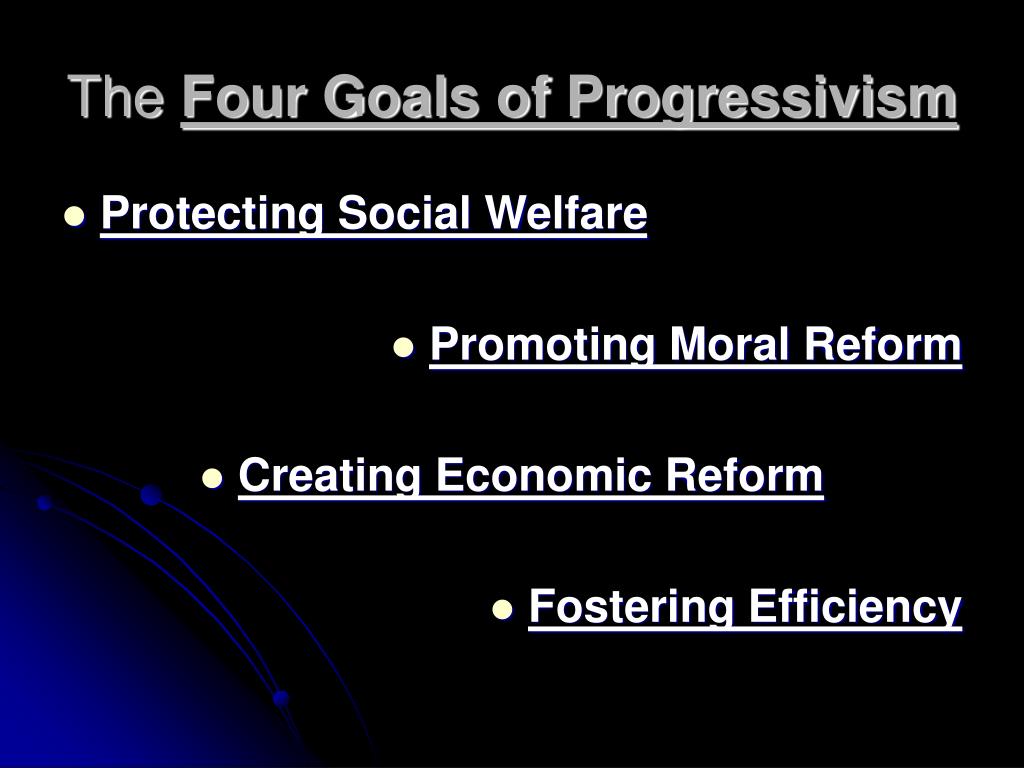
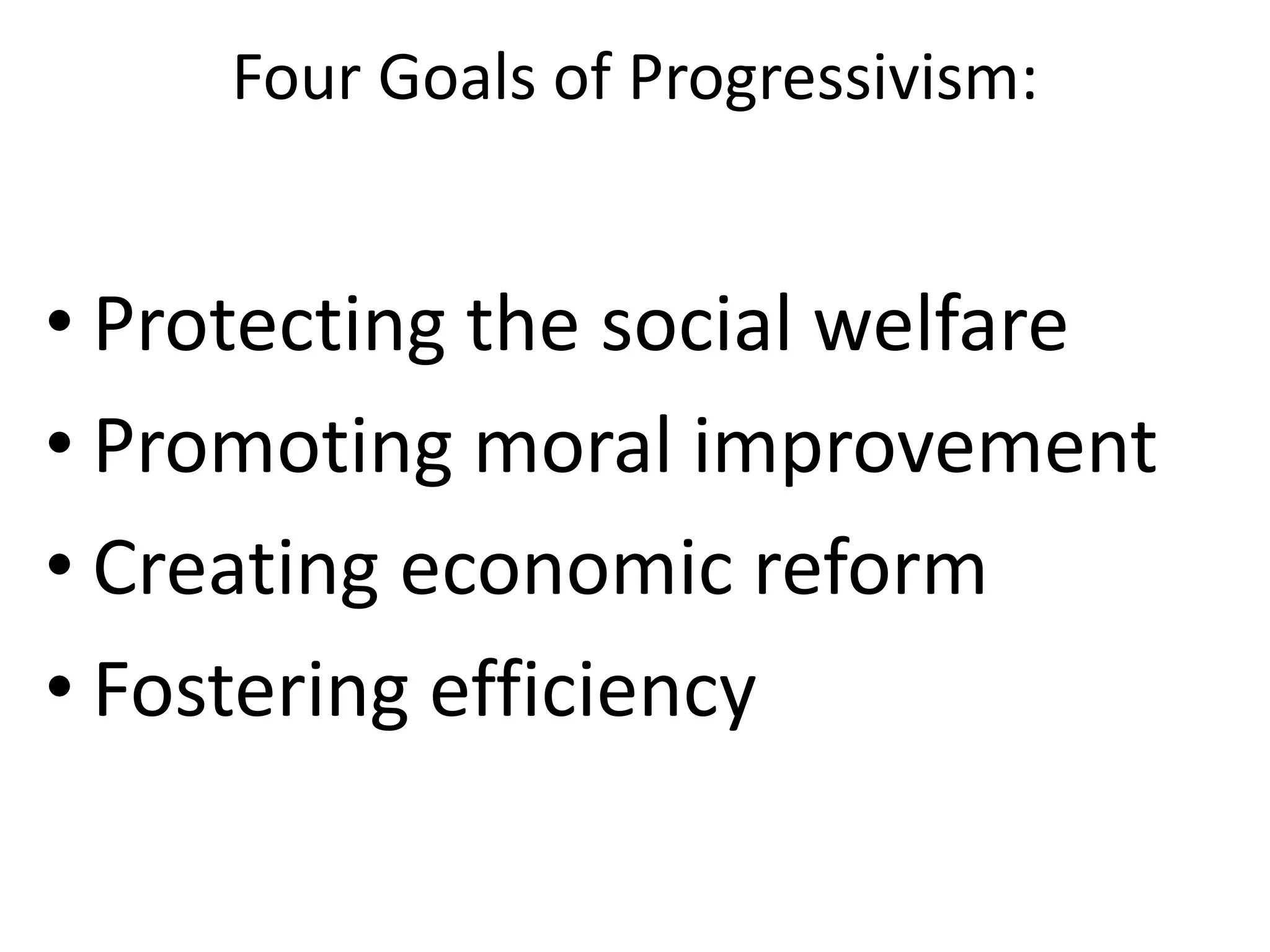
The Progressive Movement, a pivotal period in American history spanning from the 1890s to the 1920s, was fundamentally an era of reform, driven by a desire to address the profound socio-economic challenges brought about by rapid industrialization, urbanization, and unchecked corporate power. While often framed in terms of social and political change, the movement’s core objectives held deep and lasting implications for the financial landscape of the nation, restructuring business operations, financial institutions, and the very concept of economic fairness. Far from being abstract ideals, the four primary goals of the Progressive Movement directly sought to redefine how money was earned, managed, and distributed, setting precedents that continue to influence personal finance, business finance, and the regulatory environment today.
Reforming Economic Structures and Business Finance
At the heart of the Progressive agenda was a fervent desire to curb the excesses of concentrated corporate power and to create a more equitable economic playing field. This goal was predominantly driven by a recognition that unregulated capitalism led to financial monopolies that stifled competition, exploited consumers, and undermined the financial stability of smaller enterprises.
Antitrust and Fair Competition
The era witnessed the rise of vast industrial trusts and monopolies that dominated entire sectors, from oil and steel to railroads. These behemoths could dictate prices, control supply chains, and crush smaller competitors, leading to immense wealth accumulation for a few at the expense of many. The Progressives’ response was a robust push for antitrust legislation. The Sherman Antitrust Act of 1890, though initially weak, gained teeth under progressive administrations, leading to the breakup of major trusts like Standard Oil. Later, the Clayton Antitrust Act of 1914 further prohibited specific anti-competitive practices, such as price discrimination and interlocking directorates, which were common tools for financial manipulation and market control.
From a business finance perspective, this was revolutionary. It aimed to restore competitive markets, forcing companies to compete on merit rather than monopolistic leverage. For small and medium-sized businesses, it meant a fighting chance to innovate and grow without fear of predatory pricing or market exclusion. For investors, it shifted risk away from guaranteed monopoly profits towards more genuine market-driven returns, encouraging investment in diverse, competitive sectors. This re-leveling of the economic landscape directly impacted capital allocation, business valuations, and the long-term sustainability of competitive industries.
Regulating Industry and Infrastructure
Beyond breaking up monopolies, Progressives sought to establish regulatory frameworks for key industries, particularly those deemed public utilities like railroads, gas, and electricity. The Interstate Commerce Commission (ICC), established in 1887, was invigorated during this period to oversee railroad rates and practices, preventing financial exploitation of farmers and small businesses reliant on transportation.
This regulation was a direct intervention in business financial models. It moved industries away from unchecked profit maximization towards a model that considered public service and fairness. For businesses, it meant an end to arbitrary pricing power but also provided a more predictable operating environment, albeit with government oversight. For consumers and other businesses dependent on these services, it meant fairer costs and more reliable access, directly impacting their operational budgets and personal expenditures. The principle established was that certain industries, due to their essential nature, had a financial obligation beyond pure shareholder profit, laying the groundwork for utility regulation that remains a cornerstone of modern financial infrastructure.
Safeguarding Financial Well-being and Labor Economics
Another critical goal of the Progressive Movement was to alleviate social inequalities and protect the financial well-being of the average citizen, particularly workers and consumers, who were often vulnerable to the harsh realities of industrial capitalism.
Protecting Workers and Consumers
The unregulated industrial boom often came at the expense of labor, with low wages, dangerous working conditions, and extensive child labor. Progressives campaigned vigorously for labor reforms that would directly impact the financial stability of working-class families. While not fully enacted across the board during the Progressive Era, the movement laid the groundwork for minimum wage laws, maximum working hours, and improved workplace safety standards. These measures directly translate into changes in business finance, increasing labor costs for companies but also ensuring a more stable and livable income for workers, reducing poverty, and boosting consumer spending power within local economies.
Consumer protection also emerged as a significant financial concern. The lack of regulation in industries like food and pharmaceuticals meant consumers often spent their hard-earned money on unsafe or ineffective products. Landmark legislation like the Pure Food and Drug Act of 1906 aimed to ensure product safety and honesty in labeling, preventing consumers from financially wasting resources on harmful goods and protecting their health, which is an invaluable financial asset. This created an implicit financial guarantee for consumers, increasing trust in the market and promoting more responsible business practices in product development and marketing.
Addressing Wealth Disparity
While not explicitly a socialist movement, the Progressives were deeply concerned with the widening gap between the ultra-wealthy industrialists and the impoverished working class. Their efforts to curb monopolies and ensure fair labor practices were, in part, an attempt to mitigate this financial disparity. They sought to create a society where economic opportunity was more widely distributed, and where the financial stability of families wasn’t solely at the mercy of the market’s whims. This goal informed the push for progressive taxation, seeing the wealthy contribute a larger share to public services and infrastructure, thus indirectly rebalancing the distribution of wealth and resources within the economy.
Institutionalizing Financial Stability and Governance
The Progressive era also saw the creation of foundational institutions and mechanisms designed to bring greater stability, transparency, and fairness to the nation’s financial system and governance. These reforms were direct responses to economic volatility and perceived injustices in the existing fiscal framework.
The Federal Reserve System
Perhaps one of the most profound financial legacies of the Progressive Movement was the creation of the Federal Reserve System in 1913. Before the Fed, the U.S. financial system was prone to frequent panics and bank runs, which could trigger widespread economic depressions. The Progressives recognized the critical need for a centralized banking authority to stabilize the monetary system. The Federal Reserve was designed to provide a more elastic currency supply, supervise banks, and act as a lender of last resort, mitigating financial crises.
This was a game-changer for business finance and investment. It provided a stable currency, reduced the risk of widespread bank failures (which could wipe out savings and investment capital), and offered a mechanism for managing interest rates to influence economic activity. For businesses, a more stable financial environment meant greater confidence in long-term planning, investment in expansion, and more predictable access to credit. For individuals, it provided greater security for their deposits and a more reliable economic climate for personal financial planning and wealth accumulation.
Reforming Taxation
The financial basis of government itself underwent a dramatic transformation during the Progressive Era. Previously, federal revenue largely came from tariffs and excise taxes, which disproportionately burdened lower and middle-income families. Progressives advocated for a more equitable system, culminating in the ratification of the 16th Amendment in 1913, which authorized the federal income tax.
This was a revolutionary step in fiscal policy. It allowed for a progressive tax structure, meaning those with higher incomes paid a larger percentage of their earnings in taxes. This impacted both personal and corporate finance significantly. For individuals, it meant a more equitable distribution of the tax burden. For businesses, it introduced a new element of financial planning and cost, but also contributed to a more stable government revenue stream, which could fund public services and infrastructure beneficial to the economy as a whole. The income tax became a powerful tool for financing government operations and, implicitly, for moderating extreme wealth concentration.
Enhancing Efficiency in Public and Private Finance
The fourth key goal of the Progressive Movement was to foster efficiency, both in government and in business. This was not merely about doing things faster but about optimizing resource allocation, reducing waste, and ensuring that financial inputs yielded maximum societal and economic benefit.
Optimizing Resource Allocation
Inspired by the principles of “scientific management” (Taylorism), Progressives applied similar thinking to government operations and public services. The goal was to eliminate waste, improve productivity, and ensure that taxpayer money was used effectively. This meant streamlining administrative processes, professionalizing civil service, and making public expenditures more transparent.
From a financial perspective, this push for efficiency aimed to maximize the return on public investments. A government that operated efficiently could provide more services for the same financial outlay, or achieve the same level of service at a lower cost, easing the burden on taxpayers and businesses. For private enterprise, the adoption of scientific management techniques, while sometimes controversial in its application, aimed to boost productivity, reduce operational costs, and thereby improve financial performance and competitiveness. Efficient resource allocation, whether capital, labor, or raw materials, was recognized as critical for both individual firm profitability and national economic prosperity.

Promoting Fiscal Accountability
The Progressive Movement also sought to make government and large corporations more accountable for their financial decisions and operations. This meant greater transparency in budgeting, auditing, and corporate governance. The idea was to prevent corruption, mismanagement of funds, and self-serving financial practices that undermined public trust and diverted resources from productive uses.
For both public and private finance, increased accountability translates into better stewardship of funds. For government, it meant ensuring public money was spent wisely and honestly, delivering value to citizens. For corporations, it meant a push towards more transparent accounting practices and ethical management, reducing financial risks associated with fraud and malfeasance, and fostering investor confidence. This emphasis on fiscal accountability laid the groundwork for modern financial auditing standards, corporate governance best practices, and the continuous demand for transparency in financial dealings, all of which are crucial for a healthy and trustworthy financial ecosystem.
In conclusion, the four goals of the Progressive Movement were deeply intertwined with the nation’s financial evolution. They reshaped economic structures, safeguarded individual and labor financial well-being, institutionalized critical financial stability mechanisms, and championed efficiency and accountability in the use of both public and private capital. The financial tools, regulations, and institutions born out of this era continue to form the bedrock of the modern American financial system, underscoring the enduring impact of these transformative goals.
aViewFromTheCave is a participant in the Amazon Services LLC Associates Program, an affiliate advertising program designed to provide a means for sites to earn advertising fees by advertising and linking to Amazon.com. Amazon, the Amazon logo, AmazonSupply, and the AmazonSupply logo are trademarks of Amazon.com, Inc. or its affiliates. As an Amazon Associate we earn affiliate commissions from qualifying purchases.