
Navigating the labyrinthine world of car insurance can feel like an arduous journey, fraught with perplexing terminology and an overwhelming array of choices. For many, the ultimate question boils down to: “What is the best car insurance cover?” The deceptively simple nature of this inquiry belies a complex reality – there is no universal “best.” Instead, the optimal car insurance cover is a highly personalized construct, meticulously tailored to an individual’s unique financial situation, driving habits, vehicle type, and risk tolerance. This article aims to demystify car insurance, providing a comprehensive guide to understanding various coverage options and empowering you to make informed decisions that align with your personal financial well-being.
Understanding the Fundamentals of Car Insurance Coverage
Before one can determine the “best” coverage, it’s imperative to grasp the core components that make up a typical car insurance policy. These fundamental elements form the bedrock upon which any advanced or specialized protection is built.
Liability Coverage: The Non-Negotiable Minimum
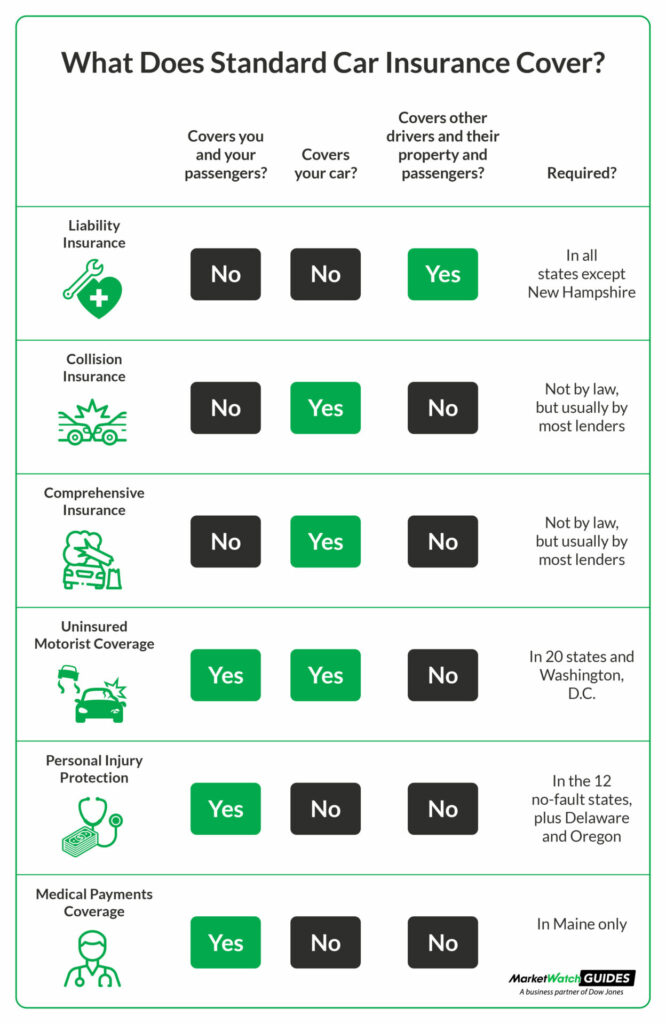
Liability coverage is the most fundamental and legally mandated component of car insurance in almost every state. Its primary purpose is to protect other drivers and their property in an accident where you are found to be at fault. It does not cover damages to your own vehicle or your own medical expenses.
- Bodily Injury Liability (BIL): This covers the costs associated with injuries sustained by other individuals in an accident for which you are responsible. This can include medical expenses, lost wages, and pain and suffering. Insurance policies typically list limits for bodily injury liability in two figures, such as $25,000/$50,000, meaning $25,000 per person and $50,000 per accident. Given the escalating costs of medical care and legal settlements, many financial advisors recommend exceeding state minimums significantly to protect your assets.
- Property Damage Liability (PDL): This pays for damage you cause to another person’s property, which could include their vehicle, fences, mailboxes, or even buildings. A typical limit might be $25,000, meaning the insurance company will pay up to $25,000 for property damage per accident. As with bodily injury, assessing the value of potential property damage, especially in multi-car accidents or incidents involving high-value property, often warrants higher limits than the state minimum.
Protecting Your Own Vehicle: Collision and Comprehensive
While liability coverage protects others, collision and comprehensive coverages are designed to protect your vehicle and, consequently, your financial investment in it. These are typically optional unless your car is leased or financed, in which case the lender will almost certainly require them.
- Collision Coverage: This pays for damages to your own car resulting from a collision with another vehicle or object (e.g., a tree, a pole). It also covers damage if you roll your car over. This coverage comes with a deductible, which is the amount you must pay out-of-pocket before your insurance kicks in. Common deductibles range from $250 to $1,000. A higher deductible generally leads to lower monthly premiums, but it also means a greater immediate financial outlay if an accident occurs.
- Comprehensive Coverage: Often referred to as “other than collision” coverage, comprehensive insurance covers damage to your car from incidents other than a collision. This includes theft, vandalism, fire, natural disasters (hail, floods, wind), falling objects, and hitting an animal. Like collision, comprehensive coverage also typically comes with a deductible. For most drivers with a significant investment in their vehicle, collision and comprehensive coverage are non-negotiable components of the “best” policy.
Beyond Basic Protection: Additional Essential Covers
Beyond the foundational coverages, several additional options can provide crucial financial protection and peace of mind, enhancing your overall financial security on the road.
- Uninsured/Underinsured Motorist (UM/UIM): This critical coverage protects you if you’re involved in an accident with a driver who either doesn’t have insurance (uninsured) or doesn’t have enough insurance to cover the damages (underinsured). UM/UIM typically covers your medical expenses, lost wages, and pain and suffering, and in some states, property damage. Given the high percentage of uninsured drivers in many areas, this coverage is often recommended by financial experts as a vital safeguard.
- Medical Payments (MedPay) / Personal Injury Protection (PIP): These coverages pay for medical expenses (and sometimes lost wages and other services, in the case of PIP) for you and your passengers, regardless of who is at fault for the accident. PIP is mandatory in “no-fault” states, where each driver’s insurance company pays for their own medical expenses up to a certain limit, regardless of fault. Even in at-fault states, MedPay can provide quick access to medical funds without waiting for fault determination.
Deciphering the “Best” for Your Unique Needs
With a clear understanding of the coverage options, the next step in finding the “best” car insurance involves a rigorous self-assessment. Your personal circumstances are the primary determinants of what constitutes optimal coverage.
Assessing Your Vehicle and Driving Habits
The characteristics of your vehicle and how you use it significantly influence your insurance needs and premiums.
- Car Value and Age: For a brand-new, expensive car, comprehensive and collision coverage are almost always essential to protect your significant investment. However, for an older car with a low market value, the cost of these coverages might outweigh the potential payout. If your car is worth only a few thousand dollars, paying hundreds in premiums for collision coverage with a $500 deductible might not be the most financially prudent choice. This is where a careful cost-benefit analysis of your premium versus potential claim payout becomes crucial.
- Driving Frequency and Commute: If you drive sparingly or work from home, you might qualify for low-mileage discounts. Conversely, a daily long commute in heavy traffic increases your exposure to risk, potentially necessitating higher liability limits and robust collision/comprehensive coverage to mitigate potential financial fallout from more frequent incidents.
- Your Driving Record: A clean driving record is a powerful financial asset, leading to lower premiums. A history of accidents or traffic violations will invariably drive up costs, making it even more important to explore every discount available and ensure your liability limits are robust enough to cover potential incidents, as you are statistically at higher risk.
Evaluating Your Financial Landscape and Risk Tolerance
Your personal financial health and comfort with risk play a pivotal role in shaping your ideal car insurance policy.
- Deductible Choices and Premium Impact: As mentioned, a higher deductible generally translates to lower monthly premiums. If you have a healthy emergency fund that can comfortably cover a $1,000 or $2,500 deductible, opting for a higher deductible can lead to substantial long-term savings on premiums. However, if your emergency fund is thin, a lower deductible might be a more financially responsible choice, preventing a major financial strain during a claim.
- Emergency Fund Availability: The size and accessibility of your emergency fund dictate your ability to absorb unexpected costs. A robust emergency fund allows for greater flexibility in choosing higher deductibles or foregoing certain less critical coverages, as you have the financial buffer to self-insure for smaller incidents. Conversely, a limited emergency fund necessitates more comprehensive coverage to prevent financial catastrophe.
- State Minimums vs. Optimal Protection: While state minimum liability coverage satisfies legal requirements, it very rarely provides adequate financial protection. A serious accident can easily result in medical bills and property damage claims that far exceed minimum limits, potentially leaving you personally responsible for the difference. For most individuals, especially those with significant assets to protect, opting for much higher liability limits (e.g., $100,000/$300,000 for bodily injury and $100,000 for property damage) is a sound financial decision. The incremental cost for significantly increased liability coverage is often surprisingly low compared to the exponential increase in protection.
Exploring Specialized Car Insurance Options
Beyond the core coverages, several specialized options exist to address specific financial vulnerabilities and provide enhanced peace of mind. While not universally essential, these can be crucial for certain drivers.
Gap Insurance: Protecting Against Depreciation
If you finance or lease a new car, gap insurance is a highly recommended, often crucial, addition. Cars depreciate rapidly, especially in the first few years. If your vehicle is totaled or stolen, collision or comprehensive coverage will pay out its actual cash value (ACV) at the time of the incident, not what you owe on your loan or lease. Gap insurance covers the “gap” between what you owe on your vehicle and its ACV, preventing you from being upside down on your loan during a catastrophic event.
Rental Car Reimbursement: Staying Mobile After an Incident
This coverage pays for a rental car while your own vehicle is being repaired or replaced after a covered accident. For individuals who rely heavily on their car for work or daily life and cannot afford to be without transportation, this coverage can be invaluable, preventing disruption to income or essential activities. Limits typically specify a daily amount and a maximum total payout.
Roadside Assistance: For Unexpected Breakdowns
Often an inexpensive add-on, roadside assistance provides services like towing, jump-starts, tire changes, fuel delivery, and lockout services. While similar services might be available through auto clubs or vehicle manufacturers, having it integrated into your insurance policy can simplify the process and ensure you have coverage when you need it most, without additional membership fees.
New Car Replacement: For Recently Purchased Vehicles
Some insurers offer new car replacement coverage, typically for vehicles within their first year or two of ownership. If your new car is totaled, this coverage will pay for a brand-new car of the same make and model, rather than just its depreciated actual cash value. This can be a significant financial advantage for those who have recently invested in a new vehicle and want to protect that investment fully.
Strategies for Securing Optimal Coverage at a Competitive Price
Finding the “best” car insurance cover isn’t just about selecting the right types and limits; it also involves ensuring you pay a fair price for that protection. Strategic financial planning can lead to substantial savings.
The Power of Comparison Shopping
The insurance market is highly competitive, with rates varying significantly between providers for identical coverage. Never settle for the first quote you receive. Utilize online comparison tools, consult independent insurance agents, and obtain quotes from multiple insurers (both national and local) at least once a year, or whenever you experience a major life event (e.g., buying a new car, getting married, moving). This proactive approach can uncover substantial savings without compromising coverage quality.
Leveraging Discounts: Don’t Leave Money on the Table
Insurance companies offer a plethora of discounts, and often policyholders are unaware of all the ones they qualify for. Proactively inquire about and take advantage of these savings opportunities:
- Bundling Policies: Combining your auto insurance with home, renters, or life insurance with the same provider often results in significant multi-policy discounts.
- Good Driver/Student Discounts: Maintaining a clean driving record, completing defensive driving courses, or being a good student (for younger drivers) can all lead to reduced premiums.
- Low Mileage Discounts: If you drive fewer miles than average, inquire about discounts for low annual mileage, which often leverage telematics devices or odometer readings.
- Anti-Theft Device Discounts: Vehicles equipped with anti-theft systems or GPS tracking devices may qualify for lower comprehensive coverage premiums.
- Paid-in-Full Discounts: Paying your annual premium in one lump sum rather than monthly installments often results in a discount.
- Loyalty Discounts: Some insurers reward long-term customers.
Regular Review and Adjustment of Your Policy
Your life and financial situation are not static, and neither should your insurance policy be. What was “best” five years ago may no longer be optimal today. Review your policy annually or whenever a significant life event occurs, such as:
- Purchasing a new car or selling an old one.
- Getting married or divorced.
- Moving to a new zip code.
- Adding a new driver to your household.
- Changes in your financial assets or liabilities.
- A significant increase or decrease in your vehicle’s value.
By regularly assessing your needs against your current coverage, you can ensure you’re always adequately protected without overpaying for unnecessary coverage.
Conclusion
Ultimately, the quest for the “best car insurance cover” is a deeply personal financial journey. It requires a thorough understanding of available coverages, an honest assessment of your unique risk profile and financial capacity, and a proactive approach to securing the most value for your money. There’s no one-size-fits-all solution; the ideal policy is one that provides robust protection for your assets and peace of mind, all while fitting comfortably within your personal finance budget. By investing the time to understand your options, compare providers, and periodically review your policy, you can craft a car insurance strategy that truly serves your individual financial best interests.
aViewFromTheCave is a participant in the Amazon Services LLC Associates Program, an affiliate advertising program designed to provide a means for sites to earn advertising fees by advertising and linking to Amazon.com. Amazon, the Amazon logo, AmazonSupply, and the AmazonSupply logo are trademarks of Amazon.com, Inc. or its affiliates. As an Amazon Associate we earn affiliate commissions from qualifying purchases.