
In the world of personal and business finance, the percentage is more than just a mathematical concept; it is the universal language of value, growth, and risk. Whether you are tracking the performance of a stock portfolio, calculating the interest on a mortgage, or determining the impact of inflation on your purchasing power, understanding how to calculate a percentage is a fundamental skill.
While the basic formula is taught in primary school, its application in complex financial scenarios requires a deeper understanding of how these figures influence your net worth. This guide provides a comprehensive look at calculating percentages specifically through the lens of money management, investing, and business finance.
1. The Fundamental Formula: Understanding Percentages in a Financial Context
Before diving into complex investment strategies, one must master the basic mechanics of the percentage. At its core, a percentage represents a part of a whole, expressed as a fraction of 100. In finance, this “whole” is often your total capital, your annual income, or the original price of an asset.
The Basic Percentage Calculation
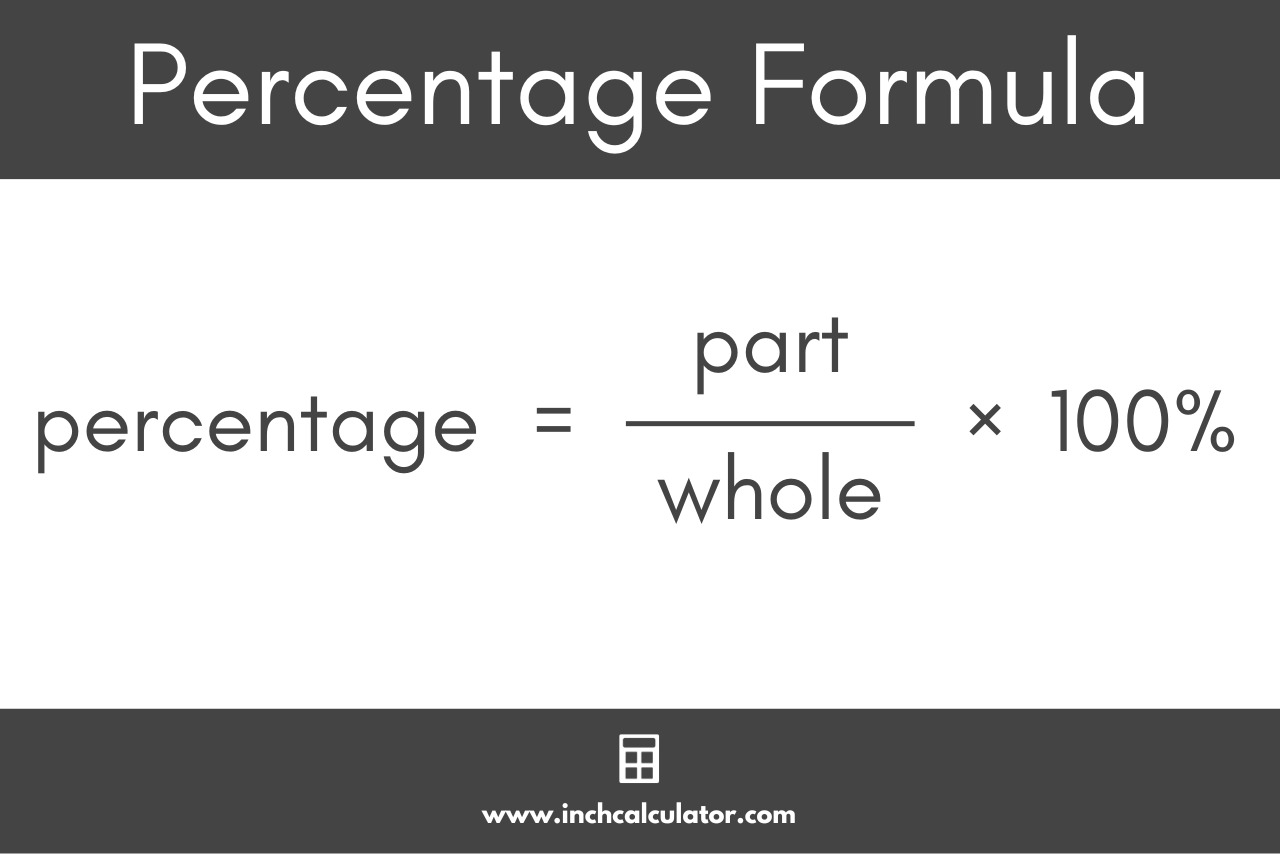
The most basic way to find a percentage is to take the “part,” divide it by the “whole,” and then multiply by 100.
Formula: (Part / Whole) × 100 = Percentage
For example, if you saved $500 out of a $4,000 monthly paycheck, your savings rate is calculated as:
(500 / 4,000) × 100 = 12.5%.
Converting Decimals and Fractions
In financial modeling—especially when using spreadsheets like Excel—percentages are often represented as decimals. To convert a percentage to a decimal, you simply divide by 100 (shifting the decimal point two places to the left). Understanding that 7% is the same as 0.07 is crucial when calculating interest rates or tax liabilities manually.
Calculating the “Amount” from a Percentage
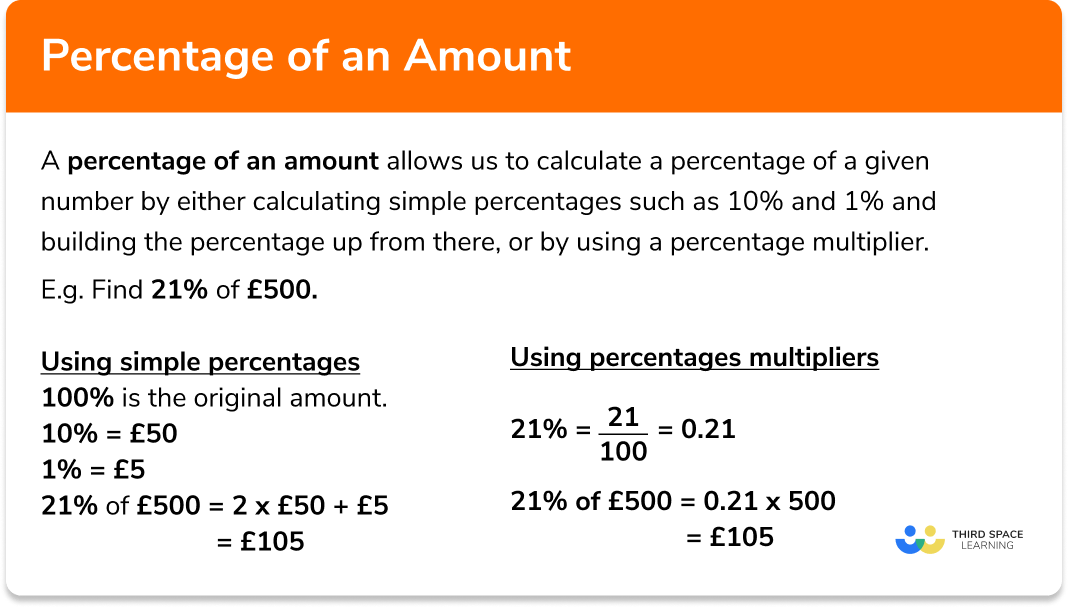
Conversely, you often need to find the dollar amount when you already know the percentage.
Formula: (Percentage / 100) × Whole = Amount
If a business consultant charges a 15% success fee on a $20,000 project, you calculate 0.15 × 20,000 to arrive at a $3,000 fee.
2. Percentages in Personal Finance: Budgeting and Debt Management
The most immediate application of percentage math is in the management of your household economy. Financial health is rarely about the raw numbers; it is about the ratios between those numbers.
The 50/30/20 Budgeting Rule
One of the most popular personal finance frameworks is the 50/30/20 rule. This strategy suggests allocating your after-tax income into three percentage-based buckets:
- 50% for Needs: Housing, utilities, and groceries.
- 30% for Wants: Dining out, travel, and hobbies.
- 20% for Savings and Debt Repayment: Building an emergency fund or paying down principal.
By calculating these percentages monthly, you can identify “lifestyle creep”—the phenomenon where your spending increases as your income rises, preventing you from building wealth.
Calculating Interest on Debt
Understanding the Annual Percentage Rate (APR) is vital for anyone with a credit card or loan. If you carry a $5,000 balance on a card with a 20% APR, the math isn’t as simple as a flat 20% per year because interest often compounds daily. However, to find the monthly interest charge roughly:
(Annual Rate / 12) × Current Balance = Monthly Interest
(0.20 / 12) × 5,000 ≈ $83.33 in interest for one month.
Realizing Discounts and Sales Tax
For the savvy consumer, calculating percentages helps in making real-time purchasing decisions. If an item is $120 with a 25% discount, you can quickly find the savings ($120 × 0.25 = $30) and the new price ($120 – $30 = $90). Adding sales tax requires a similar calculation: $90 × (Tax Rate). If the tax is 8%, the final cost is $90 × 1.08 = $97.20.
3. Investing and Growth: Measuring Performance and ROI
In the realm of investing, percentages allow us to compare apples to oranges. Is a $500 profit on a $1,000 investment better than a $5,000 profit on a $50,000 investment? Without percentages, it’s hard to tell. With them, it’s clear: a 50% return beats a 10% return every time.
Return on Investment (ROI)
ROI is the most important metric for any investor. It measures the gain or loss generated on an investment relative to the amount of money invested.
Formula: [(Current Value – Original Cost) / Original Cost] × 100
If you bought shares for $2,000 and sold them for $2,600:
[(2,600 – 2,000) / 2,000] × 100 = 30% ROI.
The Power of Compound Interest
Unlike simple interest, compound interest is calculated on the initial principal and also on the accumulated interest of previous periods. The “percentage” here works exponentially. To understand how long it takes for an investment to double at a specific percentage rate, investors use the Rule of 72:
72 / Annual Interest Rate = Years to Double.
At an 8% annual return, your money will double in approximately 9 years (72 / 8).
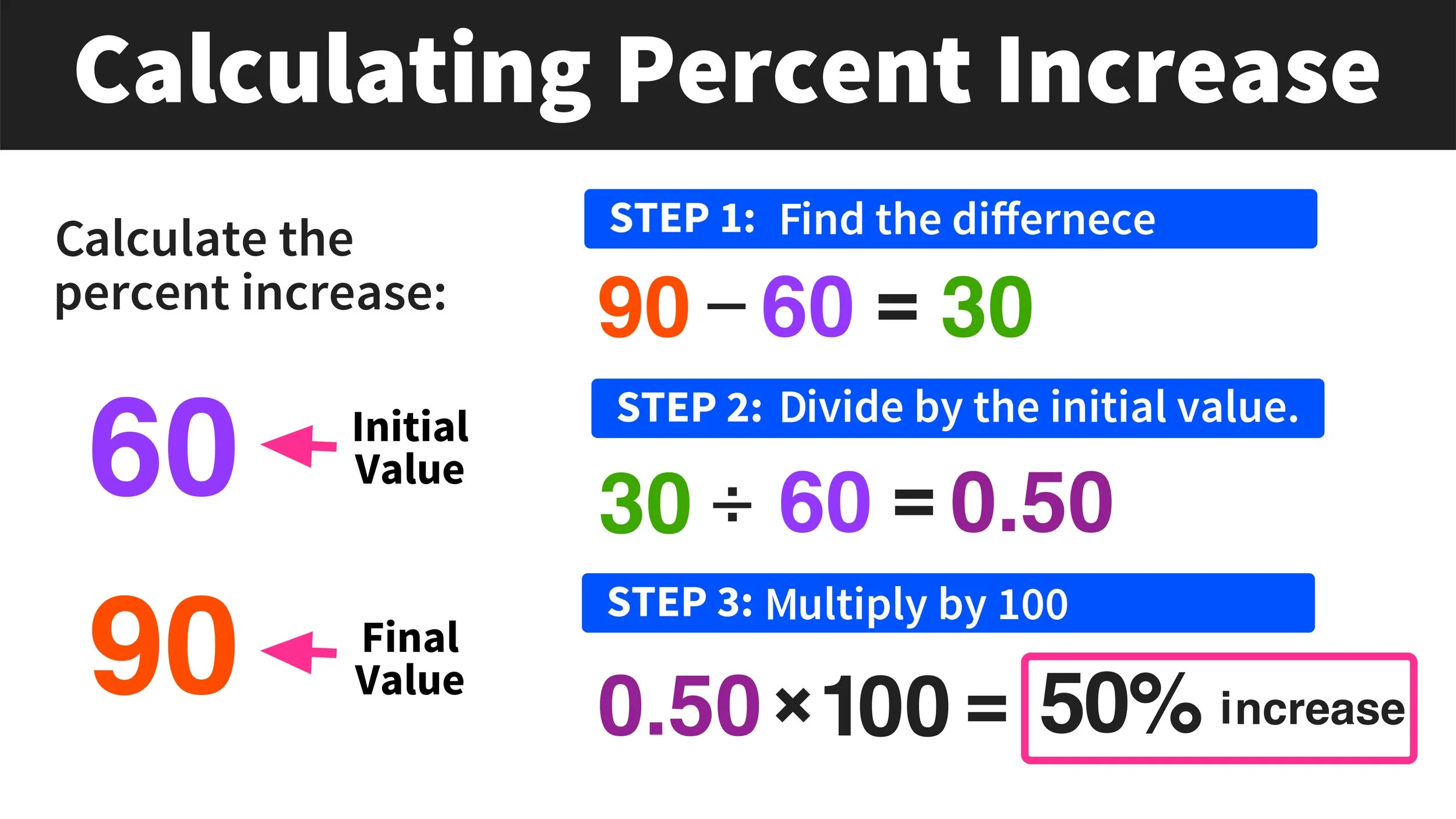
Year-over-Year (YoY) Growth
Businesses and investors use YoY percentages to track growth trends while accounting for seasonality. To calculate YoY growth:
[(Current Year Value – Previous Year Value) / Previous Year Value] × 100
If a side hustle earned $12,000 in 2022 and $15,000 in 2023, the YoY growth is 25%. This percentage is far more descriptive of the business’s trajectory than the $3,000 raw increase.
4. Business Finance: Profit Margins and Financial Ratios
For entrepreneurs and business owners, percentage calculations are the pulse of the company. They distinguish between a business that is merely “busy” and one that is actually “profitable.”
Gross vs. Net Profit Margins
A “margin” is a percentage that expresses how much of every dollar in sales a company keeps as profit.
- Gross Profit Margin: Measures the efficiency of production. [(Revenue – Cost of Goods Sold) / Revenue] × 100.
- Net Profit Margin: The “bottom line.” It accounts for all expenses, including taxes and interest. [Net Income / Revenue] × 100.
A company might have a high gross margin (e.g., 70% for software) but a low net margin (5% after heavy marketing spend). Monitoring these percentages helps owners decide where to cut costs.
Debt-to-Income Ratio (DTI)
For both businesses and individuals seeking loans, the DTI ratio is a critical percentage used by lenders to assess risk.
Formula: (Total Monthly Debt Payments / Gross Monthly Income) × 100.
Most lenders prefer a DTI below 36%. If your percentage climbs toward 50%, you are considered “overleveraged,” and your ability to borrow more money—or even survive a financial downturn—is significantly compromised.
Break-Even Analysis
Every business owner needs to know at what point they start making money. The break-even point is often calculated as a percentage of total capacity or through a margin-based formula. If your fixed costs are $5,000 and your contribution margin (the percentage of each sale that covers fixed costs) is 40%, you need $12,500 in sales to break even (5,000 / 0.40).
5. Advanced Financial Tools and Precision
While manual calculation is a great mental exercise, modern financial management relies on digital tools to ensure accuracy and handle large data sets.
Utilizing Spreadsheet Formulas
In Excel or Google Sheets, calculating percentages is automated. If Cell A1 is your “Part” and Cell B1 is your “Whole,” the formula is simply =A1/B1. By clicking the “%” button in the toolbar, the software automatically multiplies by 100 and adds the percentage symbol. For complex financial modeling, such as calculating the Internal Rate of Return (IRR) or Net Present Value (NPV), these tools use percentage-based algorithms to forecast future wealth.
The Impact of Inflation: The “Real” Percentage
When looking at money, you must distinguish between nominal percentages and real percentages. If your high-yield savings account offers a 4% interest rate, but inflation is running at 5%, your “real” percentage return is actually -1%. This calculation (Nominal Rate – Inflation Rate) is the difference between growing your wealth and merely watching the numbers go up while your purchasing power goes down.
Avoiding Common Mistakes
One of the most frequent errors in financial math is “percentage point” confusion. If an interest rate moves from 3% to 4%, it has increased by one percentage point, but it has increased by 33.3% in value. Misunderstanding this distinction can lead to significant errors in financial reporting and investment analysis.
Conclusion
Mastering how to calculate a percentage is the first step toward financial literacy. It allows you to peel back the curtain of marketing jargon and see the reality of your financial situation. Whether you are optimizing your monthly budget, analyzing a potential stock purchase, or scaling a business, the ability to think in percentages provides a level of clarity that raw numbers cannot offer. By consistently applying these formulas to your income, expenses, and investments, you move from being a passive observer of your money to an active architect of your financial future.
aViewFromTheCave is a participant in the Amazon Services LLC Associates Program, an affiliate advertising program designed to provide a means for sites to earn advertising fees by advertising and linking to Amazon.com. Amazon, the Amazon logo, AmazonSupply, and the AmazonSupply logo are trademarks of Amazon.com, Inc. or its affiliates. As an Amazon Associate we earn affiliate commissions from qualifying purchases.