
Navigating the ever-expanding landscape of streaming services often boils down to a fundamental question for financially savvy consumers: “How much does it cost?” Paramount+, the streaming home for content from CBS, MTV, Comedy Central, BET, Nickelodeon, and Paramount Pictures, is a key player in this market. Understanding its pricing structure, what value it offers, and how it fits into a household budget is crucial for making an informed financial decision. This isn’t just about a simple subscription fee; it’s about evaluating an investment in entertainment within a broader personal finance strategy.
Deconstructing Paramount+ Pricing Tiers
Paramount+ strategically offers different subscription tiers, each designed to cater to varying consumer preferences and budgets. The primary distinction lies in the inclusion of advertisements and access to premium features, which directly impacts the monthly or annual outlay. Analyzing these tiers is the first step in determining the true cost.
Essential vs. Premium: A Cost-Benefit Analysis
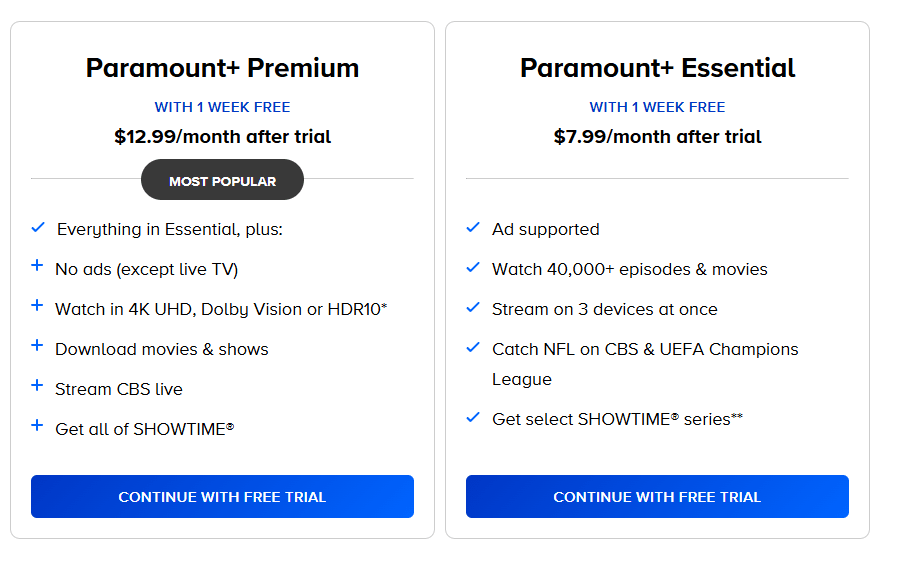
Paramount+ typically presents two main subscription options:
-
Paramount+ Essential: This tier is the more budget-friendly option, designed for viewers who don’t mind occasional commercial interruptions. It provides access to the vast on-demand library, including original series, movies, and live sports like NFL on CBS and UEFA Champions League. However, it does not include live access to your local CBS station. For someone prioritizing cost savings above all else, and who primarily watches on-demand content, this tier represents a lower recurring expense. The financial trade-off here is accepting ads in exchange for a reduced monthly payment.
-
Paramount+ with Showtime (formerly Premium): This is the higher-priced tier, offering an ad-free experience for most of the on-demand library. Crucially, it includes access to your local CBS live stream, allowing viewers to watch news, primetime shows, and major events as they air. Furthermore, this tier integrates the entire Showtime catalog, significantly expanding the available content for a single subscription fee. From a financial perspective, this tier represents a consolidated entertainment expense, combining two major content libraries, which could potentially save money compared to subscribing to Paramount+ and Showtime separately. The additional cost over the Essential plan is justified by the ad-free viewing, live CBS access, and the expanded Showtime library for many users.
When evaluating these options, consider not just the sticker price, but also your tolerance for ads and your desire for live local content or the specific premium shows offered by Showtime. Each choice has direct implications for your monthly entertainment budget.
Annual vs. Monthly Subscriptions: Maximizing Savings
Like many subscription services, Paramount+ incentivizes long-term commitments by offering discounts for annual subscriptions compared to month-to-month billing.
-
Monthly Subscription: This offers flexibility, allowing subscribers to cancel at any time without further obligation. It’s ideal for those who only want to subscribe for a specific show or season, or for those whose financial situation might fluctuate. However, the cumulative cost over a year will be higher.
-
Annual Subscription: Paying upfront for a full year typically results in a noticeable percentage saving over 12 monthly payments. From a personal finance perspective, this is a smart move if you anticipate using the service consistently for the entire year. It acts as a pre-paid expense, effectively lowering the average monthly cost and ensuring budget predictability for the entertainment category. The initial lump sum payment is larger, but the long-term financial benefit is clear.
Calculating the difference between the annual and monthly costs can quickly reveal the potential savings. For instance, if the monthly premium is X, and the annual premium is Y, and Y is less than 12*X, then the annual subscription presents a clear financial advantage for committed users.
Deciphering the Value: What Do You Get for Your Money?
Understanding the price is only one side of the coin; the other is assessing the value received for that expenditure. In the realm of personal finance, value isn’t just about quantity but also relevance and utility.
Content Library and Exclusives
Paramount+ boasts a deep catalog across various genres, from family-friendly Nickelodeon content to critically acclaimed dramas and an extensive sports offering. For consumers, the value proposition hinges on whether this content aligns with their viewing preferences.
- Originals and Exclusives: Shows like Yellowstone prequels (1883, 1923), Star Trek: Strange New Worlds, and Mayor of Kingstown are exclusive to the platform. If these specific titles are “must-haves” for a household, the value derived from the subscription increases significantly, potentially making the cost worthwhile.
- Live Sports: Access to NFL on CBS, UEFA Champions League, and other sports can be a huge draw for sports fans. For households considering costly cable packages just for sports, Paramount+ might offer a more cost-effective alternative for specific events, thereby optimizing their entertainment budget.
- Movie Library: The service regularly adds new and classic films from Paramount Pictures, often after their theatrical runs. This can represent significant savings compared to purchasing or renting individual movies.
- Showtime Integration: For the higher tier, the added value of the complete Showtime library (e.g., Billions, Yellowjackets) effectively bundles two services into one payment, streamlining billing and potentially offering a lower combined price than subscribing to both separately. This consolidation can be a savvy financial move for avid viewers of both platforms.
User Experience and Features
While less directly tied to the “how much” question, the user experience contributes to the overall perceived value and influences whether the investment feels worthwhile. Features like user profiles, watchlists, parental controls, and device compatibility all enhance the usability, making the financial outlay feel more justified. If a service is frustrating to use, even a low price can feel like a waste of money.

Beyond the Subscription Fee: Hidden Costs and Considerations
When budgeting for streaming services, it’s essential to look beyond the advertised monthly or annual fee. There are often ancillary costs or financial considerations that impact the true economic footprint of a subscription like Paramount+.
Internet Service Provider (ISP) Costs
Streaming services are entirely reliant on a stable, high-speed internet connection. While most households already have internet, if a Paramount+ subscription (or an aggregation of streaming services) necessitates an upgrade to a faster, more expensive internet plan, that additional cost should be factored into the overall entertainment budget. This is an indirect but often overlooked expense.
Device Investment
While many people already own smart TVs, streaming sticks, or gaming consoles capable of running the Paramount+ app, new device purchases can add to the total cost. If you’re setting up a new entertainment system and factor in the cost of a Roku, Amazon Fire Stick, Apple TV, or a smart TV itself, this capital expenditure supports the ability to consume streaming content. From a financial planning perspective, this is an investment in your home entertainment infrastructure.
Opportunity Cost
Every dollar spent on Paramount+ (or any streaming service) is a dollar that cannot be used for something else – savings, debt repayment, other investments, or alternative forms of entertainment. This concept of opportunity cost is fundamental in personal finance. Weighing whether the entertainment value derived from Paramount+ is greater than the value of what that money could otherwise achieve is a crucial, albeit abstract, financial decision. For some, the cost of a few movie tickets outweighs the monthly subscription; for others, the access to a vast library makes it a superior financial choice.
Promotional Offers and Bundles
Paramount+ frequently offers free trials, introductory discounts, or bundles with other services (e.g., mobile carriers, internet providers). Leveraging these can significantly reduce the initial financial outlay. Savvy consumers will track these promotions, often signing up for a free trial to evaluate the content before committing financially. Furthermore, looking into bundle deals – for example, with certain phone plans or other streaming packages – can provide a discounted rate on Paramount+ that wouldn’t be available otherwise, effectively lowering the cost per service. These can be excellent ways to manage and minimize entertainment expenses.
Paramount+ in Your Budget: A Financial Planning Perspective
Integrating a streaming service into a personal or household budget requires careful consideration, especially as the number of subscriptions grows.
Budgeting for Streaming Services
A common recommendation in personal finance is to allocate a specific portion of your discretionary income to entertainment. Within this category, streaming services form a significant component for many.
- Set a Cap: Determine a maximum amount you’re willing to spend on all streaming services combined each month. This helps prevent “subscription creep,” where individual services, each seemingly inexpensive, accumulate into a substantial monthly bill.
- Review Regularly: Periodically review your streaming subscriptions. Are you actively using all of them? Is the value still there? Cancelling underutilized services, even temporarily, can free up funds for other financial goals or reduce overall expenditure.
- Shared Costs: For households, splitting the cost of a service among multiple users (if the terms of service allow) can significantly reduce the individual financial burden, making the service more affordable per person.
Comparing with Competitors’ Pricing
No streaming service exists in a vacuum. A responsible financial decision involves comparing Paramount+ not just against itself (Essential vs. Premium) but also against its competitors like Netflix, Hulu, Max, Disney+, and Peacock.
- Content Overlap: Do other services offer similar content or content that you would prefer? If one service covers a broader range of your interests for a comparable price, it might offer better financial value.
- Exclusive Content Draw: If Paramount+ has exclusive content you can’t get elsewhere and genuinely want, its value increases. However, if your must-watch shows are spread across multiple platforms, you might need to subscribe to several, increasing your total entertainment expenditure.
- Price Per Feature: Compare the ad-free options, live TV components, and bundled offerings across services. For example, some services bundle an ad-supported tier with a mobile phone plan, potentially making it “cheaper” than a standalone Paramount+ subscription if you already need that phone plan.
Weighing the Investment: Is Paramount+ Right for Your Wallet?
Ultimately, the decision of “how much is Paramount TV” extends beyond its stated price tag to a personalized financial assessment. It’s about evaluating the direct costs, the perceived value of the content, the indirect financial implications, and how it aligns with your broader financial goals and entertainment budget.
For some, the diverse library, exclusive originals, and live sports access at its price point represent excellent value, making it a sound financial investment in entertainment. For others, particularly those with a tight budget or different viewing preferences, the cost might be deemed too high, or the content not compelling enough to warrant the expenditure. By thoroughly analyzing its pricing tiers, understanding its value proposition, and considering all related financial factors, consumers can make a financially astute decision about whether Paramount+ earns its place in their monthly budget.
aViewFromTheCave is a participant in the Amazon Services LLC Associates Program, an affiliate advertising program designed to provide a means for sites to earn advertising fees by advertising and linking to Amazon.com. Amazon, the Amazon logo, AmazonSupply, and the AmazonSupply logo are trademarks of Amazon.com, Inc. or its affiliates. As an Amazon Associate we earn affiliate commissions from qualifying purchases.