
The narrative of Tesla is inextricably linked with the visionary, often controversial, figure of Elon Musk. His name has become synonymous with the electric vehicle pioneer, from its innovative designs to its market-disrupting strategies. However, to understand the true financial DNA of Tesla, one must look back to its origins, a period before Musk assumed the reins, and explore the intricate web of ownership, investment, and strategic financing that laid the groundwork for one of the most valuable companies in the world. The question of “who owned Tesla before Elon Musk” delves into the critical initial capital injections, the founders’ equity, and the early financial architecture that ultimately shaped its destiny, making it a compelling case study in high-stakes business finance and venture capital.
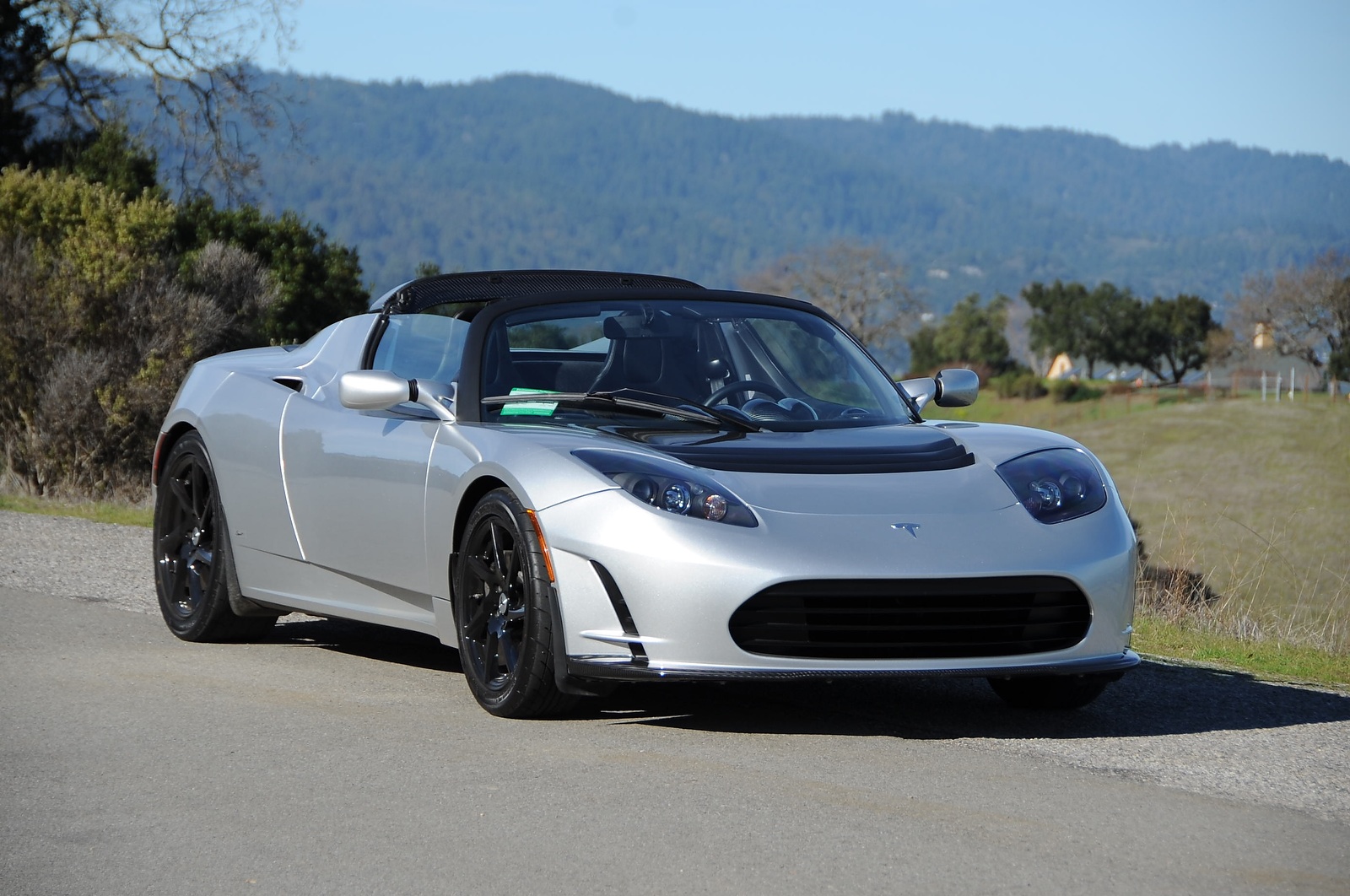
The Genesis of an Automotive Revolution: Early Financial Backing
Every monumental enterprise begins with an idea, but it truly takes flight with capital. Tesla Motors, initially conceived as a startup aiming to accelerate the world’s transition to sustainable energy, was no exception. Its foundational years were characterized by the passion of its originators and the crucial, albeit modest, financial commitments that paved the way for future colossal investments.
The Visionary Founders and Their Initial Capital
Tesla Motors was officially incorporated in July 2003 by Martin Eberhard and Marc Tarpenning. These two engineers, with a background in technology and a shared vision for electric vehicles, were the true pioneers. Their motivation stemmed from a frustration with the limitations of existing battery technology and a conviction that electric cars could be both high-performance and environmentally friendly.
Eberhard, who served as Tesla’s first CEO, and Tarpenning, who was its CFO and later VP of Electrical Engineering, initially self-funded the very early stages of the company. This bootstrapping phase involved personal savings and limited angel investments to cover fundamental costs such as legal incorporation, initial research, and the conceptualization of their first product, a high-performance electric sports car. This initial capital, though small in comparison to the billions that would later flow into the company, was instrumental in validating the concept and attracting the attention of larger investors. It reflected the common entrepreneurial journey where founders put their own financial skin in the game, demonstrating belief and commitment to their venture. Their initial equity stake was, naturally, 100% of the company they had just founded, before any external dilution.
Securing Seed Funding and Angel Investments
As the vision matured from a concept into a tangible business plan, the need for more substantial capital became evident. Building an automotive company, especially one aiming to disrupt an established industry with nascent technology, is inherently capital-intensive. The initial personal funds were sufficient for ideation but insufficient for design, engineering prototypes, or establishing a manufacturing strategy.
To bridge this gap, Tesla sought seed funding and attracted several angel investors. These were often high-net-worth individuals or groups willing to invest in early-stage companies with significant growth potential, despite the inherent high risk. These early financial commitments were vital. They provided the essential working capital for hiring initial engineering talent, securing office space, and commencing the critical design and development work for what would become the Tesla Roadster. The terms of these investments typically involved convertible notes or direct equity purchases, diluting the founders’ initial 100% stake but infusing the necessary funds to advance the company beyond its conceptual stage. This early financial period was a testament to the challenge of raising capital for a revolutionary idea, highlighting the critical role of early believers who are financially prepared to take on significant risk for potentially astronomical returns.
Elon Musk’s Transformative Investment: A Strategic Infusion
The pivotal moment in Tesla’s early financial history, and indeed its entire trajectory, arrived with the involvement of Elon Musk. While he was not one of the original founders, his significant capital injection and subsequent leadership reshaped the company’s ownership structure and financial viability irrevocably.
The Series A Round and Musk’s Entry as a Major Investor
In February 2004, less than a year after its incorporation, Tesla successfully closed its Series A funding round, raising a crucial $7.5 million. The largest single contributor to this round was Elon Musk, who invested $6.5 million. At the time, Musk was already a highly successful entrepreneur, having co-founded PayPal and Zip2, and was actively involved with SpaceX. His investment was not just capital; it was a powerful endorsement from a prominent figure in technology and entrepreneurship.
Musk’s substantial investment immediately made him the largest shareholder and the Chairman of Tesla’s board of directors. This financial infusion was transformative. It provided the significant capital required to move from theoretical designs to practical engineering and manufacturing preparations for the Roadster. More importantly, it dramatically shifted the financial control and strategic direction of the company. With his majority stake, Musk wielded considerable influence over the company’s financial decisions, operational strategies, and long-term vision. This moment marked the transition from a founder-led startup with modest funding to a venture-backed company with ambitious goals, underpinned by a deep-pocketed and highly engaged lead investor.
The Financial Implications of Early Leadership Changes
The arrival of a major investor like Elon Musk inevitably led to shifts in the company’s leadership and financial structure. While Martin Eberhard continued as CEO for a period, the dynamic of ownership and control had fundamentally changed. As Chairman, Musk’s influence extended to key financial decisions, product development, and overall corporate strategy.
This period saw a series of internal struggles and differing visions for the company’s future, a common occurrence when significant external capital and leadership are introduced into an early-stage venture. For the original founders, Eberhard and Tarpenning, while their initial vision was now on a path to realization, their equity stakes were diluted with each subsequent funding round. More importantly, their control over the company’s direction diminished as Musk’s financial leverage and strategic involvement grew. Ultimately, Musk would transition from Chairman to CEO in 2008, consolidating his control and marking a new era for Tesla. This financial restructuring and leadership evolution highlight how capital not only funds a company but often dictates its governance and ultimately, its destiny.
Navigating the Financial Labyrinth: From Startup to Public Offering
Building a car company from scratch, let alone an electric one in an era dominated by gasoline engines, required colossal amounts of capital. Tesla’s journey from a nascent startup to a publicly traded entity was a masterclass in strategic fundraising, navigating financial challenges, and making calculated bets.
Subsequent Funding Rounds and the Road to IPO

After the Series A, Tesla embarked on a relentless series of additional funding rounds to finance its ambitious growth plans. These included Series B, C, D, and E rounds, each raising tens or hundreds of millions of dollars. Investors included prominent venture capital firms such as VantagePoint Venture Partners, Valor Equity Partners, and various strategic investors.
Each funding round served a specific financial purpose:
- Scaling Production: As the Roadster moved from prototype to limited production, significant capital was needed for tooling, supplier contracts, and assembly.
- Research and Development (R&D): Developing new models (like the Model S) and proprietary technologies (like battery packs and powertrains) demanded continuous, heavy investment in R&D.
- Infrastructure: Building charging networks (Superchargers) and service centers required substantial capital outlays.
- Operational Expenses: Covering salaries, marketing, and general administrative costs for a rapidly expanding company.
Beyond equity financing, Tesla also strategically utilized debt financing. A crucial financial lifeline came in the form of a $465 million loan from the U.S. Department of Energy (DOE) in 2009, part of a program designed to help fund advanced vehicle manufacturing. This loan was not just capital; it was a significant vote of confidence that bolstered investor perception and facilitated further growth. These various funding mechanisms collectively showcased a sophisticated financial strategy aimed at sustaining a capital-intensive business through its early, high-growth phases.
The IPO: Unlocking Public Capital and Shareholder Value
The ultimate financial milestone for any high-growth startup is often its Initial Public Offering (IPO). For Tesla, this moment arrived on June 29, 2010, when it listed its shares on the NASDAQ exchange under the ticker symbol “TSLA.” The company raised approximately $226 million by offering 13.3 million shares at $17 each.
The IPO was a monumental achievement for several financial reasons:
- Liquidity for Early Investors: It provided an exit opportunity for early angel investors and venture capitalists, allowing them to realize the significant financial returns on their high-risk investments. Many saw their capital multiply several times over.
- Access to Public Capital: Going public opened up a new, vast pool of capital from institutional investors and retail shareholders, enabling Tesla to fund even larger-scale projects without relying solely on private funding rounds.
- Enhanced Valuation: Public market exposure and analyst coverage often lead to higher valuations, providing a benchmark for the company’s financial health and future potential.
- Financial Credibility: Becoming a publicly traded company added a layer of transparency and credibility, which was crucial for securing future debt, attracting top talent, and expanding into new markets.
The IPO marked a transition from a privately owned, venture-backed entity to a publicly accountable corporation. For Elon Musk, who retained a substantial ownership stake, it solidified his financial control and provided the capital base needed to pursue his ambitious vision for electric vehicles and renewable energy on a global scale.
The Financial Legacy of Early Ownership: Returns and Revisions
The story of “who owned Tesla before Elon Musk” is not just about individuals; it’s about the financial mechanics of startup creation, the dilution of equity, and the ultimate realization of value for those who took early financial risks.
The Founders’ Financial Journeys Post-Musk’s Dominance
For Martin Eberhard and Marc Tarpenning, the original founders, their journey after Musk’s ascendance was complex. While they undeniably created the initial concept and laid the groundwork, their operational roles diminished, and both eventually departed Tesla. Financially, they benefited significantly from the company’s success. As early equity holders, their shares appreciated immensely, particularly after the IPO and Tesla’s subsequent meteoric rise in valuation.
However, the nature of venture capital and high-growth startups often means that founders’ initial large equity stakes are diluted by subsequent funding rounds designed to inject massive amounts of capital. While they did not retain the level of control or the ultimate percentage of ownership that Musk commanded, their financial returns were substantial. They represent a classic case of founders who initiated a transformative company but whose ultimate financial outcome and legacy were deeply intertwined with the strategic investments and leadership that followed their initial efforts. Their wealth, derived from their early Tesla shares, allowed them to pursue new ventures and continue their entrepreneurial journeys, demonstrating the significant financial rewards possible for early innovators.
Analyzing the Investment Returns of Early Backers
The early financial backers of Tesla – angel investors, venture capital firms, and individuals like Elon Musk – saw extraordinary returns on their investments. For venture capitalists, Tesla became one of the most successful investments of all time, justifying the high-risk, high-reward model inherent in their industry. An investment in Tesla during its early private rounds, especially pre-IPO, yielded multi-bagger returns, meaning the original capital multiplied many times over.
For example, a venture capital firm investing in Series B or C, and holding through the IPO and subsequent growth, would have seen their initial investment grow from thousands or millions into hundreds of millions or even billions. This kind of outcome is the holy grail for venture capitalists, demonstrating the power of identifying and funding disruptive technologies and visionary leadership. It underscores the financial principle that while early-stage investing is fraught with risk, the potential for exponential returns in truly transformative companies like Tesla is unparalleled.
Lessons in Capital and Control: The Tesla Blueprint
Tesla’s early financial history provides a robust case study for understanding the intricate relationship between vision, capital, and control in the world of high-tech startups.
The Interplay of Vision, Capital, and Management
The Tesla story powerfully illustrates that while a compelling vision and initial entrepreneurial drive are essential, sustained financial injection is critical for scale and survival, especially in capital-intensive industries. The shift in ownership and control from the original founders to Elon Musk highlights a common dynamic: those who provide the most substantial capital often gain the most significant control. Musk’s deep pockets and willingness to invest aggressively allowed him to dictate the company’s direction, accelerate its growth, and ultimately shape it into the behemoth it is today.
This interplay underscores the importance of strategic financial management. It’s not just about raising money, but about raising the right money at the right valuation, from investors who align with the company’s long-term goals. The early financial decisions made at Tesla, from securing seed funding to Musk’s transformative Series A investment, were fundamental to allocating resources, managing risk, and navigating the perilous path from a nascent idea to a global industrial force.
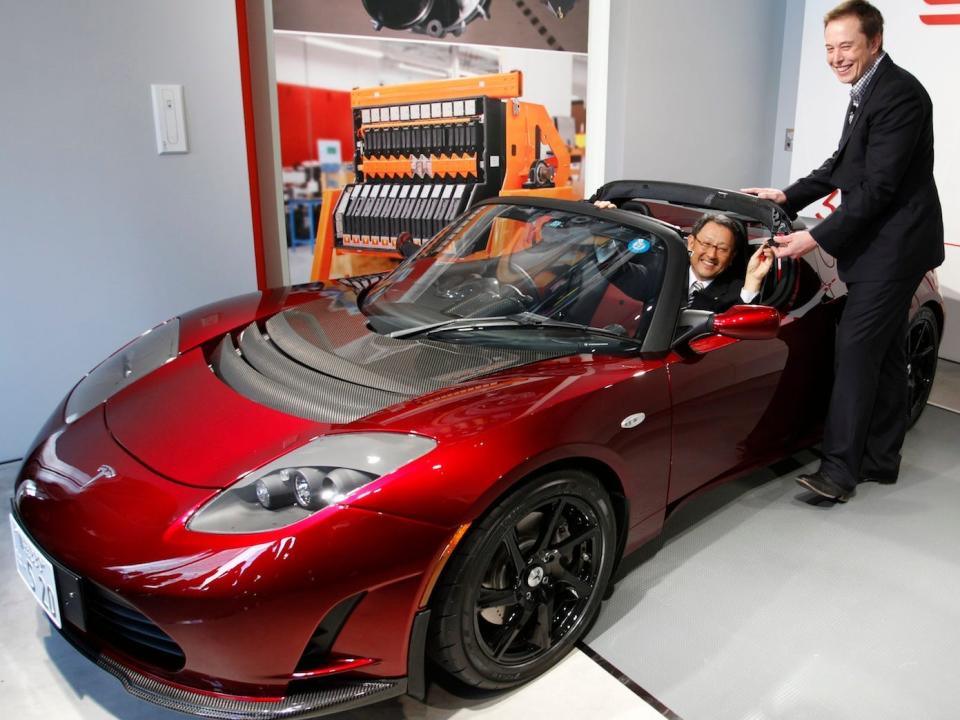
A Case Study in High-Stakes Investment
Tesla’s financial origins, particularly the pre-Musk era and his subsequent pivotal investment, serve as a premier example of high-stakes venture capitalism. It demonstrates the courage required of early investors to back unproven technology and ambitious visions, the financial sacrifices made by founders, and the eventual, often staggering, rewards for those who bet correctly. The journey from a small team with a big idea to a multi-billion dollar enterprise required not only technological innovation but also relentless financial engineering, strategic capital deployment, and the bold willingness of individuals and institutions to pour vast sums into a revolutionary, yet risky, endeavor. The question of “who owned Tesla before Elon Musk” thus opens a window into the complex financial mechanisms that underpin the birth and growth of modern industrial titans.
aViewFromTheCave is a participant in the Amazon Services LLC Associates Program, an affiliate advertising program designed to provide a means for sites to earn advertising fees by advertising and linking to Amazon.com. Amazon, the Amazon logo, AmazonSupply, and the AmazonSupply logo are trademarks of Amazon.com, Inc. or its affiliates. As an Amazon Associate we earn affiliate commissions from qualifying purchases.