
The question “What kind of Tesla did Trump buy?” transcends a simple consumer inquiry; it delves into a fascinating intersection of personal branding, corporate identity, and public perception. For a figure as globally recognized and polarizing as Donald Trump, every significant purchase, especially a high-profile vehicle, is not merely a transaction but a carefully scrutinized statement that resonates across political, social, and commercial landscapes. Similarly, for a company like Tesla, the association with such a prominent personality, whether direct or indirect, carries immense branding implications. This article will explore the hypothetical purchase of a Tesla by Donald Trump through the lens of brand strategy, examining how such a choice would interact with, reinforce, or even challenge the established brands of both the former President and the electric vehicle pioneer.
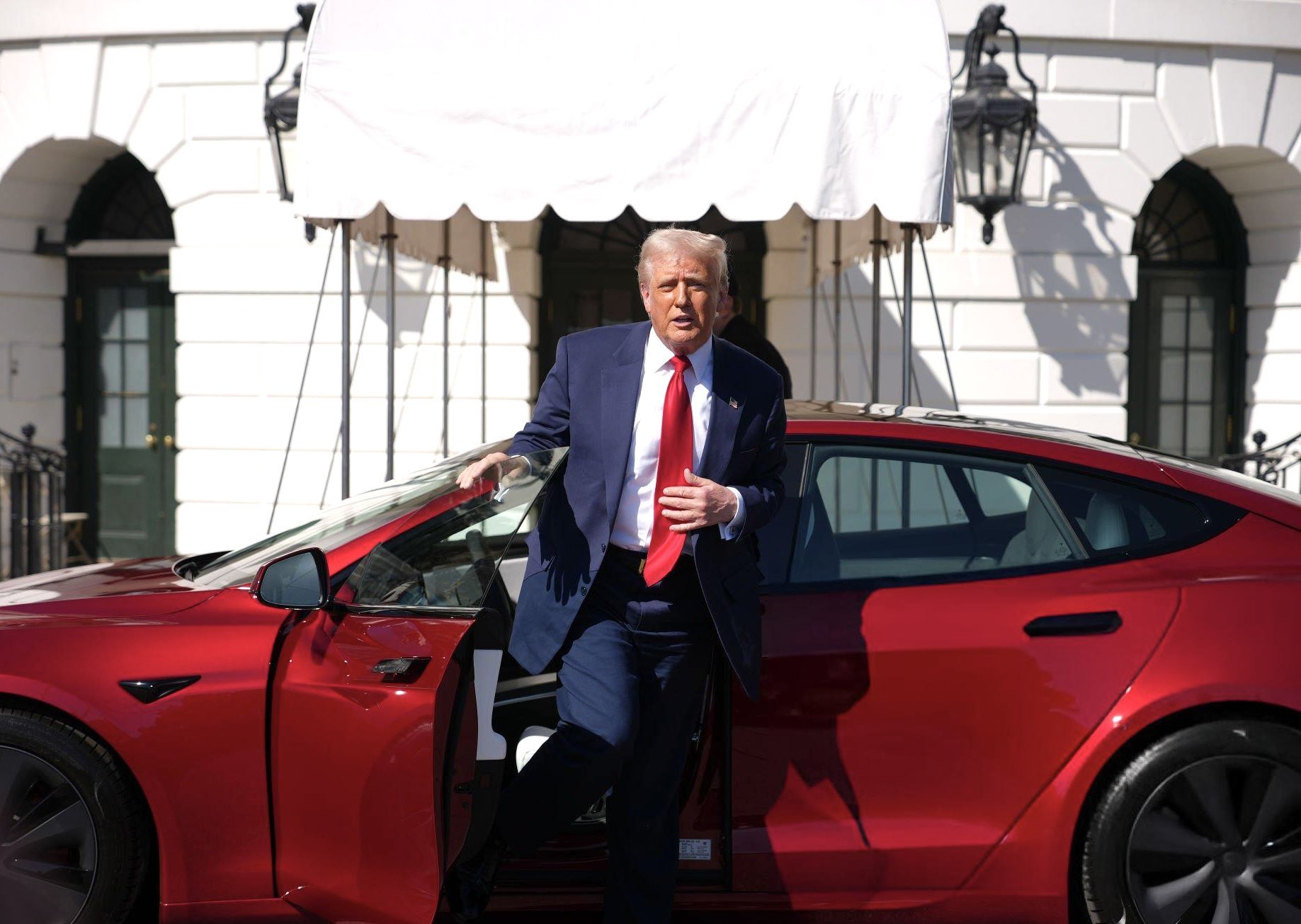
The Collision of Two Potent Brands: Trump and Tesla
To understand the branding significance of Trump potentially buying a Tesla, one must first dissect the powerful, distinct identities each entity has meticulously cultivated. Their brands, while vastly different in origin and focus, share an underlying thread of disruption and strong, often controversial, leadership.
Trump’s Personal Brand: Power, Patriotism, and Performance
Donald Trump’s personal brand is a carefully constructed edifice built on decades of real estate ventures, media appearances, and political campaigning. Key pillars of this brand include:
- Luxury and Prestige: From Trump Tower to Mar-a-Lago, his name is synonymous with opulent lifestyles, exclusive properties, and a certain aspirational, high-end aesthetic. His typical mode of transport, be it a Cadillac One limousine, a private jet, or a custom helicopter, invariably conveys status, grandeur, and an unapologetic embrace of wealth.
- American Exceptionalism and Patriotism: His political rhetoric frequently champions “America First” and often aligns with traditional American industries. This has historically informed his preference for American-made products, particularly in the automotive sector, often favoring iconic domestic luxury brands or custom-built vehicles that project strength and national pride.
- Disruption and Unconventionality: Trump’s rise to power was marked by a rejection of established norms and a willingness to challenge the status quo. His brand embodies a certain “outsider” appeal, appealing to those who feel disenfranchised by conventional politics and media.
- Strength and Dominance: His public persona consistently projects an image of unwavering resolve, confidence, and decisive action. The vehicles associated with him often reflect these traits: large, imposing, and technologically advanced in a way that emphasizes security and control.
Tesla’s Corporate Brand: Innovation, Disruption, and the Future
Tesla, under the visionary (and often volatile) leadership of Elon Musk, has forged a corporate brand that is equally distinctive and impactful, albeit in a very different arena.
- Pioneering Innovation and Technology: Tesla is the undisputed leader in electric vehicle technology, recognized for its advanced battery systems, autonomous driving capabilities, and over-the-air software updates. Its brand narrative is centered on pushing boundaries, rethinking transportation, and leading the charge into a sustainable future.
- Disruptive Market Entry: Much like Trump in politics, Tesla dramatically disrupted the entrenched automotive industry, challenging traditional manufacturing processes, distribution models, and consumer expectations. It successfully built a luxury performance brand around an entirely new powertrain.
- Environmental Consciousness (Perceived): While not all Tesla buyers are driven by environmentalism, the brand is inextricably linked with sustainability, clean energy, and a greener future. This association is a powerful component of its public image, even if some of its production methods or resource consumption draw scrutiny.
- Performance and Luxury: Beyond environmental credentials, Tesla cars are renowned for their blistering acceleration, cutting-edge infotainment systems, and minimalist yet premium interiors. They offer a blend of high-performance driving and modern luxury that appeals to a tech-savvy, forward-thinking demographic.
The potential convergence of these two brands – one steeped in traditional power and American might, the other a symbol of futuristic disruption and global sustainability – creates a fascinating canvas for brand analysis.
The Strategic Implications of a Hypothetical Tesla Purchase
A purchase as seemingly simple as a car becomes a complex brand statement when made by a figure like Donald Trump. The implications extend far beyond personal preference, influencing public perception, brand alignment, and endorsement value for both parties.
Brand Alignment and Potential Dissonance
The act of Trump buying a Tesla would immediately trigger a multifaceted analysis of brand alignment and potential dissonance.
- Synergies: Both Trump and Tesla are associated with disruption, ambitious vision, and larger-than-life leaders. Both brands command fiercely loyal followings and have a knack for dominating headlines. A Tesla, particularly a high-performance model, could align with Trump’s brand of luxury, power, and technological prowess (albeit a different kind of tech than he typically champions). It could be interpreted as embracing American innovation, given Tesla’s manufacturing presence in the U.S.
- Dissonance: The most obvious point of tension lies in the environmental narrative. Trump’s political platform often downplayed climate change concerns and championed traditional fossil fuel industries. Adopting an electric vehicle, a symbol of the green movement, could be seen as a contradiction by his base or as a cynical move by his detractors. It would challenge a core aspect of Tesla’s brand identity if the purchase were purely for performance or prestige without acknowledging its ecological implications. Conversely, it could alienate some traditional Tesla owners who identify with the brand’s environmental mission. This dissonance presents a significant challenge for brand managers seeking to control the narrative.
Public Perception and Endorsement Value
For both Trump and Tesla, the public perception of such a purchase would be a critical branding outcome.
- For Trump:
- Supporters: Might view it as Trump embracing American innovation and leading by example, or simply enjoying the best America has to offer. The performance and luxury aspects would likely resonate more than the environmental ones.
- Opponents: Could frame it as hypocrisy, a symbolic move disconnected from his policy positions, or simply a high-cost indulgence.
- Undecideds: Might see it as a surprising, perhaps even modernizing, move, or simply another example of a wealthy individual’s choices.
- For Tesla:
- Implicit Endorsement: A purchase by such a visible figure would undoubtedly provide significant, albeit unsolicited, media attention. It would offer a powerful, high-profile “user testimonial” that could broaden Tesla’s appeal beyond its traditional demographic. It could suggest that Tesla’s appeal transcends political divides, focusing purely on product excellence.
- Brand Dilution Concerns: Some segments of Tesla’s existing customer base, particularly those strongly aligned with progressive environmental values, might view an association with Trump unfavorably, fearing it could dilute the brand’s perceived ethical stance or shift its identity. This risk of alienating a core demographic is a significant brand management concern. The company would have to carefully navigate any public comments to avoid appearing to endorse or reject a political figure, focusing instead on the vehicle’s features and appeal.
The Vehicle as a Brand Statement: What Model Would Make Sense?

If Donald Trump were to acquire a Tesla, the specific model chosen would be as significant a brand statement as the decision to buy a Tesla itself. Each model carries distinct connotations that could align or clash with his carefully cultivated image.
The Model S Plaid: Performance, Prestige, and Power
The Model S Plaid is Tesla’s flagship performance sedan, a technological marvel capable of blistering acceleration and impressive range.
- Alignment: This model arguably offers the most direct alignment with Trump’s brand of power, prestige, and high performance. Its “ludicrous” speed capabilities, luxurious interior, and top-tier price point scream exclusivity and dominance—qualities often associated with Trump’s persona. It’s a car that commands attention and speaks to ultimate achievement, much like Trump’s own self-perception. The “Plaid” designation itself suggests pushing boundaries and being at the very peak of what’s possible, a narrative Trump often employs.
- Brand Narrative: Choosing the Plaid would emphasize American engineering excellence and speed, aligning with a “winning” narrative rather than an environmental one. It would be a statement that even the former President appreciates cutting-edge domestic performance.
The Cybertruck: Disruption, Unconventionality, and American Muscle
The Cybertruck is perhaps Tesla’s most radical product, an angular, stainless-steel behemoth that defies traditional automotive design.
- Alignment: This choice could be incredibly potent for Trump’s brand of disruption and unconventionality. The Cybertruck is inherently anti-establishment in its aesthetics and engineering, a perfect vehicle for someone who prides himself on challenging norms and breaking molds. Its rugged, almost militaristic appearance could also resonate with a segment of his base that values strength, utility, and an “unapologetically American” aesthetic. Its association with raw power and resilience, combined with advanced technology, could be a compelling fit.
- Brand Narrative: Opting for the Cybertruck would tell a story of embracing the future on one’s own terms, of American innovation that isn’t afraid to be different. It would signal a forward-thinking, yet fiercely independent, spirit.
Model X or Model Y: Practicality with a High-Tech Edge
The Model X (an SUV with “falcon-wing” doors) and Model Y (a more conventional compact SUV) represent Tesla’s more family-oriented or versatile offerings.
- Potential Alignment: While less overtly aggressive than the Plaid or Cybertruck, a Model X could still signify luxury and advanced technology. Its unique doors and spacious interior offer a blend of high-tech spectacle and practicality, potentially aligning with an image of sophisticated utility or even transporting family members (like grandchildren) in style. A Model Y, while more understated, still projects a modern, tech-forward image.
- Brand Narrative: These choices might be interpreted as a more subtle embrace of modern technology and luxury, perhaps suggesting a more mainstream or pragmatic side to his brand, if that were a desired public image. However, given Trump’s preference for overt statements, these might be less impactful brand choices compared to the Plaid or Cybertruck.
Ultimately, the choice of model would dictate the precise nuances of the brand message, each carrying a different weight in the intricate dance between personal brand and corporate identity.
Navigating the Media Landscape: A Brand Manager’s Perspective
Should news break of Donald Trump acquiring a Tesla, the event would immediately become a media phenomenon, requiring careful strategic communication from both Trump’s team and Tesla’s public relations department.
Managing the Narrative: Proactive vs. Reactive Branding
For both parties, controlling the narrative would be paramount.
- Trump’s Team: Would likely adopt a proactive strategy, framing the purchase in a way that aligns with his existing brand values. This might involve emphasizing the car’s performance, its American manufacturing, or simply portraying it as a personal choice that showcases his embrace of innovation. They would aim to pre-empt criticisms of hypocrisy regarding environmental stances, perhaps by focusing on economic or technological arguments. The announcement itself could be timed for maximum political or media impact.
- Tesla’s PR: Would need to be more reactive and judicious. While the publicity would be immense, Tesla’s brand is largely apolitical in its direct messaging. Their strategy would likely involve acknowledging the purchase as a testament to the product’s universal appeal, focusing on the vehicle’s features and performance rather than the individual buyer’s political alignment. They would aim to avoid explicit endorsements or rejections, maintaining a neutral stance to protect their diverse customer base. Any public statement would need to be carefully worded to celebrate the product without appearing to endorse a controversial political figure.

Leveraging the Buzz: PR Opportunities and Challenges
The sheer volume of media attention generated by such a purchase would present both significant opportunities and considerable challenges.
- PR Opportunities:
- Trump: The purchase could be leveraged for political messaging, demonstrating an embrace of American industry and innovation, or simply maintaining his name in headlines. It could be used to project an image of modernity or even a surprising openness to new technologies.
- Tesla: The coverage would be invaluable, offering free advertising and reinforcing Tesla’s position as a desirable, high-tech, luxury brand. It would expand brand awareness to new demographics, particularly those who might not typically follow EV news. The novelty of the association alone would generate discussion across various media platforms.
- Challenges:
- Controlling the Message: Given the personalities involved, controlling the narrative would be exceptionally difficult. Media outlets and social media users would interpret the purchase through their own political and ideological lenses, leading to a myriad of often contradictory narratives.
- Brand Perception Risk: For Tesla, the risk of alienating a segment of its existing customer base (who might object to an association with Trump) would be a significant challenge. For Trump, the risk of appearing inconsistent with his established political positions (particularly on environmental issues) would need to be carefully managed. Both brands would face the challenge of navigating intense scrutiny and potential misinterpretations.
In the highly charged world of personal and corporate branding, a simple car purchase, when made by a figure like Donald Trump, transforms into a complex and fascinating case study. It’s not just about what kind of Tesla he might buy, but what that Tesla says about him, about Tesla, and about the ever-evolving landscape of brand perception in the digital age. The vehicle becomes a symbol, a talking point, and a powerful piece of non-verbal communication in the ongoing narrative of two of the most potent brands in the world.
aViewFromTheCave is a participant in the Amazon Services LLC Associates Program, an affiliate advertising program designed to provide a means for sites to earn advertising fees by advertising and linking to Amazon.com. Amazon, the Amazon logo, AmazonSupply, and the AmazonSupply logo are trademarks of Amazon.com, Inc. or its affiliates. As an Amazon Associate we earn affiliate commissions from qualifying purchases.