
Tesla Inc. (TSLA) has been a polarizing stock, a darling for growth investors and a target for skeptics, consistently defying traditional valuation metrics and market expectations. Its journey from a niche electric vehicle manufacturer to a global technology and energy conglomerate has captivated the financial world. Understanding how high Tesla stock can go requires a multifaceted analysis, moving beyond simple P/E ratios to encompass its ambitious growth narratives, market leadership, and the profound shifts occurring across multiple industries it aims to disrupt.
The Valuation Conundrum: Growth Versus Fundamental Reality
Valuing a company like Tesla presents a unique challenge, as its market capitalization often reflects future potential rather than current financial performance. Traditional valuation methods frequently struggle to capture the full scope of its ambitious vision and market influence.
Traditional Valuation Metrics and Their Limitations
For many established companies, investors rely on metrics like the Price-to-Earnings (P/E) ratio, Price-to-Sales (P/S), or Discounted Cash Flow (DCF) models. Tesla’s P/E ratio has historically been astronomically high, often in the hundreds, or even negative during periods of unprofitability, making it appear overvalued by conventional standards. This reflects a market betting heavily on future earnings growth rather than existing ones. DCF models, while theoretically sound for valuing growth companies, become highly sensitive to long-term growth rate assumptions, terminal values, and discount rates, which are inherently speculative for a company pioneering new markets and technologies. Analysts must project exponential growth in vehicle deliveries, software subscriptions, energy storage deployments, and even nascent ventures like AI and robotics, making consensus difficult. Consequently, applying standard metrics without acknowledging Tesla’s unique market position and growth trajectory can lead to an incomplete or misleading picture of its true potential.
Market Sentiment, Narrative Premium, and Brand Power
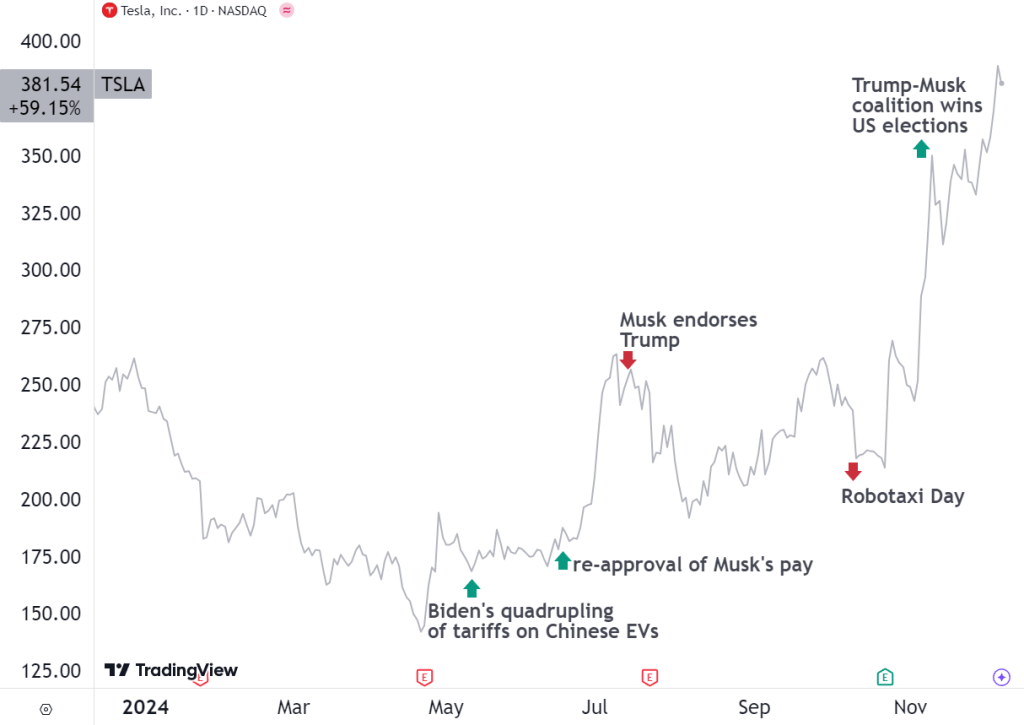
A significant portion of Tesla’s valuation is driven by market sentiment, its compelling narrative, and the almost cult-like following it commands among investors and consumers alike. The narrative premium stems from its visionary leadership under Elon Musk, its disruptive innovation in electric vehicles, battery technology, and autonomous driving, and its potential to revolutionize the energy sector. This narrative premium allows the stock to trade at multiples far exceeding industry averages. Investors are buying into a story of exponential growth, technological superiority, and a transformative impact on society. The brand’s strength, built on innovation, sustainability, and high performance, also contributes to its perceived value, fostering a loyal customer base and investor confidence. This strong sentiment can, however, also contribute to higher volatility, as investor confidence is susceptible to shifts in news cycles, competitive pressures, and macroeconomic developments. The intertwining of a compelling future vision with tangible technological advancements creates a powerful speculative force that propels the stock beyond what current financials might suggest.
Pillars of Future Growth: Diversification and Disruption
Tesla’s long-term stock potential hinges on its ability to execute on multiple growth vectors beyond just electric vehicle sales, leveraging its technological ecosystem and expanding into new, high-margin industries.
Electric Vehicle Market Expansion and Competitive Landscape
Tesla remains a dominant force in the global EV market, benefiting from increasing adoption rates driven by climate concerns, government incentives, and technological advancements. Its ability to scale production efficiently, optimize battery costs, and innovate manufacturing processes (e.g., gigafactories, structural battery packs) has been a key competitive advantage. The expansion into new geographic markets and the introduction of more affordable models are crucial for sustaining volume growth. However, the competitive landscape is intensifying rapidly. Established automotive giants are pouring billions into their EV strategies, and new pure-play EV startups are emerging. Tesla’s continued market leadership will depend on maintaining its technological edge, particularly in battery density and range, while fending off price wars and ensuring supply chain resilience. The demand for EVs is projected to grow significantly, offering a vast addressable market, but Tesla’s share of that market could face erosion if competitors successfully close the gap in technology and brand appeal.
Software, Services, and Recurring Revenue Streams
Perhaps the most underestimated driver of Tesla’s future valuation lies in its high-margin software and services segments. Full Self-Driving (FSD) capability, offered as an upfront purchase or a monthly subscription, represents a potentially massive recurring revenue stream. As the FSD software matures and regulatory approvals broaden, this could unlock substantial profitability. Beyond FSD, Tesla generates revenue from Supercharging network usage, premium connectivity subscriptions, service and maintenance, and potentially future in-car entertainment or data services. These revenue streams carry significantly higher gross margins than vehicle sales, enhancing overall profitability and potentially justifying a higher valuation multiple akin to pure-play software companies. The transition from a hardware-centric model to a blend of hardware and high-margin software/services is a critical aspect of the bull case for Tesla stock. The size and profitability of this segment are difficult to accurately forecast, adding to the speculative element of the stock’s future.
Energy Storage, Solar, and Grid Integration
Tesla’s energy division, comprising solar panels, Solar Roof, Powerwall home battery storage, and utility-scale Megapack systems, represents another substantial growth opportunity. As the world transitions to renewable energy, energy storage solutions are becoming indispensable for grid stability and reliability. Tesla’s vertically integrated approach, combining energy generation with storage, positions it favorably in this rapidly expanding market. The Megapack business, in particular, could see exponential growth as utilities and commercial entities seek to integrate more intermittent renewable sources like solar and wind power. This segment leverages Tesla’s core battery technology expertise and provides diversification away from automotive reliance. The potential for connecting these decentralized energy assets into virtual power plants, optimized by AI, could further enhance their value proposition and contribute significantly to Tesla’s top line and profitability in the coming decades.
Innovation Beyond Automotive: AI and Robotics
Looking further into the future, Tesla’s ventures into artificial intelligence and robotics, exemplified by projects like the Dojo supercomputer and the Optimus humanoid robot, present moonshot opportunities that could redefine the company’s identity and valuation. While currently speculative, these initiatives align with Tesla’s long-term vision of developing advanced AI for real-world applications. If Optimus can achieve practical functionality in manufacturing, logistics, or personal assistance, it could unlock entirely new markets and revenue streams that are currently unquantifiable. Similarly, advancements in general AI through Dojo could be leveraged across all Tesla’s existing businesses, from autonomous driving to manufacturing efficiency, creating synergistic value. These ambitious projects add a significant “optionality” value to Tesla’s stock, where investors are placing a bet on the company’s ability to innovate and disrupt far beyond its current core competencies. However, these are highly speculative endeavors with long development timelines and uncertain commercial viability.
Macroeconomic Headwinds and Tailwinds Affecting Stock Trajectory
Tesla’s stock performance is not solely determined by company-specific fundamentals but is also significantly influenced by broader macroeconomic forces that shape investor appetite and operational realities.
Interest Rates and Cost of Capital
Rising interest rates are generally a headwind for growth stocks like Tesla. Higher rates increase the cost of capital, making it more expensive for companies to borrow for expansion and reducing the present value of future earnings in DCF models. Since a substantial portion of Tesla’s valuation relies on distant future profitability, higher discount rates can significantly depress its theoretical intrinsic value. Moreover, higher rates can divert investor funds from riskier growth assets into safer fixed-income investments, reducing demand for high-volatility stocks. Conversely, a sustained period of low interest rates could provide a tailwind, encouraging investment in growth companies and lowering the hurdle rate for future projects. Monitoring central bank policies and inflationary pressures is crucial for understanding the prevailing interest rate environment and its likely impact on Tesla’s valuation.
Supply Chain Resilience and Commodity Prices
Tesla’s manufacturing prowess is dependent on a robust and reliable supply chain for critical components, particularly batteries, semiconductors, and other raw materials. Disruptions caused by geopolitical events, natural disasters, or pandemics can lead to production delays, increased costs, and missed delivery targets, directly impacting revenue and profitability. Volatility in commodity prices, especially for lithium, nickel, and cobalt, which are essential for EV batteries, can compress margins. Tesla’s efforts to vertically integrate, secure long-term supply agreements, and explore new battery chemistries (e.g., LFP cells) are strategic moves to mitigate these risks. However, the global nature of its supply chain means it remains susceptible to external shocks. A stable and predictable supply chain with manageable commodity costs would provide a significant tailwind for sustained production growth and margin expansion.
Regulatory Environment and Government Incentives
Government policies play a pivotal role in shaping the EV and renewable energy markets. Favorable regulations, such as stricter emissions standards, purchase subsidies for EVs, and tax credits for battery production or energy storage, provide tailwinds for Tesla’s core businesses. These incentives can accelerate EV adoption, reduce manufacturing costs, and enhance the profitability of energy projects. Conversely, adverse regulatory changes, increased trade tariffs, or heightened scrutiny over autonomous driving technology could pose significant headwinds. Geopolitical tensions and trade disputes, particularly between major economies like the US and China, where Tesla has significant manufacturing and sales operations, can also introduce uncertainty and operational challenges. A consistent and supportive global regulatory framework is crucial for Tesla to realize its ambitious growth plans and maximize its market potential.
Risks to Tesla’s Upside Potential
While the growth story is compelling, several risks could cap Tesla’s ultimate stock performance or introduce significant volatility for investors.
Increased Competition and Margin Compression
The initial advantage Tesla held in the EV market is rapidly diminishing as traditional automakers and new startups ramp up their electric offerings. Companies like Volkswagen, General Motors, Ford, Hyundai, BYD, and numerous others are introducing compelling EV models across various price points and segments. This increased competition is likely to lead to price wars, putting pressure on Tesla’s automotive gross margins. While Tesla aims to counter this with cost efficiencies and software-driven revenue, a sustained erosion of its core automotive profitability could dampen investor enthusiasm and force a re-evaluation of its premium valuation. The ability to maintain pricing power and product differentiation in a crowded market will be critical.
Execution Risk in New Segments
Tesla’s ambitious expansion into AI, robotics (Optimus), and extensive energy solutions carries significant execution risk. Developing fully autonomous vehicles that are legally and safely deployable at scale, bringing a humanoid robot to commercial viability, or rapidly scaling utility-grade energy storage installations requires immense capital, talent, and flawless operational execution. Delays, cost overruns, or failure to meet technical milestones in these nascent segments could lead to investor disappointment, particularly given that much of Tesla’s valuation implicitly accounts for the success of these future ventures. The capital intensity of these projects also means that missteps could strain financial resources.
Regulatory and Geopolitical Challenges
Operating globally, Tesla is exposed to a complex web of regulatory frameworks, from vehicle safety and emissions standards to data privacy and labor laws. Regulatory crackdowns on FSD capabilities, anti-trust concerns, or increased environmental scrutiny could impact product development and market access. Geopolitical tensions, especially concerning its manufacturing footprint and sales in key markets like China, present a substantial risk. Trade restrictions, localized protectionist policies, or shifts in diplomatic relations could disrupt supply chains, impact sales, or even lead to asset impairment. The company’s reliance on specific government incentives for EV adoption and charging infrastructure also makes it vulnerable to policy changes.
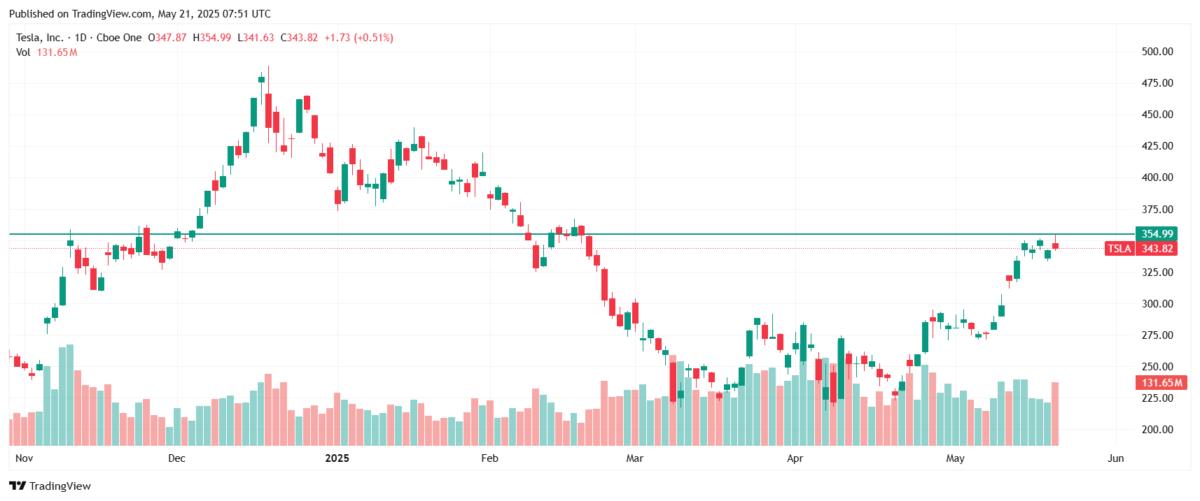
Ultimately, “how high can Tesla stock go” is a question of continued innovation, flawless execution, global market acceptance, and the persistent belief of investors in its long-term vision. The stock’s journey will likely remain volatile, balancing its groundbreaking potential against formidable operational and macroeconomic challenges.
aViewFromTheCave is a participant in the Amazon Services LLC Associates Program, an affiliate advertising program designed to provide a means for sites to earn advertising fees by advertising and linking to Amazon.com. Amazon, the Amazon logo, AmazonSupply, and the AmazonSupply logo are trademarks of Amazon.com, Inc. or its affiliates. As an Amazon Associate we earn affiliate commissions from qualifying purchases.