
Navigating the intricacies of the U.S. tax system can often feel like deciphering a complex financial code. For many taxpayers, the moment of truth arrives when it’s time to actually pay their tax liability. While digital payment methods have become increasingly prevalent and encouraged by the Internal Revenue Service (IRS), sending a physical check remains a common, and sometimes necessary, option for millions. Understanding precisely where to send that check, and under what circumstances, is paramount to ensuring your payment is processed correctly, avoiding penalties, and maintaining good standing with the tax authorities.

This guide delves into the specifics of sending your check to the IRS, offering a professional and insightful overview for individuals, small businesses, and anyone with a tax obligation. We’ll cover the rationale behind mailing a check, the crucial details you need to get right, and how to navigate the various IRS addresses that depend on your specific situation. This isn’t just about an address; it’s about the financial discipline and strategic planning required to manage your tax obligations effectively.
Understanding IRS Payment Methods Beyond the Mailbox
Before we dive deep into the postal labyrinth, it’s crucial to acknowledge the broader landscape of IRS payment options. While this article focuses on mailing checks, a holistic understanding of available methods empowers taxpayers to choose the most efficient and secure route for their unique circumstances. The IRS actively encourages electronic payments due to their speed, accuracy, and reduced processing costs, but understanding why one might still choose to mail a check is also important.
Electronic Payment Options: The IRS’s Preferred Method
The digital age has transformed how we manage our finances, and tax payments are no exception. The IRS has made significant strides in offering convenient and secure electronic payment solutions, which are often the quickest way to ensure your payment is received and recorded.
- IRS Direct Pay: This free service allows you to pay your tax bill or make estimated tax payments directly from your checking or savings account. It’s a straightforward method that doesn’t require pre-registration and allows for scheduling payments up to 365 days in advance. Confirmation is provided immediately, making it a highly reliable option.
- Electronic Federal Tax Payment System (EFTPS): Specifically designed for businesses but also available to individuals, EFTPS offers a more robust platform for managing recurring tax payments. It requires enrollment and provides a history of all payments made, making it excellent for tracking.
- Debit/Credit Card Payments: Through third-party processors, taxpayers can pay their federal taxes using a credit card, debit card, or digital wallet. While convenient, these services typically charge a processing fee, which can add to your overall tax cost. The fee percentage varies by processor and card type, so it’s essential to weigh the convenience against the additional expense.
- Electronic Funds Withdrawal (EFW): When filing your tax return electronically (e-filing), you often have the option to authorize a direct debit from your bank account for any amount due. This integrates the payment directly into the filing process, streamlining compliance.
Choosing an electronic method often minimizes the risk of lost mail, ensures timely receipt, and provides immediate confirmation. However, for those who prefer tangible records, lack immediate access to online banking, or simply feel more secure with a physical check, mailing remains a valid and necessary option.
Why Mailing Still Matters for Some Taxpayers
Despite the push for digital, several reasons compel taxpayers to continue sending checks:
- Preference and Comfort: Some individuals simply prefer the traditional method, feeling more secure with a physical check and a postal receipt.
- Situational Necessity: Certain scenarios, like responding to specific IRS notices that require original documentation, or if an electronic payment system is unavailable for a particular tax form, might necessitate mailing.
- Lack of Digital Access: Not all taxpayers have reliable internet access or are comfortable with online banking.
- Large Payments: For very large payments, some taxpayers may prefer the security protocols associated with cashier’s checks or certified mail.
The Specifics of Mailing a Check: Navigating IRS Addresses
When you decide to send a check to the IRS, the single most critical detail is ensuring it goes to the correct address. Unlike general correspondence, tax payments are routed to specific processing centers based on a confluence of factors, including the type of form you are filing, your state of residence, and sometimes even the amount of payment. Sending your check to the wrong address can cause significant delays, lead to late payment penalties, and create unnecessary stress.
Locating the Correct IRS Mailing Address: It’s Not One-Size-Fits-All
The IRS maintains numerous processing centers across the country, each responsible for different types of tax forms and geographical regions. There is no single “IRS address” for all payments. You must consult the specific instructions for the form you are filing, or the notice you are responding to, to find the accurate mailing address.
- IRS Website: The official IRS website (IRS.gov) is the definitive source for mailing addresses. Navigate to the “Where to File” section, or search for the specific form number (e.g., Form 1040, Form 1040-ES) to find its corresponding instructions, which will list the correct mailing addresses.
- Tax Form Instructions: Every official IRS tax form comes with detailed instructions. Within these instructions, usually towards the beginning or in a dedicated “Where to File” section, you will find a table or list of addresses categorized by state and the type of payment or return.
- IRS Notices: If you are paying in response to an IRS notice (e.g., a CP2000, 501, 503, or assessment), the notice itself will provide the correct mailing address for your payment. It is crucial to use the address printed on the notice.
Key Factors Determining Your IRS Mailing Address
Understanding these factors can help you quickly narrow down the correct address:
- Type of Tax Form: Are you filing an annual income tax return (Form 1040, 1040-SR, 1040-NR)? Or is it an estimated tax payment (Form 1040-ES)? Perhaps a payment for an amended return (Form 1040-X)? Each form type often has distinct mailing instructions.
- Your State of Residence: The IRS generally assigns a specific processing center based on the state where you reside or where your business is located.
- Payment Status (With or Without a Return): Sometimes, the address differs if you are sending a payment with your tax return versus sending a payment without a return (e.g., an estimated tax payment, or a payment for a prior year’s liability).
- Foreign Addresses: If you are a U.S. citizen or resident alien living abroad, there’s typically a single, specific address for all returns and payments from outside the U.S.
Example Scenario: A taxpayer living in California filing a Form 1040 with a payment due would likely send their check to a different IRS processing center than a taxpayer in New York filing the same form. Similarly, if that California taxpayer was making an estimated tax payment for the current year, the address might again be different. Always verify!
Essential Information to Include with Your Check
Sending a check isn’t just about the address; it’s also about ensuring the IRS can correctly attribute the payment to you and your specific tax obligation. Missing or incorrect information can lead to payments being misapplied, resulting in notices for unpaid taxes even if you’ve paid.
When preparing your check:
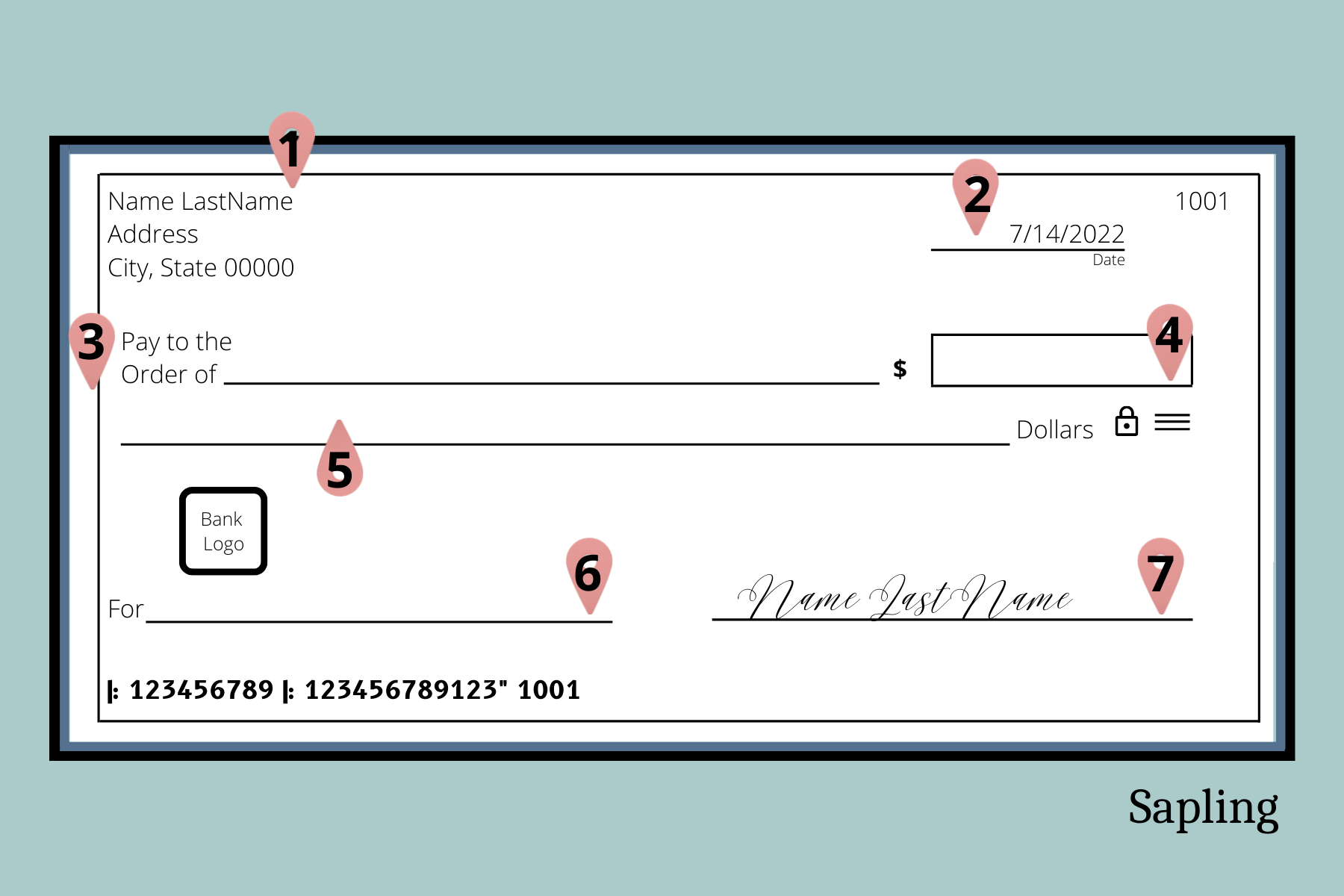
- Make the Check Payable To: “United States Treasury.” Do not abbreviate.
- Write Clearly and Legibly: Use blue or black ink.
- On the Memo Line (Bottom Left of Check): Include the following crucial identifiers:
- Your Tax ID Number: Your Social Security Number (SSN) or Employer Identification Number (EIN). If it’s a joint return, list the primary taxpayer’s SSN.
- The Tax Year: The year for which the payment is being made (e.g., “2023 Tax”).
- The Related Tax Form or Notice Number: For example, “Form 1040,” “Form 1040-ES,” or the specific notice number if you’re responding to one (e.g., “CP2000”).
- Do Not Staple or Paperclip: Do not attach the check to your return or payment voucher with staples or paperclips. This can jam processing equipment. Simply place it loosely with the payment voucher (if applicable) in the envelope.
- Send Payment Voucher (If Applicable): For many payments (like Form 1040-ES or payments with your annual return), there’s a specific payment voucher (e.g., Form 1040-V) that should be included with your check. Fill it out completely and accurately.
Common Scenarios for Sending Checks to the IRS
To further illustrate the practical application of these guidelines, let’s look at common situations where you might need to send a check and the general principles involved.
Paying Your Annual Tax Bill (Form 1040)
If you owe taxes after filing your individual income tax return (Form 1040, 1040-SR, or 1040-NR), and you haven’t opted for electronic funds withdrawal, you’ll need to mail your payment.
- What to include: Your check (made out to “United States Treasury” with SSN, “2023 Tax,” and “Form 1040” in the memo line) and Form 1040-V (Payment Voucher).
- Where to find the address: Refer to the “Where to File” section of the Form 1040 instructions, which will specify the address based on your state of residence.
Estimated Tax Payments (Form 1040-ES)
Individuals who receive income not subject to withholding (e.g., self-employment income, rental income, investment income) often need to make estimated tax payments throughout the year.
- What to include: Your check and the appropriate quarterly Form 1040-ES voucher.
- Where to find the address: The Form 1040-ES instructions contain a table with addresses specific to each state. Ensure you use the address for estimated tax payments, as it may differ from the address for your annual return.
Responding to an IRS Notice or Assessment
If you receive a notice from the IRS indicating an additional tax due (e.g., after an audit, correction, or penalty assessment), the notice itself will be your primary guide.
- What to include: Your check with the SSN/EIN, the tax year, and the specific notice number (e.g., “CP2000” or “Notice 501”) in the memo. Sometimes, a payment stub is included with the notice.
- Where to find the address: The mailing address will be clearly stated on the IRS notice itself. Do not use the address from a tax form’s instructions unless explicitly directed by the notice.
Payment for Amended Returns (Form 1040-X)
If you file an amended return (Form 1040-X) that results in additional tax due, you will also need to send a payment.
- What to include: Your check, clearly indicating your SSN, the amended tax year, and “Form 1040-X” in the memo line. Include the amended return (Form 1040-X) itself.
- Where to find the address: The instructions for Form 1040-X will provide the correct mailing address, which is typically based on your state of residence.
Best Practices for Ensuring Your Payment Reaches the IRS Safely
Making a tax payment, especially a significant one, comes with the responsibility of ensuring it reaches its destination. A lost or delayed payment can result in penalties, interest, and the hassle of resolving the issue with the IRS.
Timeliness and Postmark Rules
- Timeliness is Key: Payments are considered timely if they are postmarked by the due date. The U.S. Postal Service postmark is generally accepted as proof of timely mailing.
- Mail Early: Don’t wait until the last minute. While the postmark technically counts, mailing several days before the deadline provides a buffer against postal delays or unexpected issues.
- Certified Mail: For significant payments, consider using certified mail with a return receipt. This provides undeniable proof that your payment was mailed and received by the IRS, along with the date of delivery. This small expense can save substantial headaches if there’s ever a dispute.
Documenting Your Payment
Maintain meticulous records of your tax payments. This is a fundamental principle of sound personal and business finance.
- Keep a Copy of the Check: Photocopy the front and back of your check after you’ve filled it out.
- Record Date and Confirmation: Note the date you mailed the check, and if you used certified mail, keep the receipt and tracking number.
- File Everything: Keep all relevant documentation—tax return, payment voucher, check copy, postal receipts—in a secure place with your other tax records for at least three years (or longer, depending on your tax situation).
What to Do If Your Check is Lost or Not Cashed
If a reasonable amount of time has passed and your check hasn’t been cashed, or you receive a notice from the IRS stating you owe tax that you’ve already paid:
- Check Your Bank Account: First, verify that the check hasn’t been cashed.
- Contact Your Bank: If it hasn’t been cashed and enough time has passed (usually a few weeks after the payment due date), request a “stop payment” on the original check to prevent fraudulent cashing if it was lost or stolen.
- Resend Payment: Issue a new check for the correct amount.
- Contact the IRS: If you’ve received a notice, call the IRS at the number provided on the notice or the general IRS taxpayer assistance line. Be prepared with all your documentation (copy of original check, bank statements, certified mail receipts). Explain the situation clearly.
Avoiding Common Payment Pitfalls
- Incorrect Tax Year: Double-check that the tax year on your check and payment voucher matches the year you intend to pay.
- Payment Amount Discrepancy: Ensure the amount on your check matches the amount due on your return or notice.
- Outdated Forms/Addresses: Always use the current year’s forms and instructions to ensure you have the most up-to-date mailing address.
- Blank Checks: Never send a blank or incomplete check to the IRS.
The Financial Implications of Late or Incorrect Payments
The IRS is not shy about assessing penalties and interest for non-compliance. Understanding the financial ramifications of late or incorrect payments is a powerful motivator for meticulous adherence to payment procedures.
Understanding Penalties and Interest
- Failure to Pay Penalty: If you don’t pay your taxes by the due date, the IRS may charge a penalty, typically 0.5% of the unpaid taxes for each month or part of a month that taxes remain unpaid, up to a maximum of 25%.
- Failure to File Penalty: If you don’t file your return on time, there’s a separate and often heftier penalty, usually 5% of the unpaid taxes for each month or part of a month that a return is late, up to a maximum of 25% of your unpaid tax. If both apply, the failure-to-file penalty is reduced by the failure-to-pay penalty.
- Interest: In addition to penalties, the IRS charges interest on underpayments. The interest rate is reviewed quarterly and can fluctuate, but it’s typically based on the federal short-term rate plus 3 percentage points. Interest accrues on both the underpayment amount and any unpaid penalties.
These charges can quickly compound, turning a manageable tax bill into a substantial financial burden. This underscores the importance of correctly addressing and timely mailing your payments.
Options for Taxpayers Facing Financial Hardship
If you genuinely cannot pay your tax bill on time, the worst thing to do is ignore it. The IRS offers several options for taxpayers experiencing financial hardship:
- Payment Plan (Installment Agreement): You can request a monthly payment plan, allowing you to pay your tax liability over an extended period, usually up to 72 months. While penalties and interest still apply, they may be reduced for the failure-to-pay penalty.
- Offer in Compromise (OIC): An OIC allows certain taxpayers to resolve their tax liability with the IRS for a lower amount than what they originally owe. This is typically an option for those facing severe financial difficulty and who cannot pay their full tax liability.
- Temporary Delay of Collection: In extreme cases of financial hardship, the IRS may temporarily delay collection until your financial situation improves.
Even if you can’t pay the full amount, always file your return on time and pay as much as you can to minimize penalties and interest.

Conclusion
Sending a check to the IRS, while seemingly a simple task, requires meticulous attention to detail to ensure your payment is accurately attributed and processed. From making sure the check is payable to the “United States Treasury” and including all necessary identifiers in the memo line, to selecting the correct mailing address based on your form and state of residence, each step is critical.
While electronic payment options offer speed and convenience, mailing a check remains a viable and sometimes necessary method for many. By adhering to best practices—mailing early, documenting thoroughly, and being aware of the severe financial implications of errors or delays—you can fulfill your tax obligations confidently and avoid unnecessary penalties. In the complex world of personal finance, precision in tax payments is a cornerstone of sound financial management, and knowing exactly “where to send your check to the IRS” is a fundamental piece of that puzzle.
aViewFromTheCave is a participant in the Amazon Services LLC Associates Program, an affiliate advertising program designed to provide a means for sites to earn advertising fees by advertising and linking to Amazon.com. Amazon, the Amazon logo, AmazonSupply, and the AmazonSupply logo are trademarks of Amazon.com, Inc. or its affiliates. As an Amazon Associate we earn affiliate commissions from qualifying purchases.