
In the realm of personal finance, numbers are the map, but percentages are the compass. While your bank balance tells you how much money you have today, percentages tell you the story of where that money is going, how fast it is growing, and what portion of your future is secured. Whether you are calculating a tip at a restaurant, determining your tax liability, or projecting the growth of a retirement portfolio, understanding how to “take” and apply percentages is the most fundamental skill in the modern investor’s toolkit.

This guide moves beyond basic arithmetic to explore the strategic application of percentages in money management. By mastering these ratios, you transition from a passive observer of your bank account to an active architect of your financial destiny.
The Fundamentals of Financial Percentages: The Math of Growth
To navigate the world of finance, one must first be comfortable with the mechanics of the percentage. At its core, a percentage is a way to express a number as a fraction of 100. In money management, this allows for an “apples-to-apples” comparison between different financial instruments, regardless of their total value.
The Simple Calculation of Interest and Gains
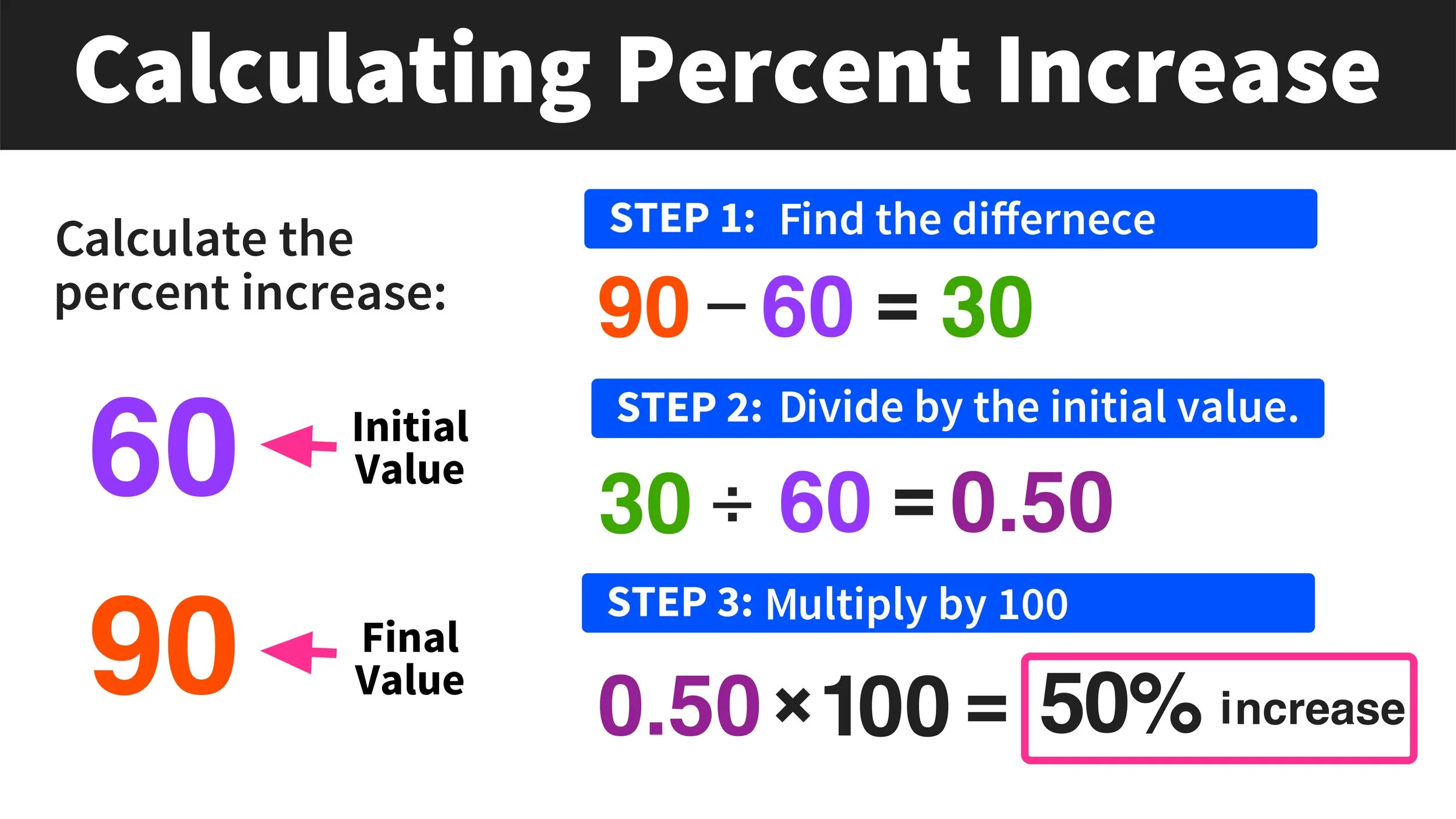
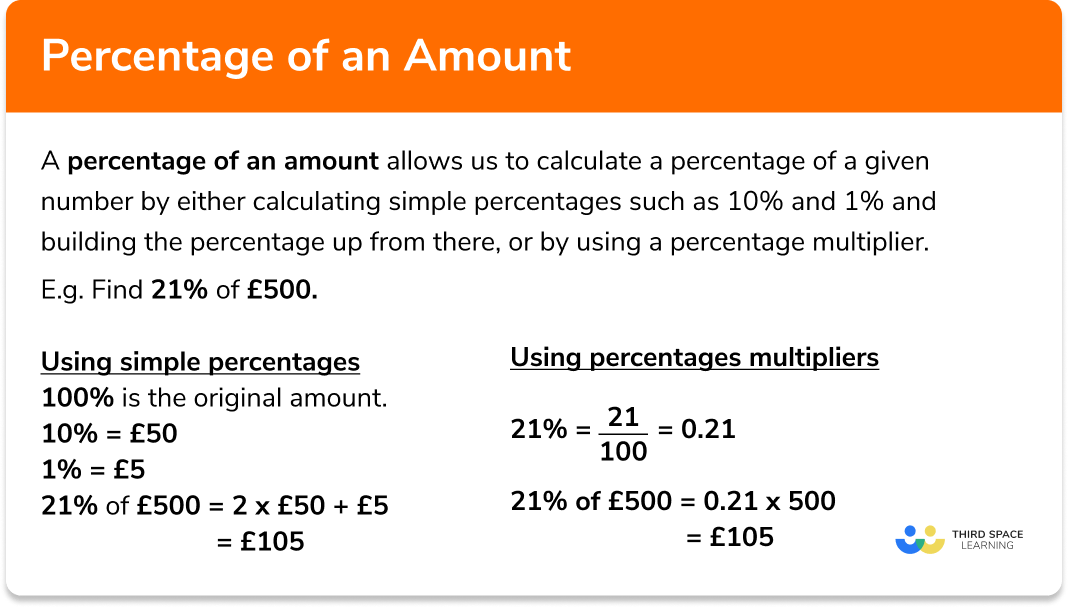
The most basic way to take a percentage in finance is calculating a return or a cost. To find the percentage of a total, you divide the part by the whole and multiply by 100. For example, if you earned $500 on a $10,000 investment, your return is (500 / 10,000) * 100, which equals 5%.
Understanding this calculation is vital when comparing high-yield savings accounts or bond coupons. A “5% APY” (Annual Percentage Yield) is a standardized way for banks to tell you exactly how much your money will work for you over a year. When you know how to take these percentages, you can quickly discern that a 0.5% difference in an interest rate on a $200,000 mortgage translates to tens of thousands of dollars over thirty years.
Understanding Compounding: The Percentage That Builds Wealth
While simple percentages measure a static moment in time, compound interest represents the “percentage on top of a percentage.” This is the engine of wealth creation. When you earn a 7% return on an investment, and that 7% is reinvested to earn another 7% the following year, you are witnessing the exponential power of percentages.
To master this, investors often use the “Rule of 72.” By dividing 72 by your annual percentage return, you can estimate how many years it will take for your money to double. If you are “taking” a 10% annual return from the stock market, your money doubles roughly every 7.2 years. This mental math is essential for long-term retirement planning and setting realistic financial goals.
Strategic Allocation: The 50/30/20 Rule and Beyond
Once you understand how to calculate percentages, the next step is learning how to “take” them out of your income to build a sustainable lifestyle. Budgeting is effectively the art of dividing 100% of your net income into productive categories.
The Core Budgeting Framework
The most famous percentage-based budgeting system is the 50/30/20 rule. This framework suggests that you should take your after-tax income and allocate it as follows:
- 50% to Needs: This includes housing, utilities, groceries, and insurance.
- 30% to Wants: This covers dining out, travel, hobbies, and entertainment.
- 20% to Financial Goals: This is the most critical percentage, dedicated to debt repayment, emergency funds, and retirement investments.
The beauty of using percentages rather than fixed dollar amounts is scalability. Whether you earn $40,000 or $400,000 a year, the 50/30/20 rule keeps your lifestyle in check. If your “Needs” start taking up 65% of your income, the percentage calculation acts as an early warning system that you are over-leveraged in your housing or transport costs.
Customizing Percentages for Your Lifecycle
As you progress through different stages of life, your percentage allocations should shift. A young professional in their 20s might take a higher percentage for “Wants” if their “Needs” are low, but a more savvy individual would pivot that extra percentage into “Financial Goals” to take advantage of the compounding mentioned earlier.
For those pursuing FIRE (Financial Independence, Retire Early), the “Savings Rate” becomes the most important percentage in their life. Many in this community strive to take 50% or even 70% of their income and move it directly into income-producing assets. By focusing on the percentage rather than the dollar amount, they create a clear timeline for when their passive income will eventually cover 100% of their expenses.
Evaluating Investment Performance and Risk
In the world of investing, taking percentages is how we measure success and manage the inherent risks of the market. Without these ratios, an investor is essentially flying blind.
Calculating ROI and Total Return
The “Return on Investment” (ROI) is the gold standard for measuring how hard your money is working. However, professional investors look deeper by taking “Total Return” percentages into account, which include capital gains, dividends, and interest.
If you buy a stock at $100 and it rises to $105, you have a 5% capital gain. If that stock also pays a $2 dividend, your total return is 7%. Learning to take these percentages allows you to compare different asset classes—such as real estate versus stocks—to see which truly offers the best efficiency for your capital.
The Role of Expense Ratios in Long-Term Gains
One of the most overlooked “takes” in finance is the expense ratio of a mutual fund or ETF. This is the percentage of your investment that the fund manager takes every year as a fee. While 1% might sound like a small percentage, it is a massive drag on wealth over time.
Consider two portfolios growing at 7% annually over 30 years. If Portfolio A has an expense ratio of 0.1% and Portfolio B has an expense ratio of 1.1%, the difference in the final balance can be hundreds of thousands of dollars. When you know how to take the percentage of fees out of your projected growth, you realize that a “small” fee can actually consume 25-30% of your total potential wealth over a lifetime.
Navigating the Percentage of Debt and Taxes
Not all percentages work in your favor. In the world of money, debt and taxes are the two primary areas where percentages are “taken” from you. Managing these effectively is the key to wealth preservation.
Debt-to-Income Ratios: The Lender’s Perspective
When you apply for a mortgage or a car loan, the bank looks at your “Debt-to-Income” (DTI) ratio. This is calculated by taking your total monthly debt payments and dividing them by your gross monthly income.
Lenders generally prefer a DTI of 36% or lower. If you know how to calculate this percentage yourself, you can determine your “borrowing power” before ever walking into a bank. Furthermore, understanding the “Credit Utilization Ratio”—the percentage of your available credit limits that you are actually using—is the single most important factor in maintaining a high credit score. Keeping this percentage below 30% is a hallmark of financial health.
Marginal vs. Effective Tax Rates
Taxes are perhaps the most complex area of percentage-based math. Most people are confused by “Marginal Tax Brackets,” erroneously believing that if they move into a 24% bracket, all their money is taxed at that rate.
In reality, you must understand your “Effective Tax Rate.” This is the actual percentage of your total income that goes to the government after accounting for deductions and the progressive nature of the tax code. By taking the total tax paid and dividing it by your total income, you find your true tax burden. This percentage is crucial for making decisions about tax-advantaged accounts like 401(k)s or IRAs, which allow you to keep a higher percentage of your earnings for yourself.
Conclusion: Thinking in Ratios
To truly master your money, you must stop thinking in absolute dollars and start thinking in percentages. Dollars are static, but percentages represent relationships, growth, and efficiency.
When you look at a potential purchase, don’t just ask “Can I afford it?” Ask “What percentage of my monthly income does this represent?” When you look at your savings, don’t just look at the balance; look at the percentage of your “Financial Independence” goal that you have achieved. By constantly “taking percentages” of your financial life, you gain a macro-perspective that allows for better decision-making, reduced anxiety, and a much clearer path to long-term prosperity. In the language of money, percentages aren’t just math—they are the blueprint for freedom.
aViewFromTheCave is a participant in the Amazon Services LLC Associates Program, an affiliate advertising program designed to provide a means for sites to earn advertising fees by advertising and linking to Amazon.com. Amazon, the Amazon logo, AmazonSupply, and the AmazonSupply logo are trademarks of Amazon.com, Inc. or its affiliates. As an Amazon Associate we earn affiliate commissions from qualifying purchases.