
Navigating the intricacies of the U.S. tax system can often feel like deciphering a complex puzzle. While many employed individuals rely on W-2 withholdings to manage their tax obligations, a significant segment of the population, including freelancers, small business owners, investors, and those with various forms of un-taxed income, must proactively address their tax burden through federal estimated tax payments. This mechanism ensures that taxpayers meet their obligations throughout the year, rather than facing a massive bill – and potentially penalties – come tax season. Understanding when, why, and how to pay these estimated taxes is crucial for sound financial management and compliance with IRS regulations. This guide will demystify the process, offering a clear roadmap for fulfilling your estimated tax responsibilities efficiently and accurately.
Understanding Federal Estimated Taxes: Who Pays and Why?
For many, the concept of estimated taxes remains a mystery until a significant life change, such as starting a business or delving into the gig economy, thrusts them into this realm. Far from being an optional payment, estimated taxes are a mandatory component of the “pay-as-you-go” tax system implemented by the United States government. This system is designed to ensure a steady stream of tax revenue throughout the year, preventing taxpayers from accumulating a large, unmanageable tax liability that could be difficult to settle at once.
What Are Estimated Taxes?
Estimated taxes are payments made directly to the Internal Revenue Service (IRS) by individuals and businesses that do not have federal income tax withheld from their income, or who do not have enough withheld. These payments cover not only federal income tax but also other taxes like self-employment tax (Social Security and Medicare), and in some cases, the Alternative Minimum Tax (AMT). Essentially, if you expect to owe at least $1,000 in tax for the year from sources other than regular employment wages, you’re likely required to pay estimated taxes. For corporations, this threshold is $500.
Who Is Required to Pay?
The IRS outlines specific criteria for who needs to pay estimated taxes. Primarily, this includes individuals who receive income from sources that aren’t subject to regular payroll withholding. Common scenarios include:
- Self-Employed Individuals: Freelancers, independent contractors, consultants, and sole proprietors are classic examples. They are responsible for both the employer and employee portions of Social Security and Medicare taxes (self-employment tax), in addition to income tax.
- Gig Economy Workers: Individuals earning income through platforms like ridesharing, food delivery, or online marketplaces typically fall into this category.
- Investors: Those with significant income from dividends, interest, capital gains, or rental properties often need to pay estimated taxes, especially if these earnings are substantial and not offset by losses or covered by other withholdings.
- Retirees with Untaxed Income: Individuals receiving pensions or annuities where insufficient tax is withheld, or those with large IRA distributions, may need to make estimated payments.
- Those with Insufficient Withholding: Even individuals who receive a W-2 from an employer might need to pay estimated taxes if their regular wage withholding is insufficient to cover their total tax liability, perhaps due to a second job, significant investment income, or a spouse’s lower withholding.
The key is that if you expect to owe more than a certain amount of tax ($1,000 for individuals, $500 for corporations) and don’t have enough tax withheld from other sources, you must pay estimated taxes. Failure to do so can result in penalties.
The Rationale Behind Estimated Payments
The “pay-as-you-go” system is fundamental to the U.S. tax structure. It prevents taxpayers from facing an overwhelming tax bill at the end of the year, which could lead to financial hardship or non-payment. For the government, it ensures a consistent flow of revenue to fund public services. By requiring payments throughout the year, the IRS aims to smooth out financial obligations for both the taxpayer and the government. Penalties for underpayment are levied to encourage compliance and ensure that individuals contribute their fair share periodically, rather than in one lump sum.
Calculating Your Estimated Tax Liability
The most challenging aspect of paying federal estimated taxes often lies in accurately calculating the amount due. Unlike W-2 employees whose employers handle the withholding calculations, those required to pay estimated taxes must essentially become their own tax preparers throughout the year. The goal is to estimate your annual income, deductions, credits, and ultimately, your tax liability, as accurately as possible to avoid penalties for underpayment.
The 1040-ES Worksheet: Your Starting Point
The IRS Form 1040-ES, Estimated Tax for Individuals, is an invaluable resource. It includes a worksheet designed to help you project your income and deductions for the entire tax year. While you don’t submit the worksheet itself, it guides you through the process of estimating:
- Adjusted Gross Income (AGI): This involves projecting all sources of income (self-employment, interest, dividends, capital gains, rental income, etc.) and subtracting any above-the-line deductions.
- Deductions and Exemptions: Estimate your standard deduction or itemized deductions, whichever you anticipate using.
- Credits: Factor in any tax credits you expect to qualify for (e.g., child tax credit, education credits).
- Self-Employment Tax: If you’re self-employed, you’ll calculate your projected self-employment tax, which includes Social Security and Medicare taxes. The 1040-ES worksheet helps you calculate the deductible portion of this tax as well.
- Total Tax: Combine your income tax and self-employment tax.
- Withholding and Prior Payments: Subtract any tax already withheld from wages or previous estimated tax payments made. The remaining amount is your estimated tax liability for the year.
The worksheet then helps you divide this total into four quarterly payments. It’s crucial to be as realistic as possible with your income projections. Overestimating income might lead to overpaying taxes, while underestimating could result in penalties.
Projecting Your Income and Deductions
Accurate projection is the bedrock of effective estimated tax planning. For those with relatively stable income, using the previous year’s tax return as a baseline can be a good starting point, adjusting for any anticipated changes in income or expenses. However, for many self-employed individuals or those with fluctuating income (e.g., seasonal businesses, variable investment returns), this can be more complex.
- Track Income and Expenses Diligently: Keep meticulous records of all income earned and business expenses incurred. Using accounting software or even a detailed spreadsheet can make this process much smoother.
- Monitor Changes: Be prepared to adjust your estimates throughout the year. If your income significantly increases or decreases, or if you incur large unexpected expenses, you should recalculate your estimated payments for the remaining quarters.
- Consider Major Life Events: Marriage, divorce, the birth of a child, purchasing a home, or a major change in employment status can all impact your tax situation and necessitate a revision of your estimated taxes.
The Safe Harbor Rules: Avoiding Penalties
Even with the best projections, life can be unpredictable. To protect taxpayers from penalties for underpayment, the IRS provides “safe harbor” rules. If you meet one of these conditions, you generally won’t face a penalty, even if your actual tax liability ends up being higher than your estimated payments:
- 90% Rule: You pay at least 90% of your current year’s tax liability through withholding and estimated payments.
- 100% Rule (or 110% Rule for Higher Earners): You pay 100% of your previous year’s tax liability through withholding and estimated payments. If your Adjusted Gross Income (AGI) in the prior year was over $150,000 ($75,000 for married filing separately), this threshold increases to 110% of your previous year’s tax liability.
Meeting either of these safe harbor rules ensures you avoid underpayment penalties. For many, especially those with fluctuating income, aiming for the 100% (or 110%) safe harbor based on the prior year’s taxes is often the most straightforward and reliable strategy.
The Estimated Tax Payment Schedule
Once you’ve calculated your annual estimated tax liability, the next step is to divide it into quarterly payments and ensure they are submitted on time. Unlike a single annual filing, estimated taxes demand ongoing attention throughout the year.
Quarterly Deadlines: A Critical Overview
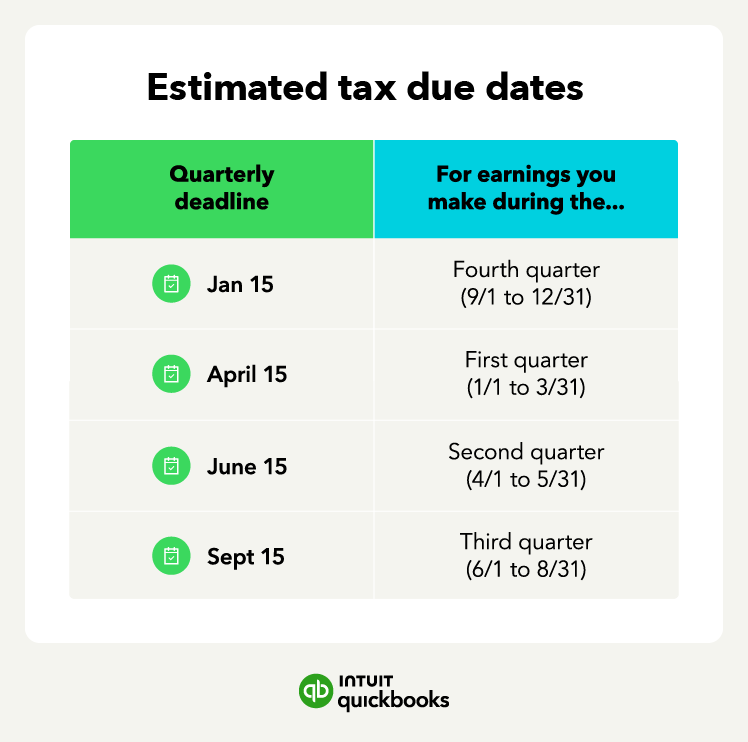
The IRS has specific due dates for estimated tax payments, generally falling on the 15th of the month following the end of each quarter. If a due date falls on a weekend or holiday, the deadline shifts to the next business day. The standard schedule is:
- Payment 1 (January 1 to March 31 income): Due April 15
- Payment 2 (April 1 to May 31 income): Due June 15
- Payment 3 (June 1 to August 31 income): Due September 15
- Payment 4 (September 1 to December 31 income): Due January 15 of the next year
It’s important to note that these payments cover income earned during those periods, not necessarily the previous calendar quarter’s income. For example, the April 15 payment covers income earned from January 1 to March 31. Failing to pay by these deadlines, or underpaying, can trigger penalties, even if you eventually pay all your taxes by the annual filing deadline.
Special Considerations for Farmers, Fishermen, and Irregular Income
Certain groups have slightly different rules:

- Farmers and Fishermen: If at least two-thirds of your gross income is from farming or fishing, you have two options: pay all your estimated tax by January 15 of the following year, or file your annual return by March 1 and pay all the tax due at that time.
- Irregular Income: For those whose income fluctuates significantly throughout the year (e.g., a business that earns most of its revenue in one season), the standard equal quarterly payments might lead to an overpayment in early quarters and an underpayment later. In such cases, the annualized income method can be used. This method allows you to adjust your quarterly payments based on when you actually receive your income. You’ll use Form 2210, Underpayment of Estimated Tax by Individuals, Estates, and Trusts, Part III, to calculate and justify these unequal payments. While more complex, it can help avoid underpayment penalties if your income is heavily weighted toward the end of the year.
What Happens if You Miss a Deadline?
Missing an estimated tax payment deadline, or significantly underpaying, generally results in an underpayment penalty. The IRS calculates this penalty based on the amount of underpayment, the period it was unpaid, and the applicable interest rate. The penalty is not a flat fee; it accrues interest.
There are, however, a few exceptions to the penalty:
- You owe less than $1,000 in tax after subtracting your withholding and refundable credits.
- You paid 100% (or 110% for high earners) of your prior year’s tax liability.
- You had an unexpected casualty, disaster, or other unusual circumstance (IRS may grant a waiver).
- You retired after age 62 or became disabled during the tax year, and your underpayment was due to reasonable cause, not willful neglect.
If you realize you’ve missed a payment or underpaid, it’s generally best to pay the amount due as soon as possible to minimize potential penalties. You can also increase subsequent estimated payments to catch up.
Methods for Making Your Estimated Tax Payments
The IRS offers several convenient and secure methods for making estimated tax payments, catering to various preferences. Choosing the right method can streamline the process and ensure your payments are recorded accurately and on time.
IRS Direct Pay: The Simplest Online Method
For most individuals, IRS Direct Pay is the easiest and quickest way to make a payment. It allows you to pay directly from your checking or savings account, free of charge. You can schedule payments up to 365 days in advance, view your payment history, and receive email confirmations. This method is ideal for one-off payments or scheduling your four quarterly payments in advance.
How it works:
- Visit the IRS Direct Pay website.
- Select the reason for payment (Estimated Tax), the applicable tax year, and your identity verification method (e.g., last five digits of SSN, date of birth, filing status).
- Enter your bank account information (routing and account number).
- Specify the payment amount and schedule the payment date.
- Confirm and receive your confirmation number.
EFTPS: For Business Owners and Frequent Filers
The Electronic Federal Tax Payment System (EFTPS) is a robust system primarily used by businesses but also available to individuals. It requires enrollment and is a bit more involved than Direct Pay, but it offers more features, such as payment history for up to 15 months and the ability to designate payments for various federal taxes. If you anticipate making many federal tax payments throughout the year, EFTPS might be a good fit.
How it works:
- Enroll online at EFTPS.gov or by mail. You’ll receive a PIN via postal mail.
- Once enrolled, log in using your SSN/EIN, PIN, and password.
- Select “Make a Payment,” choose the type of tax (e.g., Form 1040ES estimated tax), enter the amount, and select the payment date.
- Confirm the payment. You’ll receive an immediate confirmation number.
It’s recommended to schedule EFTPS payments at least a day in advance of the deadline to ensure they are processed on time.
Paying by Mail: Traditional and Reliable
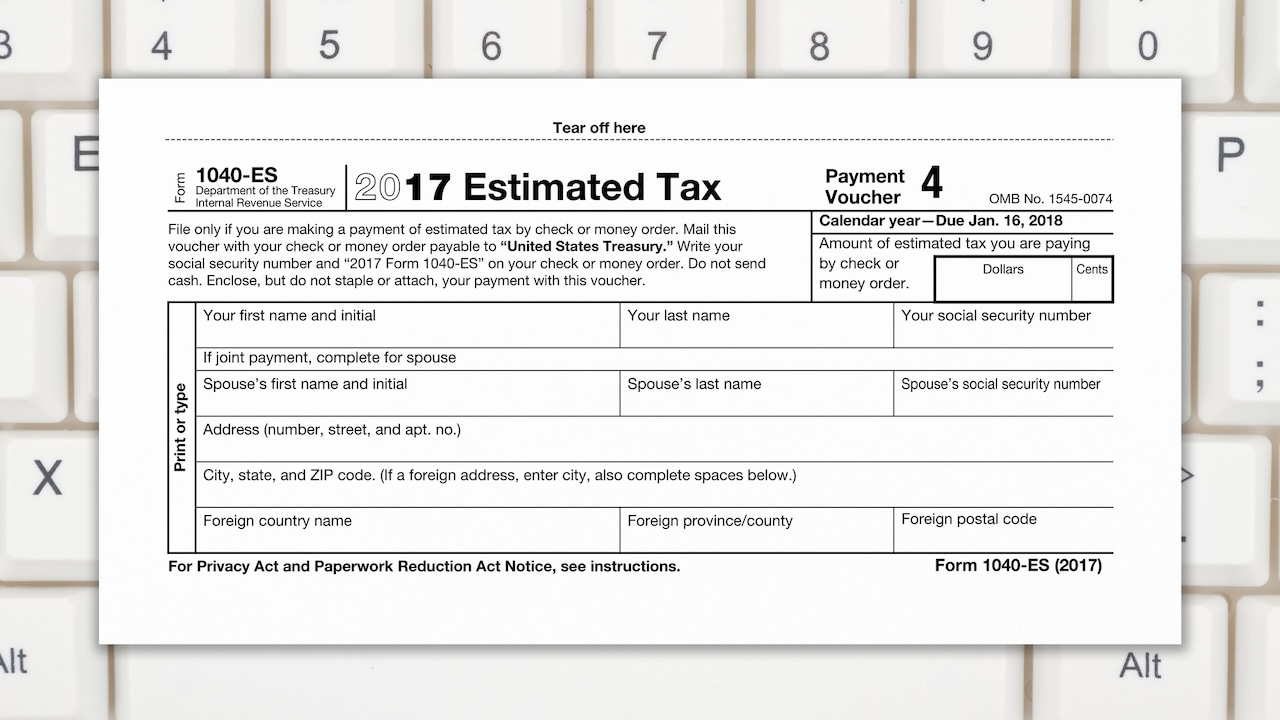
For those who prefer traditional methods, you can still pay your estimated taxes by mail using a check or money order. When mailing a payment, you must include a Form 1040-ES payment voucher for the correct tax year and payment period. These vouchers are found within the Form 1040-ES package.
How it works:
- Make your check or money order payable to the “U.S. Treasury.”
- On the check/money order, write your name, address, daytime phone number, Social Security number (SSN), the tax year, and “Form 1040-ES.”
- Tear off and complete the appropriate payment voucher from Form 1040-ES.
- Mail the payment voucher and your check/money order to the IRS address specified in the Form 1040-ES instructions for your state.
- Allow ample time for mail delivery, especially around deadlines.
Other Payment Options: Credit Card and Tax Software
- Credit Card/Debit Card/Digital Wallet: You can pay estimated taxes using a credit card, debit card, or digital wallet through third-party payment processors. While convenient, these processors typically charge a small fee (which can range from 1.87% to 2.25% for credit cards, or a flat fee for debit cards), which can add up, especially for larger payments.
- Tax Software: Many tax preparation software programs (e.g., TurboTax, H&R Block) allow you to calculate and schedule estimated tax payments directly through their platforms. This can be a convenient option if you’re already using the software for other tax planning.
Regardless of the method chosen, always retain proof of payment for your records. This includes confirmation numbers for electronic payments or copies of checks for mailed payments.
Strategies for Managing and Adjusting Estimated Taxes
Effective management of estimated taxes goes beyond simply calculating and submitting payments. It involves continuous monitoring, accurate record-keeping, and the willingness to adjust your strategy as your financial situation evolves. Proactive management can prevent surprises, minimize penalties, and contribute to overall financial peace of mind.
Dynamic Financial Planning: Adapting to Income Changes
Your income and expenses are rarely static, especially if you’re self-employed or have diverse income streams. Therefore, your estimated tax plan shouldn’t be either.
- Quarterly Reviews: Make it a habit to review your income, expenses, and potential tax liability at the end of each quarter (or even monthly). If you notice a significant deviation from your initial projections, adjust your remaining estimated tax payments. For instance, if you had a particularly profitable second quarter, you might need to increase your third and fourth quarter payments to catch up. Conversely, if income drops, you can reduce subsequent payments.
- Annualized Income Method: As mentioned earlier, if your income varies substantially throughout the year, explore the annualized income method. This allows you to pay your tax as you earn it, preventing you from overpaying in slow periods or underpaying in busy ones. While it requires more detailed record-keeping, it can be a valuable tool for managing cash flow and avoiding penalties.
- Adjust Withholding: If you also have W-2 income, consider adjusting your Form W-4 with your employer. Increasing your withholding for the remaining pay periods can be an effective way to cover a shortfall in estimated taxes without having to make separate payments. This is often an easier solution than making additional estimated payments, as your employer handles the remittance.
Record-Keeping and Documentation Best Practices
Meticulous record-keeping is paramount for managing estimated taxes and for overall tax compliance. Should the IRS ever question your payments or calculations, robust documentation will be your best defense.
- Organized Financial Records: Keep all income statements, expense receipts, bank statements, and investment reports organized. Whether digital or physical, a consistent system is key.
- Payment Confirmations: Save every confirmation number from electronic payments or proof of mailing for physical checks.
- Worksheets and Calculations: Keep copies of your Form 1040-ES worksheets or any other calculations you used to determine your estimated payments. This demonstrates your due diligence in trying to accurately assess your liability.
- Dedicated Account: Consider setting aside a portion of your self-employment or un-taxed income into a separate savings account specifically for taxes. This acts as a “tax escrow,” ensuring funds are available when payments are due and preventing accidental spending of your tax money.
When to Seek Professional Guidance
While this guide provides a comprehensive overview, some situations warrant professional tax advice.
- Complex Financial Situations: If you have multiple income streams, significant investments, operate a complex business structure, or have experienced major life changes, a qualified tax professional (CPA, Enrolled Agent) can provide personalized guidance.
- Uncertainty About Calculations: If you’re unsure about how to accurately project your income, deductions, or apply the safe harbor rules, a professional can ensure your calculations are correct and minimize your risk of penalties.
- Penalty Abatement: If you’ve received an underpayment penalty and believe you have a reasonable cause for it (e.g., casualty, disaster, or other unusual circumstances), a tax professional can help you navigate the process of requesting penalty abatement from the IRS.
- Business Growth: As your business grows, your tax situation will likely become more complex. Regular consultation with a tax professional can help you optimize your tax strategy, plan for future growth, and remain compliant.
Paying federal estimated taxes is a critical responsibility for many taxpayers. By understanding the “why,” accurately calculating your liability, adhering to the payment schedule, utilizing convenient payment methods, and adopting proactive management strategies, you can fulfill your obligations with confidence and avoid unnecessary stress or penalties. With careful planning and diligent record-keeping, managing estimated taxes can become a smooth and integrated part of your financial life.
aViewFromTheCave is a participant in the Amazon Services LLC Associates Program, an affiliate advertising program designed to provide a means for sites to earn advertising fees by advertising and linking to Amazon.com. Amazon, the Amazon logo, AmazonSupply, and the AmazonSupply logo are trademarks of Amazon.com, Inc. or its affiliates. As an Amazon Associate we earn affiliate commissions from qualifying purchases.