
Navigating the complexities of tax season can be daunting for individuals and businesses alike. Beyond the arduous task of calculating your tax liability, a crucial, often stress-inducing step is figuring out how to actually send that payment to the Internal Revenue Service (IRS). Whether you owe a balance from your annual return, need to make an estimated tax payment, or are settling an overdue amount, understanding the various payment methods available is essential for ensuring your financial obligations are met accurately and on time. Making a timely payment not only helps you avoid penalties and interest but also contributes to the smooth functioning of the national economy. This comprehensive guide will demystify the process, exploring the array of options the IRS provides to make tax payments, offering insights into their benefits, limitations, and best practices.
Understanding Your IRS Payment Obligations and Deadlines
Before diving into how to pay, it’s crucial to understand when and why you need to pay. The IRS enforces strict deadlines and has clear expectations regarding who needs to remit payments and under what circumstances. A foundational understanding of these obligations is the first step toward effective tax management.
Who Needs to Pay and When?
Most taxpayers are familiar with the annual tax deadline, typically April 15th (or the next business day if it falls on a weekend or holiday). This is when individual income tax returns (Form 1040) are due, and any outstanding tax balance for the previous year must be paid. However, not all payments align with this single date.
- Individuals with Withholding: If you’re an employee, your employer typically withholds income tax from your paychecks throughout the year. If the amount withheld is less than your total tax liability, you’ll owe the difference at tax time.
- Self-Employed Individuals and Gig Workers: If you’re self-employed, a freelancer, or a gig worker, or if you receive income from sources not subject to withholding (like interest, dividends, or rental income), you’re generally required to make estimated tax payments quarterly. These payments cover income tax, self-employment tax (Social Security and Medicare), and other taxes. The four estimated tax deadlines are typically April 15, June 15, September 15, and January 15 of the following year.
- Businesses: Corporations and other business entities have their own estimated tax requirements and filing deadlines, which can vary based on their fiscal year.
- Payment Plans and Extensions: Even if you file an extension for your tax return, an extension to file is not an extension to pay. Any tax due should still be paid by the original deadline to avoid penalties and interest. If you can’t pay by the deadline, the IRS offers various payment solutions, which we’ll explore shortly.
What Happens If You Can’t Pay?
Discovering you owe the IRS more than you can comfortably afford can be a source of significant anxiety. However, ignoring the issue is the worst possible approach. The IRS offers several pathways for taxpayers facing financial hardship:
- Short-Term Payment Plan: This allows you up to 180 days to pay your tax liability in full, though interest and penalties still apply.
- Offer in Compromise (OIC): An OIC allows certain taxpayers to resolve their tax liability with the IRS for a lower amount than what they originally owe. This is typically an option when taxpayers are in significant financial distress and cannot pay the full amount due. The IRS considers your ability to pay, income, expenses, and asset equity when evaluating an OIC.
- Installment Agreement: If you need more time than a short-term plan allows, an installment agreement lets you make monthly payments for up to 72 months. While penalties and interest still accrue, setting up an agreement can prevent further collection actions.
- Penalty Abatement: In certain situations, the IRS may waive penalties due to reasonable cause, such as a natural disaster, serious illness, or other unavoidable circumstances. Interest, however, is rarely abated.
Understanding these options empowers taxpayers to proactively address their obligations, rather than succumbing to the stress of an unpaid tax bill.
Digital and Online Payment Methods for IRS Taxes
In today’s digital age, the IRS has embraced technology to make tax payments more convenient, secure, and efficient. Online payment methods are often the quickest way to ensure your payment is received and processed, and many offer instant confirmation.
IRS Direct Pay: The Free and Secure Option
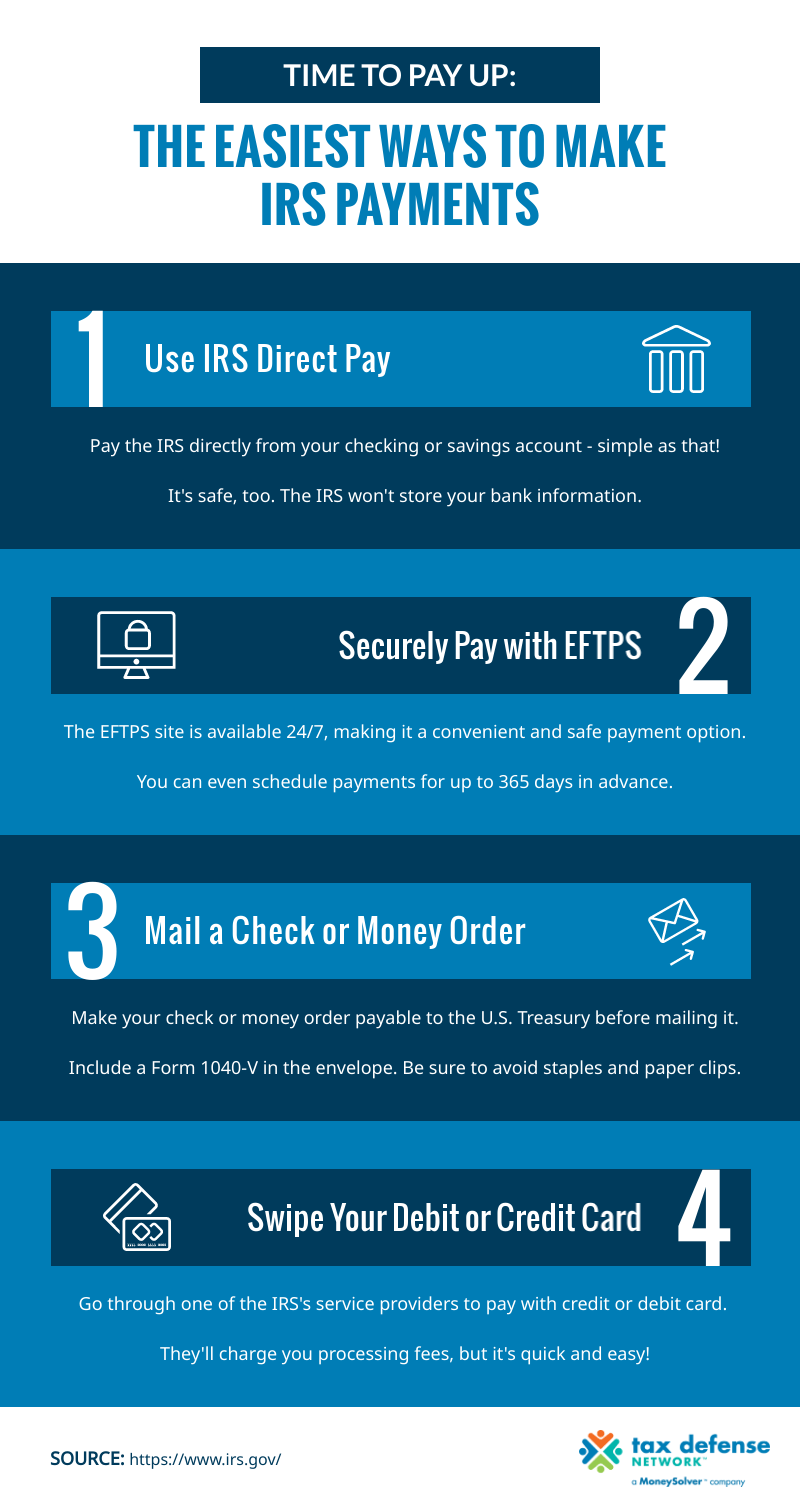
For most individual taxpayers, IRS Direct Pay is the recommended method. It’s a free, secure, web-based service that allows you to pay your tax bill directly from your checking or savings account.
- How it Works: You visit the IRS Direct Pay website, select the type of payment (e.g., balance due, estimated tax, amended return), enter your tax information (e.g., Social Security number, filing status, date of birth) for verification, and provide your bank routing and account number.
- Benefits: It’s completely free, offers immediate confirmation, and is available 24/7. You can schedule payments up to 365 days in advance and even modify or cancel payments up to two business days before the scheduled date.
- Payments Covered: This service handles various payment types, including Form 1040 series payments (annual taxes, estimated taxes), amended return payments, and certain payment plan installments.
Paying by Debit Card, Credit Card, or Digital Wallet
For those who prefer the convenience of plastic or digital solutions, the IRS allows payments via debit cards, credit cards, or digital wallets (e.g., PayPal, Click to Pay). These payments are processed through third-party payment processors, which charge a fee for their service.
- Fees: While the IRS itself does not charge for these payments, the third-party processors do. Fees vary depending on the processor and payment method (credit card fees are typically a percentage of the payment, while debit card fees are usually a flat, lower rate).
- Benefits: This method offers immediate payment and, for credit card users, the potential to earn rewards points or cash back. It can also be a viable option if you need to pay quickly and don’t have sufficient funds in your bank account, allowing you to pay now and settle with your credit card company later (though interest charges on the card itself would apply).
- Process: You choose a processor from the IRS’s approved list, visit their website (or use their app), and follow their instructions to make the payment. You’ll receive a confirmation number from the processor.
Electronic Federal Tax Payment System (EFTPS)
EFTPS is a free service provided by the U.S. Department of Treasury. While primarily designed for businesses and federal agencies, individual taxpayers who make estimated tax payments frequently can also benefit from its robust features.
- Enrollment: Unlike IRS Direct Pay, EFTPS requires enrollment, which can take 5-7 business days to complete as a Personal Identification Number (PIN) is mailed to you.
- Scheduling Payments: Once enrolled, you can schedule payments up to 365 days in advance, a significant advantage for those who like to plan their finances meticulously.
- Benefits: EFTPS offers a comprehensive payment history, providing a detailed record of all your federal tax payments. It’s highly reliable and secure, making it ideal for those who regularly make multiple tax payments. It supports all federal taxes, including income tax, employment tax, excise tax, and corporate tax.
Traditional and Alternative Payment Options
While digital methods offer speed and convenience, the IRS also maintains traditional payment avenues for those who prefer or require them. Additionally, for specific situations, alternative options ensure that no taxpayer is left without a way to fulfill their obligations.
Paying by Mail with a Check or Money Order
The classic method of mailing a physical check or money order remains a viable option. It’s straightforward but requires careful attention to detail and consideration of processing times.
- Process: Make your check or money order payable to the “U.S. Treasury.” On the check, write your full name, address, daytime phone number, Social Security number (or EIN for businesses), the tax year, and the related tax form or notice number (e.g., “2023 Form 1040”).
- Payment Voucher: Crucially, you must include the appropriate payment voucher (e.g., Form 1040-V for individual income tax, Form 1040-ES voucher for estimated tax payments). This helps the IRS correctly apply your payment.
- Where to Mail: The mailing address depends on the type of payment, the form you’re filing, and your geographic location. Always refer to the instructions for the specific form you are paying or the IRS website for the correct mailing address.
- Considerations: Mail payments take longer to process, and the postmark date determines if your payment is on time. Keep a copy of your check or money order and proof of mailing (e.g., certified mail receipt) for your records. Avoid sending cash through the mail.
Cash Payments Through Retail Partners
For individuals who prefer to pay in cash or are unbanked, the IRS has partnered with various retail stores across the country to facilitate cash payments.

- Process: You’ll need to visit an IRS-authorized retail partner (e.g., PayNearMe locations, select 7-Eleven stores, CVS pharmacies). You’ll typically need to obtain a payment barcode from the IRS website (or through certain tax software) which you present to the cashier. The cashier scans the barcode, accepts your cash payment, and provides a receipt.
- Limits and Fees: There may be daily payment limits (e.g., $500 to $1,000) and small processing fees charged by the retail partner.
- Benefits: This method offers a secure and traceable way for cash-reliant individuals to make their tax payments, providing a real-time record of the transaction.
Wire Transfers (International Taxpayers)
For international taxpayers or those making large international payments, a wire transfer can be an option. This method is generally used for specific tax types or in unique circumstances and typically involves higher fees.
- Specific Instructions: If you need to pay by international wire transfer, you must contact the IRS directly for specific instructions, including the correct beneficiary name, bank details, and Swift codes. Incorrect information can lead to significant delays and complications.
- High Fees: Banks charge substantial fees for wire transfers, both for sending and receiving, making it an expensive option for most domestic taxpayers.
Strategies for Managing Your Tax Payments Effectively
Beyond simply knowing the payment methods, employing sound financial strategies can significantly streamline your tax payment process, reduce stress, and prevent costly penalties. Effective tax payment management is an integral part of personal and business financial health.
Planning Ahead for Tax Season
Proactive planning is the cornerstone of effective tax management. Don’t wait until April 14th to think about how you’ll pay.
- Budgeting for Taxes: Incorporate tax liabilities into your annual budget. If you’re self-employed, set aside a percentage of every payment you receive for taxes. A general rule of thumb for self-employed individuals is to save 25-35% of your net income, though this varies greatly by income level and deductions.
- Withholding Adjustments: If you’re an employee, review your W-4 form annually or whenever you have a life change (marriage, birth of a child, new job) to ensure the correct amount of tax is being withheld from your paychecks. Using the IRS Tax Withholding Estimator can help you avoid under-withholding (which leads to a tax bill) or over-withholding (giving the government an interest-free loan).
- Estimated Tax Calculations: If you’re required to make estimated payments, regularly calculate your income and expenses throughout the year to adjust your quarterly payments as needed. The IRS provides Form 1040-ES worksheet for this purpose.
Setting Up Payment Reminders and Automation
Leveraging technology for reminders and automation can prevent missed deadlines and ensure consistency.
- EFTPS Scheduling: If you use EFTPS, take advantage of its ability to schedule payments up to a year in advance. This “set it and forget it” feature is invaluable for quarterly estimated taxes.
- Calendar Reminders: Integrate tax deadlines into your digital calendar with multiple reminders leading up to the due date.
- Accounting Software Integration: Many accounting software solutions (e.g., QuickBooks, Xero) can help you track income and expenses, calculate estimated tax liabilities, and sometimes even integrate with payment systems.
What to Do If You Miss a Payment Deadline
Missing a tax payment deadline can lead to penalties and interest charges. However, there are steps you can take to mitigate the damage.
- Pay as Soon as Possible: The IRS charges penalties and interest for late payments. The sooner you pay, the less you’ll accrue.
- Communicate with the IRS: If you anticipate you won’t be able to pay on time, or if you’ve already missed a deadline, contact the IRS. As discussed, they offer payment plans and relief options. Ignoring the problem will only make it worse.
- Understand Penalties: The penalty for failure to pay is 0.5% of the unpaid taxes for each month or part of a month that taxes remain unpaid, but the penalty is capped at 25% of your unpaid taxes. Interest is also charged on underpayments and unpaid balances, which can compound over time.
Ensuring Your Payment is Applied Correctly
Making a payment is one thing; ensuring it’s correctly applied to your tax account is another. Mistakes can lead to unnecessary correspondence with the IRS, delayed refunds, or even incorrect penalty assessments. Diligence in this final step is paramount.
Double-Checking Your Information
Accuracy is critical for every tax transaction. Before finalizing any payment, take a moment to double-check all entered information.
- Taxpayer Identification Number: Verify your Social Security number (SSN) or Employer Identification Number (EIN) is entered correctly. A single digit error can cause your payment to be misapplied.
- Tax Period: Confirm the payment is designated for the correct tax year or quarter. Payments intended for 2023 might accidentally be applied to 2024 if not specified.
- Payment Amount: Ensure the amount you intend to pay matches the amount you’re submitting.
- Filing Status (if applicable): For individual payments, confirm your filing status matches what you filed or intend to file.
Keeping Meticulous Records
Maintaining thorough records of your tax payments is essential for dispute resolution and future reference.
- Confirmation Numbers: Always save any confirmation numbers provided by the IRS Direct Pay, EFTPS, or third-party processors. These are your proof of payment.
- Bank Statements: Regularly check your bank or credit card statements to ensure the payment was successfully debited or charged.
- Payment Vouchers and Mailing Receipts: If paying by mail, keep copies of your payment voucher, the check itself, and any proof of mailing (e.g., Certified Mail receipt).
- Correspondence: File away any IRS notices or correspondence related to your payments.
Understanding Payment Confirmation and Processing Times
Knowing what to expect after you’ve made a payment can alleviate anxiety.
- Instant Confirmation: Digital payment methods like IRS Direct Pay and payments through third-party processors often provide instant on-screen confirmation and/or email confirmations.
- EFTPS: Payments made via EFTPS typically take one business day to process, and you can verify the status through the system.
- Mail Payments: Payments sent via mail take the longest to process and for the IRS to record. It can take several weeks for your payment to appear on your tax account transcript.
- Verifying Receipt: You can check your tax account balance and payment history by accessing your IRS online account, requesting an account transcript, or contacting the IRS directly (though phone wait times can be significant).
Conclusion
Making a payment to the IRS doesn’t have to be a source of dread. With a clear understanding of your obligations, the diverse payment methods available, and proactive financial strategies, you can fulfill your tax responsibilities efficiently and accurately. From the speed and convenience of IRS Direct Pay and EFTPS to the traditional reliability of mail-in payments and the accessibility of retail cash options, the IRS offers a robust suite of solutions designed to accommodate nearly every taxpayer’s needs.
By choosing the method that best suits your financial situation, planning ahead, and maintaining meticulous records, you not only avoid penalties and interest but also gain peace of mind. Remember, the goal is not just to pay your taxes, but to do so smartly and seamlessly, ensuring your financial health remains intact year after year. For specific questions or complex situations, always consider consulting a tax professional or utilizing the resources available on the official IRS website.
aViewFromTheCave is a participant in the Amazon Services LLC Associates Program, an affiliate advertising program designed to provide a means for sites to earn advertising fees by advertising and linking to Amazon.com. Amazon, the Amazon logo, AmazonSupply, and the AmazonSupply logo are trademarks of Amazon.com, Inc. or its affiliates. As an Amazon Associate we earn affiliate commissions from qualifying purchases.