
For investors, analysts, and anyone tracking the pulse of the global technology and financial markets, Nvidia’s quarterly earnings report is a pivotal event. More than just a routine financial disclosure, it serves as a critical barometer for the health of several high-growth sectors, from artificial intelligence and data centers to gaming and autonomous vehicles. Understanding when this report is released and, more importantly, how to interpret its contents is fundamental for informed investment decisions and market analysis.
Nvidia typically announces its earnings report dates several weeks in advance. The exact schedule can fluctuate slightly quarter-to-quarter, but historically, the company releases its results approximately three to four weeks after the close of each fiscal quarter. For specific and up-to-the-minute information, the most reliable source is Nvidia’s official Investor Relations website. Here, you’ll find a dedicated section detailing upcoming earnings call dates, webcast links, and access to previous earnings transcripts and financial filings. Major financial news outlets and investment platforms also widely publicize these dates as they approach, often accompanied by analyst expectations and pre-report commentary.
The Critical Role of Earnings Reports for Investors
An earnings report is a comprehensive statement released by a public company, typically quarterly and annually, detailing its financial performance over a specific period. It includes vital information such as revenue, net income, earnings per share (EPS), and an outlook for future performance (guidance). For companies like Nvidia, these reports are not merely accounting exercises; they are crucial communication tools that connect the company’s operational realities with the financial markets.
Understanding the Basics of an Earnings Call
Following the release of the written report, companies typically host an earnings call, a conference call where executives discuss the results, provide context, and answer questions from institutional investors and financial analysts. This live interaction offers deeper insights into management’s perspective on market conditions, strategic initiatives, and future growth drivers. Listening to these calls can reveal nuances not always apparent in the written report, such as the tone of management regarding upcoming challenges or opportunities. It’s a prime opportunity to gauge management’s confidence and clarity in their strategic vision.
Why Nvidia’s Report Commands Special Attention
Nvidia is not just another chipmaker; it’s a foundational technology provider whose products underpin some of the most transformative trends of our era. Its graphics processing units (GPUs) are the engines behind modern AI, driving everything from large language models to complex scientific simulations. They are indispensable in data centers, powering cloud computing infrastructure, and remain dominant in the high-end PC gaming market. Furthermore, Nvidia is making significant inroads into professional visualization, automotive (especially autonomous driving), and omniverse platforms.
Given its pervasive influence, Nvidia’s earnings report offers a window into the health and future trajectory of these critical sectors. A strong performance from Nvidia often signals robust demand across the AI and data center landscapes, while any weakness can raise concerns about broader industry trends, capital expenditure cycles, or competitive pressures. Therefore, a deep dive into Nvidia’s financials provides insights far beyond the company itself, influencing sentiment across the broader tech index and global equities.
Key Financial Metrics to Monitor in Nvidia’s Report
When Nvidia releases its earnings, investors scrutinize several key metrics to assess its performance and future prospects. These metrics go beyond the headline numbers and offer a nuanced understanding of the company’s financial health and market positioning.
Revenue Breakdown: Data Center, Gaming, and Beyond
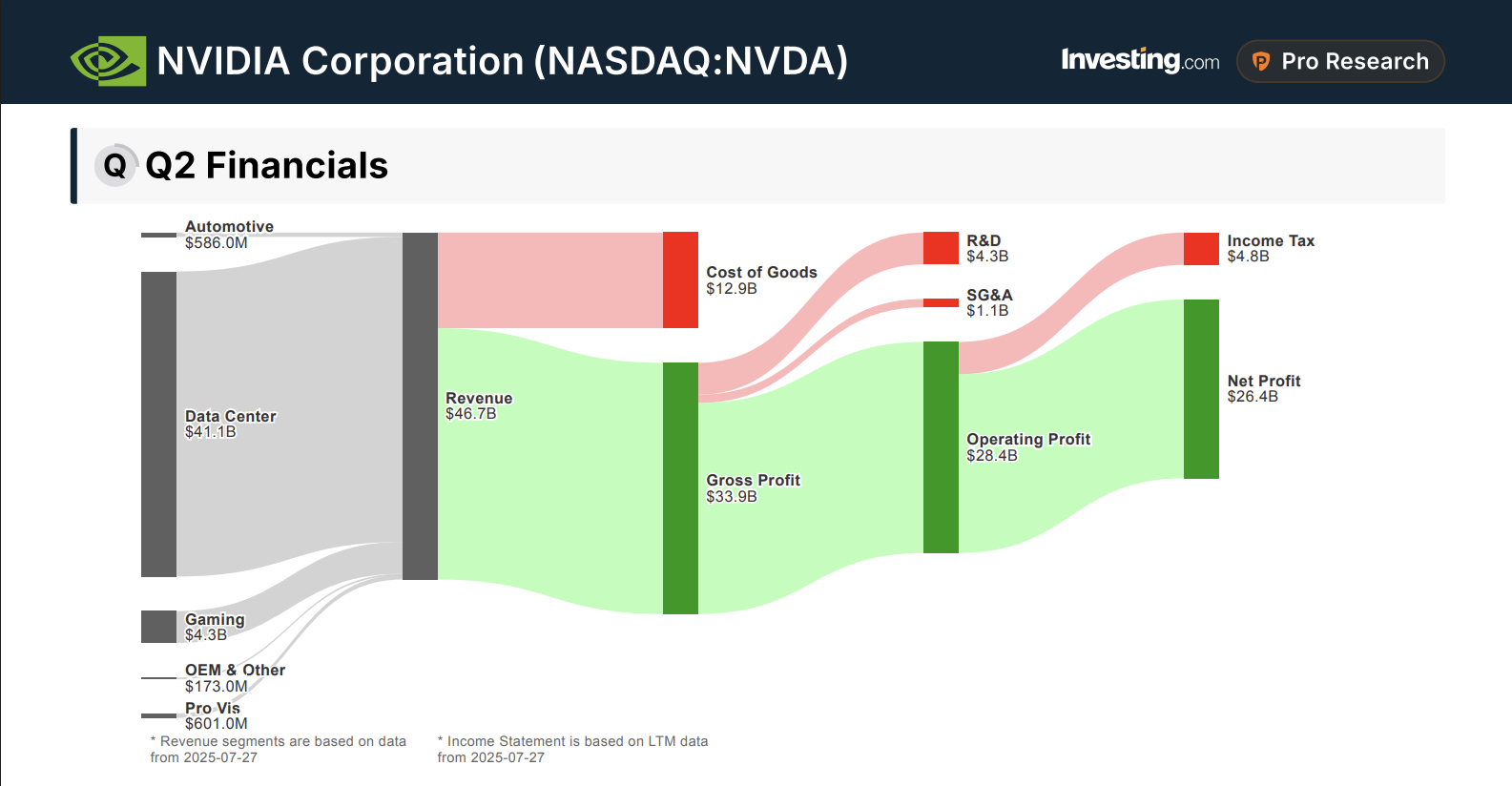
Nvidia’s revenue is segmented across several categories, each offering unique insights:
- Data Center: This segment is often the most closely watched, given Nvidia’s dominance in AI accelerators. Investors look for strong year-over-year and sequential growth, as it reflects the increasing adoption of AI and cloud computing infrastructure. Commentary on order backlogs, capacity constraints, and demand from hyperscalers (large cloud providers) is critical. Any slowdown here can trigger significant market concern.
- Gaming: Historically Nvidia’s largest segment, gaming revenue indicates the health of the consumer PC market and the demand for high-performance GPUs. While perhaps less volatile than data center revenue, sustained growth here signifies ongoing product innovation and market leadership. Inventory levels and average selling prices (ASPs) for new graphics cards are important sub-metrics.
- Professional Visualization: This includes GPUs used in workstations for demanding professional applications like design, engineering, and content creation. Steady growth in this segment points to broader economic activity and corporate investment in advanced computing capabilities.
- Automotive: Though a smaller percentage of total revenue currently, the automotive segment, particularly for autonomous driving platforms and in-car infotainment systems, represents a significant long-term growth opportunity. Investors monitor design wins, partnerships, and progress toward scaling these solutions.
Analyzing the growth rates and proportional contributions of these segments helps to understand Nvidia’s strategic priorities and where its future growth drivers lie.
Profitability and Margins: EPS and Gross Margin
Beyond revenue, profitability metrics are crucial:

- Earnings Per Share (EPS): This is often the most quoted figure, representing the portion of a company’s profit allocated to each outstanding share of common stock. Investors compare reported EPS against analyst estimates. A “beat” (higher than expected) or “miss” (lower than expected) can significantly impact the stock price.
- Gross Margin: This metric reflects the percentage of revenue left after deducting the cost of goods sold (COGS). For a company like Nvidia, maintaining high gross margins is indicative of strong pricing power, technological leadership, and efficient manufacturing. Fluctuations can signal changes in product mix, competitive pressures, or supply chain costs.
- Operating Expenses: R&D (research and development) and SG&A (selling, general, and administrative) expenses reveal how much Nvidia is investing in innovation and market expansion. High R&D is often viewed positively, signifying future product pipelines, while efficient SG&A management points to operational discipline.
Forward Guidance: The Future Outlook
Perhaps the most impactful component of an earnings report is the company’s “guidance” for the upcoming quarter or fiscal year. This is management’s projection for future revenue, gross margin, and sometimes EPS. Guidance significantly influences analyst ratings and investor sentiment. A company can “beat” current quarter expectations but see its stock fall if its forward guidance is weaker than anticipated. Conversely, a “miss” can be overlooked if robust guidance signals strong future growth. This forward-looking statement provides insight into management’s confidence, market demand trends, and potential challenges or opportunities on the horizon.
Navigating the Earnings Cycle: How to Track and React
For active investors, the period around Nvidia’s earnings release is often characterized by heightened volatility and strategic decision-making. Knowing how to track the information and interpret market reactions is key.
Locating the Earnings Release Date and Materials
As mentioned, the official Nvidia Investor Relations page (typically found on their corporate website under an “Investors” or “IR” section) is the primary resource. It will feature a calendar of events, including the precise date and time of the earnings release and the subsequent conference call. The page will also host links to the press release, the full financial statements (often in an 8-K filing with the SEC), and the webcast replay. Setting up email alerts from the IR page or from reputable financial news sources ensures you don’t miss the announcement.
Analyst Expectations vs. Reality: The “Beat and Raise”
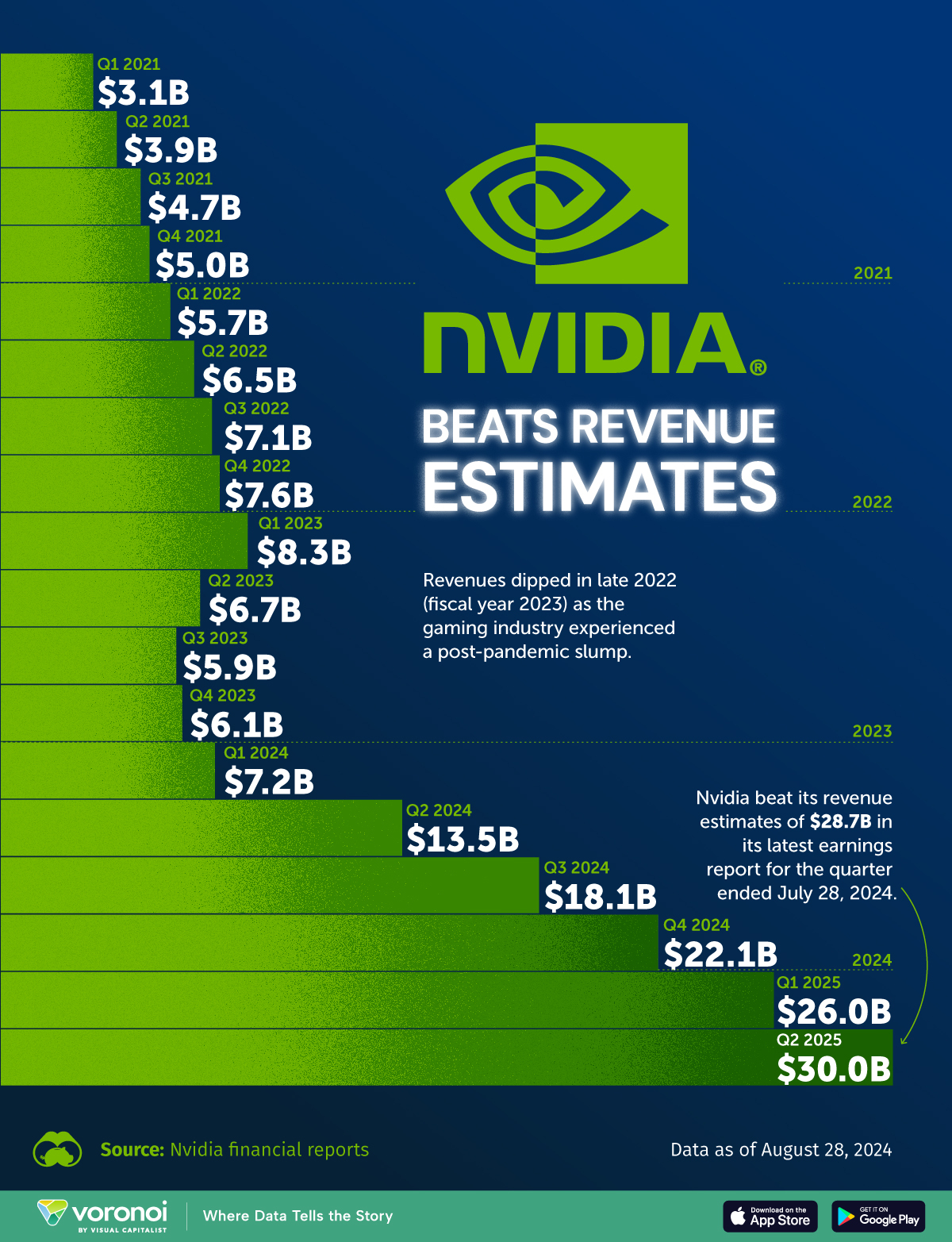
Prior to the report, numerous financial analysts will publish their estimates for Nvidia’s revenue and EPS. These consensus estimates become the benchmark against which the company’s actual performance is measured.
- A “beat” occurs when actual results exceed these consensus estimates.
- A “raise” refers to the company’s forward guidance being higher than previous projections or analyst expectations.
The ideal scenario for investors is a “beat and raise,” where the company outperforms on current quarter metrics and provides an optimistic outlook for the future. This typically leads to a positive stock price reaction. Conversely, a “miss and lower” (missing estimates and lowering guidance) almost invariably results in a sharp sell-off. The magnitude of the beat or miss, along with the tone of the guidance, dictates the severity of the market’s response.
Market Reaction and Volatility
Nvidia’s stock, NVDA, is known for its volatility, especially around earnings reports. Even a small deviation from expectations can cause significant price swings in after-hours trading and the subsequent trading day. These reactions are often driven by algorithmic trading and rapid repositioning by large institutional investors. It’s crucial for individual investors to avoid making impulsive decisions based purely on initial market reactions. Instead, take time to digest the full report, listen to the earnings call, and re-evaluate your investment thesis in light of the new information. Consider whether the fundamental long-term story has changed, or if the reaction is merely short-term noise.
Beyond the Quarter: Long-Term Investment Perspective on Nvidia
While quarterly earnings reports are vital for short-term assessment, a truly insightful investment approach for a company like Nvidia requires looking beyond single-quarter fluctuations and focusing on its long-term strategic position and growth drivers.
Strategic Growth Drivers and Competitive Landscape
Nvidia’s enduring strength lies in its ability to innovate and capitalize on secular growth trends. Its investments in R&D, its CUDA platform (a parallel computing platform), and its strong ecosystem of developers and partners solidify its competitive moat. Investors should evaluate whether the earnings report reinforces these long-term drivers. Are new products gaining traction? Is the company expanding into new markets successfully? How is it fending off competition from established players like AMD or emerging specialized AI chip developers? The narrative surrounding sustained innovation and market expansion is as critical as the quarterly numbers.
Valuation Considerations and Risk Factors
Even with strong growth, valuation remains a key concern. Nvidia often trades at a premium multiple due to its growth prospects. Investors must weigh the company’s earnings power against its stock price, considering metrics like the price-to-earnings (P/E) ratio and price-to-sales ratio, especially in comparison to its historical averages and industry peers.
Furthermore, several risk factors can impact Nvidia’s long-term trajectory, which may or may not be fully reflected in a single earnings report. These include:
- Geopolitical tensions: Restrictions on chip exports, particularly to key markets, can significantly impact revenue and market access.
- Supply chain disruptions: Global semiconductor manufacturing capacity can affect Nvidia’s ability to meet demand.
- Macroeconomic downturns: Recessions can curb consumer spending (gaming) and corporate capital expenditure (data centers).
- Increased competition: While Nvidia leads, competitors are constantly striving to innovate and capture market share.
- Regulatory scrutiny: Given its market dominance, Nvidia could face antitrust reviews or other regulatory challenges.
Ultimately, Nvidia’s earnings report is more than just a date on the calendar; it’s a quarterly deep dive into the financial health of a company at the forefront of technological innovation. For the savvy investor, understanding how to track, analyze, and interpret these reports, both in isolation and within the broader market context, is an indispensable tool for navigating the complexities of modern investing.
aViewFromTheCave is a participant in the Amazon Services LLC Associates Program, an affiliate advertising program designed to provide a means for sites to earn advertising fees by advertising and linking to Amazon.com. Amazon, the Amazon logo, AmazonSupply, and the AmazonSupply logo are trademarks of Amazon.com, Inc. or its affiliates. As an Amazon Associate we earn affiliate commissions from qualifying purchases.