
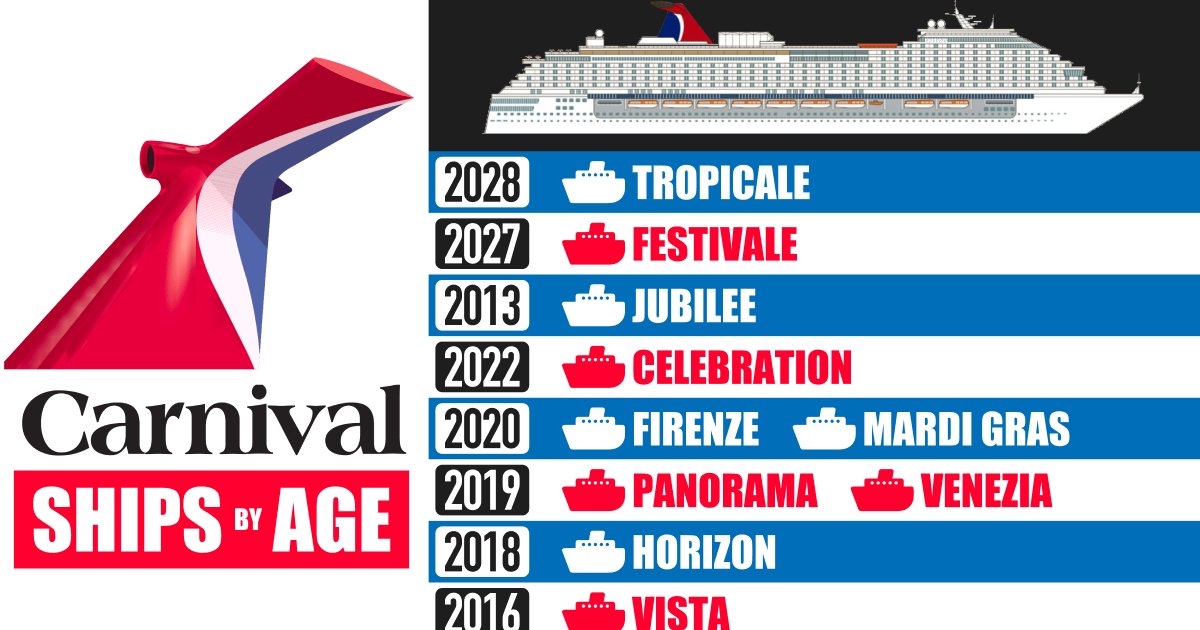
In the hyper-competitive world of the cruise industry, the age of a vessel is more than just a chronological marker; it is a critical component of a company’s brand strategy and market positioning. When travelers and industry analysts ask, “How old is Carnival Vista?”, they are often looking for more than a delivery date. They are inquiring about the ship’s relevance, its technological standing, and its place within the broader evolution of the Carnival Cruise Line brand.
Delivered in April 2016 and embarking on her maiden voyage in May of that same year, the Carnival Vista is currently entering a fascinating stage of its lifecycle. At approximately eight years old, the ship occupies a strategic “sweet spot” in the Carnival fleet. It is no longer the shiny new flagship—a title currently held by the Excel-class vessels like the Carnival Jubilee—but it remains a modern, high-capacity asset that defines the mid-tier luxury and high-energy fun that the brand is known for. To understand the Carnival Vista is to understand how a global brand manages its physical assets to ensure long-term loyalty and consistent revenue in a rapidly changing travel landscape.
The 2016 Debut: A Strategic Shift for Carnival Cruise Line
The launch of the Carnival Vista in 2016 represented a pivotal moment for Carnival Cruise Line’s brand architecture. Prior to the Vista, the fleet was largely defined by the Dream-class and the long-standing Conquest-class ships. While these vessels were successful, the brand needed a modern evolution to compete with the massive, feature-heavy ships being launched by competitors like Royal Caribbean and Norwegian Cruise Line.
Redefining the “Fun Ship” Identity
The Carnival Vista was engineered to be the flagship of a new class, aptly named the Vista Class. Its arrival signaled a shift in aesthetic and functional design. The brand moved away from the neon-heavy, high-glitz interiors of the previous decade toward a more contemporary, tropical-resort feel. This was a deliberate branding move to appeal to a broader demographic, including younger millennials and multi-generational families who sought a more “sophisticated fun” rather than just a party atmosphere.
By introducing features like the first IMAX Theater at sea and the SkyRide—a pedal-powered aerial track—Carnival used the Vista’s youth to market itself as an innovator. Even today, as the ship approaches a decade of service, these brand-defining features allow it to maintain a competitive edge against newer ships that may lack these specific proprietary experiences.
The Impact of Ship Class on Brand Consistency
The age of the Carnival Vista is significant because it served as the blueprint for its sister ships, the Carnival Horizon (2018) and the Carnival Panorama (2019). Because the Vista was the pioneer, its design successes and failures shaped the brand’s trajectory for the next five years. For a brand manager, the Vista represents the “baseline” of the modern Carnival experience. When a ship reaches the eight-to-ten-year mark, it becomes the benchmark for brand consistency: does the experience on a 2016 ship still feel like the experience on a 2024 ship?
Maintaining Brand Equity: The Role of the Vista Class in Corporate Identity
As a ship ages, the primary challenge for a corporate brand is preventing the “aging out” of the asset in the mind of the consumer. In the cruise industry, the “new ship smell” is a powerful marketing tool. However, the Carnival Vista has managed to maintain high brand equity through a combination of innovative layout and strategic maintenance.
The Havana Experience as a Premium Brand Sub-Segment
One of the most successful branding masterstrokes introduced with the Carnival Vista was the Havana Cabanas and Bar. By creating a private, themed enclave with exclusive pool access, Carnival successfully segmented its brand within a single ship. This allowed them to command premium pricing—comparable to their newest ships—on an aging asset. The “brand within a brand” strategy proved so successful that it has been replicated and expanded in every major build since. The age of the ship becomes irrelevant when the exclusivity and brand experience of the Havana area remain high-status symbols for the cruising community.
Navigating the “Mid-Life” Brand Perception
At eight years old, a ship can risk falling into a “forgotten middle” category. It isn’t a classic, nostalgic vessel, nor is it the latest marvel. Carnival combats this by positioning the Vista as the “accessible modern” choice. In their marketing funnels, the Vista is often the gateway for first-time cruisers who want modern amenities without the peak pricing associated with the Excel-class ships. This strategic pricing and positioning ensure that the ship’s age is viewed as “proven reliability” rather than “outdated technology.”
The Art of the Refresh: How Dry Docks Extend Brand Longevity
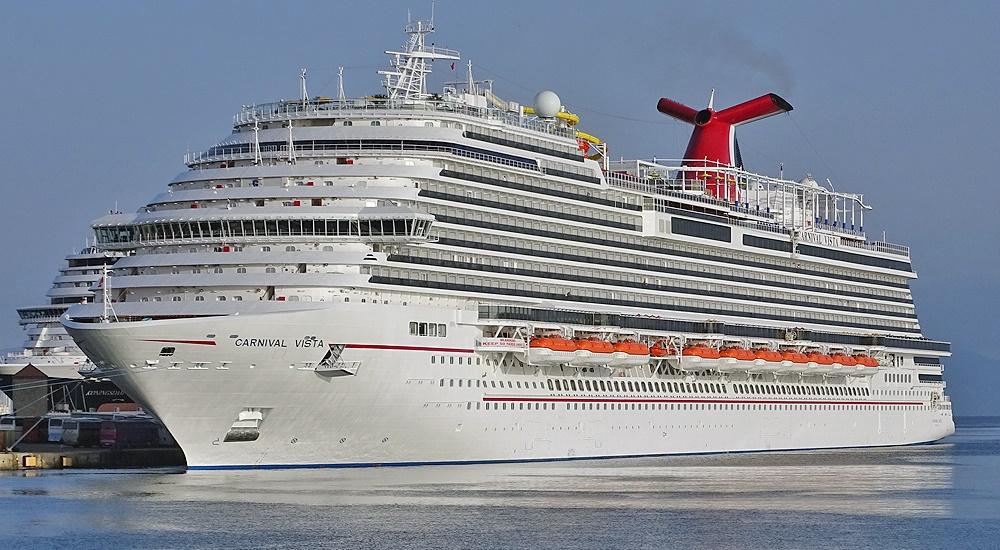
In the lifecycle of a maritime brand asset, the “dry dock” is the most critical event for maintaining brand standards. For the Carnival Vista, its most recent significant dry dock occurred in early 2024. This period of intensive maintenance and renovation is how Carnival ensures that an eight-year-old ship continues to look and feel like a flagship.
The 2024 Refurbishment: Aligning with the New Brand Aesthetic
During the 2024 dry dock, the Carnival Vista underwent a series of updates that were designed to align it with the brand’s newest visual identity. The most notable change was the addition of the signature red, white, and blue hull livery, which was first introduced on the Carnival Mardi Gras. This cosmetic change is a powerful branding tool; it visually unites the older ships with the newest ones, signaling to the customer that the “Vista” is still a premier member of the modern fleet.
Beyond the hull, interior refreshments—such as updating upholstery, modernizing signage, and refreshing the retail spaces—ensure that the physical environment does not betray the ship’s age. In brand management, sensory cues are vital. If a guest walks into a lounge and sees worn carpet, the brand promise of a “premium vacation” is broken. Dry docks are the corporate solution to this “physical brand erosion.”
Technical Upgrades and Digital Integration
A major part of the “how old is it” question relates to technology. In 2016, the digital guest experience was vastly different than it is today. To keep the Carnival Vista “young,” the company has invested heavily in integrating the Hub App and Starlink internet services. By upgrading the back-end infrastructure, Carnival ensures that the user experience (UX) on the Vista is identical to that on the Jubilee. From a brand perspective, this digital parity is essential. A customer expects the same ease of booking excursions and ordering food via an app regardless of the ship’s age.
Competitive Positioning: Navigating the Market as a Mid-Life Asset
To fully answer “how old is Carnival Vista,” one must look at where it stands relative to its competitors. In the broader market, an eight-year-old ship is still considered relatively young. However, the pace of innovation in the cruise sector is blistering.
Vista vs. the Excel Class: A Hierarchy of Experience
The introduction of the Excel-class (Mardi Gras, Celebration, Jubilee) has shifted the Carnival Vista’s role from “the leader” to “the workhorse.” This is a classic brand evolution. The newer ships handle the high-volume, high-profile sailings out of major hubs like Port Canaveral and Miami, while the Vista can be strategically deployed to secondary markets or different homeports (like Galveston or Port Canaveral) to capture different segments of the market.
This hierarchy allows Carnival to maintain a diverse portfolio. The “Vista” brand is marketed as being “big enough to have everything, but small enough to navigate.” This positioning appeals to loyalists who find the 6,000-passenger Excel-class ships too overwhelming. By leveraging the ship’s slightly smaller scale (approximately 4,000 passengers), the brand turns a potential weakness (smaller size/older age) into a unique selling proposition (USP).
Brand Resilience in the Face of Mechanical Challenges
It is also worth noting that a ship’s age and brand reputation are often tied to its mechanical reliability. The Carnival Vista has faced well-documented issues with its azipod propulsion system over the years. From a brand management standpoint, how a company handles these “product failures” is crucial. Carnival has managed this by being transparent with itinerary changes and using dry docks to perform corrective engineering. The brand’s resilience is tested when an asset ages, and Carnival’s ability to keep the Vista in high demand despite these hiccups is a testament to the strength of their marketing and guest loyalty programs.

Conclusion: The Lifecycle of an Icon
The Carnival Vista, at eight years old, represents the successful middle-age of a revolutionary brand asset. It is old enough to have an established reputation and a loyal following, yet young enough to benefit from the latest corporate initiatives and technological upgrades.
For Carnival Cruise Line, the Vista is not just a ship; it is a vital part of a brand strategy that emphasizes constant evolution. By investing in regular refurbishments, maintaining digital parity across the fleet, and strategically positioning the ship within the market, Carnival ensures that the Vista remains a “Fun Ship” for the modern era. Whether it is through the adrenaline of the SkyRide or the exclusivity of the Havana Bar, the Carnival Vista continues to deliver on the brand promise established in 2016, proving that in the world of corporate branding, age is truly just a number when the strategy is sound.
aViewFromTheCave is a participant in the Amazon Services LLC Associates Program, an affiliate advertising program designed to provide a means for sites to earn advertising fees by advertising and linking to Amazon.com. Amazon, the Amazon logo, AmazonSupply, and the AmazonSupply logo are trademarks of Amazon.com, Inc. or its affiliates. As an Amazon Associate we earn affiliate commissions from qualifying purchases.