
A loan note is a formal financial instrument representing a debt owed by one party (the issuer or borrower) to another (the noteholder or lender). Essentially, it’s a written promise to repay a loan, often with interest, over a specified period. While conceptually straightforward, loan notes are sophisticated tools in finance, frequently employed in corporate transactions, business funding, and various investment strategies. They serve as a crucial mechanism for structuring debt and offer an alternative to traditional bank loans or direct equity investment.
Understanding the Fundamentals of a Loan Note
At its core, a loan note formalizes the terms and conditions of a loan, providing a legally binding document that protects the interests of both the lender and the borrower. Its structure allows for considerable flexibility, making it adaptable to a wide range of financial scenarios.

Definition and Core Components
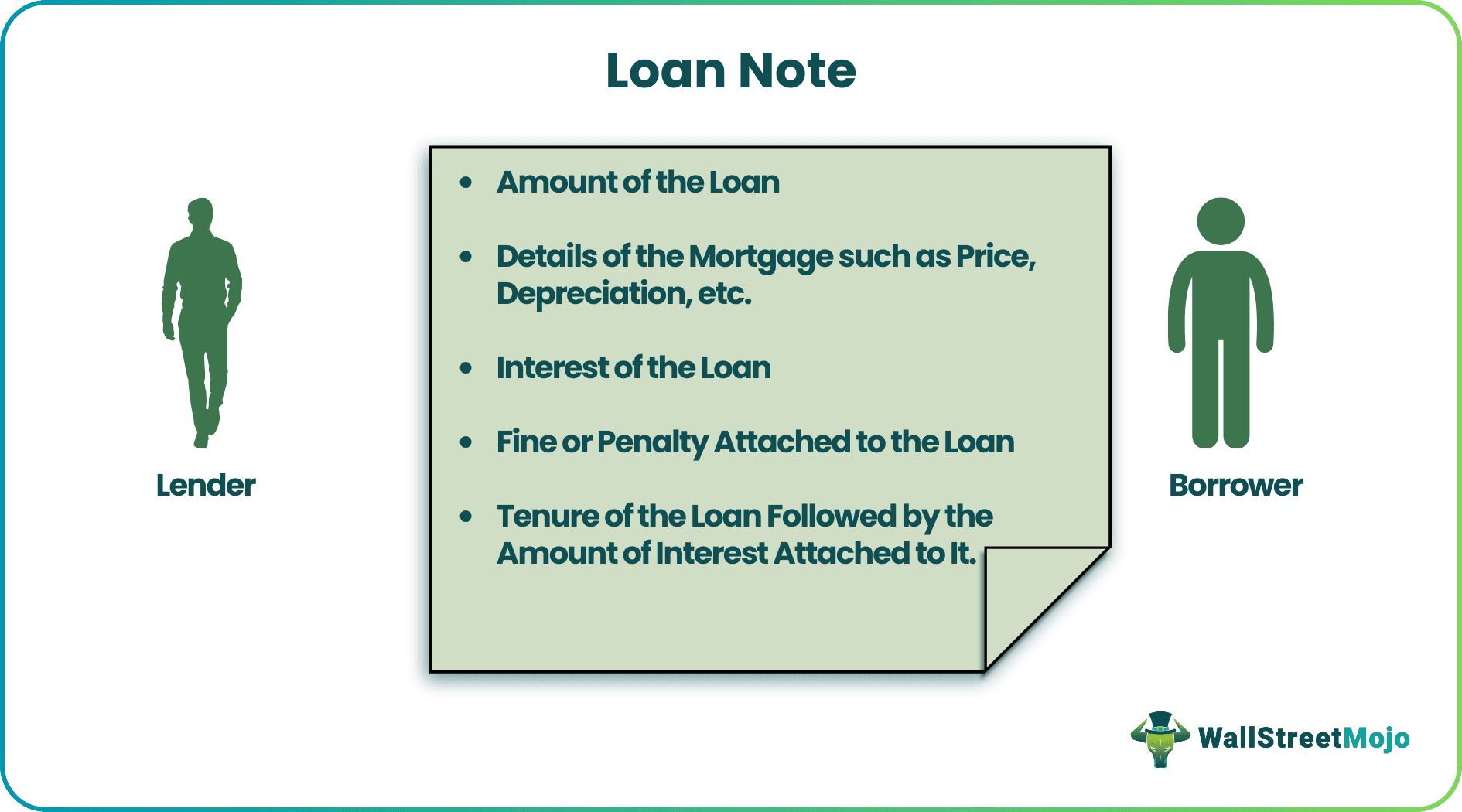
A loan note details the commitment of a borrower to repay a principal sum to a lender by a specific maturity date, along with agreed-upon interest payments. The fundamental elements that define a loan note include:
- Principal Amount: The initial sum of money lent by the noteholder to the issuer.
- Interest Rate: The rate at which interest accrues on the principal. This can be fixed (unchanging over the life of the note) or floating (adjusting based on a benchmark rate, such as LIBOR or SOFR).
- Maturity Date: The date by which the entire principal amount and any remaining interest must be repaid. Loan notes can be short-term (under one year), medium-term (1-5 years), or long-term (over five years).
- Repayment Schedule: Specifies how the principal and interest will be repaid. This could be a “bullet” repayment (all at once at maturity), amortizing (regular payments of principal and interest over time), or a mix.
- Parties Involved: Clearly identifies the issuer (borrower) and the noteholder (lender/investor).
- Security (Optional): Some loan notes are secured by specific assets of the borrower, offering a layer of protection to the noteholder. Unsecured loan notes rely solely on the borrower’s creditworthiness.
- Covenants: Clauses that stipulate certain actions the borrower must or must not take (e.g., maintaining specific financial ratios, restricting further borrowing).
How it Differs from Other Debt Instruments
While sharing similarities with other debt instruments, loan notes possess distinct characteristics that differentiate them:
- Bonds: Bonds are typically issued by larger corporations or governments to a wide range of public investors. They are often standardized, highly liquid, and traded on public exchanges. Loan notes, while they can be transferable, are often privately placed and have bespoke terms tailored to specific transactions between a smaller group of parties. They offer more flexibility in terms compared to the standardized nature of bonds.
- Promissory Notes: Promissory notes are generally simpler, less formal agreements, often used for personal loans or smaller business transactions. They might lack the detailed covenants, security provisions, and transferability clauses common in more complex corporate loan notes. Loan notes are usually more comprehensive, legally robust, and designed for more significant or intricate financing arrangements.
- Bank Loans: Traditional bank loans involve a direct lending relationship with a financial institution. Loan notes, conversely, represent a direct lending relationship between an investor (or syndicate of investors) and a borrower, often bypassing traditional banking channels. While banks can be noteholders, the instrument itself allows for private capital to flow into businesses directly.
The Mechanics and Legal Framework
The creation and execution of a loan note involve a structured process, supported by a robust legal framework to ensure enforceability and clarity for all parties.
Issuance and Documentation
The journey of a loan note begins with negotiation and culminates in detailed legal documentation.
- Term Sheet: An initial, non-binding document outlining the key commercial terms of the loan note, such as the principal amount, interest rate, maturity, and any security. This serves as a blueprint for the full agreement.
- Loan Note Instrument/Agreement: The definitive legal document, meticulously drafted by legal counsel. It incorporates all the terms from the term sheet, expanding on them with precise legal language, definitions, representations and warranties, conditions precedent, events of default, and remedies.
- Due Diligence: Both the issuer and prospective noteholders undertake due diligence. Issuers must ensure they understand the implications of the debt. Noteholders scrutinize the borrower’s financial health, business model, management team, and ability to repay, often commissioning independent financial and legal reviews.
- Security Documentation (if applicable): If the loan note is secured, separate legal documents will be executed to create and perfect the security interest over the specified assets (e.g., charges over property, debentures over all assets).
Key Provisions and Covenants
The power and protection offered by a loan note largely reside in its detailed provisions and covenants.
- Interest Payment: Beyond just the rate, the agreement specifies the frequency (e.g., monthly, quarterly, semi-annually, annually) and method of interest calculation. Payment in kind (PIK) interest, where interest accrues and is added to the principal instead of being paid in cash, is also a possibility, often used in distressed situations or early-stage ventures.
- Repayment Structure: This outlines how the principal will be returned. A bullet repayment means the entire principal is repaid at maturity. Amortizing notes involve regular principal repayments alongside interest. Convertible loan notes offer the noteholder the option to convert their debt into equity in the issuing company under predefined conditions, merging debt and equity features.
- Security and Ranking: A secured loan note gives the noteholder a claim over specific assets of the issuer in the event of default, positioning them higher in the pecking order during liquidation compared to unsecured creditors. An unsecured loan note relies solely on the issuer’s general creditworthiness, carrying higher risk but potentially offering higher returns. The ranking of the loan note (e.g., senior, junior, subordinated) determines its priority relative to other debts.
- Covenants: These are contractual undertakings designed to protect the noteholder’s investment.
- Positive Covenants: Actions the borrower must take (e.g., provide financial reports, maintain insurance, comply with laws).
- Negative Covenants: Actions the borrower must not take without the noteholder’s consent (e.g., incur additional debt, dispose of key assets, pay dividends beyond a certain threshold).
- Default Provisions: Clearly define what constitutes an event of default (e.g., non-payment, breach of covenant, insolvency). These provisions also detail the remedies available to the noteholder, such as accelerating repayment, enforcing security, or charging penalty interest.
Transferability and Secondary Market
While many loan notes are held by the original noteholder until maturity, they can be structured to be transferable.
- Assignability: The ability for a noteholder to sell or assign their rights and obligations under the loan note to a third party. This can be subject to restrictions, such as requiring the issuer’s consent, particularly in private placements.
- Secondary Market: A formal or informal market where existing loan notes can be bought and sold. While not as liquid as public bond markets, larger or more standardized loan notes might find a secondary market, often facilitated by specialist brokers. The liquidity of a loan note significantly impacts its appeal to investors.
Types and Applications of Loan Notes
Loan notes are versatile financial instruments, finding applications across a spectrum of funding needs and investment strategies.
Corporate Finance and Business Funding

For businesses, loan notes present a flexible funding avenue, bridging gaps where traditional financing might be unavailable or less suitable.
- Startups and SMEs: For early-stage companies or small and medium-sized enterprises (SMEs) that may not qualify for traditional bank loans or wish to avoid immediate equity dilution, loan notes offer a crucial source of capital. Convertible loan notes are particularly popular here, allowing investors to benefit from future growth by converting debt into equity if the company succeeds.
- Mergers and Acquisitions (M&A): Loan notes are frequently used to structure payments in business acquisitions. A “vendor loan note” is issued by the acquiring company to the selling shareholders, deferring part of the purchase price over time. This can facilitate deals, align interests, and manage cash flow.
- Bridge Financing: Short-term loan notes can provide “bridge” funding to cover immediate capital needs until a more permanent financing solution (e.g., a larger equity round or long-term debt facility) can be secured.
- Project Finance: Loan notes can be tailored to fund specific projects, with repayment often tied to the project’s cash flows.
Investor Perspective
From an investor’s standpoint, loan notes can be an attractive addition to a diversified portfolio.
- Income Generation: The predictable stream of interest payments makes loan notes appealing to investors seeking regular income.
- Diversification: Adding debt instruments like loan notes to a portfolio can help diversify risk, especially if the portfolio is heavily weighted towards equity.
- Risk vs. Return Profile: Generally, loan notes offer lower risk and, consequently, lower potential returns compared to equity investments, especially if they are secured. However, unsecured or subordinated loan notes from less established companies carry higher risk and, therefore, demand higher potential returns.
- Priority in Liquidation: In the event of a company’s insolvency, noteholders typically have a higher priority claim on assets than equity holders, often recovering a portion of their investment before shareholders receive anything.
Specific Examples
- Convertible Loan Notes: A hybrid instrument that starts as debt but gives the noteholder the option to convert into equity (shares) at a pre-agreed valuation event (e.g., next funding round) or date. This allows investors to benefit from capital appreciation while having the security of debt.
- Vendor Loan Notes: Used in M&A deals where a seller accepts a portion of the sale price in the form of a loan note from the buyer. This can help the buyer manage cash flow and shows the seller’s continued confidence in the business.
- Fixed-Rate vs. Floating-Rate Notes: Fixed-rate notes provide stable interest income, while floating-rate notes adjust with market interest rates, protecting against inflation but exposing the investor to interest rate fluctuations.
Advantages and Disadvantages
Like any financial instrument, loan notes offer distinct benefits and drawbacks for both the issuer and the noteholder.
For Borrowers (Issuers)
- Advantages:
- Retain Control: Unlike equity financing, issuing loan notes does not dilute ownership or control of the company.
- Flexible Terms: Loan notes can be highly customized to suit specific business needs, repayment capacities, and financial situations.
- Potentially Lower Cost: In some cases, the cost of debt (interest payments) can be lower than the long-term cost of equity, especially for stable businesses. Interest payments are also typically tax-deductible.
- Speed and Access: Can be quicker to arrange than traditional bank financing or a public equity raise, and accessible to companies that may not qualify for bank loans.
- Disadvantages:
- Debt Obligation: The principal and interest must be repaid, regardless of the company’s performance, which can strain cash flow. Failure to repay can lead to default and potentially insolvency.
- Covenants: Restrictive covenants can limit operational flexibility, requiring the borrower to seek noteholder consent for certain business decisions.
- Collateral Requirements: Secured loan notes require pledging assets, limiting the company’s ability to use those assets for other financing.
For Lenders (Investors)
- Advantages:
- Predictable Income: Fixed or floating interest payments provide a steady stream of income.
- Fixed Repayment: The principal is repaid by a specific date, offering a clear exit strategy.
- Security and Priority: Secured loan notes offer a higher level of protection against default compared to equity, with priority claims on assets during liquidation.
- Diversification: Can offer portfolio diversification and potentially lower risk profiles than pure equity investments.
- Disadvantages:
- Default Risk: The primary risk is that the issuer defaults on payments, leading to a loss of principal and interest. Due diligence is crucial.
- Liquidity Risk: Unless explicitly structured for transferability, loan notes can be illiquid, meaning they might be difficult to sell before maturity.
- Lower Upside Potential: Unlike equity, loan notes typically do not participate in the exponential growth of a successful company beyond the agreed-upon interest.
- Interest Rate Risk: For fixed-rate notes, if market interest rates rise significantly, the note’s fixed return may become less attractive compared to new investments.
Important Considerations for Engaging with Loan Notes
Engaging with loan notes, whether as an issuer or a noteholder, demands careful planning and professional guidance to mitigate risks and maximize benefits.
Due Diligence is Paramount
Thorough due diligence is the bedrock of a successful loan note transaction.
- For Investors: It is critical to comprehensively assess the borrower’s creditworthiness, financial stability, business model, management team’s competence, and industry outlook. Understand the terms, security, covenants, and potential events of default. Seeking independent financial analysis is highly advisable.
- For Borrowers: Understand the full implications of the debt, including repayment obligations, the impact of covenants on operations, and the cost of capital. Ensure the business has a realistic and robust plan for servicing the debt.
Legal and Tax Implications
The legal and tax aspects of loan notes are complex and jurisdiction-specific.
- Professional Advice: Always engage qualified legal counsel to draft and review the loan note instrument and any related security documents. This ensures the agreement is legally sound, enforceable, and accurately reflects the commercial terms.
- Tax Treatment: Consult with tax advisors to understand the tax implications of interest income for noteholders and interest expense for issuers, as well as any capital gains implications upon sale or repayment. Tax rules can vary significantly based on jurisdiction and the specific structure of the loan note.
Risk Management
Both parties must employ robust risk management strategies.
- For Investors: Diversify investments across various loan notes and issuers to avoid over-reliance on a single entity. Understand the specific risks associated with each loan note (e.g., unsecured, subordinated, from early-stage companies).
- For Borrowers: Maintain strong financial discipline, monitor cash flow closely, and develop contingency plans for unexpected downturns to ensure repayment capacity. Adhere strictly to all covenants to avoid triggering events of default.
In conclusion, a loan note is a sophisticated and highly adaptable financial instrument that plays a vital role in both corporate finance and investment strategies. Its customizable nature allows it to serve a diverse range of funding needs, while its formal structure provides clarity and legal enforceability for all involved parties. Understanding its fundamental components, mechanics, applications, and inherent risks is crucial for anyone considering its use as a funding mechanism or an investment vehicle.
aViewFromTheCave is a participant in the Amazon Services LLC Associates Program, an affiliate advertising program designed to provide a means for sites to earn advertising fees by advertising and linking to Amazon.com. Amazon, the Amazon logo, AmazonSupply, and the AmazonSupply logo are trademarks of Amazon.com, Inc. or its affiliates. As an Amazon Associate we earn affiliate commissions from qualifying purchases.