
The financial markets are a complex, dynamic ecosystem, and pinpointing a singular reason for a daily downturn is often an oversimplification. While a specific piece of news or economic data might be cited as the immediate trigger, market declines typically result from a confluence of interconnected factors – macroeconomic shifts, corporate performance, technical trading patterns, and, perhaps most powerfully, investor psychology. Understanding these underlying currents is crucial for any investor navigating the inherent volatility of capital markets. Today’s market movements are not just a snapshot but a reflection of evolving narratives, risk perceptions, and the ongoing tug-of-war between optimism and caution.
Macroeconomic Headwinds and Shifting Investor Sentiment
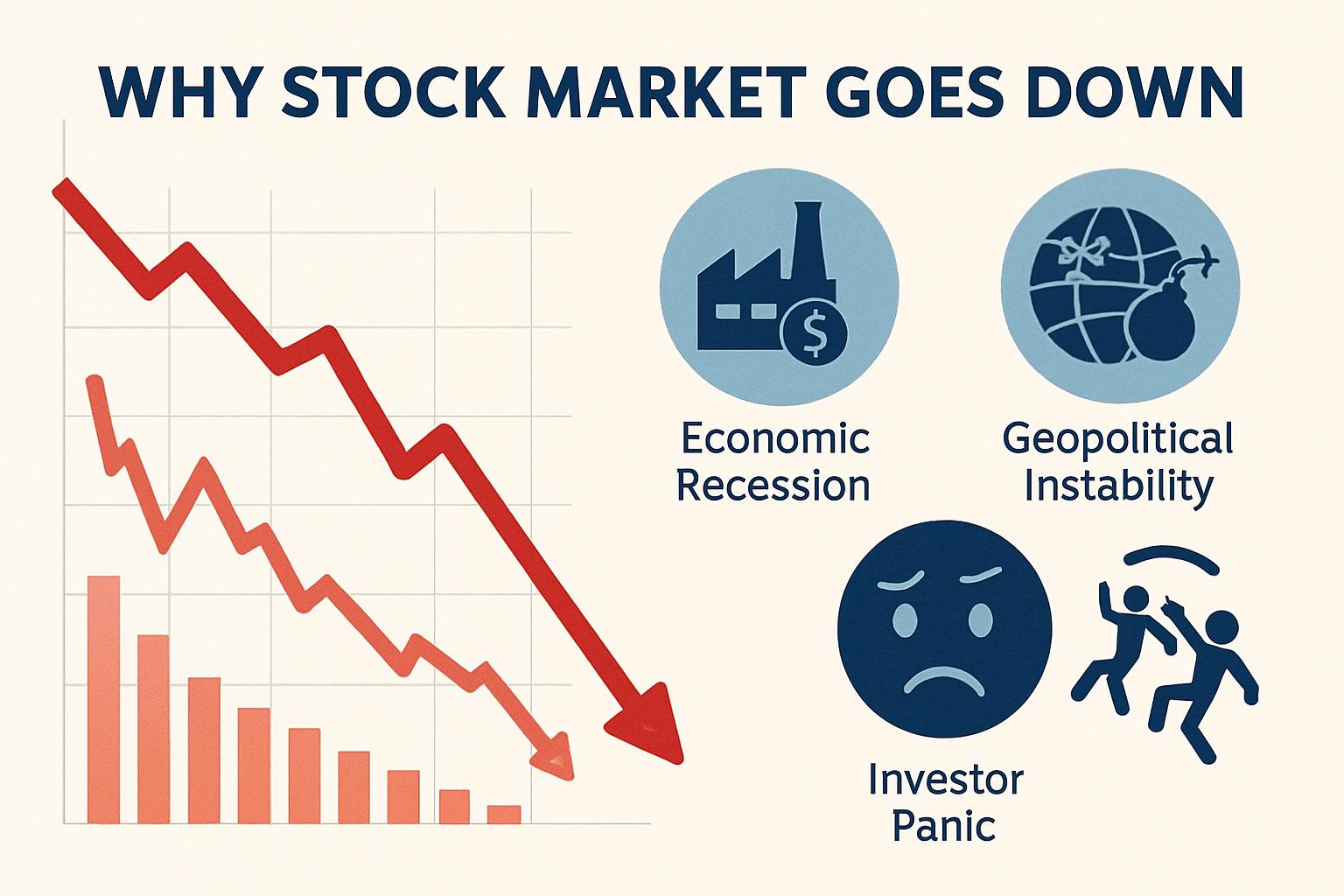
A significant portion of market movements is dictated by the broader economic landscape. Investors are constantly assessing the health and trajectory of national and global economies, and any signs of instability or impending slowdown can quickly translate into selling pressure across various asset classes.
Inflationary Pressures and Interest Rate Hikes
One of the most potent macroeconomic forces influencing markets is inflation. When the cost of goods and services rises persistently, it erodes purchasing power and can squeeze corporate profit margins. Central banks, like the U.S. Federal Reserve, typically respond to high inflation by raising interest rates. While intended to cool down an overheating economy, these rate hikes make borrowing more expensive for businesses and consumers, slowing economic activity. Higher interest rates also make “risk-free” investments, such as government bonds, more attractive compared to riskier assets like stocks, leading some investors to reallocate capital away from equities. The prospect of sustained inflation or aggressive rate hikes can therefore trigger widespread market apprehension and downturns.
Geopolitical Instability and Supply Chain Disruptions
Global events, from political conflicts and trade disputes to regional instabilities, frequently cast long shadows over financial markets. Geopolitical tensions can disrupt established trade routes, leading to supply chain bottlenecks that push up production costs and limit availability of goods. Such disruptions were prominently observed during the pandemic and subsequent conflicts, where shortages of key components and increased shipping costs directly impacted corporate profitability and consumer prices. Uncertainty stemming from these events also dampens investor confidence, as the future becomes less predictable, leading to a flight to safety and a general sell-off in risk assets.
Fears of Recession and Economic Slowdown
Perhaps the most significant macroeconomic fear for investors is the specter of a recession. A recession, characterized by a significant decline in economic activity across the economy, causes corporate earnings to fall, unemployment to rise, and consumer spending to contract. Markets are forward-looking mechanisms, and as soon as leading indicators – such as an inverted yield curve (where short-term bond yields are higher than long-term yields), declining manufacturing data, or a consistent drop in consumer confidence – begin to signal an impending downturn, investors often start to price in these negative expectations by selling off stocks. The cumulative effect of these recessionary fears can lead to sharp and sustained market declines.
Corporate Performance and Sector-Specific Challenges
Beyond the broad macroeconomic brushstrokes, the performance of individual companies and entire sectors plays a critical role in determining daily market movements. Even in a relatively stable economy, specific corporate announcements or industry-specific headwinds can trigger a broader market reaction.
Disappointing Earnings Reports and Forward Guidance
For many investors, corporate earnings reports are a quarterly barometer of financial health. When a significant number of bellwether companies report earnings that miss analyst expectations, or worse, provide weaker-than-expected forward guidance (their projections for future performance), it can send negative ripples throughout the market. Disappointing earnings signal that underlying business conditions might be deteriorating, or that the companies are struggling to manage costs or generate revenue. This directly impacts valuation models and prompts investors to reassess their holdings, leading to sell-offs not just in the affected companies but often across the entire sector or even broader indices if the companies are major components.
Sector-Specific Headwinds and Regulatory Shifts
Certain market downturns can be heavily influenced by challenges unique to specific industries. For instance, a sudden surge in oil prices might hurt airlines and transportation companies but benefit energy producers. Conversely, new regulations targeting a particular sector, technological disruptions (e.g., streaming services impacting traditional media), or shifts in consumer preferences can create significant headwinds for companies within that industry. When a dominant sector faces such challenges, its poor performance can drag down the broader market, especially if that sector represents a large portion of the overall index, such as technology or financial services.
Valuation Concerns and Market Correction
After extended periods of economic growth and strong market performance, asset valuations can become stretched. When stock prices rise faster than their underlying earnings or intrinsic value, the market can become “overbought.” In such scenarios, even minor negative news or a shift in sentiment can trigger a significant market correction. Investors, particularly institutional ones, might decide that current prices do not reflect future earnings potential, leading to profit-taking and a sell-off. This re-evaluation of asset prices, especially after a bull run, is a natural part of the market cycle and can contribute to a sudden downturn as investors seek to recalibrate risk and reward.
Technical Factors and Market Dynamics
While fundamentals and macroeconomics provide the “why,” technical factors often explain the “how” and “speed” of market movements. These dynamics are driven by the mechanics of trading, liquidity, and short-term positioning.
Algorithmic Trading and Program Selling
In modern financial markets, a significant portion of trading is executed by high-frequency trading firms and algorithms. These sophisticated computer programs are designed to react to specific market conditions, news headlines, or technical indicators almost instantaneously. If a key negative trigger occurs – be it a disappointing economic report, a breach of a major support level on a chart, or even a cascade of initial sell orders – these algorithms can engage in rapid, automated selling. This “program selling” can amplify market moves, turning a modest decline into a sharp fall in a matter of minutes or hours, creating a feedback loop that accelerates the downturn.
Futures and Options Expiration Cycles
The expiration of futures and options contracts can introduce significant volatility into the market. These derivatives allow investors to bet on the future price movements of underlying assets without owning them directly. As expiration dates approach, traders must decide whether to close out their positions, roll them over to new contracts, or exercise their options. Large-scale unwinding or repositioning of these contracts, particularly on “quadruple witching” days when stock index futures, stock index options, stock options, and single-stock futures expire simultaneously, can lead to substantial buying or selling pressure and increased price swings as market participants adjust their exposure.
Liquidity Contractions and Margin Calls
Market liquidity refers to the ease with which an asset can be bought or sold without affecting its price. During times of stress or panic, liquidity can dry up quickly as buyers disappear, and sellers rush for the exits. This illiquidity can exacerbate downward movements, as even relatively small sell orders can have a disproportionate impact on prices. Furthermore, a sudden market decline can trigger margin calls, forcing investors who bought securities on borrowed money to either deposit more cash or sell off assets to cover their loans. This forced selling can create a domino effect, pushing prices down further and fueling a broader market downturn.
The Psychology of Market Downturns
Beneath the layers of economic data, corporate reports, and trading algorithms, human psychology plays a profound role in driving market fluctuations. Fear, greed, and herd mentality can often override rational analysis, especially during periods of stress.
Fear, Panic, and Herd Mentality
When markets start to fall, fear can quickly spread among investors. The instinct to protect capital can lead to panic selling, where individuals and institutions liquidate holdings regardless of their long-term value. This “herd mentality” causes investors to follow the crowd, abandoning their initial strategies and making emotional decisions rather than sticking to fundamental analysis. The fear of missing out (FOMO) on gains is often discussed in bull markets, but the fear of losing everything (FOLIE) during a downturn is equally powerful, leading to irrational capitulation that can accelerate market declines beyond what underlying fundamentals might suggest.
The Role of Media and Information Flow
In today’s interconnected world, news travels at the speed of light. Financial media, social media, and constant news cycles can amplify negative sentiment. A single negative headline, even if based on speculation or partial information, can be interpreted and disseminated rapidly, influencing countless investors simultaneously. The constant stream of information, often presented with an emphasis on urgency and drama, can contribute to heightened anxiety and a tendency for investors to overreact to short-term events, driving market prices away from their intrinsic value.
Opportunities Amidst Volatility
While downturns are often characterized by fear, it’s crucial to recognize that they also present opportunities for disciplined investors. Market corrections are a natural, albeit uncomfortable, part of the investing cycle. For those with a long-term perspective, periods of market weakness can offer a chance to acquire high-quality assets at reduced prices. Understanding that volatility is normal, and having a strategy to capitalize on it, can differentiate successful investors from those who succumb to panic.
What to Do When the Market Is Down
Navigating a market downturn can be challenging, but a disciplined and strategic approach is vital for long-term financial success.
Stay Calm and Avoid Emotional Decisions
The most critical advice during a market downturn is to resist the urge to panic sell. Emotional decisions, driven by fear, often lead to irreversible losses. Remind yourself of your long-term financial goals and the historical resilience of markets to recover from downturns. History shows that markets have always recovered from even severe bear markets over time.
Reassess Your Portfolio and Risk Tolerance
A market dip is an opportune time to review your portfolio and ensure it still aligns with your risk tolerance and investment objectives. If the downturn has made you uncomfortable with your current level of risk, it might be time to consider rebalancing towards more conservative assets. Conversely, if you have a high risk tolerance and a long time horizon, you might see this as a buying opportunity.
Consider Dollar-Cost Averaging or Rebalancing
Rather than trying to “time the bottom,” a proven strategy is dollar-cost averaging. This involves investing a fixed amount of money at regular intervals, regardless of market conditions. When prices are low, your fixed investment buys more shares, reducing your average cost over time. Additionally, consider rebalancing your portfolio. If stocks have fallen, your asset allocation might have shifted, making your bond allocation (if you have one) a larger percentage. Rebalancing means selling some assets that have performed well and buying more of those that have underperformed to bring your portfolio back to its target allocation.
Focus on Long-Term Goals
Market downturns are a normal, albeit uncomfortable, component of the investment landscape. For most investors, particularly those saving for retirement or other long-term goals, short-term market fluctuations should not derail their strategy. Focus on the power of compounding and the historical tendency of equity markets to trend upwards over decades. Time in the market often proves to be far more important than attempting to time the market. Maintain a diversified portfolio, invest in quality assets, and stick to your well-thought-out financial plan.
In conclusion, a market downturn, such as the one observed today, is rarely the result of a single isolated incident. It typically reflects a complex interplay of macroeconomic forces, specific corporate challenges, technical trading dynamics, and the powerful psychological currents that sweep through investor communities. By understanding these multifaceted influences and adopting a disciplined, long-term perspective, investors can navigate periods of volatility with greater confidence and potentially position themselves for future growth.
aViewFromTheCave is a participant in the Amazon Services LLC Associates Program, an affiliate advertising program designed to provide a means for sites to earn advertising fees by advertising and linking to Amazon.com. Amazon, the Amazon logo, AmazonSupply, and the AmazonSupply logo are trademarks of Amazon.com, Inc. or its affiliates. As an Amazon Associate we earn affiliate commissions from qualifying purchases.