
The daily closing value of the Nasdaq Composite Index is more than just a fleeting number; it’s a critical barometer reflecting the pulse of the technology sector, a significant segment of the broader U.S. and global economy. For investors, financial analysts, and economists alike, understanding what drove today’s performance and what it implies for the future is a fundamental exercise in navigating the complex world of finance. While individual stock movements capture headlines, the aggregate performance of indices like the Nasdaq provides a crucial overview, signaling shifts in investor sentiment, economic health, and the trajectory of innovation.
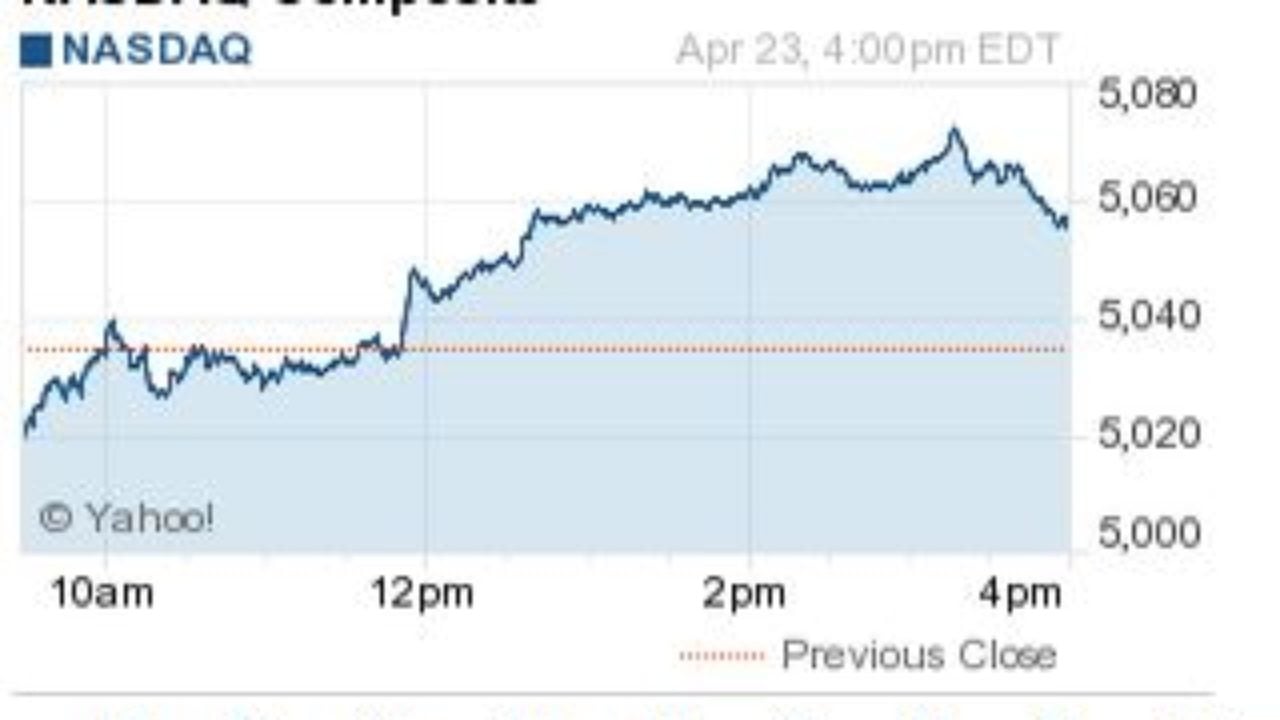
The Nasdaq, primarily known for its heavy concentration of technology and growth companies, often acts as a leading indicator for specific economic trends and technological advancements. Its daily close encapsulates the collective optimism or pessimism regarding these high-growth sectors, offering immediate insight into market reactions to everything from earnings reports and economic data to geopolitical events and interest rate expectations. Deciphering this daily snapshot requires a deeper dive into the index’s composition, the forces that influence its movements, and the strategic implications for investors.
Understanding the Nasdaq: More Than Just a Number
To truly appreciate the significance of the Nasdaq’s daily close, one must first grasp its fundamental structure and its unique position within the global financial landscape. Unlike the Dow Jones Industrial Average, which is price-weighted and composed of 30 large companies, or the S&P 500, a broader market index of 500 large-cap companies, the Nasdaq boasts a distinct identity rooted in its technological leanings.
The Nasdaq Composite vs. Nasdaq 100
When people refer to “the Nasdaq,” they are often thinking of two primary indices: the Nasdaq Composite and the Nasdaq 100.
- The Nasdaq Composite Index is a market-capitalization-weighted index of all common stocks and similar securities listed on the Nasdaq stock market. This means it includes a vast array of companies, from small-cap startups to mega-cap tech giants, as long as they are traded on the Nasdaq exchange. Its breadth makes it a comprehensive reflection of the technology-driven market, encompassing over 3,000 companies across various industries, though tech remains dominant.
- The Nasdaq 100 Index, on the other hand, is a modified market-capitalization-weighted index of 100 of the largest non-financial companies listed on the Nasdaq Stock Market. This index is even more concentrated in technology and growth stocks, featuring household names like Apple, Microsoft, Amazon, Google (Alphabet), and Meta Platforms. Due to its focus on these influential giants, the Nasdaq 100 is often a more direct and often more volatile gauge of the performance of the leading technology and innovation companies. Its movements frequently command more attention due to the sheer market capitalization and influence of its constituents.
The Tech-Heavy Nature of the Nasdaq
What truly sets the Nasdaq apart is its historical and ongoing emphasis on technology companies. While the definition of “tech” has broadened over the years to include e-commerce, biotechnology, and other innovation-driven sectors, the core identity remains. This concentration means that the Nasdaq’s performance is highly sensitive to trends, innovations, and challenges within these industries. When tech companies are booming, the Nasdaq typically soars; when they face headwinds, the index often experiences significant corrections. This makes it a crucial indicator for investors focused on growth opportunities and disruptive technologies. Its composition provides a window into the health of sectors driving future economic growth, from artificial intelligence and cloud computing to cybersecurity and biotechnology.
Market Capitalization and Index Weighting
Both the Nasdaq Composite and Nasdaq 100 are market-capitalization-weighted indices. This means that companies with larger market capitalizations (share price multiplied by the number of outstanding shares) have a greater impact on the index’s overall movement. For example, a 1% move in Apple or Microsoft will influence the Nasdaq 100 significantly more than a 1% move in a smaller constituent company, even if that company is also a major player in its niche. This weighting scheme ensures that the index accurately reflects the collective value and influence of its largest components, though it can sometimes lead to the index’s performance being heavily dictated by a few mega-cap stocks. Understanding this weighting is key to interpreting the daily close; a strong performance might be driven by broad market sentiment or simply by a handful of heavy hitters.
Decoding Today’s Performance: What Moves the Market?
The Nasdaq’s daily close is the culmination of countless transactions driven by a multitude of factors, both micro and macro. Pinpointing the exact drivers requires dissecting various economic, corporate, and geopolitical influences.
Economic Indicators and Their Impact
Macroeconomic data releases regularly sway market sentiment and, consequently, the Nasdaq. Inflation reports (CPI, PPI), employment figures (non-farm payrolls, jobless claims), GDP growth, manufacturing surveys (ISM), and consumer confidence indices all provide clues about the health of the economy. Strong economic data can fuel optimism, suggesting robust corporate earnings and consumer spending, thus pushing the Nasdaq higher. Conversely, signs of an economic slowdown or rising inflation can trigger concerns about future profitability and interest rate hikes, leading to pullbacks. Given the Nasdaq’s growth orientation, its companies are often sensitive to consumer spending and business investment cycles, making these indicators particularly impactful.
Corporate Earnings and Guidance
For individual companies and, by extension, the indices they comprise, earnings reports are pivotal. Each quarter, publicly traded companies release their financial results, including revenue, earnings per share, and future guidance. Strong earnings that beat analyst expectations, coupled with optimistic forward guidance, can send a company’s stock soaring and contribute positively to the Nasdaq’s performance. Conversely, missed earnings or a pessimistic outlook can lead to sharp declines. Because the Nasdaq 100 is concentrated in a relatively small number of highly influential companies, the earnings reports of its top constituents can single-handedly dictate the index’s direction on any given day. Beyond just the numbers, investors scrutinize commentary from management for insights into sector trends, competitive landscapes, and technological shifts.
Geopolitical Events and Global Sentiment
The interconnectedness of the global economy means that events far from Wall Street can ripple through financial markets, impacting the Nasdaq. Geopolitical tensions, trade disputes, shifts in international policy, and even global health crises can introduce uncertainty, leading investors to re-evaluate risk and potentially pull capital from equity markets, especially from growth stocks often perceived as riskier. Conversely, resolutions to conflicts or improved international relations can inject confidence. The Nasdaq, with many of its companies having significant international operations and revenue streams, is particularly susceptible to shifts in global sentiment and economic stability.
Interest Rates and Monetary Policy
Perhaps one of the most significant overarching drivers of Nasdaq performance is the trajectory of interest rates and the broader monetary policy set by central banks like the U.S. Federal Reserve. Technology and growth companies often rely heavily on future earnings potential to justify their high valuations. When interest rates rise, the “present value” of those future earnings is discounted more heavily, making these stocks less attractive. Higher rates also increase borrowing costs for companies and consumers, potentially slowing economic growth and reducing corporate profits. Conversely, periods of low interest rates tend to foster an environment where growth stocks thrive, as capital is cheaper and investors are more willing to pay a premium for future growth. Statements and actions from the Federal Reserve, particularly regarding inflation targets and rate hikes, are therefore meticulously watched by Nasdaq investors.
Why Today’s Close Matters for Investors
The daily closing figure of the Nasdaq is not merely an academic data point; it carries real-world implications for investors, influencing portfolio decisions, risk assessments, and even psychological states.

Short-Term Volatility vs. Long-Term Trends
For active traders, today’s close provides immediate signals for short-term strategies, indicating momentum, support, and resistance levels. A strong close might encourage further buying, while a weak close could prompt profit-taking or short positions. However, for long-term investors, a single day’s performance is often just noise. Long-term investors focus on broader trends, looking at the Nasdaq’s performance over weeks, months, and years to gauge the underlying health and growth trajectory of the tech sector. Volatility is inherent in growth stocks, and a sharp dip on one day may be an opportunity rather than a cause for panic if the long-term fundamentals remain strong. The key is to distinguish between transient fluctuations and genuine shifts in economic or industry paradigms.
Sectoral Implications and Portfolio Adjustments
Given the Nasdaq’s sectoral concentration, its daily close has specific implications for portfolios heavily weighted in technology, software, semiconductors, and other innovation-driven industries. A strong Nasdaq performance suggests these sectors are in favor, potentially boosting the value of relevant holdings. Conversely, a significant decline might signal sector-specific headwinds, prompting investors to re-evaluate their exposure, perhaps trimming positions or looking for diversification opportunities outside of tech. For fund managers and individual investors alike, the Nasdaq’s daily action can inform decisions about rebalancing, hedging, or identifying sectors that are either overvalued or presenting buying opportunities.
Psychological Impact on Market Participants
The daily movement of major indices like the Nasdaq has a profound psychological effect on investors. A string of positive closes can foster optimism, encouraging more participation and risk-taking (the “fear of missing out” or FOMO). Conversely, consecutive negative closes can breed pessimism, fear, and even panic selling. Understanding this psychological aspect is crucial. Seasoned investors learn to manage their emotions, making decisions based on analysis and long-term goals rather than immediate market swings. The “animal spirits” of the market, driven by hope and fear, are vividly reflected in the Nasdaq’s daily journey.
Strategies for Navigating Nasdaq Movements
Investing in a dynamic and often volatile index like the Nasdaq requires a thoughtful and disciplined approach. While reacting to every daily close is ill-advised, developing a strategy that accounts for its unique characteristics is essential.
Diversification Beyond Tech
While the Nasdaq offers exposure to high-growth companies, relying solely on it can lead to an undiversified portfolio, especially during tech-specific downturns. Smart investors complement their Nasdaq exposure with investments in other sectors (e.g., healthcare, industrials, consumer staples, financials) and asset classes (bonds, real estate, commodities). This diversification helps to mitigate risk, as different sectors often perform well at different points in the economic cycle. Even within the “tech” umbrella, diversifying across different sub-sectors (software, hardware, services, semiconductors, biotech) can add a layer of resilience.
The Importance of Long-Term Perspective
The most crucial strategy for navigating the Nasdaq is maintaining a long-term perspective. Historically, despite periods of significant downturns (like the dot-com bust or the 2008 financial crisis), the Nasdaq has demonstrated a remarkable ability to recover and achieve new highs, driven by continuous innovation and economic growth. Attempting to time the market based on daily closes is notoriously difficult and often leads to missing out on significant gains. Instead, focusing on the underlying fundamentals of the companies within the index, dollar-cost averaging, and holding investments for years allows investors to ride out short-term volatility and benefit from the compounding power of growth.
Utilizing Financial Tools and Resources
In today’s information-rich environment, investors have access to a plethora of financial tools and resources to help them understand and react to Nasdaq movements. This includes real-time market data, in-depth company analysis from financial news outlets, analyst reports, and economic calendars. Utilizing these resources can help investors make informed decisions, identify trends, and stay updated on factors influencing the market. However, it’s vital to critically evaluate sources and distinguish between reliable information and speculative noise.
The Broader Economic Ripple Effect
The Nasdaq’s daily close extends its influence far beyond individual portfolios, sending signals throughout the broader economy and impacting various stakeholders.
Consumer Confidence and Spending
A rising Nasdaq, particularly when driven by strong corporate earnings and innovation, can contribute to a “wealth effect.” As individuals see their investment portfolios grow, they may feel wealthier and more confident in their financial future, leading to increased consumer spending. Since consumer spending is a major component of GDP, a buoyant Nasdaq can indirectly fuel economic growth. Conversely, a falling Nasdaq can dampen consumer sentiment, potentially leading to reduced spending and a more cautious economic outlook.
Business Investment and Innovation
The strong performance of the Nasdaq often reflects a thriving environment for technology and innovation. This can encourage venture capitalists and private equity firms to invest more in startups and growth companies, fueling further research and development. Publicly traded tech companies, seeing their stock prices appreciate, may also find it easier to raise capital for expansion, acquisitions, and innovation projects. A healthy Nasdaq therefore plays a vital role in fostering the very innovation that drives future economic progress, creating jobs and advancing technological frontiers.

Global Market Interconnectedness
While the Nasdaq is a U.S. index, its performance has significant implications for global markets. Many Nasdaq-listed companies are multinational giants with operations and customers worldwide. Their financial performance and market valuation can impact suppliers, partners, and competitors across continents. Furthermore, global investors often use the Nasdaq as a benchmark for technology sector performance and as a bellwether for global growth sentiment. A strong or weak Nasdaq close can therefore influence trading in Asian and European markets, highlighting the increasingly interconnected nature of the global financial system.
In conclusion, “what did the Nasdaq close today” is a question with layered answers, offering insights into the immediate market sentiment, the health of the technology sector, and the broader economic landscape. For anyone involved in finance or with an interest in the economy, understanding these daily movements, within the context of long-term trends and fundamental drivers, is an indispensable part of navigating the complex world of money.
aViewFromTheCave is a participant in the Amazon Services LLC Associates Program, an affiliate advertising program designed to provide a means for sites to earn advertising fees by advertising and linking to Amazon.com. Amazon, the Amazon logo, AmazonSupply, and the AmazonSupply logo are trademarks of Amazon.com, Inc. or its affiliates. As an Amazon Associate we earn affiliate commissions from qualifying purchases.