
Understanding the “current interest rate” in the U.S. is less about pinpointing a single, static figure and more about grasping a dynamic ecosystem of rates influenced by various factors, primarily the actions of the Federal Reserve. For individuals and businesses alike, these rates dictate the cost of borrowing, the return on savings, and the overall pace of economic activity. This article will demystify the complex interplay of U.S. interest rates, explaining the benchmark rates, their impact on consumers and the economy, and how you can navigate the prevailing financial landscape.
Understanding the Federal Funds Rate: The Benchmark
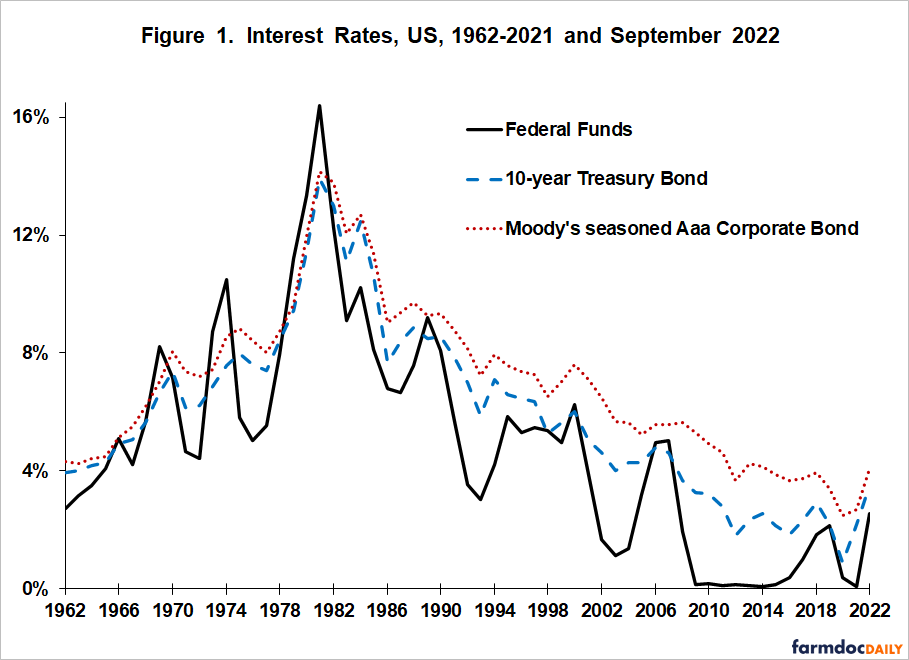
At the heart of the U.S. interest rate structure lies the Federal Funds Rate, a target rate set by the Federal Reserve. It’s not an interest rate you or I directly pay or receive, but rather the interest rate at which commercial banks lend and borrow their excess reserves from each other overnight. Its significance, however, is immense, as it serves as the foundational benchmark for virtually all other interest rates in the economy.
The Federal Reserve’s Role
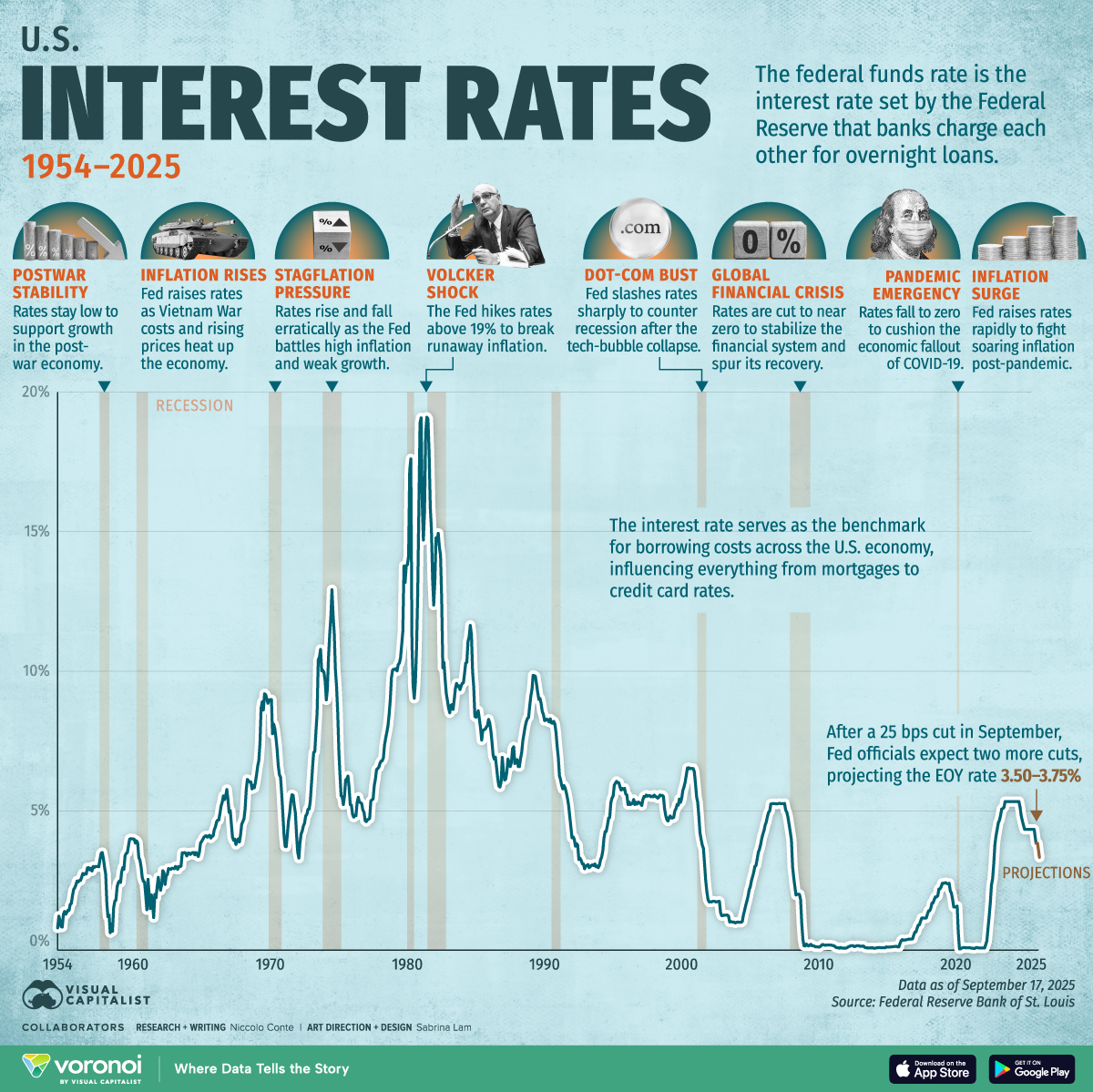
The Federal Reserve, often referred to as “the Fed,” is the central bank of the United States. Its primary mandate is to foster maximum employment and stable prices (i.e., control inflation). To achieve these goals, the Fed utilizes monetary policy tools, with adjusting the Federal Funds Rate target range being one of the most powerful. The Federal Open Market Committee (FOMC), a twelve-member committee within the Fed, meets eight times a year (or more, if necessary) to assess economic conditions and determine the appropriate target range for this rate. By raising or lowering this target, the Fed influences the overall cost of money in the economy. For instance, following a period of elevated inflation in 2022-2023, the FOMC aggressively raised the federal funds rate target to cool economic demand and bring inflation back down to its 2% target. Conversely, during economic downturns, the Fed typically lowers rates to stimulate borrowing and investment.
What the Federal Funds Rate Influences
The ripple effect of the Federal Funds Rate is profound. When the Fed raises its target, it makes it more expensive for banks to borrow money, a cost they then pass on to their customers. This directly impacts the “prime rate,” which is the interest rate banks charge their most creditworthy corporate customers. The prime rate, in turn, is a common benchmark for a host of consumer loans, including variable-rate mortgages, home equity lines of credit (HELOCs), and most credit card interest rates. Even fixed-rate loans, like 30-year mortgages, while not directly tied to the Federal Funds Rate, are influenced by broader market expectations about future short-term rates and the bond market, which themselves react to Fed policy. Consequently, a change in the Fed Funds Rate can shift the entire spectrum of borrowing and saving costs for American households and businesses within a relatively short period.
Current Target Range and Recent Trends
As of early 2024, the Federal Reserve has maintained its target range for the federal funds rate at a level significantly higher than the near-zero rates seen during the COVID-19 pandemic and the years following the 2008 financial crisis. This elevated range, established through a series of rapid hikes in 2022 and 2023, reflects the Fed’s commitment to fighting inflation. While the exact numerical target range shifts based on FOMC decisions, the general trend in recent times has been a move from a historically low environment to a restrictive stance aimed at cooling the economy. This shift has had tangible consequences for consumers, manifesting as higher borrowing costs for various loan types and, conversely, improved returns on savings. It’s crucial to remember that this range is subject to change based on evolving economic data, inflation trends, and employment figures, making the Fed’s future guidance a key determinant of market expectations.
Key Interest Rates Affecting Consumers
While the Federal Funds Rate is the maestro, consumers experience the symphony through a variety of specific interest rates. These are the rates that directly impact monthly budgets, purchasing power, and financial planning.
Mortgage Rates
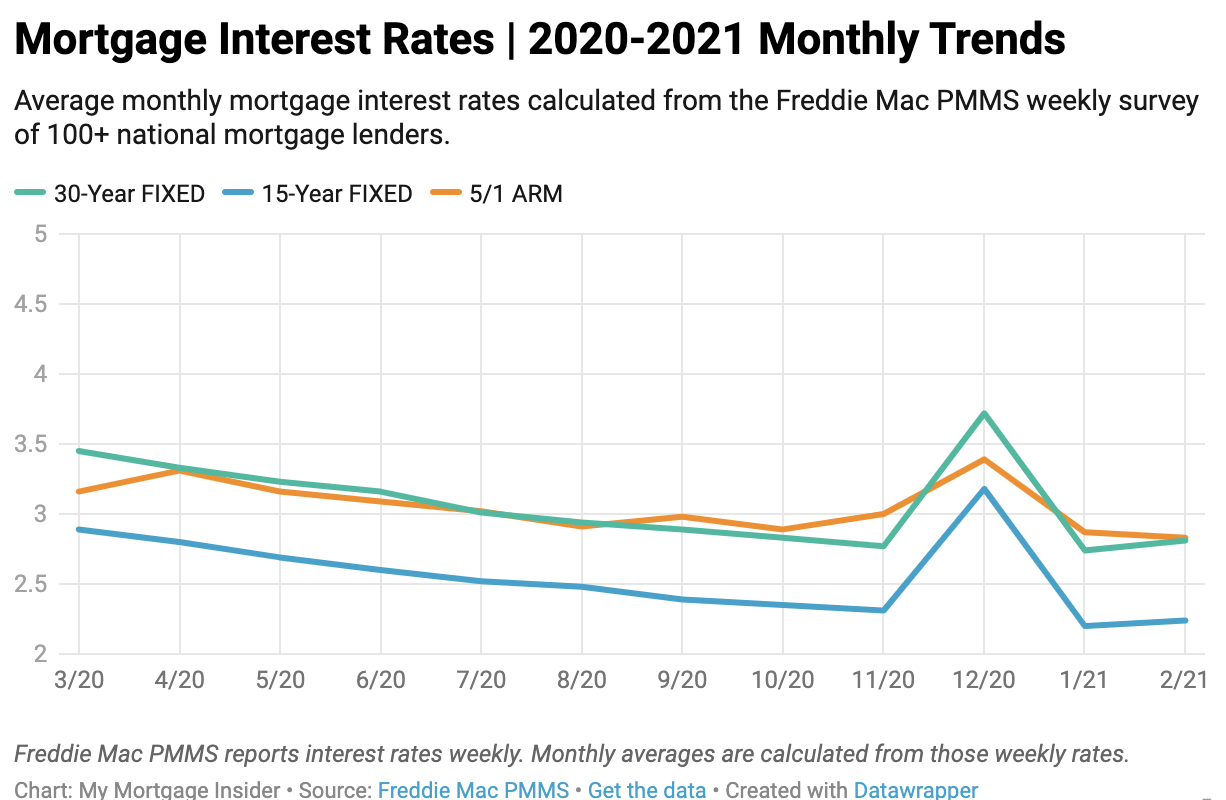
For most Americans, mortgage rates represent one of the largest and most impactful interest rates they will encounter. These rates determine the cost of buying a home and can vary significantly based on the type of mortgage (e.g., 30-year fixed, 15-year fixed, adjustable-rate mortgage or ARM), the borrower’s creditworthiness, and broader market conditions. While influenced by the Federal Funds Rate, long-term mortgage rates are more directly tied to the yield on U.S. Treasury bonds, particularly the 10-year Treasury note, as well as inflation expectations. When Treasury yields rise, so too do mortgage rates. Higher mortgage rates increase monthly payments, reducing housing affordability and often dampening activity in the real estate market. Conversely, lower rates can stimulate a boom in home sales and refinancing. The choice between a fixed-rate mortgage, which locks in a consistent interest rate for the life of the loan, and an ARM, which adjusts periodically, often depends on the current rate environment and a borrower’s risk tolerance.
Credit Card Interest Rates
Credit card annual percentage rates (APRs) are typically among the highest interest rates consumers face, often ranging from 15% to well over 25%. Most credit cards have variable APRs that are directly tied to the prime rate, which, as discussed, moves in lockstep with the Federal Funds Rate. This means that when the Fed raises its benchmark rate, credit card APRs tend to follow suit, increasing the cost of carrying a balance. For consumers who revolve balances month-to-month, even small increases in APR can translate into significantly higher interest charges over time, making debt management even more critical in a rising-rate environment. Understanding the terms and conditions of credit card agreements and prioritizing repayment of high-interest debt is paramount.
Auto Loan Rates
Whether you’re financing a new or used car, auto loan rates are another significant consumer interest rate. These rates are influenced by a combination of factors, including the general interest rate environment (i.e., the prime rate and broader market rates), the borrower’s credit score, the loan term (e.g., 36, 60, or 72 months), and whether the vehicle is new or used. Generally, borrowers with excellent credit scores qualify for the lowest rates, while those with less stellar credit will pay more. Longer loan terms often come with slightly higher rates but lower monthly payments, which can be appealing but ultimately lead to paying more interest over the life of the loan. In a rising rate environment, new car purchases can become more expensive, potentially leading consumers to consider used vehicles or delay purchases.
Savings Account and CD Rates
It’s not all about borrowing; interest rates also affect saving. While often overlooked, the rates offered on savings accounts, money market accounts, and Certificates of Deposit (CDs) are directly impacted by the Federal Funds Rate. When the Fed raises rates, banks typically pass on some of those higher returns to depositors to attract funds. This can be a boon for savers, offering better returns on idle cash. CDs, in particular, can become very attractive in a rising rate environment, as they offer a fixed return for a set period, often higher than standard savings accounts. However, it’s crucial to compare these returns against the rate of inflation. If inflation outpaces the interest earned on savings, the real purchasing power of your money may still decline, even with seemingly higher nominal rates.
The Economic Impact of Interest Rate Changes
Interest rate adjustments are not merely technical financial maneuvers; they are powerful levers that can significantly alter the trajectory of the entire U.S. economy, impacting everything from consumer spending to international trade.
Inflation Control
One of the Federal Reserve’s primary objectives is to maintain stable prices, meaning keeping inflation in check. When inflation is high, the Fed typically raises interest rates. Higher rates increase the cost of borrowing for both consumers and businesses, which in turn cools demand. Consumers might defer large purchases (like homes or cars) due to higher loan costs, while businesses might postpone expansion plans due to more expensive capital. Reduced demand helps to alleviate upward pressure on prices, gradually bringing inflation down. Conversely, during periods of low inflation or deflation, the Fed may lower rates to stimulate borrowing and spending, injecting more money into the economy and ideally nudging inflation upwards towards its target.
Impact on Borrowing and Spending
The direct effect of interest rate changes on borrowing and spending is perhaps the most immediately felt by the general public. When interest rates are high, borrowing becomes more expensive. This discourages taking on new debt for mortgages, auto loans, and even credit card spending. High rates also make saving more appealing, as bank accounts and CDs offer better returns, incentivizing people to put money aside rather than spend it. This collective slowdown in borrowing and spending is exactly what the Fed aims for when it’s trying to combat inflation. Conversely, low interest rates make borrowing cheaper and saving less rewarding, encouraging consumers to spend and invest, which can stimulate economic growth.
Effects on Investment and Business
Businesses are profoundly affected by interest rate fluctuations. Higher interest rates increase the cost of capital for companies, making it more expensive to borrow money for expansion, equipment purchases, or research and development. This can lead to reduced investment, slower job creation, and potentially lower corporate profits. The stock market often reacts negatively to rising rates as well, as higher borrowing costs can depress corporate earnings, and bonds become a more attractive alternative to stocks due to their higher yields. For international trade, higher U.S. interest rates can strengthen the dollar, making U.S. exports more expensive for foreign buyers and imports cheaper for American consumers. This can impact trade balances and global capital flows, adding another layer of complexity to the economic landscape.
Navigating the Current Interest Rate Environment
Understanding the current interest rate environment is crucial for making informed financial decisions. Whether you are a borrower looking for the best deal or a saver aiming for optimal returns, proactive strategies are key.
For Borrowers
In an environment where interest rates are high or rising, borrowers need to be particularly strategic. If you have variable-rate debt, such as credit card balances or a HELOC, focus on paying it down aggressively to minimize interest costs. Consider consolidating high-interest debt into a lower-interest personal loan if your credit score allows, but be mindful of associated fees. For new loans, shop around extensively. Rates can vary significantly between lenders for mortgages, auto loans, and personal loans, so getting multiple quotes is essential. If rates are projected to fall in the future, it might be wise to consider shorter-term fixed-rate options or even adjustable-rate mortgages (ARMs) if your financial situation allows for potential payment increases down the line, with an eye towards refinancing later. Conversely, if rates are expected to rise further, locking in a fixed rate now could save money over the long term.
For Savers and Investors
A higher interest rate environment generally benefits savers. Take advantage of competitive rates on high-yield savings accounts, money market accounts, and Certificates of Deposit (CDs). Locking in a CD for a specific term can offer a guaranteed return that outperforms traditional savings accounts, especially when rates are attractive. For investors, the landscape also shifts. Bonds, particularly U.S. Treasury bonds, become more appealing as their yields rise, offering a potentially safer alternative or complement to equities. However, existing bonds might see their market value decrease as new bonds offer higher yields. In the stock market, companies with strong balance sheets and less reliance on debt may fare better, while highly leveraged companies might struggle with increased borrowing costs. Diversification across different asset classes remains a cornerstone of sound investment strategy, helping to mitigate risks in a volatile rate environment.
Future Outlook and Expert Predictions
Predicting future interest rate movements with certainty is notoriously difficult, even for seasoned economists. The Federal Reserve’s decisions are data-dependent, reacting to a constant stream of economic indicators, including inflation reports, employment statistics, GDP growth, and global economic developments. Factors such as geopolitical events, supply chain disruptions, and technological advancements can also play a significant role. Expert predictions often diverge, reflecting different interpretations of current data and future trends. While many expect the Fed to eventually ease its restrictive monetary policy as inflation cools, the timing and extent of any rate cuts remain uncertain. Therefore, staying informed about economic news, following official Fed communications, and consulting with financial advisors are prudent steps to anticipate potential shifts and adapt your financial strategy accordingly.
In conclusion, “the current interest rate in the US” is not a singular data point but rather a complex, interconnected web of rates orchestrated by the Federal Reserve and influenced by market forces. From the benchmark Federal Funds Rate to the consumer-facing rates on mortgages, credit cards, auto loans, and savings, understanding this ecosystem is fundamental to navigating your personal finances and comprehending broader economic trends. By staying informed and strategic, individuals can optimize their borrowing and saving decisions to achieve their financial goals in any interest rate environment.
aViewFromTheCave is a participant in the Amazon Services LLC Associates Program, an affiliate advertising program designed to provide a means for sites to earn advertising fees by advertising and linking to Amazon.com. Amazon, the Amazon logo, AmazonSupply, and the AmazonSupply logo are trademarks of Amazon.com, Inc. or its affiliates. As an Amazon Associate we earn affiliate commissions from qualifying purchases.