
Navigating the landscape of home financing can be a complex endeavor, with countless variables influencing one of the most significant financial decisions many individuals will ever make. At the heart of this complexity for many prospective homeowners is the 30-year fixed-rate mortgage. This instrument offers a unique blend of stability and long-term commitment, making its prevailing interest rate a critical piece of information for anyone contemplating a home purchase or a refinance. Understanding what drives this rate, how to find it, and its implications for your personal finance is paramount.
Understanding the 30-Year Fixed Mortgage
The 30-year fixed-rate mortgage is the most popular mortgage product in the United States, accounting for the vast majority of all home loans. Its appeal lies in its predictable payment structure and extended repayment period.
The Stability of a Fixed Rate
A fixed-rate mortgage means that the interest rate on your loan remains constant for the entire duration of the loan term, which in this case is 30 years. This translates into a predictable monthly principal and interest payment that never changes, regardless of market fluctuations. This stability is a significant advantage for budget-conscious homeowners, shielding them from the potential volatility of interest rate increases that can impact adjustable-rate mortgages (ARMs). Knowing precisely what your housing cost will be each month for three decades provides unparalleled peace of mind and simplifies long-term financial planning. It allows homeowners to forecast their expenses accurately, making it easier to manage cash flow and save for other financial goals, such as retirement or education.
How the 30-Year Term Works
The “30-year” aspect refers to the amortization period, meaning the loan is scheduled to be fully repaid over 360 monthly payments. While the fixed interest rate provides stability, the extended term itself impacts the financial mechanics of the loan. A longer repayment period typically results in lower monthly payments compared to shorter-term mortgages (like 15-year fixed loans) for the same loan amount. This is because the principal is spread out over more payments. However, this convenience comes at a cost: over the life of the loan, a 30-year fixed mortgage will accrue significantly more total interest paid compared to a 15-year fixed loan, even if the interest rate itself is similar or slightly higher. The early years of a 30-year mortgage are heavily weighted towards interest payments, with only a small portion of each payment going towards reducing the principal balance. As the loan matures, this ratio gradually shifts.
Factors Influencing Today’s Rate
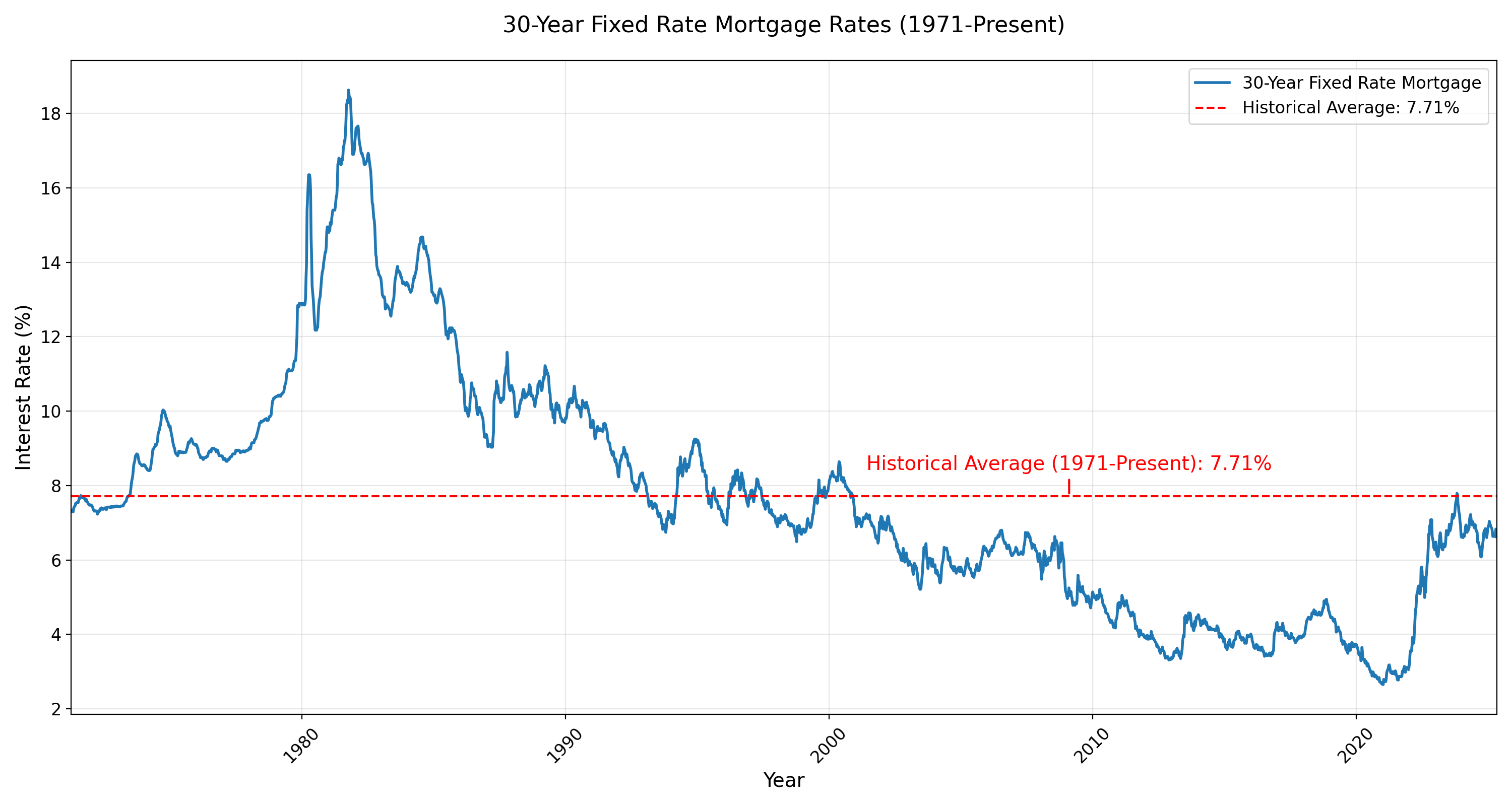
Mortgage rates, including the 30-year fixed rate, are dynamic and can change daily, sometimes even multiple times within a single day. They are not set by a single entity but are influenced by a complex interplay of various economic indicators, financial market activities, and lender-specific considerations.
Economic Indicators: Inflation and Employment
Two primary economic indicators exert significant influence on mortgage rates: inflation and employment. Inflation, the rate at which the general level of prices for goods and services is rising, is a critical concern for lenders. When inflation is high, the purchasing power of future mortgage payments decreases, making lenders demand higher interest rates to compensate for this anticipated erosion of value. Conversely, low or stable inflation can lead to lower rates. Employment figures, such as the monthly jobs report and the unemployment rate, signal the overall health of the economy. A strong job market generally suggests a robust economy, which can sometimes fuel inflationary pressures and lead to higher rates. A weakening job market, however, might prompt the Federal Reserve to implement policies aimed at stimulating the economy, potentially leading to lower rates.
Federal Reserve Policy and the Federal Funds Rate
While the Federal Reserve does not directly set mortgage rates, its monetary policy decisions have a profound indirect impact. The Fed’s primary tool is the federal funds rate, which is the target rate for overnight lending between banks. Changes in this short-term rate ripple through the financial system, influencing other short-term interest rates and, to a lesser extent, long-term rates like those for mortgages. When the Fed raises the federal funds rate, it generally signals a tightening of monetary policy, often in response to inflation concerns or a strong economy, which can push mortgage rates higher. Conversely, lowering the federal funds rate typically aims to stimulate economic activity, which can contribute to lower mortgage rates. The market also reacts to the Fed’s forward guidance and public statements, trying to anticipate future policy moves.
Bond Market Dynamics: The 10-Year Treasury Yield
Perhaps the most direct and impactful driver of long-term mortgage rates is the yield on the 10-year U.S. Treasury note. Mortgage rates generally track the direction of the 10-year Treasury yield because both are long-term investments that compete for capital. When investors demand a higher yield for buying government bonds, lenders typically must offer higher mortgage rates to make their mortgage-backed securities (MBS) competitive. Factors that cause the 10-year Treasury yield to rise, such as increased government borrowing, stronger economic growth expectations, or inflation fears, tend to push mortgage rates up. Conversely, when economic uncertainty drives investors to seek the safety of Treasury bonds, their demand increases, pushing yields down and often taking mortgage rates with them.
Lender Specifics and Borrower Profile
Beyond macroeconomic factors, individual lenders also play a role in setting today’s rate. Each lender has its own operational costs, profit margins, and risk assessment models. Therefore, rates can vary significantly from one financial institution to another on the same day. Moreover, your personal financial profile heavily influences the rate you qualify for. A higher credit score (typically 740 and above) signals lower risk to lenders, often resulting in access to the most favorable rates. Your debt-to-income ratio, down payment amount, and loan-to-value (LTV) ratio also factor into the lender’s risk assessment and the rate they are willing to offer. Loans with a lower LTV (meaning a larger down payment) or a lower DTI typically receive better rates.

Finding Today’s Best Rate
Given the daily fluctuations and varying offers, actively searching for the best rate is crucial. A small difference in an interest rate can translate into thousands of dollars saved over the life of a 30-year mortgage.
Where to Look for Real-Time Rates
Several reliable resources exist for finding today’s 30-year fixed rates. Financial news websites, dedicated mortgage rate comparison sites, and individual lender websites are excellent starting points. Many online platforms allow you to input basic information about your location, desired loan amount, and credit score range to receive personalized rate quotes. It’s important to remember that these initial quotes are often estimates based on ideal borrower profiles (e.g., excellent credit, large down payment). For the most accurate and binding rates, you will need to formally apply with a lender, which involves a credit check.
The Impact of Your Credit Score
Your credit score is arguably the most significant personal factor influencing the rate you’ll receive. Lenders use credit scores to assess the likelihood of you repaying your loan. A higher FICO score demonstrates a history of responsible borrowing and repayment, making you a less risky borrower. This reduced risk translates into lower interest rates. Conversely, a lower credit score will result in higher rates, as lenders compensate for the increased risk with higher charges. Before applying for a mortgage, it is wise to review your credit report for any errors and take steps to improve your score if necessary. Paying down debt, avoiding new credit applications, and ensuring timely payments can all contribute to a healthier credit profile.
Don’t Forget Closing Costs and APR
While the advertised interest rate is vital, it’s not the only cost associated with a mortgage. You must also consider closing costs, which are various fees charged by lenders and third parties for processing and closing your loan. These can include origination fees, appraisal fees, title insurance, and more. A loan with a slightly lower interest rate might come with higher closing costs, potentially offsetting the savings from the lower rate. This is where the Annual Percentage Rate (APR) becomes an essential metric. The APR reflects the total cost of the loan over its term, expressed as an annual rate, including both the interest rate and most closing costs. Comparing the APR across different loan offers provides a more comprehensive picture of the true cost of borrowing, allowing for a more accurate apples-to-apples comparison between lenders.
Is a 30-Year Fixed Rate Right for You?
The suitability of a 30-year fixed mortgage depends heavily on your individual financial situation, risk tolerance, and long-term goals.
Pros: Predictability and Lower Monthly Payments
The primary advantages of a 30-year fixed rate are its predictability and lower monthly payments. For individuals or families who prioritize stable budgeting and a lower monthly housing expense, this mortgage type is highly attractive. The fixed payment provides immunity from interest rate hikes, offering financial security over a long period. This can be particularly beneficial for first-time homebuyers who are stretching their budget or for those who plan to stay in their home for many years. The lower monthly payment also leaves more room in the budget for other investments, savings, or discretionary spending.
Cons: Higher Total Interest Paid
The trade-off for lower monthly payments and long-term predictability is a significantly higher amount of total interest paid over the life of the loan. Because the repayment period is extended, interest accrues for a longer duration. For example, a $300,000 loan at 6% over 30 years will cost approximately $347,000 in interest alone, whereas the same loan over 15 years would incur around $159,000 in interest. While you can always make extra principal payments to accelerate repayment, the standard amortization schedule means a substantial portion of your early payments goes towards interest.
Alternatives to Consider
Depending on your financial goals, other mortgage products might be more suitable. A 15-year fixed-rate mortgage offers substantially lower total interest paid and faster equity build-up, but with significantly higher monthly payments. This is often preferred by homeowners with stable, higher incomes who can comfortably afford the increased monthly outflow. Adjustable-rate mortgages (ARMs) typically offer lower initial interest rates for a fixed period (e.g., 5, 7, or 10 years), after which the rate adjusts periodically based on market indices. ARMs can be advantageous for those who plan to sell or refinance before the fixed period ends, or for those who anticipate their income increasing substantially to absorb potential future rate hikes. However, they carry the risk of increased monthly payments if rates rise.

The Long-Term Financial Implications
Choosing a 30-year fixed rate mortgage is a monumental financial decision that extends for decades. Its long-term financial implications are profound, affecting everything from your monthly budget to your net worth. It locks in a significant portion of your future housing costs, providing a stable foundation for your personal finances. However, it also dictates how quickly you build equity and how much you ultimately pay for your home. Understanding today’s rate in the broader context of economic trends and your personal financial objectives is key to making an informed choice that supports your long-term wealth-building strategy. While the allure of low monthly payments is strong, a comprehensive financial assessment, including an analysis of total interest paid and potential investment opportunities, is essential to determine if this popular mortgage product aligns with your unique financial journey.
aViewFromTheCave is a participant in the Amazon Services LLC Associates Program, an affiliate advertising program designed to provide a means for sites to earn advertising fees by advertising and linking to Amazon.com. Amazon, the Amazon logo, AmazonSupply, and the AmazonSupply logo are trademarks of Amazon.com, Inc. or its affiliates. As an Amazon Associate we earn affiliate commissions from qualifying purchases.